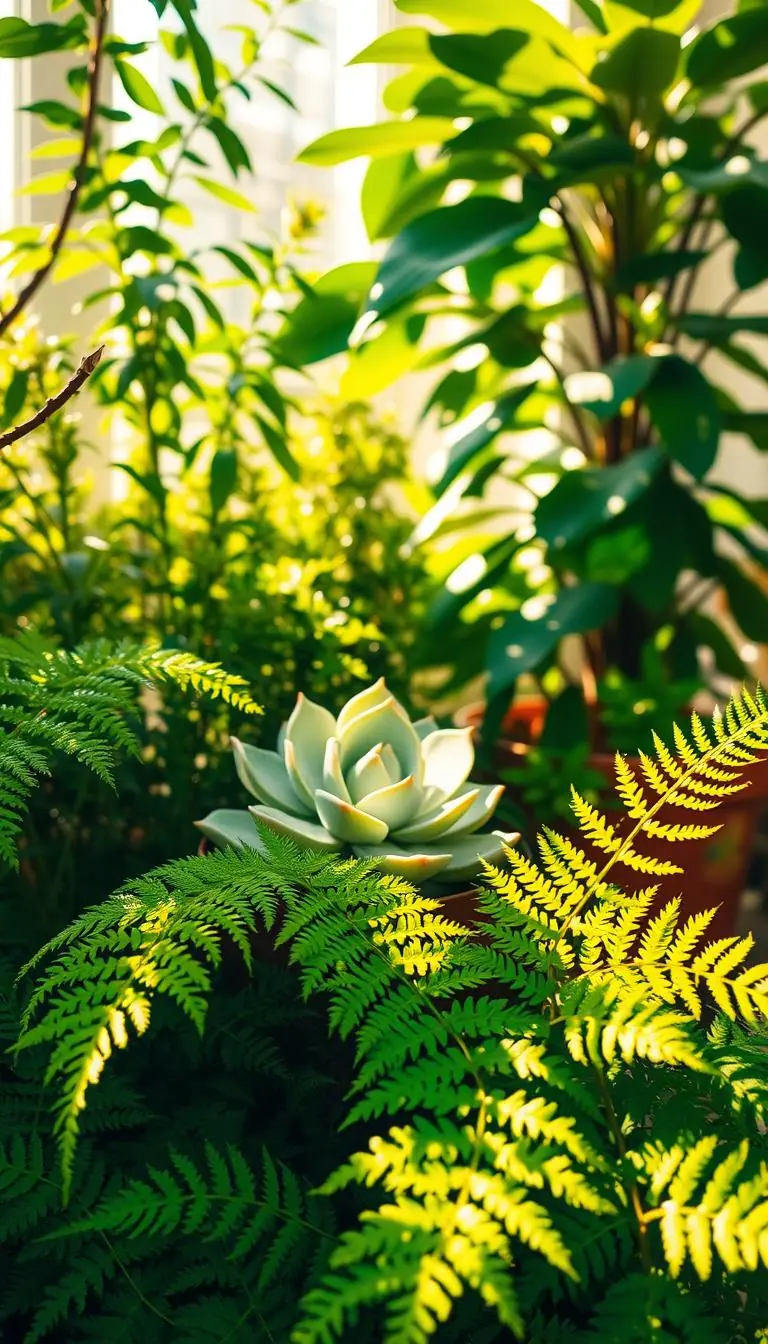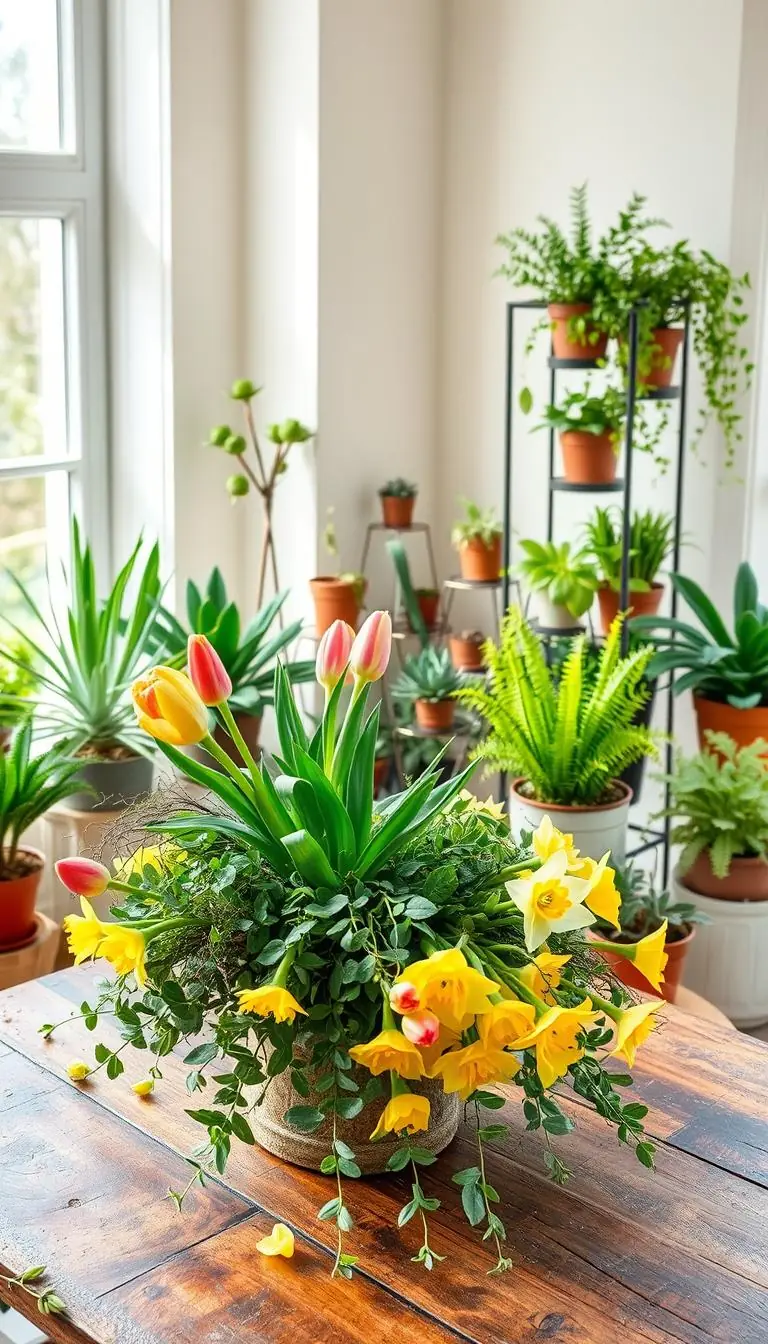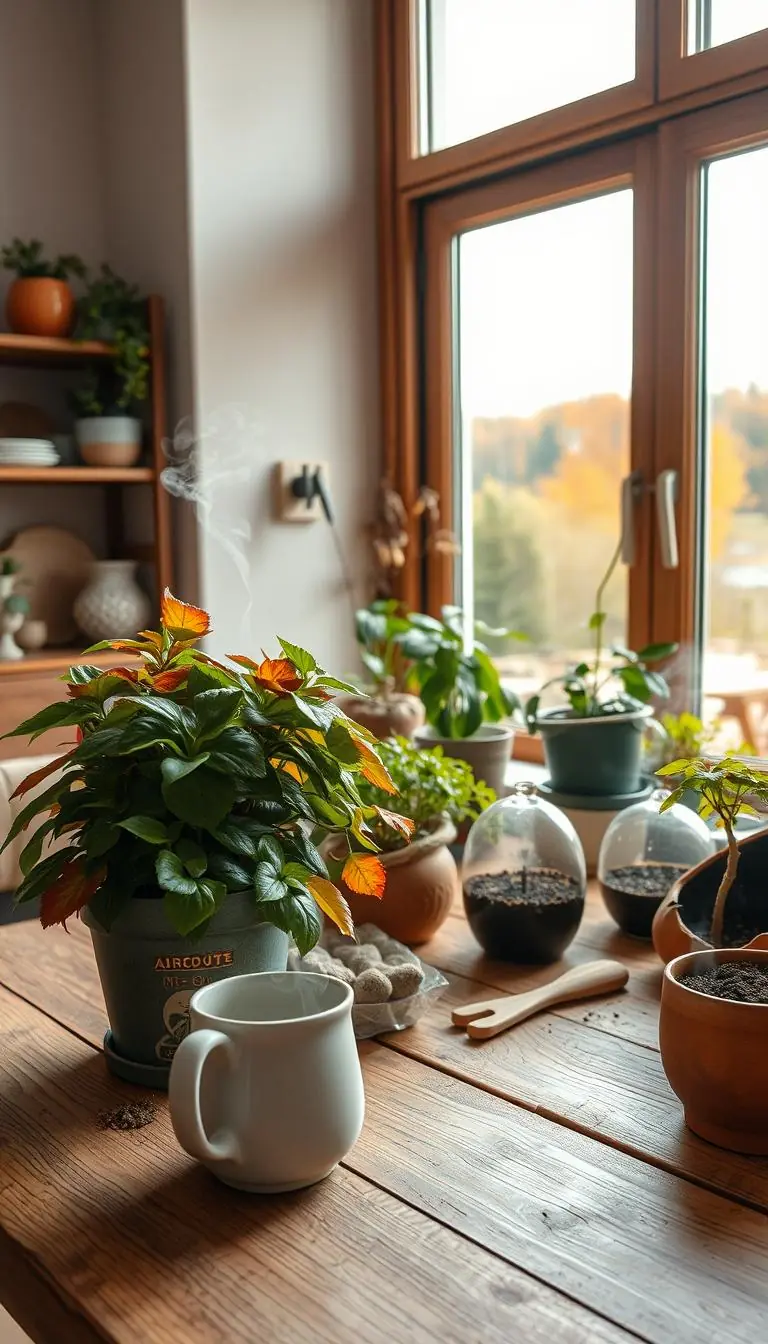
Imagine stepping onto a sunlit porch where soft leaves whisper and a cool ceramic planter sits by the door. You want greenery that feels lush and steady, not a chore to keep alive.
In this short guide you’ll learn a friendly, step‑by‑step way to blend one lifelike faux piece with living accents so your entry, porch, or room looks polished without constant watering or fuss.
We show practical examples—UV‑resistant hydrangea topiaries for covered porches, trailing ivy near a window, and rosemary by the door—plus the tools and materials you’ll need: sturdy planters, soil or mulch, preserved moss, rocks, a hand trowel, pruners, gloves, and a soft cloth for occasional cleaning.
You’ll also get simple placement rules and easy upkeep tips so people notice the style and not the upkeep: a quick wipe, a leaf blower pass, or a soap‑and‑water rinse keeps things looking fresh through seasons when water is scarce.
Key Takeaways
- Use one faux anchor piece with living accents to create a cohesive look.
- Choose UV‑resistant faux for sun and place live greenery where you’ll enjoy tending it.
- Gather simple tools up front: planters, soil, moss, pruners, and a soft cloth.
- Style with real soil, mulch, or rock to make artificial elements feel natural.
- Rotate seasonal pieces and perform light maintenance for lasting curb appeal.
Plan the perfect blend: why, where, and what to use for a natural look indoors and on the porch
Before buying anything, map where sun, shade, and access meet so your arrangement looks natural and lasts.
When faux shines: drought, sun, and hard-to-reach areas
Start by walking your porch and rooms. Note where afternoon sun bakes surfaces, which corners are hard to water, and which shelves are too high to reach.
Use faux plants in hot or dry zones — a sunny front porch with no hose, or the top of cabinetry. These pieces keep a vignette full without daily care.
Choose quality: UV-resistant outdoor faux, Real Touch indoor picks, and right-size planters
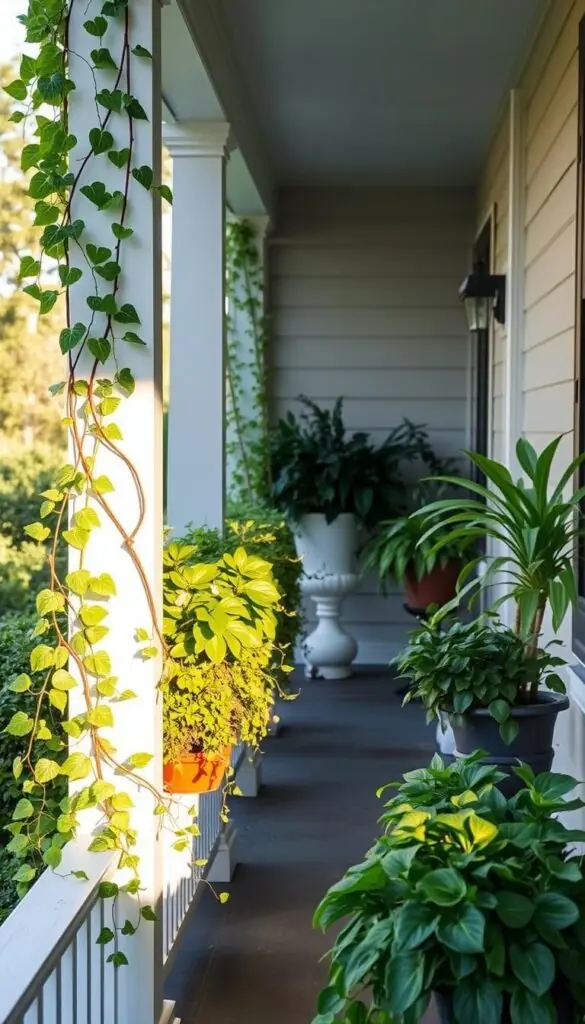
Pick outdoor-rated, UV-resistant options for covered porches. Indoors, choose Real Touch stems so artificial plants hold up to close inspection.
Plan sizes: include one taller planter (24–48 inches), a mid-height piece, and a small accent. This guides the eye and creates balance.
- Survey light and access before shopping.
- Use upright faux anchors and softer live accents to soften edges.
- Pack a checklist: planter with drainage or cachepot, potting mix or mulch, preserved moss, small rocks, and a soft cloth.
Quick warning: avoid non-UV faux in direct sun, wrong scale for a space, or skipping top dressing — these common mistakes give away the plan.
Step‑by‑step to mix fake real plants so they look convincingly alive
Follow these practical steps to plan, place, and finish a grouping that feels effortless and lived‑in.
Assess the site
Walk the porch and indoors. Mark hot afternoon sun, shady corners, and areas where watering is hard.
Measure heights for scale—note 12", 24", 48" and 72" as useful tiers for composition.
Select anchors and companions
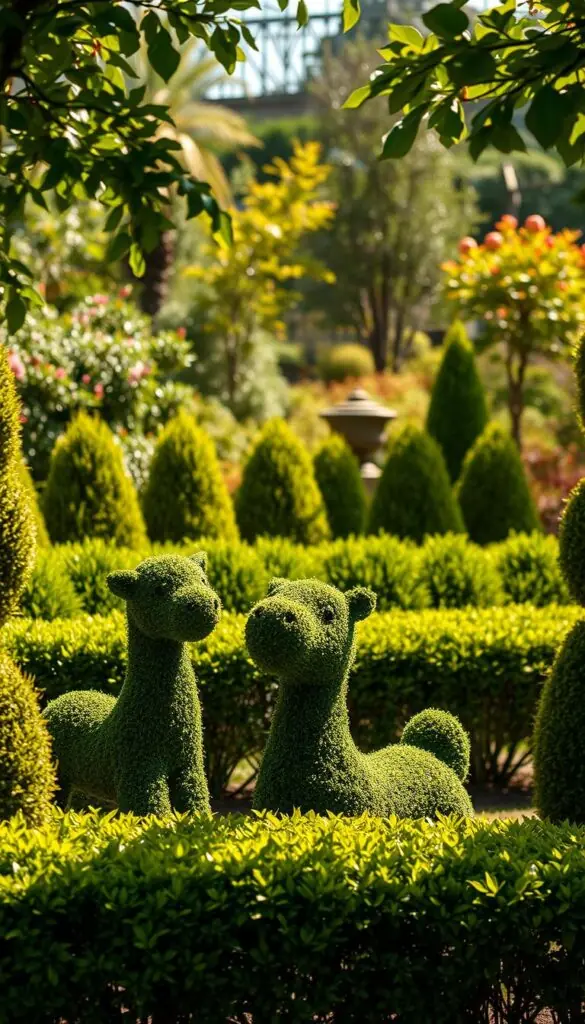
Choose one or two tall faux anchors: a 48–72" fiddle fig, palm, or a pair of hydrangea topiaries to set shape.
Tuck in live companions by zone: trailing ivy or vinca for softness, boxwood for form, and rosemary or thyme for scent.
Containers, base, and finishing
Use a weighted outdoor planter for tall pieces, a 12–24" ceramic cachepot for mid height, and small pots for steps.
Style the top with real soil, mulch, pressed preserved moss, and small rocks to hide stems and inserts.
Final shaping and common mistakes
Fluff stems toward the imagined sun, vary leaf angles, and avoid perfect symmetry.
Avoid planting faux directly in the ground, non‑UV pieces in full sun, and skipping a top dressing. Tend live plants on your watering schedule and clean faux with a leaf blower or soap‑and‑water rinse.
| Element | Size example | Function |
|---|---|---|
| Tall anchor | 48–72 inches | Sets height and silhouette |
| Mid plant | 24–36 inches | Bridges scale and adds texture |
| Accent pot | 12 inches or tabletop | Adds detail and scent (herbs) |
Styling, care, and seasonal swaps to keep the blend beautiful and low maintenance
Think vertically and seasonally to keep your display fresh, bright, and low on upkeep.
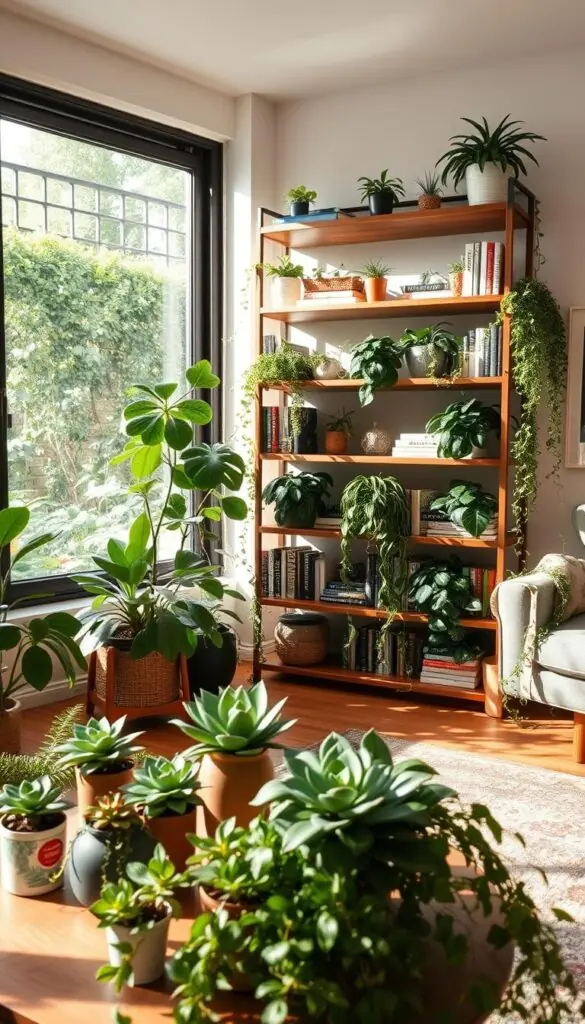
Layer heights and textures
Build depth by pairing a tall anchor with a hanging basket or wall mat behind it and a small tabletop pot up front. This creates a layered, immersive look that draws the eye.
Tools and accents: hanging baskets, wall mats, soft-fiber doormats, warm exterior lights, and ceramic planters. Nearly Natural offers Real Touch hanging options that work well indoors and on sheltered porches.
Care that lasts
Keep maintenance simple: a once-a-month dusting, a quick leaf-blower sweep on the porch, or a gentle soap-and-water rinse when pollen builds up. For outdoor artificial pieces, a brief power wash is fine if they are rated for it.
Store everything dry at season’s end in labeled bins. Slip a soft cloth between delicate leaves and note watering routines for any live companions you leave behind.
Rotate by season
Swap lush hydrangea stems in spring and summer for cedar or boxwood topiaries in winter. Change color accents to match your room palette so the entry feels intentional all year.
- Finish each pot with moss, mulch, or pea gravel to blur stems and give a tidy top layer.
- Protect outdoor pieces from harsh sun; place them in covered or partially shaded spots so they last longer.
- Avoid overstuffing or repeating identical items; edit so each piece has room to breathe.
Quick mistakes to avoid: placing non-UV pieces in strong sun, skipping top dressing, or crowding too many accents into one planter. Keep edits small and seasonal swaps simple so your greenery always looks calm and cared for.
Conclusion
Wrap up your project by placing a single, well‑chosen piece where people will notice it.
You now have a clear, low‑water path to a welcoming porch and home. UV‑resistant topiaries hold shape through drought, while a live plant adds scent and movement. Keep care simple: quick wipe‑downs, gentle rinses, and neat off‑season storage.
Start small—refresh one planter this week and build outward as time allows. Watch for a good sale on a new faux stem or an extra planter, then trust the core arrangement to carry you through seasons with light touch‑ups.
Choose what you love, enjoy the process, and let this calm approach make your space feel cared for every day.
FAQ
How do I plan where to put living and artificial pieces for a natural look indoors and on the porch?
Start by mapping light and access. Put water‑needy living greens where you can easily water and where they get suitable sun. Reserve high‑sun or hard‑to‑reach spots for UV‑resistant faux pieces. Use larger items to anchor corners or porches and add smaller live pots near seating and entryways to create a layered, sunlit feel.
When is an artificial piece a better choice than a living one?
Choose synthetic pieces for drought‑prone sites, full‑sun porches that bleach foliage, or tight spaces you can’t water regularly. They also shine in windy or cold entryways and high shelves where maintenance would be difficult. Look for weatherproof, UV‑treated options for outdoors.
What should I look for in quality faux greenery?
Pick UV‑resistant materials for outdoor use and “Real Touch” finishes for indoor realism. Check for strong stems, natural leaf variation, and good construction at the junctions. Weighted bases or well‑designed planters improve stability on porches and balconies.
How do I decide which live plants to pair with larger artificial anchors?
Match care needs by zone: use water‑wise, sun‑tolerant varieties like rosemary, thyme, vinca, or certain ivies in sunny spots; choose shade‑tolerant houseplants for low‑light interiors. Balance scale and texture so living pots complement the size and silhouette of faux anchors.
What planter sizes and types work best when combining both kinds?
Use a mix of sizes—short tabletop pots, 12–24 inch planters, and taller 48‑inch floor planters—to create depth. Choose heavier or weighted pots for tall pieces and ceramic or metal cachepots that match your style. Ensure proper drainage for live specimens.
How can I disguise the base of artificial stems to make them look planted?
Finish the top with real soil, mulch, sheet moss, or decorative rocks. Add small live succulents or trailing vines around the rim when appropriate. These details hide stems and blend textures so the arrangement reads as naturally planted.
What are simple shaping tricks to make faux pieces look alive?
Bend stems toward the light, vary leaf angles, and slightly asymmetrically arrange branches. Gently pinch or separate clusters to create depth. Avoid perfect symmetry—nature is a little messy, and that’s what makes it convincing.
How do I create convincing vignettes with mixed greenery?
Layer items by height and texture: a tall faux palm, mid‑height live pot, and a small tabletop or hanging element. Add functional accents like doormats, a lantern, or an outdoor throw to distract the eye and make the grouping feel lived‑in.
What common mistakes should I avoid when mixing live and synthetic pieces?
Don’t use indoor‑only faux outdoors without UV protection. Avoid planting artificial pieces directly in the ground. Keep away from perfect symmetry and neglecting top dressing. And don’t place heat‑sensitive faux items in full afternoon sun where they can fade or warp.
How should I care for both types so the blend stays beautiful with low maintenance?
Wipe faux foliage regularly with a damp cloth or use a gentle leaf blower to remove dust. For live pots, follow watering schedules and occasional feeding. Clean outdoor pieces with mild soap and water and store delicate items off‑season to prolong life.
How can I rotate and refresh arrangements by season?
Swap accents to match the season—hydrangea stems for spring and summer, cedar or boxwood for winter, and colored berries for fall. Rotate planters and change top dressings to keep the scene fresh without overhauling your core pieces.
Can I mix topiaries and moss with live containers for a cohesive look?
Yes. Use faux or preserved topiaries as anchors and surround them with living, low‑care groundcovers or trailing herbs. Add sheet moss or decorative stone on top to unify textures and hide transitions between materials.