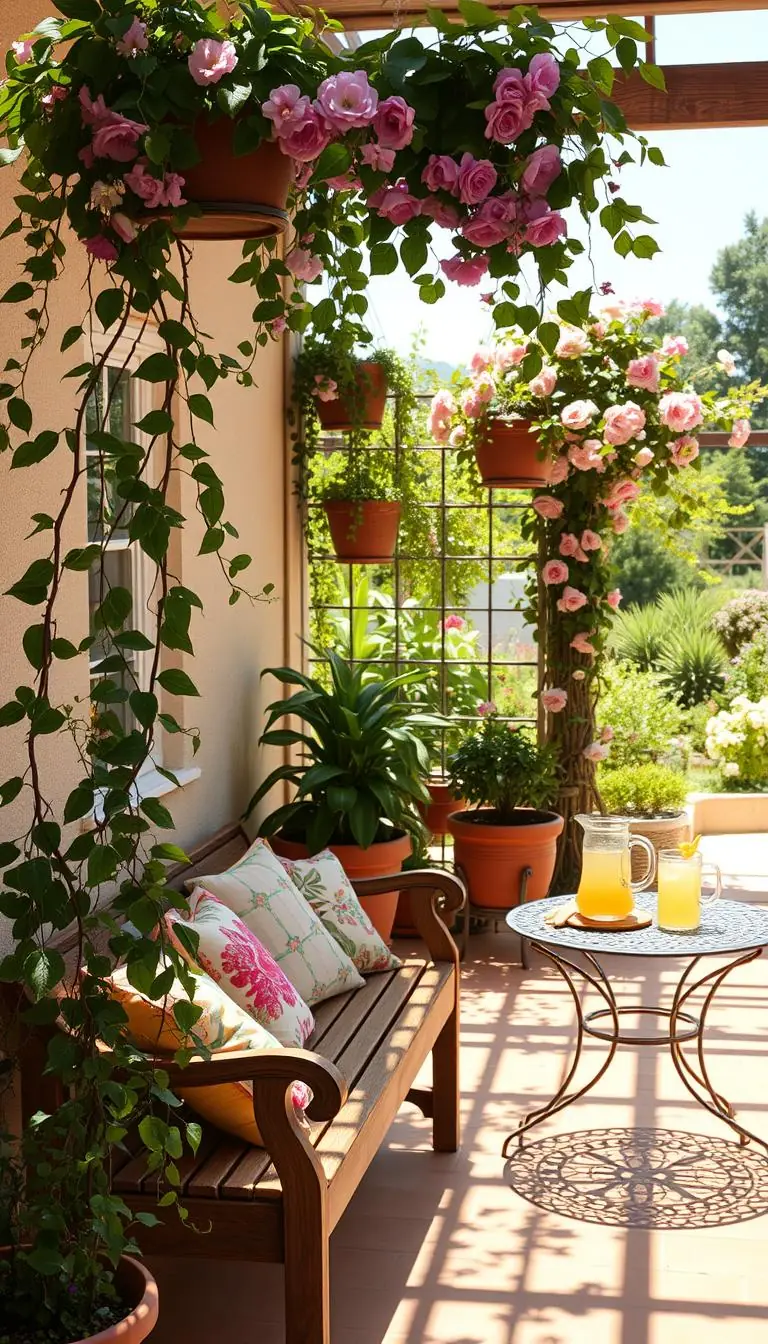
Imagine warm wood under bare feet and the soft scent of citrus at dusk. Do you ever picture a calm patio where mornings start with coffee and evenings end with quiet conversation?
You’ll begin with a clear vision so you can build with confidence. Set your intention for a welcoming patio retreat that makes simple moments feel special and creates new memory markers in your home.
Think of this outdoor space like a living room under the sky: define a floor with a washable rug, make a ceiling with string lights or an umbrella, add cozy seating and a durable chair or two, and finish with large planters.
We’ll guide you step by step with short, friendly actions. From sketching a layout with tape and a phone compass to sourcing used furniture on Marketplace or Craigslist, you’ll see practical, budget-friendly options that work.
Key Takeaways
- Start by picturing how mornings and evenings feel in your patio retreat.
- Define the area with a rug and a simple overhead for a room-like feel.
- Use affordable sources like Marketplace and curbside finds for furniture.
- Choose durable materials—aluminum, teak, or synthetic wicker—for lasting pieces.
- Layer lighting, shade, textiles, and plants to make the space feel grounded.
Start With a Vision: How You Want Your backyard lounge to Feel and Function
Begin with a simple image: your favorite hour spent on your patio, and design around that.
Close your eyes and picture morning light, the smell of coffee, birdsong, and a soft rug underfoot. Then imagine sunset chats with lanterns and a light throw. These small moments tell you what the space must do for you.
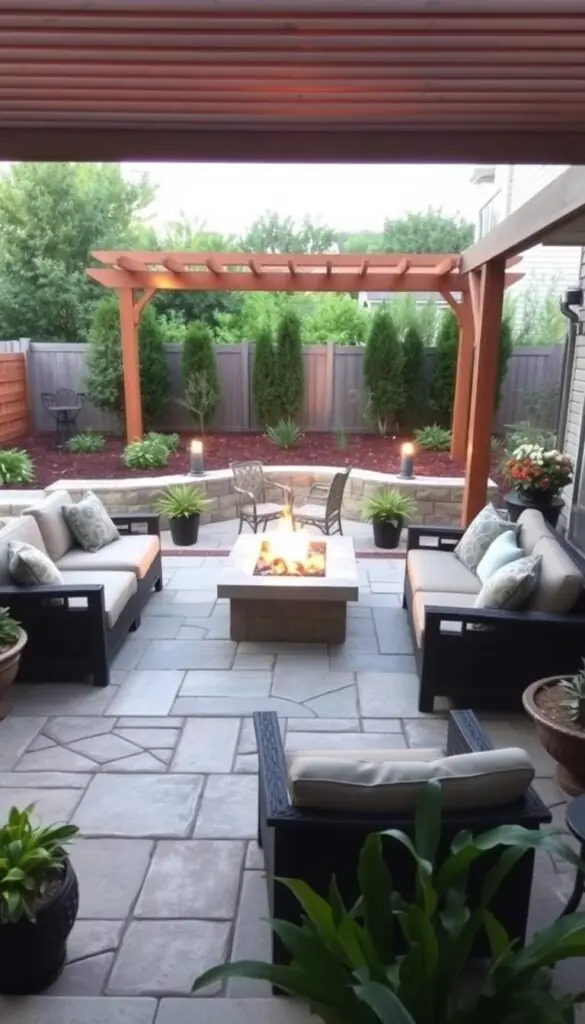
Picture the moments
- Morning routine: a quiet nook for coffee and shade when you need it.
- Evening time: layered lights and comfy cushions for longer talks.
- Weekend hangs: flexible seating so guests can mingle.
Choose the vibe
Decide between neutral cottage calm or a breezy beach feel. Use a base of natural textures—wicker, jute, wood, or concrete—and limit bold colors to one confident accent.
Quick checklist: enough seats, a small table, 1–2 hero textures, and a simple sketch of sun patterns. This makes choosing furniture and outdoor options feel easy and neighborly.
Read Your Yard: Site, Size, Sun, and Wind
Before you buy a single piece of furniture, map the space so decisions feel easy and precise.
Walk the patio with a tape measure, painter’s tape, and your phone compass. Measure length and width, then tape out a mock layout to see how real chairs and a table will fit.
Mark clear paths to doors, hose bibs, and outlets. This keeps daily tasks simple and prevents tripping over cords when you add lighting at dusk.
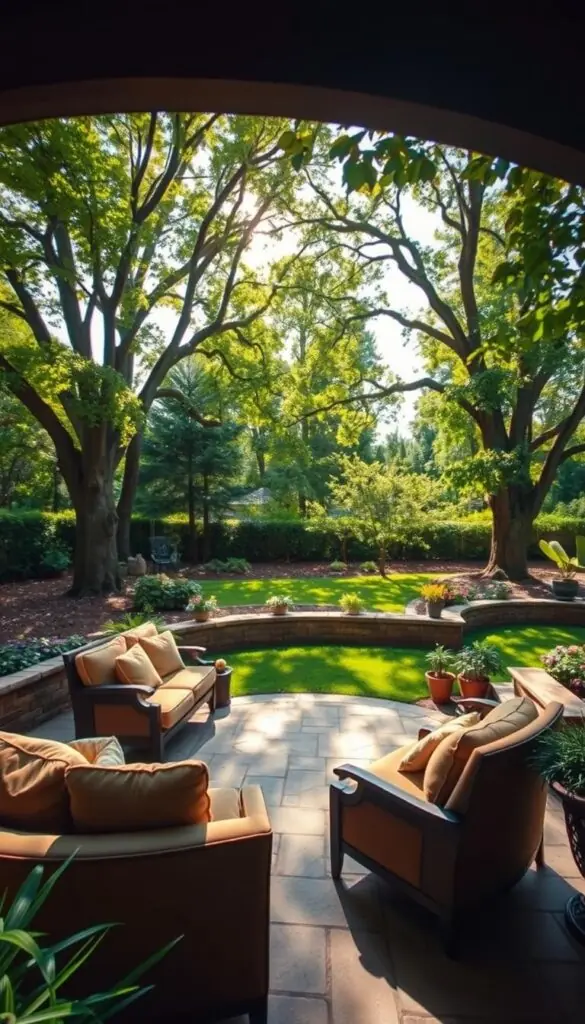
Track light and wind
Note sun patterns for 2–3 typical days. Write where morning light warms a coffee spot and where late‑summer sun sits higher and hotter.
Observe breezy corners. If wind funnels through, choose heavier furniture and vented umbrellas or moveable shade that pivots.
Finishing touches that guide the eye
Place large planters at corners to "finish" the yard and add scale without blocking doors. This frames the space and leaves walkways open.
- Measure first: tape out furniture footprints before you buy.
- Keep paths clear: mark doorways and hose access.
- Plan shade: over morning seats or afternoon reading spots.
- Note outlets: plan layered lighting without extension cord clutter.
Create “A Floor” and “A Ceiling” Outdoors
Turn a patch of stone into a cozy sitting room with a simple rug and a soft glow above. These two moves give your patio an instant, finished feel without heavy construction.
Rug as the floor
Pick a rug that fits the whole seating footprint so the group feels joined. At minimum, have the front legs of the sofa and chairs sit on it.
Choose durable materials: polypropylene or recycled PET dries fast and cleans with a hose. Layer a patterned flatweave over a round jute for texture that still reads calm.
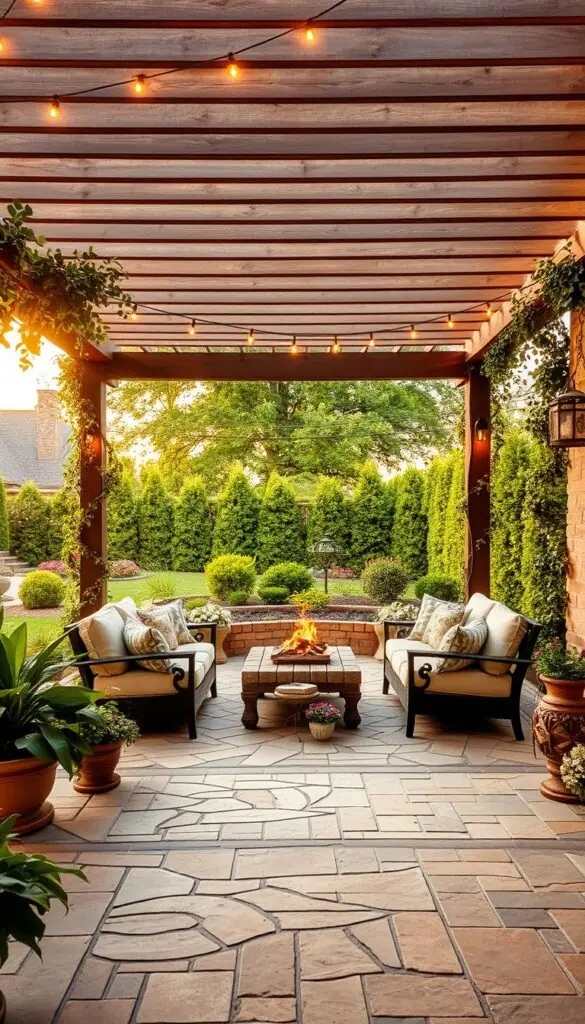
Umbrella or lights for a ceiling
Hang warm‑white string lights on posts or along eaves for a dimmable overhead glow. If wiring is tricky, a 7–9 ft umbrella gives instant shade and a sheltered feel.
- Pick a rug that fits the seating footprint; front legs on the rug unify the group.
- Look for polypropylene or recycled PET for weather resistance.
- Layer a subtle flatweave over round jute to ground the conversation area.
- Use warm‑white string lights on a dimmer or a 7–9 ft umbrella where cords are a problem.
This floor‑and‑ceiling trick stretches your budget and lets you skip building a deck or pergola. Small choices in rug, lights, and a table or umbrella can make the outdoor lounge feel like a true room with thoughtful design and simple options for furniture placement.
Plan the Layout: Conversation First, Everything Else Second
Start by arranging seats so faces can meet—conversation should shape the whole plan. Place pieces so people can speak without raising voices. This makes a patio feel welcoming and easy to use.
Conversation grouping
Build a simple triangle: a sofa facing two chairs with a side table in easy reach for each seat. That layout keeps everyone connected.
Sample floorplan
Try a sofa opposite two rocking chairs, and add an egg chair or swing on the third side. The egg chair becomes a cozy anchor and a playful visual point.
Clear walkways and flexible surfaces
- Leave 36 inches for main paths to doors.
- Keep 18 inches around tables so knees and trays clear.
- Cluster two or three side tables of different heights as a movable coffee table. Use pieces on wheels or light enough to carry.
Tape the footprint with painter’s tape and “walk” the plan to check reach and sightlines. Prioritize seats and surfaces first; add planters and accents in order after the conversation setup works.
| Element | Recommended spacing | Purpose |
|---|---|---|
| Sofa to path | 36 inches | Clear entrance and flow |
| Table circulation | 18 inches | Comfortable use and service |
| Clustered side tables | Varied heights | Flexible coffee table alternative |
Choose Outdoor Furniture That Lasts and Feels Good
Good furniture starts with durable frames and honest comfort—choose pieces that will age gracefully.
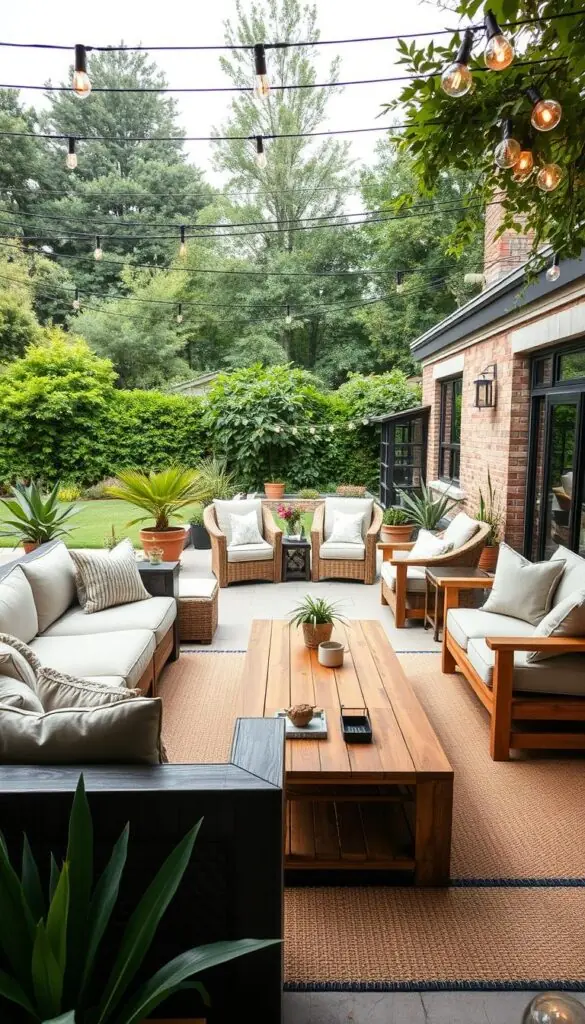
Pick materials that shrug off weather. Aluminum resists rust, teak ages to a warm patina, and synthetic wicker wipes clean easily.
Comfort checks that matter
Try before you buy when you can. Seat height between 17–19 inches feels natural for most people.
Look for cushion depths of 22–26 inches if you want to sink in and relax. Add a small lumbar cushion where your lower back meets the seat for longer chats.
Sets or mixed pieces?
Full conversation sets give a cohesive look and fast setup. Mixing pieces from different stores adds texture and saves money.
"A few tested seats and one well-chosen table will keep your space both friendly and durable."
- Check arms and legs for solid finishes where wear shows first.
- Confirm covers unzip for seasonal cleaning.
- Balance budget by anchoring with one strong piece and mixing smaller items.
| Material | Strength | Maintenance |
|---|---|---|
| Aluminum | Rust-resistant frame, lightweight | Wipe with mild soap |
| Teak | Durable, ages to silver patina | Oil or let weather naturally |
| Synthetic wicker | Low maintenance, flexible look | Hose down and spot clean |
Seating Options: Sofas, Lounge Chairs, Rocking Chairs, and an Egg Chair
Comfort and scale guide every good seating choice for a small patio or a roomy porch. Choose pieces that let you move easily and invite people to stay.
Outdoor sofa sizing: loveseat vs. full sofa
If your patio is compact, pick a loveseat plus two chairs to seat four without crowding. A loveseat keeps sightlines open and leaves room for a side table.
For wider spaces, a full outdoor sofa anchors the group and creates a homey focal point. Pair it with one deep lounge chair to balance reading time and chat.
Rocking chairs for timeless charm
Rocking chairs add a gentle rhythm to evening conversations. Leave a few inches behind the rocking arc so the motion is free and safe.
Place a small side table within reach for drinks or a book. Keep planters nearby for a soft, green backdrop, but don’t block the sweep of the rock.
Egg chair or swing: placement and safety
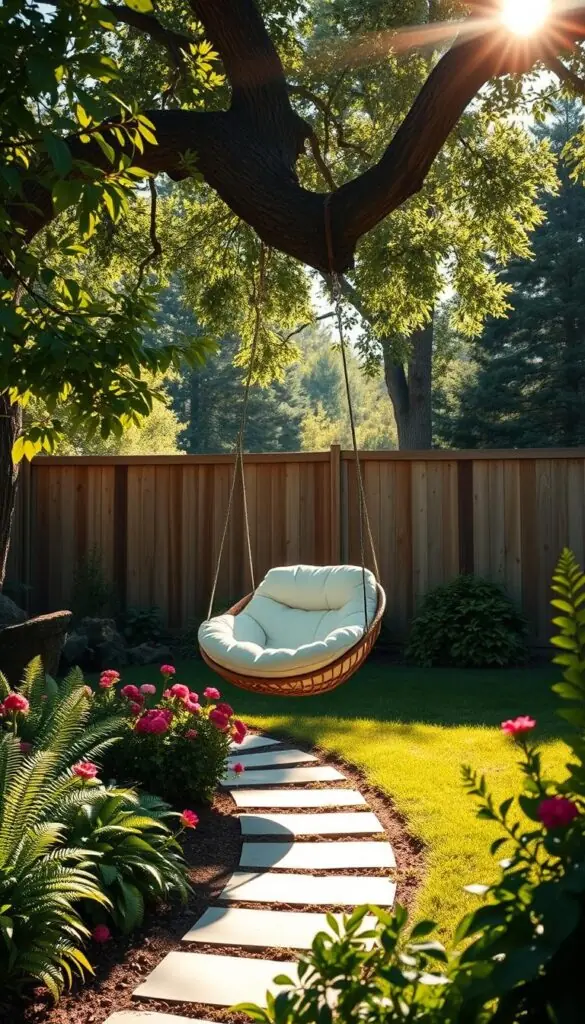
An egg chair or a small swing becomes a favorite perch for adults and kids. Suspend a swing from a strong beam using rated hardware, eye bolts, and carabiners, or choose a solid stand.
Check weight ratings and fasten into blocking or a structural header. Leave at least 18–24 inches clearance all around so the chair can sway in the evening breeze.
Smart Surfaces: Coffee Table, Side Table, and Multi‑Use Pieces
The right mix of surfaces helps you host with less juggling and more ease. Begin by thinking of surfaces as helpers, not decoration.
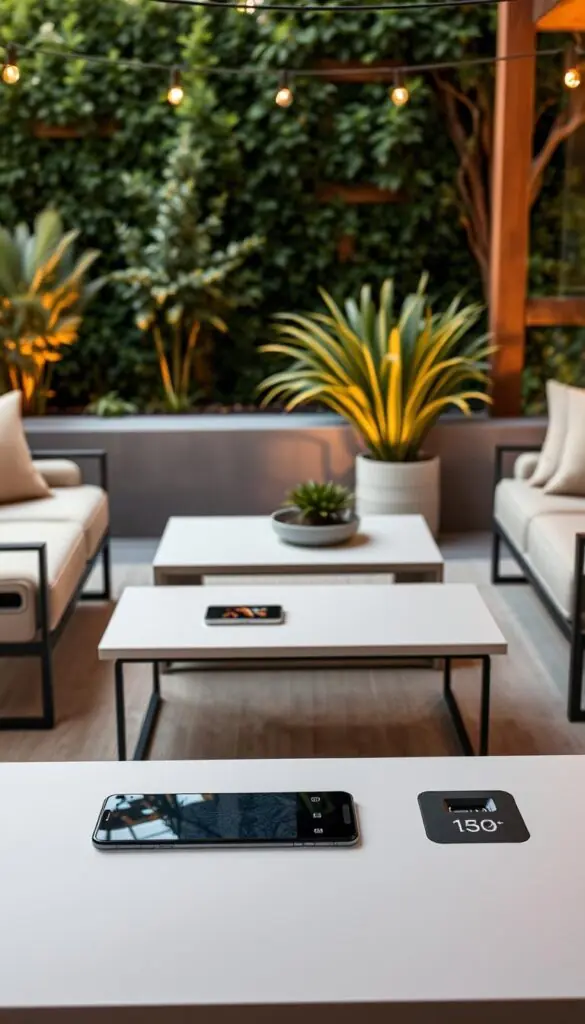
Cluster two or three side tables at varied heights to make a sculptural coffee table that splits apart for serving. Concrete pieces feel grounded and work well in mixed groups.
Add a slim rolling cart with locking wheels for glassware, snacks, or plants. Lock it during conversation, then roll it away when you need the room.
- Choose wipe‑clean surfaces: powder‑coated metal, sealed teak, or lightweight concrete.
- Place a small table within easy reach of every chair so no one balances a drink on their knee.
- Keep the tallest table free for trays, and tuck a planter or lantern on the lowest table.
- Consider nesting tables or lightweight pieces for flexible layout options.
| Item | Best use | Care |
|---|---|---|
| Clustered side tables | Sculptural coffee table / split for serving | Wipe clean; seal concrete |
| Rolling cart with locking wheels | Mobile bar, plants, serving station | Lock casters; store indoors in winter |
| Nesting or lightweight tables | Flexible seating arrangements | Easy to move; hose or wipe down |
This approach keeps your patio ready for quiet mornings or lively evenings in the lounge. Little surface decisions make hosting smoother and more pleasant for every guest.
Set Your Color Palette: Calm Neutrals With a Confident Accent
Start by picking a calm base color that makes the whole patio feel collected. This gives every piece a place to live and keeps secondhand finds from looking mismatched.

Anchor with a neutral rug and a bold repeat
Lay a large neutral rug first. Oatmeal, stone, or driftwood makes the area read as one, even when pieces are mixed.
- Choose one calm base and one confident accent like navy or clay.
- Repeat the accent 3–5 times—in pillows, lantern cords, or a planter—to make the colors feel intentional.
- Lean on texture—wicker, jute, warm wood, and concrete—so depth comes from touch, not more hues.
Limit color choices and add seasonal tweaks
Keep the color palette tight: one neutral + one or two accents. This makes used items look cohesive and curated.
"A simple rule: fewer colors, more texture—your patio will feel calm and collected."
For a beach vibe, add a navy stripe or a sand‑toned throw. Small textile swaps are the easiest design options for seasonal refreshes.
Textiles and Touches: Cushions, Pillows, and Throws
A soft mix of fabrics can turn a simple seat into a spot you actually want to linger in.
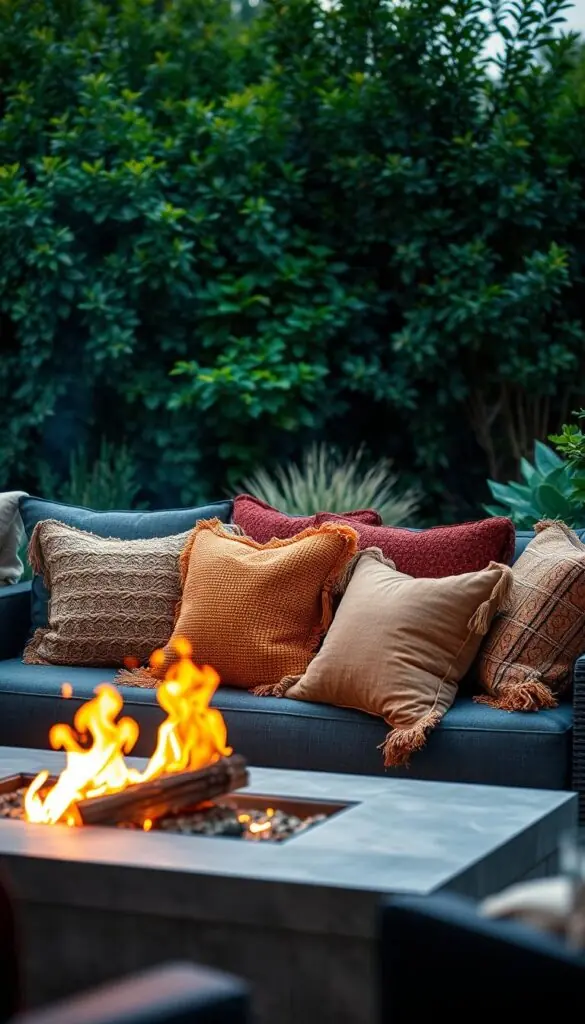
Choose performance fabrics like Sunbrella or similar performance weaves so your cushions resist fading and dry fast after a surprise sprinkle. Zip‑off covers make seasonal laundering easy; pop them on a gentle cycle each spring and they look like new.
Mix for texture, not more colors
Layer a nubby linen‑look cushion with a soft cotton pillow and a subtle striped throw. This builds depth without adding many colors. Add one navy pillow to echo your palette and keep the rest calm.
- Durability: performance fabrics that stand up to sun and dust.
- Care: zip‑off covers and gentle machine washes.
- Storage: keep spare pillows indoors or in a deck box during windy, dusty days to extend life.
"A tactile mix—chunky weaves and breathable throws—makes every chair feel more inviting."
Small items like throws and trim cushions refresh a patio quickly. With the right fabrics and a simple care routine, your lounge will stay cozy and ready for any season.
Greens That Thrive: Planters, Fiddle Leaf, Agave, and More
A few well‑placed pots bring instant scale and a softer edge to your outdoor seating. Large planters finish the edges of a patio and give the whole space presence.
Big pots hold moisture longer and stabilize taller plants. Use them to frame an entry or to anchor a group near a chair cluster.
Right plants for the right spot
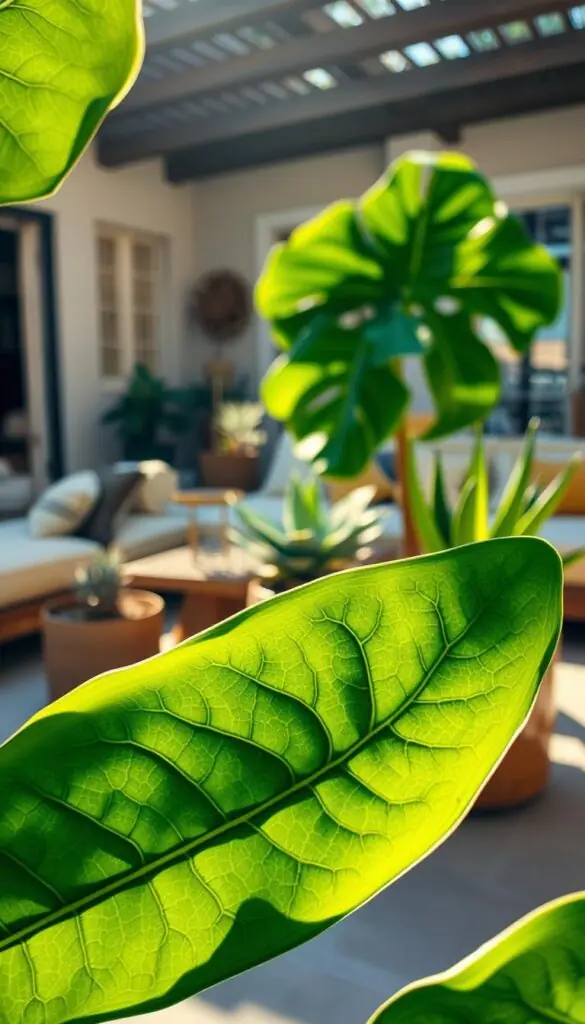
Place a fiddle leaf fig in bright shade. In warm zones it can live outside for summer. Water it 2–3 times a week in hot spells and shelter it from harsh wind.
Sun‑loving picks
Agave and cactus thrive in full sun. Give them sharp drainage—mix gravel into potting soil and keep crowns slightly above the soil line.
Tuck a citrus tree, like lemon or orange, near seating so warm evenings carry a sweet scent. Apple, fig, or pomegranate trees add fruit and shade where space allows.
- Group planters in odd numbers for a natural look.
- Mix heights so leaves layer like a small, lush backdrop.
- Choose heavier pots if your yard sees wind; lighter items are fine on calm patios.
| Plant | Sun | Watering |
|---|---|---|
| Fiddle leaf fig | Bright shade | 2–3×/week in heat |
| Agave / Cactus | Full sun | Sparse, well‑drained |
| Citrus (lemon/orange) | Full to part sun | Regular; keep moist in pots |
| Fruit trees (apple/fig) | Full sun | Weekly; more in drought |
"Large planters give scale and help your lounge feel like a complete, lived place."
Light the Evening: Layers for Glow and Safety
A layered plan for light keeps your space useful and beautiful after dusk. Start with warm, even glows and add task lights where you need them most.
String lights for overhead ambiance
Hang warm‑white string lights to create a gentle "ceiling" of glow over the patio and to guide footpaths safely. Aim strands above the seating cluster so faces stay flattering and glare is low.
Wall sconces in matte black for a classic look
Swap dated fixtures for matte black sconces to get a clean, timeless curb appeal. Choose outdoor‑rated models and place them by doors or posts for even, usable light.
Woven pendant over the lounge for a soft pool of light
Center a woven pendant above the seating cluster to make a warm pool that flatters faces and fabrics. Position it over the central coffee or chair grouping and keep it low enough to feel intimate but high enough to clear heads.
- Warm‑white bulbs: use 2700K–3000K for cozy color.
- Dimmers: add a dimmer so you can shift from dinner to stargazing quickly.
- Safe runs: use outdoor‑rated cords, anchors, and conduit for tidy, code‑safe cable runs.
- Solar & plug‑in options: where outlets are limited, use solar path lights or plug‑in fixtures with weatherproof covers.
"A few thoughtful fixtures and a dimmer make evenings feel effortless and safe."
| Fixture | Best placement | Notes |
|---|---|---|
| String lights | Over seating & paths | Warm‑white, hung from posts or eaves |
| Matte black sconces | Near doors or posts | Classic look; many color options |
| Woven pendant | Above central table or chair | Soft pool of light; aim for center |
Shade That Moves With You: Umbrellas, Awnings, and Trees
An umbrella or awning can feel like a portable roof that follows your day. Pick shade that lets you enjoy morning sun or afternoon cool without heavy work. A well-chosen piece gives immediate comfort and can be shifted as light changes.
7–9 ft umbrella sizing and placement
Choose a 7–9 ft umbrella to cover a loveseat plus two chairs without crowding the area. Set the pole slightly to the side of the conversation set so views stay clear and headroom is open. Vented canopies reduce lift in wind and let warm air escape.
Portable shade for changing seasons
Use a weighted base that rolls to track the sun across seasons. In fall or winter, move the umbrella to let more sun warm the seating zone. For windy yards, choose a vented canopy and a heavy base; for calm spots, a lighter stand is fine.
Pair a freestanding umbrella with a slim awning or plant a young deciduous tree nearby. The tree gives cool summer shade and lets winter sun through. This mix offers flexible options that grow more useful each year.
- Pick 7–9 ft for small to mid patios; it shades a loveseat plus two chairs.
- Use vented canopies in breezy areas and a rolling weighted base to follow the sun.
- Set the pole off to the side so the set stays open and sightlines remain pleasant.
- Combine an umbrella with a slim awning or a fast‑growing shade tree for seasonal balance.
| Shade Type | Best for | Maintenance / Notes |
|---|---|---|
| 7–9 ft freestanding umbrella | Small to mid patio seating set | Rotate base seasonally; close in storms |
| Vented canopy umbrella | Breezy yards | Better wind performance; heavier base advised |
| Slim wall awning | Permanent sun over doors or seating | Low upkeep; fixed placement |
| Deciduous shade tree | Long‑term seasonal shade and structure | Planting care first years; pruned for clearance |
Shop Smart, Save Big: Sourcing, Sets, and Used Finds
Spend first where the space needs it most, and save the fun extras for later.
Start by hunting anchor pieces that define the seating—sofa or chairs come first. Buy tables next, then textiles, planters, and lighting. This buying order keeps your budget focused and your plan simple.
Scout Facebook Marketplace, Craigslist, and local curbside finds for great deals. Inspect frames, check for rust, test cushion zippers, and lift corners to see strap strength. Photograph measurements and save receipts so surprise finds actually fit.
How to build confidently
- Anchors first: sofa/chairs to set scale.
- Then tables: coffee and side surfaces.
- Finally: textiles, planters, and lamps.
"A single standout piece can steer the whole design—build a tight palette around it."
| Source | Best for | What to check |
|---|---|---|
| Marketplace / Craigslist post | Sectionals, hard-to-find sets | Frames, measurements, photos |
| Curbside / thrift | Unique accents, quick projects | Solid frames, easy refinish |
| Retailers | New textiles, weatherproof items | Warranty, materials, return policy |
Don’t fret about matching furniture brands. Mix textures and retailers to get a layered, personal set that feels curated. Small, smart choices make your lounge ready and resilient.
Seasonal Care: Timing, Cleaning, and Quick Swaps
Small, regular upkeep saves time and keeps cushions, pillows, and wood looking their best.
Spring setup and fabric refresh
Each spring, hose off the rug and wash removable covers on a gentle cycle. Spot‑seal teak or acacia to protect wood and keep surfaces smooth.
In dusty yards, store a few pillows inside; performance fabrics like Sunbrella cut maintenance and stay brighter longer.
Fall storage: bring pillows in; cover furniture
In fall, bring pillows and loose cushion pieces indoors. Cover frames and stack cushions dry so they last through winter.
- Each spring: hose rug, wash covers, and spot‑seal wood.
- Mid‑summer: refresh textiles, check umbrella hardware, and tighten bolts.
- Fall: store pillows and cushions dry; cover frames.
- Keep a small caddy with a soft brush, mild soap, and microfiber cloth for quick cleaning.
- After storms: lift and air cushions; a sunny afternoon restores freshness.
"A short seasonal routine prevents big repairs and keeps your patio ready for evenings with friends."
Backyard Lounge
Envision a compact seating group that balances shade, texture, and easy surfaces for drinks and books.
Picture a neutral rug defining the outdoor lounge floor, with a 7–9 ft umbrella as a soft ceiling over a tight conversation circle. Mix wicker, jute, wood, and concrete so each texture reads like a friendly layer.
See two rocking chairs and a compact loveseat facing a clustered trio of tables. Every chair has a handy surface nearby so guests never balance a drink on their knee.
Large planters frame the edge, a woven pendant warms the center, and a matte black sconce by the door gives clean task light. Add one statement seat—a hanging egg chair or a swing—to anchor the set and invite lingering.
The palette repeats in textiles and pots so the patio space feels calm and tied to the garden.
| Element | Role | Quick tip |
|---|---|---|
| Neutral rug | Defines seating area | Fit front legs of seats on rug |
| 7–9 ft umbrella / string lights | Ceiling & shade | Place off-center to keep sightlines |
| Mixed textures (wicker, jute, wood) | Depth & comfort | Limit bold colors; add tactile contrast |
| Large planters & statement seat | Scale & personality | Group pots in odd numbers; one egg chair as focal |
Common Mistakes to Avoid (and Easy Fixes)
Small design missteps can make even a lovely patio feel unfinished. You can fix most problems with a few clear moves. Think scale, color, surfaces, and light in that order.
Scale and the rug
If the rug looks skimpy, size up so at least the front legs of seats rest on it. A larger rug instantly grounds your lounge and makes pieces read as one.
Too many colors
When the palette feels busy, cut colors to one neutral base and one accent. Repeat that accent across cushions, a planter, and a post or lamp cord to make used finds look intentional.
Missing surfaces and tight flow
If guests juggle drinks, add a small table for every chair or cluster side tables to create a bigger landing zone. Tight paths? Shift furniture to reclaim 36 inches to doors and 18 inches around tables so movement feels easy.
- Rug: front legs on rug = instant cohesion.
- Colors: one neutral + one accent, repeated 3–5 times.
- Table: one reachable surface per seat or clustered small tables.
- Order: fix scale, then surfaces, then textiles and plants.
- Light: swap to warm‑white bulbs and add a dimmer if lighting feels harsh.
"In makeovers, larger rugs and clustered side tables immediately improved cohesion and made mixed pieces feel curated."
Conclusion
A few steady choices — rug, shade, and a comfy seating set — turn a patch of stone into a warm outdoor lounge.
Start small and take one clear action: define your patio with a rug, add a simple ceiling of light or shade, then group seats for easy talk. Use budget‑friendly "floor and ceiling" moves, scout secondhand pieces, and layer over time.
Choose durable materials, keep colors calm, and let texture and plants do the heavy lifting. Plant what thrives in your light: a citrus for scent, an agave for sculptural sun, and a fiddle leaf in cool shade.
These small projects give you flexible options and a welcoming set where mornings, golden‑hour chats, and quiet evenings become memory markers in your home and backyard. Begin today — one simple step at a time — and enjoy the calm of your outdoor lounge.
FAQ
How do I start planning a cozy outdoor lounge that fits my space and lifestyle?
Begin by picturing the moments you want—morning coffee, sunset chats, weekend hangs. Measure your area, note doorways and pathways, and track sun patterns so seating, shade, and plants fall into the right spots. Choose a vibe (neutral cottage calm or beachy comfort), then anchor the layout with a rug as the "floor" and an umbrella or string lights as the "ceiling" to create instant coziness.
What size rug should I use to define a seating area?
Pick a rug that fits under the main seating group so front legs of sofas and chairs rest on it. For small patios a 5x7 or 6x9 often works; larger patios can use 8x10 or 9x12. Choose durable, outdoor-friendly materials and consider layered rugs for texture. This creates a clear area and ties together the sofa, coffee table, and side tables.
How do I arrange furniture to encourage conversation?
Group seating in a triangle or U-shape with a sofa, chairs, and clustered side tables acting as a coffee table. Keep clear walkways—about 36 inches to doors and 18 inches around tables—for flow. Consider movable pieces on wheels or casters for quick rearranging before guests arrive.
Which outdoor furniture materials hold up best?
Look for aluminum, teak, and synthetic wicker for longevity. These resist weather and maintain appearance with basic care. For cushions, choose performance fabrics like Sunbrella for fade and moisture resistance. Mix conversation sets with a few unique pieces—like an egg chair or rocking chairs—to add personality without sacrificing durability.
What seating options work best for different-sized yards and patios?
For compact yards or patios, a loveseat or chaise-style outdoor sofa pairs well with a single lounge chair. Medium spaces suit a full sofa plus rocking chairs or an egg chair. Larger areas allow for multiple conversation clusters and an outdoor dining zone. Always check seat height, cushion depth, and lumbar support for comfort.
Where should I place an egg chair or hanging swing safely?
Hang an egg chair or swing from a sturdy beam or a rated stand, and follow manufacturer weight limits. Position it with enough clearance for gentle rocking—about 2–3 feet behind and to the sides. If anchored to a structure, have a professional check joists or rafters for secure installation.
How can I make my coffee table area flexible for entertaining?
Cluster two or three side tables to create a dynamic coffee table that’s easy to move. Use a mix of heights and materials for interest and include trays for serving. Lightweight tables with wheels help you adapt seating and surface area quickly when guests arrive.
What color palette should I choose to keep the space cohesive?
Anchor the area with a neutral rug and layer in navy, sand, or warm wood tones as confident accents. Limit your palette to maintain cohesion, and use textured pillows and throws to add depth without introducing too many competing colors.
What fabrics and pillow choices are best for outdoor use?
Choose outdoor fabrics like Sunbrella or other performance weaves that resist UV and mildew. Opt for a pillow mix focused on texture rather than too many colors—woven weaves, linen looks, and subtle patterns create a lush, lived-in feel while staying practical.
Which plants add scale and thrive outdoors with minimal fuss?
Large planters with fiddle leaf figs (in semi-shade), agave, and cacti give scale and interest. Fruit trees add fragrance and shade where space allows. Use well-draining soil and group plants with similar water needs to keep care simple and the area thriving.
How should I layer lighting for both ambiance and safety?
Combine string lights for overhead ambiance, wall sconces in matte black for pathways, and a woven pendant over the lounge for a warm pool of light. Add low-level path lighting or lanterns to mark steps and edges for safety after dark.
What shade options work best for changing sun and seasons?
Use 7–9 ft umbrellas placed near seating, portable awnings, or strategically planted trees for seasonal shade. A freestanding umbrella or cantilever style lets you move shade as the sun shifts while keeping furniture protected.
Where can I find good deals on outdoor furniture and decor?
Start with reputable retailers and check local marketplaces, Craigslist, and curbside finds for bargains. Prioritize anchor pieces—sofa or dining set—first, then add accents like side tables, rugs, and pillows. Buying used teak or quality frames and refreshing cushions can save money.
What are common design mistakes and quick fixes?
Avoid rugs that are too small, too many clashing colors, and not enough table surfaces. Fixes: swap for a larger rug, simplify the palette to two or three tones, and add clustered side tables to serve as a flexible coffee table. These small changes make a big difference.
How do I care for outdoor cushions and furniture through the seasons?
In spring set up and refresh fabrics; in fall bring pillows inside or store in waterproof bins and cover furniture. Clean frames with mild soap and cushions per fabric instructions. Regularly sweeping, wiping spills, and stashing soft goods in severe weather extends lifespan.