Imagine a sunlit border where dark mulch frames bright daylilies and a neat, crisp line separates grass from beds. Have you ever wished your yard looked that calm and intentional after a weekend project?
You’ll get clear, step-by-step advice in a friendly neighbor tone. We’ll name real tools—half-moon edger, spade, rubber mallet—and trusted products like EverEdge, Haddonstone, and items from Ace Hardware.
In one afternoon you can cut a fresh face, set permanent galvanized edging, or choose pound-in plastic for a quick fix. We keep tips simple so you avoid wavy lines, trimmer scars, and creeping grass.
Key Takeaways
- You’ll see how to choose materials that suit your climate and mower.
- Spring and fall are best for new cuts; summer is for touch-ups.
- Use a half-moon blade or spade to cut a true vertical edge first.
- Tap in galvanized systems to turf level and interlock sections securely.
- Small details—end protectors and pre-bending—prevent common problems.
Why Edging Matters: Beautiful Borders, Easier Mowing, Healthier Beds
Well-defined borders turn simple plantings into a composed, sunlit scene. A true edge makes colors sing and chores feel quicker. Think glossy boxwood set against black mulch, the lemony scent of fresh-cut grass, and the smooth roll of a mower following a steady guide.
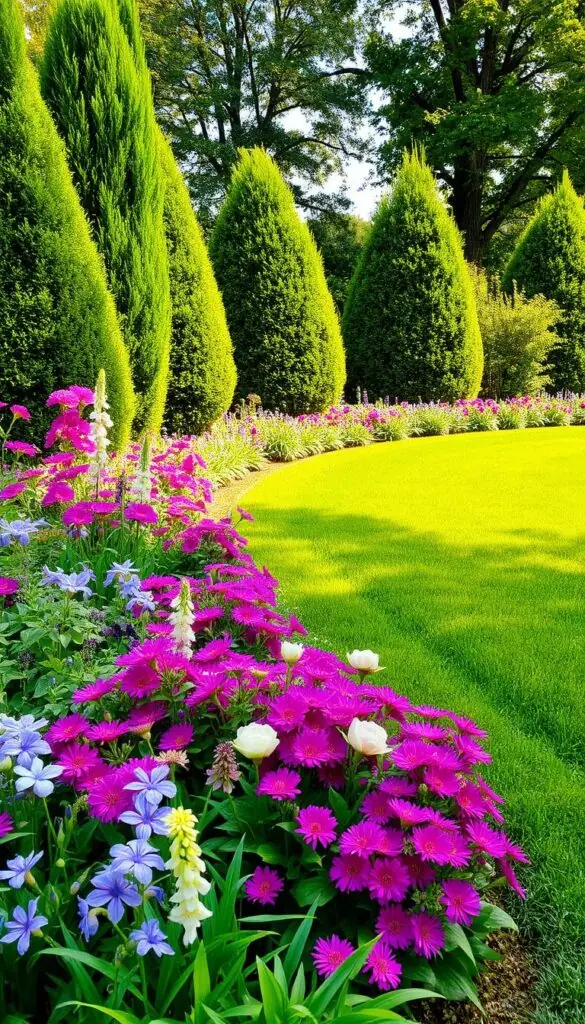
The tidy look: crisp green lines against dark mulch and bright blooms
A clean strip frames hydrangeas, hostas, and daylilies so their greens and blooms feel brighter. That sharp line reads like a picture frame around your garden beds. Small details—end caps, neat joins, and a flush height—give a finished, professional feel.
Practical perks: weed control, erosion prevention, and mower guidance
A defined border keeps creeping grass out of beds and cuts mowing time by giving your mower a straight path. Ace Hardware notes how proper separation prevents grass encroachment and helps stop weeds from spreading into garden areas.
- Time saver: a firm edge guides mower wheels so you trim less.
- Erosion control: the right material holds mulch and soil on gentle slopes.
- Maintenance tip: set the edge flush with grass so blades glide over, not into, the material.
- Common mistake: avoid wavy, rushed lines—snap a string or use a hose to trace curves before you cut.
Best Lawn Edging Options Compared for the United States
Pick the right material and your beds will look tidy for seasons, not just a weekend.
Galvanized steel landscape edging: durable, mow-over edges that last
Why choose it: EverEdge gives a clean, long-lasting line you can mow over. It resists rust, uses integral stakes, and comes in sizes and colors for driveways and path edges.
Stone and cast options: classic borders that guide mower wheels
Cast pieces like Haddonstone add curb appeal and are wide enough for mower wheels. They hold soil and gravel and are great for front walk beds and mailbox islands.
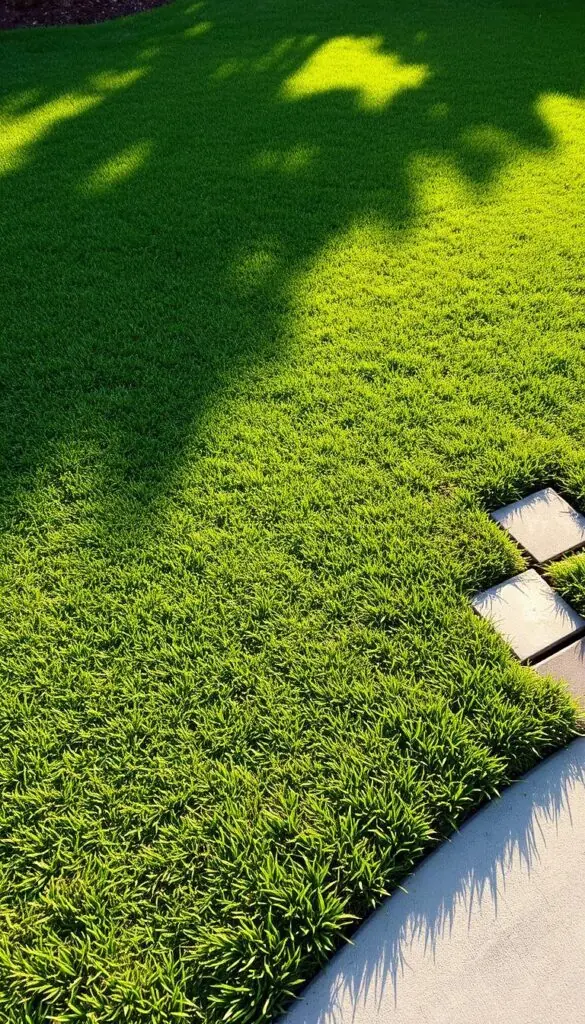
Pound-in plastic and resin borders: quick, no-dig fixes
Poundable plastic from Ace Hardware is fast to install. Use it around vegetable rows or seasonal flower rings. Expect occasional lifting in freeze-thaw zones.
Natural edges with rock or mulch: soft, organic lines
Rock or mulch suits cottage-style beds and pollinator areas. It’s forgiving for curves and easy to refresh each season.
"Measure runs, note material height, and choose anchors for your climate."
- Quick guide: metal = set-and-forget; stone = classic and heavy; plastic = budget-friendly; natural = flexible and soft.
- For trees, preformed metal rings save bark and hold mulch neatly.
Spotlight on Steel: EverEdge Landscape Edging and Tree Rings
If you want a set-and-forget border that survives sun, rain, and freeze-thaw, steel is a smart pick. EverEdge is permanent galvanized steel made in England for over 25 years. It gives a clean, mow-over line and asks very little from you after installation.
Why choose steel: galvanized runs resist rust and stay straight through seasons. The result is a crisp frame that keeps beds tidy and trims faster.
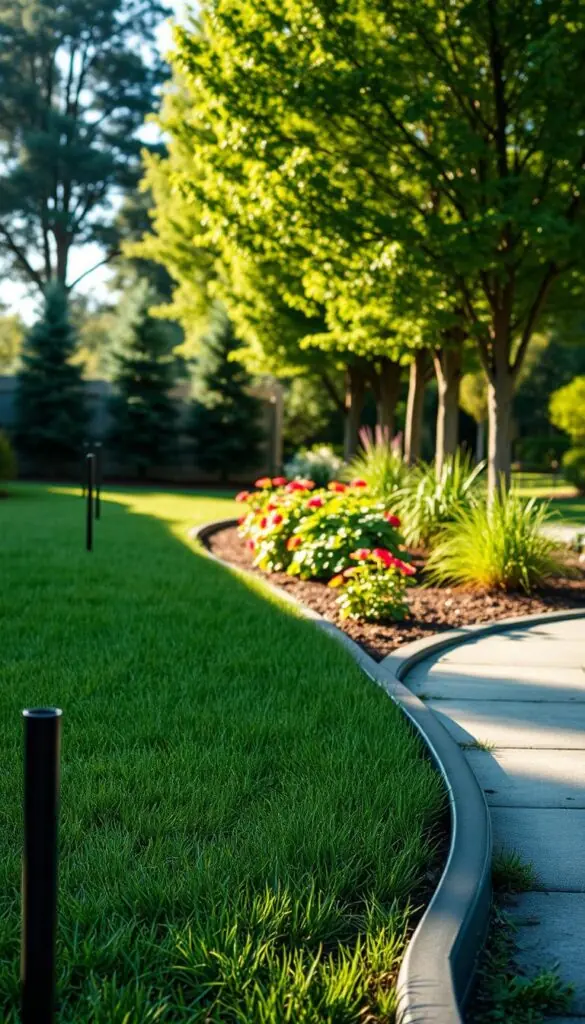
EverEdge essentials
EverEdge comes in three sizes and four finishes to match brick, gravel, or groundcover. Sections use integral stakes so the run bites into soil and stays put.
Accessories include Guard-N-Edge end protectors and Pin & Sleeve anchorage for poor soils. Classic Tree & Garden Rings finish circles around young maples and shrubs neatly.
Installer-friendly features
Install is straightforward: cut a fresh vertical face with a half-moon blade or spade, seat the piece with the logo forward, then tap to turf level with a rubber mallet.
Lock male-to-female, push the tongue about 45°, and pre-bend sections for curves before setting. For slopes or loose ground, use the Pin & Sleeve system for extra hold.
"Aim for just-flush with the grass—too high and you’ll nick it with the mower, too low and grass can creep over the top."
- Durability: galvanized steel stands up to weather and mowers.
- Maintenance: set flush and you can mow right over the top.
- Protection: end guards shield corners from trimmers.
Stone-Style Elegance: Mower-Friendly Hard Edges You Can Strim To
A stone border gives your yard a calm, built-to-last edge you can trim to with confidence.
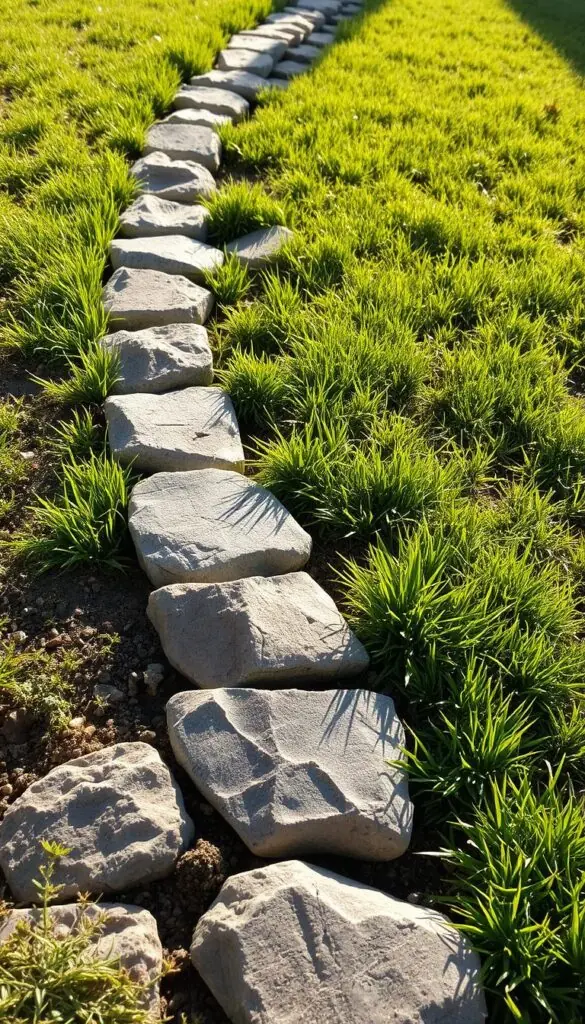
Haddonstone-style sections create a timeless look that stays smart through spring bulbs and fall mums. The Arcadian range is wide enough for mower wheels to roll on the turf and keep wheels off beds, so you mow with steadier hands.
Set pieces on a compacted base of sand or fine gravel so they don’t rock. Dry-fit the run first; step back in soft morning light to spot bumps before you fix them.
- Strim-friendly: a hard, straight face makes touch-ups neat and prevents ragged turf.
- Retention: stone holds mulch and gravel in place so you spend less time sweeping debris off the grass.
- Curves and corners: stagger joints for gentle arcs; plan a keystone for tight turns to keep lines crisp.
After freeze-thaw cycles, tap low spots level and brush joints clean so water sheds away instead of pooling. Pair pale stone with dark mulch to make green plantings pop in your garden.
"Let the stone be your guide—keep the trimmer guard a short distance away and follow the face for clean, protected edges."
How to Install Landscape Edging Like a Pro, Season by Season
A steady hand, the right tools, and a cool morning make installation feel simple and sure.
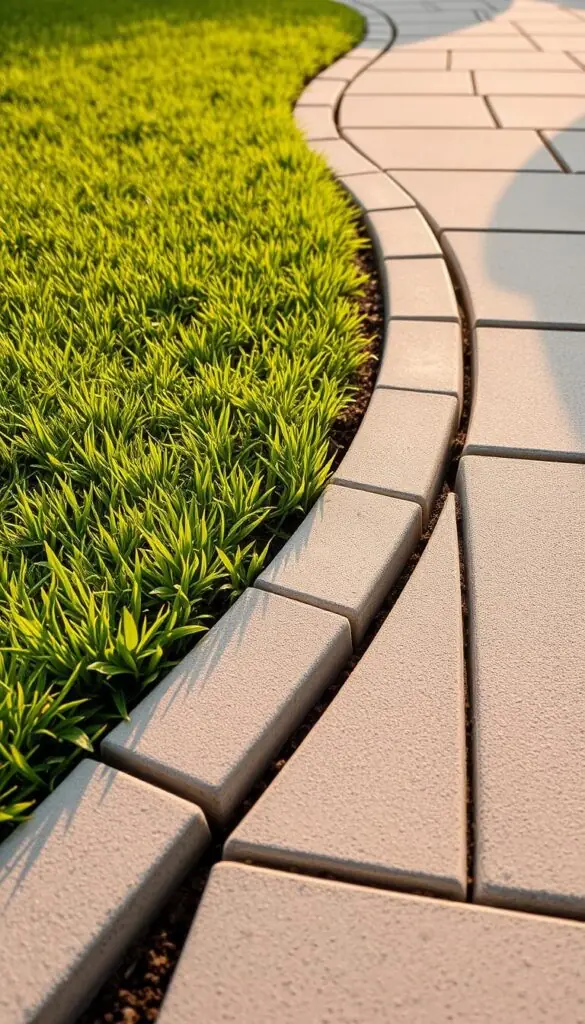
Prep a fresh face: half-moon edger, spade, and a clean vertical face
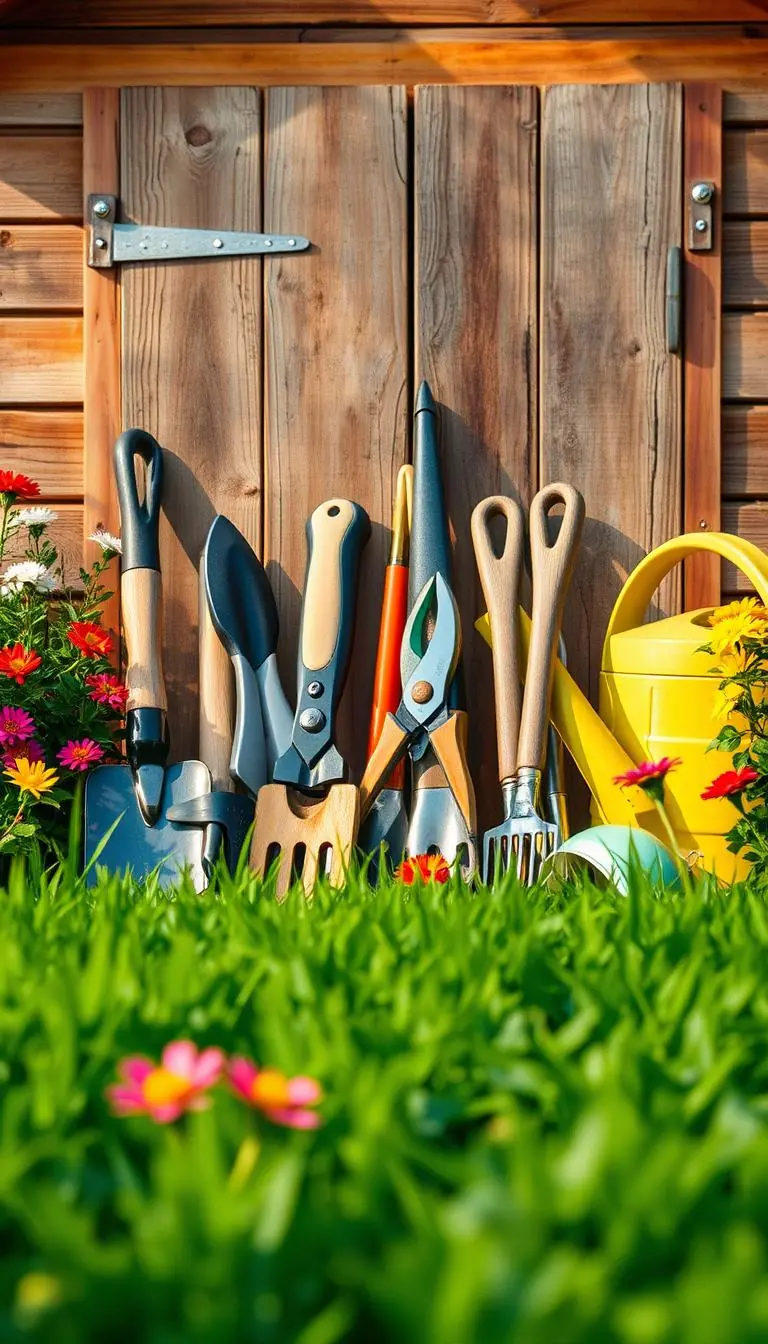
Tools first: mark your run with string or a hose, then grab a half-moon edger or sharp spade, gloves, safety glasses, and a block of wood.
Cut a crisp vertical slice 3–4 inches deep. Lift the strip so the material sits tight against firm soil. You’ll smell fresh earth and see a true soil profile that helps placement.
Set, tap, and lock: positioning, mallet work, and tongue closure for a flush edge
- Place sections with the logo forward and male into female where required.
- Tap with a rubber mallet or hammer on a wood block until the top is just flush with the grass—this makes mowing easier.
- Interlock overlaps, then push the locking tongue to about 45° so the run stays secure.
- Season tips: spring and fall give the cleanest cuts; cool, moist soil bites better than dry summer ground.
- Regional notes: in the South, leave edges slightly proud to shed storms; in snowy climates, set flush to avoid shovels catching.
- Accessories: use Pin & Sleeve sleeves in loose soil and Guard-N-Edge caps where you’ll trim near flower beds.
- Quick mistakes to avoid: don’t set too high (scalping), skip the fresh cut, or rush tight curves—pre-bend pieces for smooth arcs.
Conclusion
Finish the job this weekend and enjoy a yard that greets you like a tidy, sunlit room.
Start small: edge one front bed or the mailbox island, measure the run, and pick a style that suits your home. EverEdge gives a long-lasting, mow-over option; Haddonstone adds classic stone charm; Ace Hardware carries quick pound-in systems and helpful supplies.
Set the height flush, make a fresh cut, then set, tap, and lock the pieces. A neat border makes mowing easier and your garden feel calmer every day.
Next step: grab a half-day, one reliable product, and enjoy the pride of a tidy landscape edging you can relax into as seasons change.
FAQ
What is the easiest way to create a crisp border between turf and flower beds?
The simplest method is to use a half-moon edger or a flat spade to cut a clean, vertical face, then remove the strip of turf. For a long-term solution, install a steel or stone landscape edge flush with the soil so your mower can ride smoothly and you get that professional, tidy look.
Which material gives the best balance of durability and aesthetic for a garden border?
Galvanized steel offers a great balance: it’s weather-resistant, creates thin, sharp lines, and lasts for years with minimal maintenance. Stone and cast edging provide classic beauty and mower-friendly hard edges if you prefer a more traditional, permanent look.
Can I install edging myself, and what tools will I need?
Yes, you can. Basic tools include a half-moon edger or spade, mallet, tape measure, stakes, and a level. For steel systems you’ll use integral stakes or pin & sleeve kits. Work in short sections, tamp pieces tight, and check for a continuous, flush profile.
How do steel edge systems like EverEdge handle curves and tree rings?
Quality steel edging bends to gentle curves and can be shaped around trees. Many systems include bend-to-fit sections, end protectors, and tree ring accessories so you can form smooth arcs while keeping a neat, maintenance-free perimeter.
What are good no-dig options for quick border fixes?
Pound-in plastic and resin borders are quick and low-effort. They’re easy to install with a mallet and work well for soft, informal beds. They’re not as long-lasting as steel or stone but are cost-effective and simple to replace.
How does an edge help with weed control and bed health?
A defined border creates a physical barrier that slows grass and roots from invading planting beds. It also helps retain mulch, reduce erosion, and gives you a clean line to mow along, which makes maintenance faster and keeps beds healthier.
When is the best season to install permanent edging?
Spring and fall are ideal: soil is workable, plants are not stressed by extreme heat, and you can settle the edge before heavy growth or winter freezing. Avoid installing in frozen ground or during the hottest summer weeks for best results.
How deep should I set landscape edging for a flush, mower-friendly finish?
Set edging so the top sits just slightly above the soil surface—usually 1/4" to 1/2"—to protect the edge while allowing the mower to ride over it. For steel and stone, a shallow trench and firm tamping will keep pieces secure and flush.
Are natural rock or mulch borders a good choice for a cottage-style garden?
Yes. Natural rock and mulch provide soft, organic lines that suit cottage and informal designs. They’re gentle on the eye and easy to maintain, though they lack the long-term barrier provided by metal or concrete edging.
How can I ensure my new border stays straight and true over time?
Use sturdy stakes or integrated pins, compact the backfill, and check alignment as you work. For steel systems, lock tongues or sleeves per manufacturer instructions. Periodic checks and light adjustments after settling keep the line crisp and reliable.