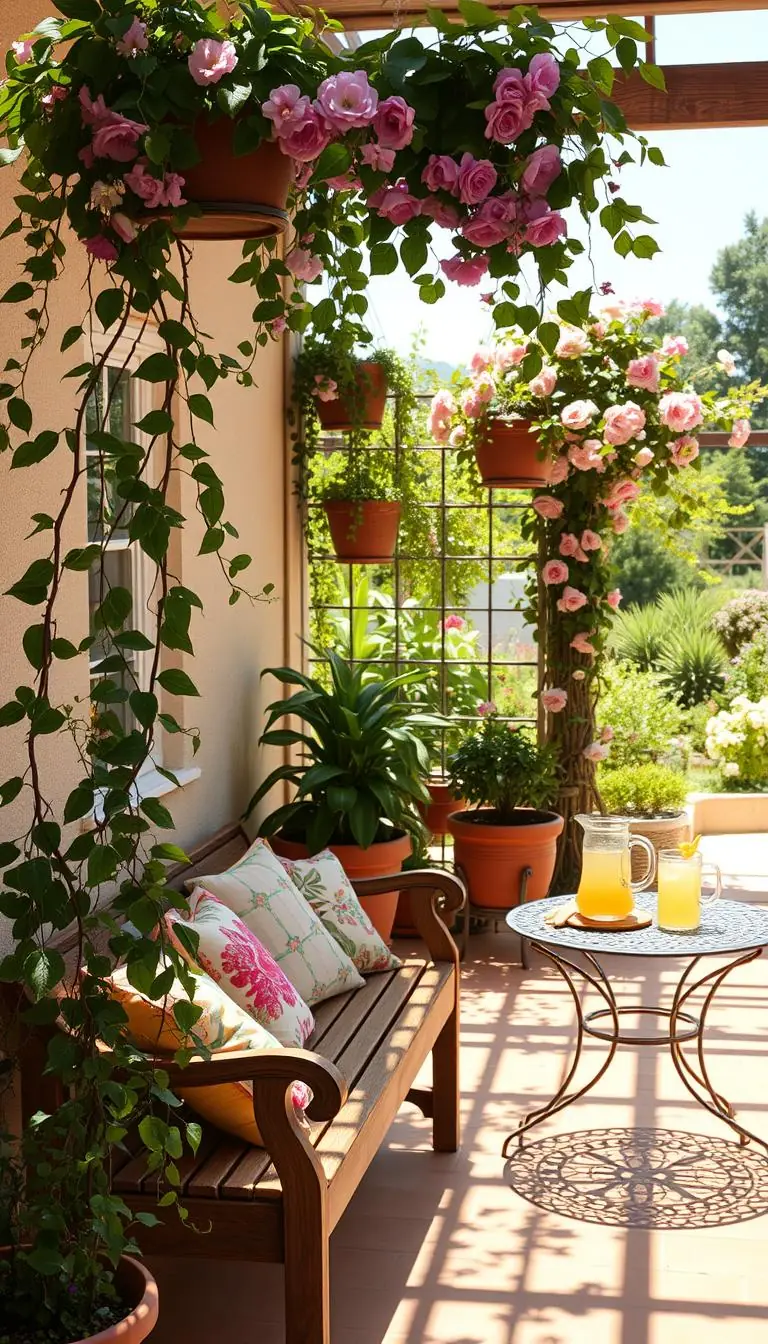
Imagine stepping into a sunlit corner where bright blooms brush your hand and a gentle scent greets the morning. You can make that feeling real with a few simple choices that fit your space and schedule.
Start by thinking about size, light, and pets. Patio plants and a couple of well-placed containers turn a tiny spot into a cozy garden retreat.
Choose forgiving, low-maintenance varieties like succulents or ferns for an easy start. Group three pots of different heights, place a welcoming pot by the door, and use a saucer to protect decking from drips.
A few tools—a hand trowel, watering can, and potting mix with perlite—make planting days smooth. Keep sightlines clear so your outdoor space feels open and inviting all year.
Key Takeaways
- Start small: group colorful containers for instant impact.
- Match plants to light and climate for easier care.
- Use basic tools and saucers to protect surfaces.
- Shop for pet-safe, pollinator-friendly picks when you buy.
- Repot and cluster pots to refresh your outdoor potted display.
Start Here: Read Your Outdoor Patio’s Sun, Shade, and Space
Begin by watching how light moves across your outdoor space through one clear day. This quick scan tells you where to position each pot, hanging basket, or trellis so your choices thrive.
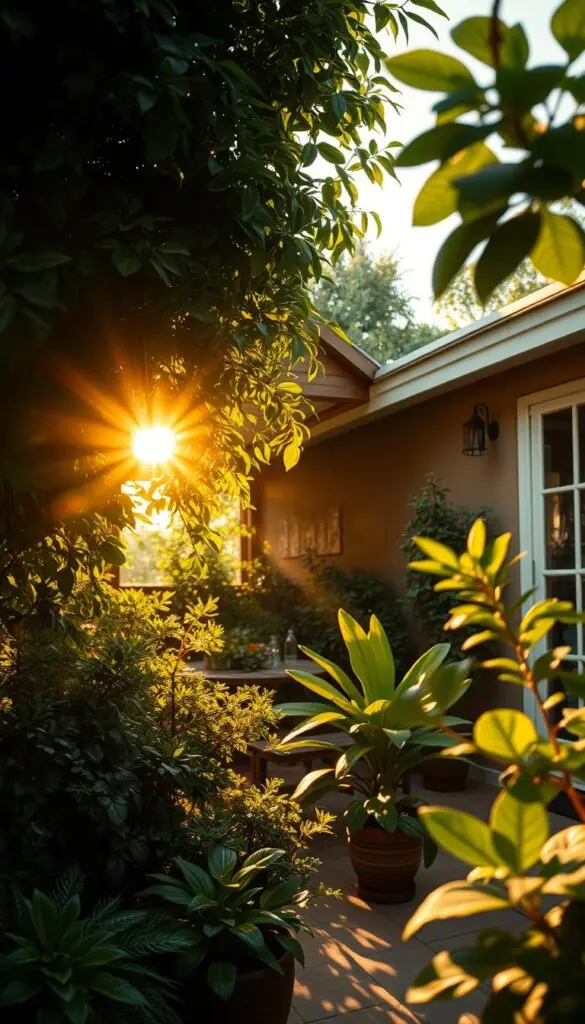
Quick method: Track sunlight in morning, midday, and afternoon
Spend one sunny day making three simple notes: 9 a.m., noon, and 3 p.m. A phone note works fine.
If you see long hours of direct sun, you have full sun. If light fades by afternoon, you have partial shade.
Watch for hot reflections from walls — they can raise temps and dry soil fast.
Match plant size to space: from hanging baskets to statement pots
- Sketch the footprint. Tall planters frame edges; hanging baskets free up floor room.
- Use one large anchor, one medium, and one small pot to avoid clutter.
- Tuck sun lovers like petunias and geraniums where sun is strongest; place begonias or impatiens in partial shade behind taller pieces.
- In tight spots, go vertical with a slim trellis so vines climb without blocking walkways.
Tip: Check plants the first week. Perked leaves and steady growth mean the light and space are right. A friendly read of your layout sets you up for easy, joyful gardening this season.
patio plants
Containers make styling quick: move a pot, swap a bloom, and your entry feels new.
Why containers shine: They add curb appeal without heavy digging. You can test colors and textures in small doses and change them as seasons shift.
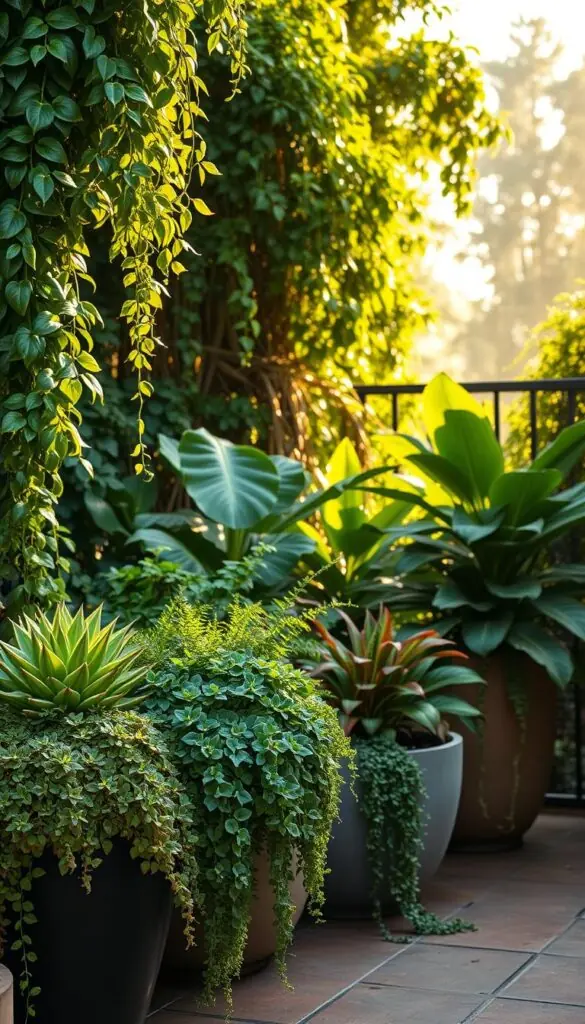
Why containers are beauty-forward and low fuss
Containers let you right-size a design for any space. Use one tall piece for height, a mid-size for body, and a trailing variety for movement.
Tool needs are simple: a watering can, a bag of potting mix, and a few good pots. That light routine keeps maintenance easy.
- Nudge a pot into more sun or deeper shade to fine-tune growth.
- Shelter water-sensitive picks like succulents and lavender during heavy rain to avoid waterlogging.
- Pick pet-safe options—Spider Plant or Boston Fern—to keep curious pets safe.
- Rotate each pot weekly for even growth and a polished look.
| Container Type | Best Use | Care Level |
|---|---|---|
| Terracotta pot | Heat-loving sun selections | Medium |
| Glazed ceramic | Colorful focal pieces by steps | Low |
| Hanging basket | Trailing spillers in filtered shade | Low to Medium |
| Self-watering pot | Busy spots or drought-prone areas | Low |
Keep care simple: check soil with a finger, water when the top inch is dry, and refresh topsoil mid-season. Small habits build confidence and a thriving outdoor display.
Best Outdoor Potted Plants for Full Sun Color and Summer-Long Blooms
Bright, sun-ready blooms make a small container feel like a summer statement. Fill sunny pots with a mix of draping and upright choices for color that lasts through the growing season.
Petunias & Calibrachoa: These spill beautifully from baskets and boxes. Choose Wave or Supertunia types to cut down on deadheading. Light feeding every couple of weeks keeps their flowering strong.
Geraniums & Marigolds: Tough and bold, geraniums reward regular deadheading and can be brought indoors to overwinter. Marigolds soak up full sun and carry color to the first hard frost.
Lantana & Cuphea: Heat lovers that attract butterflies and hummingbirds. Lantana shifts color as it blooms. Feed Cuphea lightly to keep its tubular flowers full and nectar-rich.
Lavender & Sweet Alyssum: Lavender needs excellent drainage and minimal water; tuck it at the pot edge for airflow. Sweet Alyssum trails with a honey scent and invites pollinators into your garden.
- Quick mistakes to avoid: overwatering and heavy soil—make sure drainage is good drainage.
- Tools: lightweight potting mix, slow-release fertilizer, and a small hand pruner for spent blooms.
- Tip: you may need to water more often in heat waves; check the top inch of soil each morning.
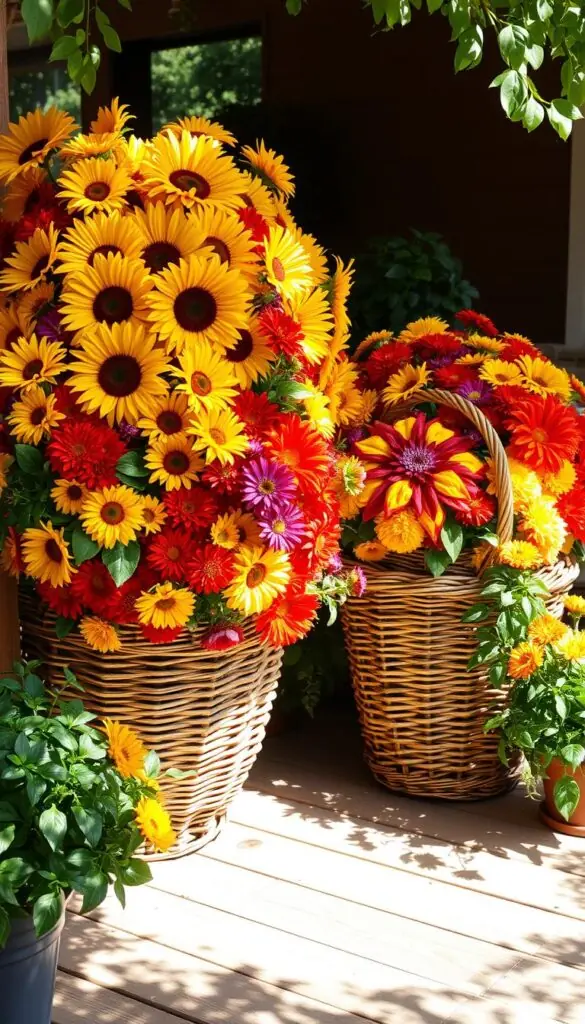
Calm Corners: Shade and Afternoon Shade Picks with Lush Leaves
Create a cool, shady nook by layering leafy textures and soft blooms. Choose smaller hosta varieties and feathery ferns to build a calm, green corner that feels cool to the touch.
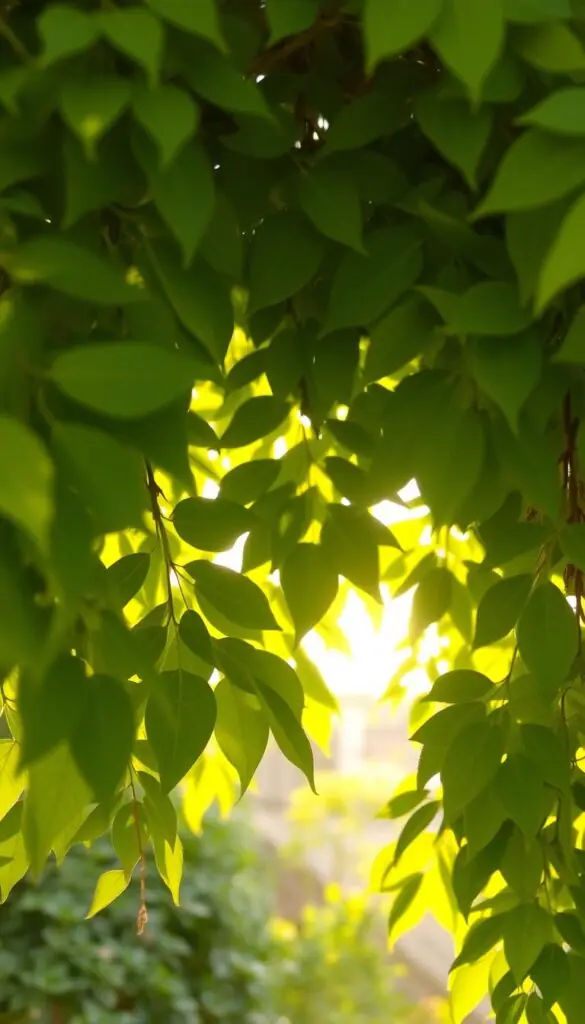
Hostas and Ferns: textured greens for cool nooks
Small hostas suit pots and add duo-toned or teal leaves that catch low light. Pair them with ferns for an airy, woodland feel.
Ferns like consistently moist soil and excellent drainage. Move tender varieties indoors if cold weather threatens.
Impatiens and Rex Begonia: flowers and foliage for full shade
In deep shade, let Impatiens give soft blooms; pinch stems early to encourage bushy growth.
Add a Rex Begonia for dramatic patterned leaves that read like color without heavy bloom care.
Boston Fern in hanging pots: soft movement and easy care
- Hang a Boston Fern where air moves gently; fronds sway and soften a still corner.
- Use a pot with holes plus a saucer to prevent standing water and protect your patio surface.
- Watering is lighter here—check the top inch and water when it feels dry.
- Rotate pots monthly and choose container-friendly varieties so roots stay happy.
Partial Shade Charmers for Dappled Light and Soft Mornings
Morning light brings out the soft glow of foliage, making shaded corners feel alive. These choices favor cool hours and dappled light and reward touch and scent as much as blooms.
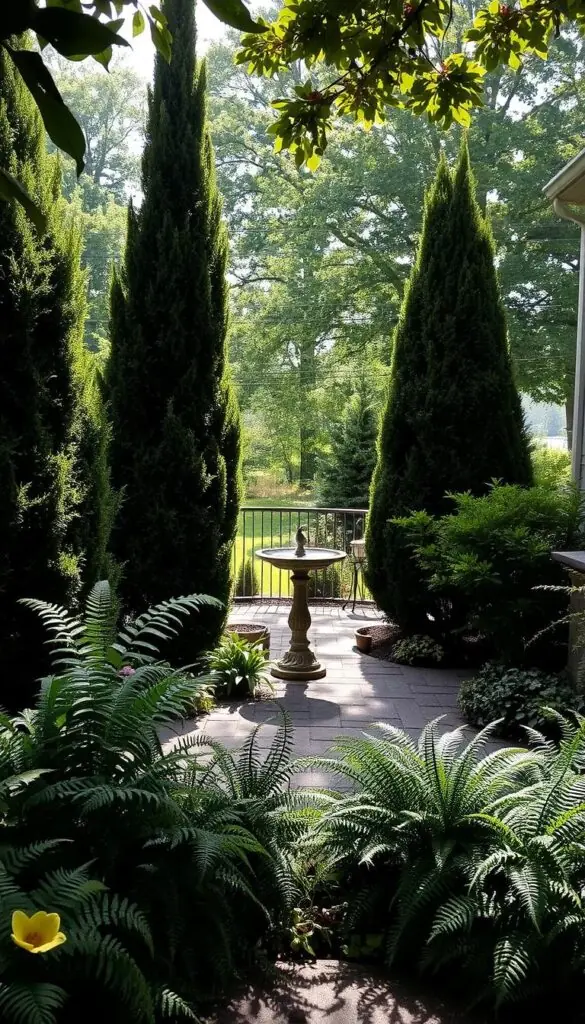
Begonias and Coral Bells: foliage fireworks and dainty blooms
Begonias love partial shade and good drainage. Their petals glow in soft morning sun.
Coral Bells add colorful leaves in plums, limes, and ambers. They also attract pollinators and add quiet movement.
Give both a potting mix that drains well and water when the top inch dries—their needs are simple in shade.
Periwinkle as a spiller and Mint for scent near seating
Let periwinkle trail over the rim as a spiller; its little stars soften the edge of a pot.
Tuck mint in a separate container near seating. Brush the leaves as you sit to release a burst of fresh scent.
"Plant one thriller, one filler, and one spiller in a medium pot for a balanced look that reads well from every angle."
| Species | Best Role | Quick Care |
|---|---|---|
| Begonia | Thriller — tall, showy blooms | Partial shade; well-draining mix; water when top inch is dry |
| Coral Bells (Heuchera) | Filler — colorful foliage | Protect in winter; dappled sun; light feeding in spring |
| Periwinkle (Vinca minor) | Spiller — trailing edge | Part shade; moderate moisture; trim to control spread |
| Mint | Scented seat-side pot | Keep in its own pot; clip often; tolerates some shade |
Design tip: place one taller begonia, one Coral Bells, and a trailing periwinkle in a medium container to create instant balance. If a heat wave hits, slide the grouping a foot deeper into shade to protect the leaves.
Quick note: these small plan design moves work well on a sunny step or flanking your patio entrance for a warm, textured welcome.
Statement Makers: Tall and Climbing Plants to Frame Your Space
A vertical accent can turn a small corner into a private, scented room. Use climbing growth to add height, color, and fragrance without building a wall.
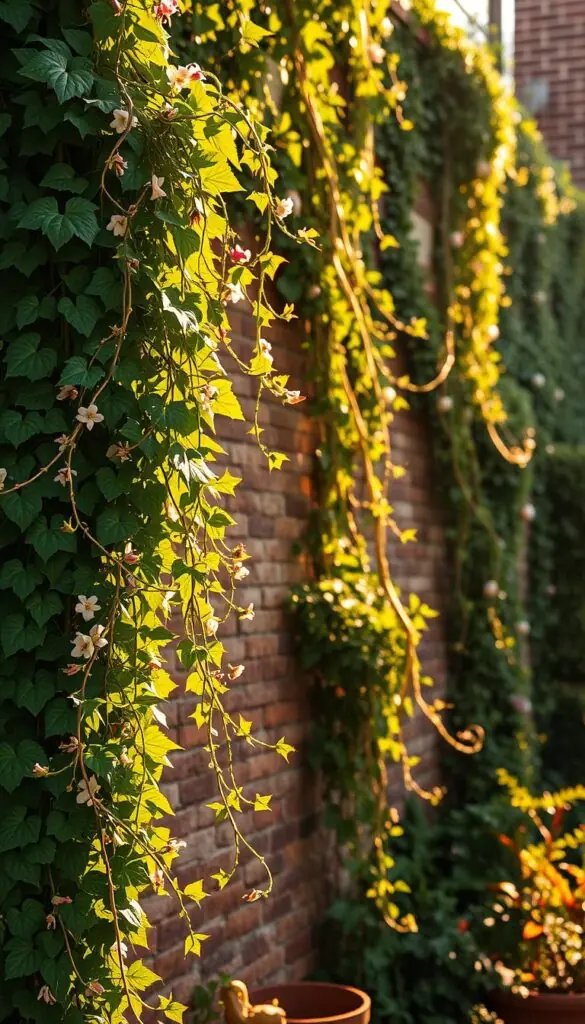
Star Jasmine is low-maintenance and fragrant. It climbs to about 5 feet and fills a trellis with glossy green leaves. Fertilize monthly in the offseason to support steady growth. It works well in USDA zones 8–10.
Mandevilla brings bold, trumpet blooms and shiny foliage. Give it full sun with some afternoon shade in hot regions. Its tropical look adds a resort feel to your pot and seating area.
More vertical choices
Butterfly Bush reaches 4–5 feet in full sun and draws pollinators all season. Black-Eyed Susan vine is vigorous and needs a large pot and tall support to thrive.
- Frame seating with one large pot plus a sturdy trellis for instant height and privacy.
- Secure trellises firmly; two zip ties can protect a season’s growth on windy days.
- Water deeply but less often so roots dive; add mulch to keep moisture steady.
- Choose a 4–6 foot trellis to match plant size and keep proportions balanced.
- Snip stray stems lightly to tidy the outline and encourage branching and more flowers.
| Species | Typical Size | Best Spot |
|---|---|---|
| Star Jasmine | Up to 5 ft | Partial sun; evening scent near seating |
| Mandevilla | 4–6 ft vine | Full sun, light afternoon shade in heat |
| Butterfly Bush | 4–5 ft shrub | Large pot in full sun for long bloom |
| Black-Eyed Susan vine | Vigorous climber | Wide pot and tall trellis in full sun |
"Place taller planters at corners to frame views and guide the eye to your door or favorite chair."
Tropical Vibes for Bright Patios
Bring a warm, tropical glow to your outdoor seating with glossy leaves and dripping blooms. This small grouping focuses on color, texture, and easy care so your corner feels lush without heavy fuss.
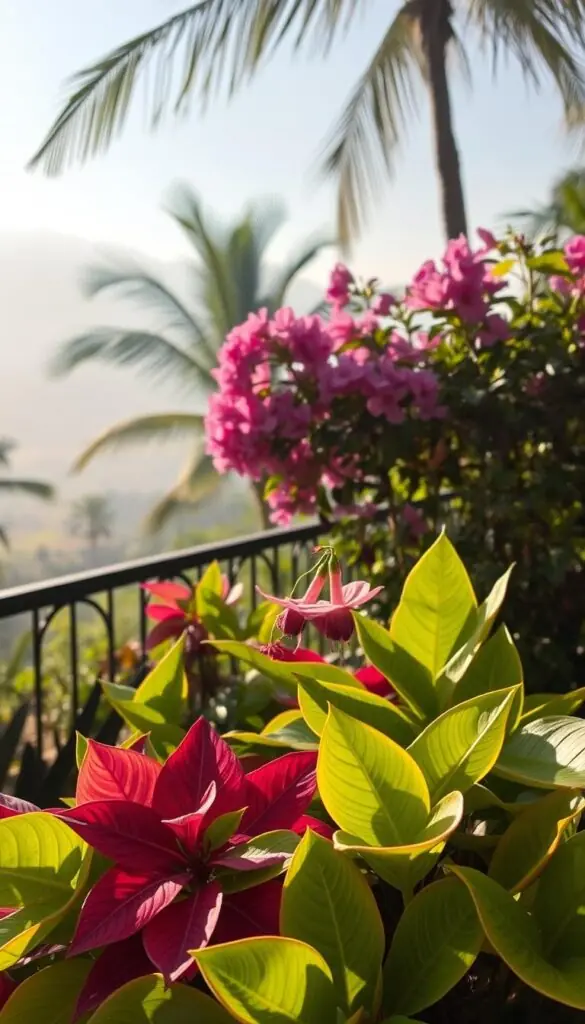
Croton ‘Petra’: sunset leaves that glow in strong light
Croton ‘Petra’ shows streaks of gold, orange, and red that intensify in bright light. Place it where sun is strong but not baking-hot all afternoon.
Wipe leaves monthly with a damp cloth to keep colors vivid and dust-free. Use a well-draining mix and water when the top inch dries so the roots stay happy.
Fuchsia: dramatic blooms for containers and baskets
Fuchsia brings dangling, bell-like flowers in striking combos. Choose varieties to match your exact light—some want more sun, others prefer partial shade.
Set a coir-lined basket in morning sun with gentler afternoon conditions to avoid scorched blooms. Rotate containers weekly so both sides color evenly.
- Bright look: combine one Croton, one fuchsia basket, and a petite fern for glossy leaves, airy flowers, and soft fronds.
- Care basics: good drainage, water when top inch is dry, and move fuchsia under an overhang during heat waves.
- Styling tip: cluster mixed heights in pots and hang a trailing basket to add motion and scent to your outdoor patio.
"Let strong light brighten foliage, but give delicate blooms a little afternoon shelter to stay fresh."
Fragrance First: Scented Picks to Greet You at the Door
Let scent lead your entry design and make every arrival a small celebration. Place fragrant choices where you slow down: a step, a bench, or the path to your door.
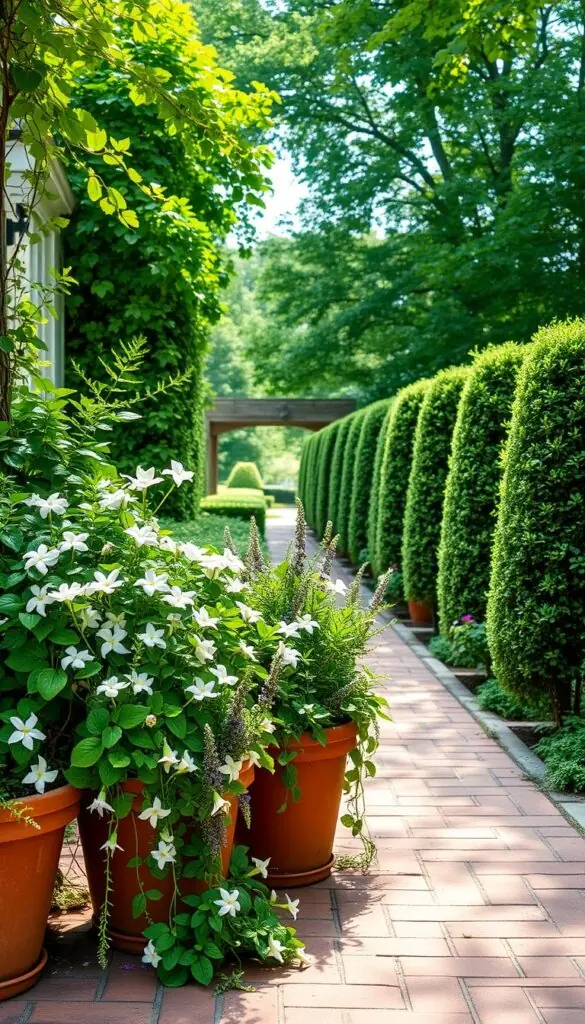
English Lavender thrives in containers (USDA zones 4–10) and brings a silvery sway and calming scent. Line your entry with lavender in matching pots to form a soft, scented border that guides visitors in.
Flowering companions and evening perfume
Tuck Sweet Alyssum at the base for tiny white blooms that smell like honey and attract pollinators. Its low habit makes a gentle drift along pot rims or the front step.
Train Star Jasmine up a post or pergola so its sweet scent lifts into the evening air. Place it near seating so night breezes carry perfume across your patio and toward the door.
- Use porous, well-draining mix for lavender; let the soil dry slightly between waterings to preserve fragrance oils.
- Keep lavender in full sun and trim lightly after flowering to keep shape through the year.
- Place scent at nose height—hanging baskets or raised planters catch every whiff as you pass.
- Combine cool herbal lavender with sweet alyssum so they complement rather than compete.
| Fragrant Choice | Best Placement | Care Highlight |
|---|---|---|
| English Lavender | Front row in matching containers | Full sun; well-draining mix; light trim after bloom |
| Sweet Alyssum | Base of pots or front-step spillers | Keep edges slightly moist; attracts pollinators |
| Star Jasmine | Treillis, post, or pergola near seating | Train vines; monthly light feed; evening scent peak |
Pollinator-Friendly Picks That Bring Butterflies and Hummingbirds
Set out clusters of color where sun warms the pots and pollinators can feed all day. This simple shift invites wildlife and brightens your outdoor patio without extra fuss.
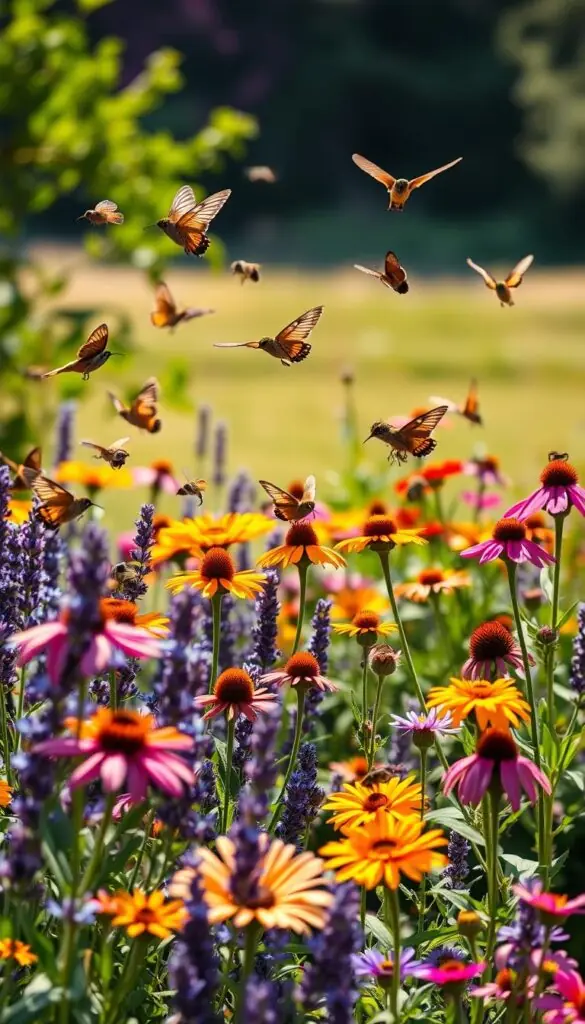
Lantana clusters, Cuphea tubes, and Verbena airiness
Lantana gives heat-tolerant clusters that shine in full sun. Cuphea's tubular flowers lure hummingbirds and benefit from light feeding.
Verbena bonariensis adds tall, airy stems that sway and may need light deadheading off-season to keep blooms coming.
Planting tip: cluster varieties for a longer feeding window
Plant three to five of one type so butterflies can feed easily and return throughout the day. Mix heights: sweet alyssum with white blooms at the edge, mid-height Lantana, and taller Verbena at the back.
You may need to water more in heat; morning watering helps flowers open for daytime visitors. Add a shallow dish with pebbles for sipping.
"Cluster nectar-rich species and skip chemicals—your garden becomes a reliable stop for wings and color."
| Species | Role | Care Highlight |
|---|---|---|
| Lantana | Bright clusters | Full sun; heat-tolerant; low to medium water |
| Cuphea | Hummingbird tubes | Light feeding; consistent blooms |
| Verbena bonariensis | Tall, airy filler | Full sun; deadhead lightly for new flowers |
| Sweet Alyssum | Edge with white blooms | Low border; honey scent attracts pollinators |
Foliage Focus: Leaves that Steal the Show
Let foliage take center stage and you’ll enjoy color and texture even when flowers rest. A simple, leaf-forward design keeps your outdoor corner lively and low fuss.
Coleus palettes from lime to burgundy
Coleus offers shade-friendly varieties that read like fabric swatches. Choose shade-bred types for low light and pinch any flowers so color stays in the leaves.
Place taller coleus at the back of a grouping so each leaf pattern layers clearly. Rotate pots every couple of weeks for even color on all sides.
Caladium hearts in pinks and greens
Caladiums bring painterly heart-shaped foliage in pinks and greens that glow in soft light. Use a simple charcoal pot to make hues pop and keep soil lightly moist to avoid crisp edges.
In cooler regions, lift caladium bulbs after frost and store them dry for next season. This saves your favorite variety and makes the look repeatable year to year.
"Build a foliage-first vignette and you’ll have steady color even when blooms pause."
| Foliage | Best Use | Care Tip |
|---|---|---|
| Coleus | Background height; bold color | Pinch flowers; shade varieties; keep evenly moist |
| Caladium | Front or mid-row; delicate color | Lift tubers in cold climates; avoid midday sun |
| White Alyssum | Subtle edge accent | Adds small blooms without overpowering leaves |
Quick tips: pair foliage with one subtle bloom, place caladiums up front, and tuck coleus behind. These small moves give your seating area a steady wash of color and texture.
Container Basics: Pots, Good Drainage, and the Right Mix
A steady, well-draining base makes container gardening simple and reliable. Start with a stable pot and a soil blend that moves water quickly. This prevents root rot and keeps growth steady.
Choose the right pot and soil
Choose pots with holes and a saucer so water can leave the container and decking stays protected. Fill the pot with a high-quality potting mix blended with perlite for good drainage; skip heavy garden soil.
Step-by-step setup and care
- Place a mesh screen or coffee filter over drainage holes to hold soil but let water out.
- Fill with mix, position your plant, and add soil so roots are covered but not packed.
- Water until you see runoff, then let excess drain to encourage deep roots.
- Feed with a balanced fertilizer during the growing season to support steady growth.
- Keep a small kit: trowel, pruners, gloves, and a watering can with a gentle rose.
- If heavy rain is forecast, move moisture-sensitive outdoor potted plants under an overhang to avoid waterlogging.
- Label each pot with the plant name and sun needs to simplify maintenance and placement on your patio.
Watering and Light Made Simple
Let a quick fingertip test and a weather glance guide your watering routine. A short daily rhythm gives you confidence and avoids common mistakes like overwatering after rain or missing thirsty pots in heat.
Water when the top inch is dry; adjust in heat or rain
Check soil with your finger. Water when the top inch is dry, then soak slowly until water runs from the bottom.
In hot, windy weather, containers may need watering once a day. In cool spells, wait longer between drinks.
Place sun lovers in full sun; give shade fans filtered light
Match each plant to its light needs. Geraniums and petunias love bright sun. Begonias and impatiens do best in partial shade.
Watch the weather: heavy rain can overwater succulents and lavender. Move drought‑tolerant pots under cover during storms.
- Lift a pot by the rim—light weight often means a drink is due.
- Water early so leaves dry through the day and disease risk falls.
- If leaves droop by afternoon but recover at night, add a little morning water.
- Group similar needs together so one routine covers many pots.
"Small, steady habits keep your outdoor display thriving with very little fuss."
Seasonal Care by USDA Zone and Weather
A simple seasonal rhythm keeps your outdoor pots thriving from spring into frost. First, know your USDA zone so you can plan what stays out and what moves indoors during the year. Small actions timed well make a big difference.
Warm zones: year-round favorites and heat tips
In warm zones you can leave many tropicals out most of the year. Think Hibiscus or citrus trees in full sun for bold color and fruit.
During the growing season, feed monthly and prune lightly to keep shape and blooms coming. Shade containers in peak afternoon heat and give sun lovers extra water during heat waves.
Cooler zones: bring tender varieties in; mulch and cover perennials
Watch your first frost date. Bring tender picks like mandevilla and geraniums inside before nights dip into the 40s.
Mulch perennials in pots to buffer roots and cover them on the coldest nights with a breathable frost cloth. Move containers to a bright garage, sunny window, or small greenhouse for winter rest.
- Clean and inspect before moving plants indoors—rinse leaves and check for pests.
- Use rolling caddies so moving heavy outdoor potted containers is easier in shoulder seasons.
- Keep a short seasonal checklist on the fridge to track feeding, moving, and protection steps.
"Match plant care to your zone and weather; small, timely moves keep favorites returning each spring."
Smart Styling: Pots, Baskets, and Small-Space Patio Ideas
A handful of well-placed pots and baskets can make a tiny outdoor corner feel roomy and purposeful. Use scale, repeat, and a few reliable combinations to craft a calm, curated spot with minimal fuss.
Thriller, filler, spiller combos for instant balance
Start simple: one tall thriller for drama, a medium filler for body, and a spiller to soften the rim.
Choose low-upkeep varieties so watering and tidying fit into a busy week. In sun choose calibrachoa or petunias to spill; in shade pick ivy or alyssum.
Use tall planters, window boxes, and hanging baskets to save floor space
- Frame corners with tall planters to free walking space and draw the eye outward.
- Hang baskets from a pergola or railing to lift color to eye level and keep floors clear.
- Install window boxes and raised planters to create focal bands of color across a wall.
- Repeat one color and two planter finishes for a calm, intentional look.
- Keep a small tote with tools so five minutes of care keeps your display tidy with light maintenance.
"A few well-chosen placements make small spaces feel airy and intentional."
Use these formulas to style a welcoming corner that reads polished and easy to live with. With a little planning, your potted plants will give continuous joy without cluttering the patio.
Quick Troubleshooting for Outdoor Potted Plants
A brief, calm inspection often solves most common container garden problems. Take a slow walk through your pots and note droop, discoloration, or sticky residue before you act.
Yellowing or droop: check moisture balance and drainage
If leaves yellow or wilt, test the soil with your finger. Watering when the top inch is dry usually helps.
Succulents need less water. Improve good drainage by using a pot with holes and a coarser mix.
Sunburnt leaves: shift to bright, indirect light in afternoon
Brown, crispy edges mean too much direct sun. Move the pot so it gets bright morning light and afternoon shade.
Trim the worst leaf tips and let the plant recover slowly; new growth will show in a few weeks.
Pests and slow growth: inspect, treat, and repot if needed
Check leaf undersides weekly for aphids, mites, or mealybugs. A gentle spray of insecticidal soap clears most infestations.
If growth stalls, roots may be crowded—your pot may need one size up. Repot with fresh mix to renew energy and encourage steady growth.
- Water when soil is dry to the touch; deep soak, then drain.
- Scrape off moldy soil surface and let the top dry if fungus appears.
- Wipe large leaves with a damp cloth to help breathing and photosynthesis.
- Keep a small kit—hand lens, cloth, snips, and neem or soap spray—near the door for quick fixes on your patio.
"Most issues respond to simple checks: soil moisture, light angle, and a fast look under the leaves."
Conclusion
Simple moves—one bold pot and a soft spiller—can change how your space feels. With a few well-chosen patio plants and attention to sun and shade, you can enjoy a lush, welcoming corner from spring through the summer long.
Trust your eye and start small. One statement planter by the door and a basket by your chair make a quick, beautiful change. Keep routines light: a fingertip soil check, a monthly feed in season, and small trims as needed.
Mix scent, foliage, and blooms so the area reads alive even when flowers rest. When you’re ready to grow, shop for a pair of matching pots and repeat colors for a cohesive look.
Go outside, breathe in lavender, and enjoy your garden—one gentle step at a time.
FAQ
How do I start styling my outdoor space with plants?
Begin by reading your outdoor sun, shade, and space. Track sunlight in morning, midday, and afternoon for a few days. Measure available floor and railing space, then plan a mix of hanging baskets, medium pots, and one statement container to balance height and color.
How can I quickly track sunlight to choose the right spots?
Note where direct sun falls during morning, midday, and afternoon. Mark areas as full sun (6+ hours), partial shade (3–6 hours), or full shade (less than 3 hours). Use that map when placing sun-loving or shade-tolerant varieties.
What size containers should I use for different plants?
Match plant size to space. Small herbs and spillers do well in 6–8 inch pots or window boxes. Medium bloomers like geraniums prefer 10–12 inch pots. Give climbers and large foliage plants a 14–20 inch pot so roots can spread.
Why are containers a smart choice for outdoor areas?
Containers offer beauty and flexibility. They let you move plants for light, protect tender varieties in cold snaps, and reduce garden maintenance. Good drainage and quality potting mix help keep plants thriving with less fuss.
Which outdoor potted varieties thrive in full sun and bloom all summer?
Look for petunias and calibrachoa for cascading color in baskets and boxes. Geraniums and marigolds give bold blooms with simple care. Lantana and cuphea attract butterflies and hummingbirds, while lavender and sweet alyssum add fragrance and pollinator appeal.
What are good picks for cool, shaded corners?
For cool nooks choose hostas and ferns for textured greens. Impatiens and rex begonia bring flowers and dramatic foliage to full shade. A Boston fern in a hanging pot adds soft movement and easy care.
Which varieties work well in partial or dappled shade?
Begonias and coral bells provide striking foliage and delicate blooms. Periwinkle serves as a reliable spiller, and mint adds scent near seating—just keep mint contained to prevent it from taking over.
How do I use tall and climbing plants to frame an area?
Train star jasmine or mandevilla on a trellis for scented color and vertical interest. Butterfly bush or black-eyed Susan vine offer tall blooms that draw the eye upward and create a living backdrop.
What gives a tropical look on bright decks or terraces?
Croton ‘Petra’ brings sunset-colored leaves in strong light. Fuchsia provides dramatic hanging blooms ideal for containers and baskets on bright, sheltered patios.
Which scented varieties should I place by doors or seating?
English lavender along a border and swaths of sweet alyssum make gentle, continuous perfume. Plant star jasmine near a pergola or entry for evening fragrance that greets you and guests.
How do I attract pollinators like butterflies and hummingbirds?
Choose lantana clusters, cuphea tubes, and airy verbena. Cluster varieties together so feeders stay busy; this extends the feeding window and keeps pollinators returning.
What foliage choices add long-lasting interest without constant blooms?
Coleus offers palettes from lime to burgundy and stays showy through the season. Caladium brings heart-shaped leaves in pinks and greens for shady spots with big visual impact.
What are the container basics I should follow?
Choose pots with drainage holes and use a potting mix blended with perlite for aeration. When repotting, go up one pot size so roots have room. Good drainage and the right soil mix reduce disease and watering problems.
When should I water and how do I judge light needs?
Water when the top inch of soil feels dry; increase frequency in high heat and cut back after heavy rain. Place sun lovers where they get full sun and give shade varieties filtered or morning light to prevent sunburn.
How do seasonal care and USDA zones affect container choices?
In warm zones you can often keep many tender varieties outdoors year-round with heat-smart watering. In cooler zones bring tender pots inside, mulch hardy specimens, and cover perennials during frosts to extend the season.
How can I save space while creating a lush outdoor room?
Use thriller, filler, spiller combos in containers for instant balance. Tall planters, window boxes, and hanging baskets free up floor space while layering height and texture for a cozy, lived-in feel.
What quick fixes help when outdoor potted varieties look sickly?
For yellowing or droop, check moisture and drainage first. Sunburnt leaves mean move to bright, indirect light in the afternoon. Inspect undersides of leaves for pests and treat aphids, mites, or mealybugs promptly with insecticidal soap or neem oil.