You step out and notice a narrow path that feels tight and dim. Have you wished that your small garden felt wider and more sunlit without heavy work?
We’ll show you calm, practical steps to stretch your view using a well-placed mirror and plant pairings that bring real results.
In this short guide, you’ll get friendly advice on where a mirror belongs on a wall or fence so reflections feel natural and soothing.
Expect simple ideas for turning shady corners into bright nooks, tips on shapes and frames that match your decor and style, and quick measuring and mounting steps you can try this weekend.
We’ll also point out seasonal touches—like reflecting spring blooms or string lights—and practical notes on hardware and materials so your piece lasts at home.
Key Takeaways
- You can visually double a small garden with smart mirror placement on a wall or fence.
- Choose shapes and frames that blend with your decor and living room view for seamless design.
- Use reflected greens and pale blooms to create a peaceful window effect in shaded spots.
- Simple measuring, mounting, and angling steps deliver fast, confidence-building results.
- Pick weather-smart materials and safe hardware so your mirror garden stays attractive year-round.
Why mirrors work outdoors to expand space
A single well-placed reflective panel can turn a cramped yard into a scene that feels open and welcoming.
How reflection tricks the eye in gardens
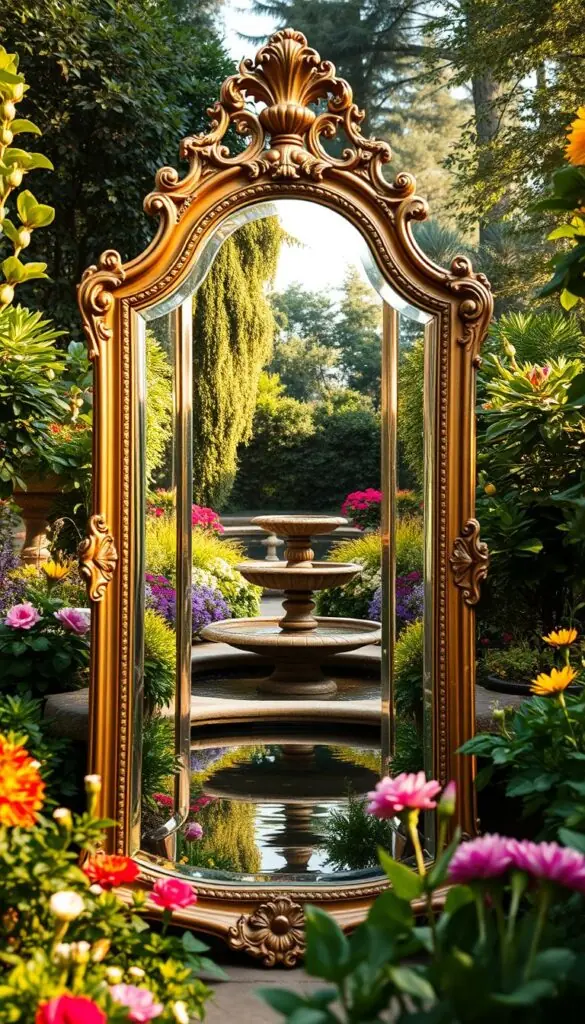
When you aim a garden mirror at layered plants or a path, your eye reads continuity. The reflected greenery reads like extra room, not a flat wall. That faint "second room" calms the view and makes seating areas feel wider.
Depth, light, and the “second room” effect
Reflections bounce existing light back into shady beds. Brightening foliage helps borders feel deeper without adding new plants.
Angle the mirror so it captures leaves, sky, or a trellis—never just the frame. A softly arched or slim rectangle keeps the effect like a window and fits modest design options.
- Use reflections to hide utility areas by directing the eye toward blooms.
- Place tall pieces opposite vertical planting to double perceived height.
- Keep scenes simple—leaf movement helps sell the living view.
| Goal | Best option | Tip |
|---|---|---|
| Brighten shade | Slim rectangular piece | Angle to catch dappled light |
| Lengthen path | Tall, narrow panel | Reflect layered plantings, not fence |
| Create window feel | Soft arch | Frame leafy scene like a view |
outdoor mirrors
Pick a weather-ready piece that suits your patio and watch a small yard feel much larger.
Weatherproof options matter. Look for frames and backing made for sun, rain, and temperature swings so your piece lasts with low upkeep.
Choose a size that matches your wall or fence. Tall, narrow panels create a window effect. Round accents soften a patio without overwhelming it.
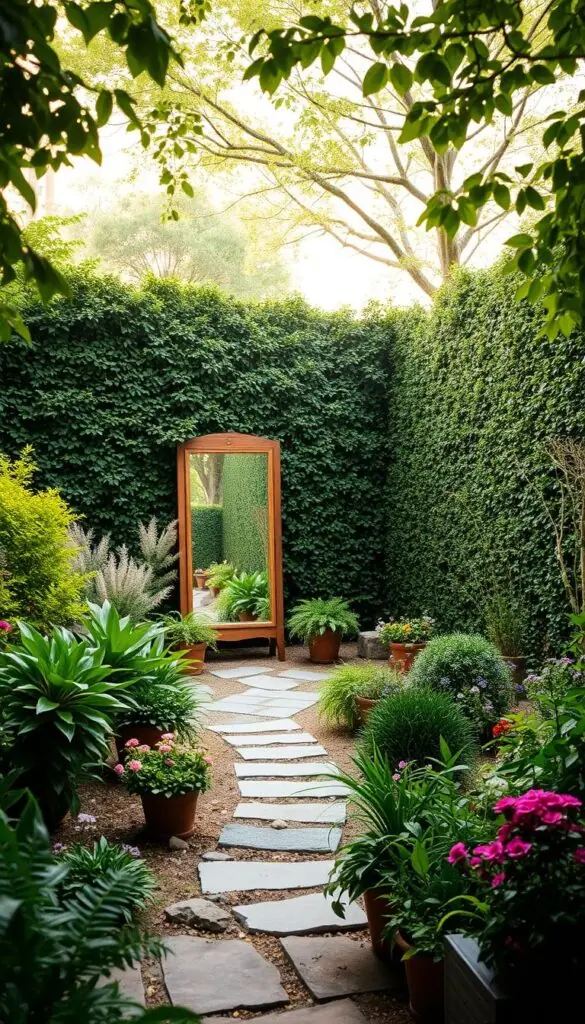
Match the frame to your furniture or planters for cohesive decor. If the mirror will see wind, pick a lighter model that’s still rated for outside use so you can move it seasonally.
- Prefer long-term ease? Pick an outdoor-rated design over an indoor piece.
- For a small garden, a mid-size garden mirror multiplies potted herbs and blooms.
- Mount on a wall facing greenery, not blank surfaces, to keep the scene soft and inviting.
Choose a decoration you genuinely love—arched panes, simple rectangles, or coastal textures—so the piece feels like part of your home the moment you hang it.
Buyer’s snapshot: what to know before you shop
Before you buy, a quick checklist keeps shopping simple and your garden goals clear.
Quick checklist: size, placement, safety, budget
Measure first. Note the span of your wall or fence and the typical viewing distance from a chair or path. A mirror 24–36 inches wide fits most patios; narrow side yards often work better with a tall, slim piece.
Decide where to put mirror panels. Stand in your usual seat and picture the view you want to borrow — a leafy border, trellis, or distant tree line. Take a quick phone photo to check scale and frame finish at the store.
Plan for safety and mounting. Choose tempered or shatter-resistant glass and confirm secure fixings for wind. Note the surface—wood, brick, or siding—and list anchors, exterior screws, or masonry bits before you shop.
- Set a budget range so you can compare options without delay.
- Keep a short ideas list of shapes you like: arched, paneled, or round.
- Time projects for calm weather and bring basic tools: level, tape measure, and drill.
When to choose indoor/outdoor rated pieces
If your space sees moisture or big temperature swings, pick outdoor-rated pieces for longer results. On a covered porch, a well-sealed piece can work, but outdoor-rated items usually last the season with less care.
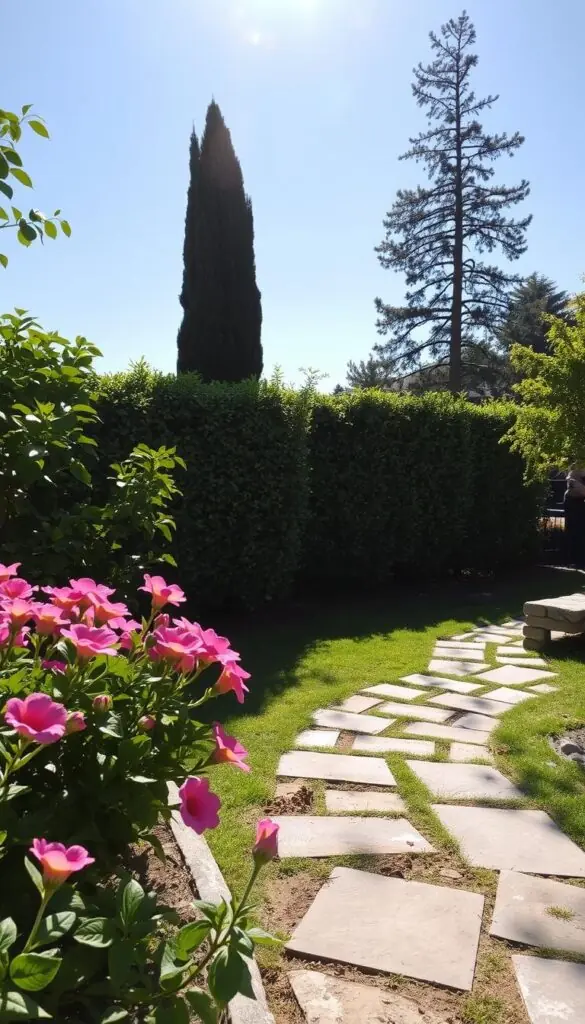
| Need | Best pick | Quick tip |
|---|---|---|
| Brighten shade | Slim rectangular mirror | Angle to catch dappled light |
| Narrow side yard | Tall, narrow piece | Mount opposite layered plantings |
| Covered porch | Well-sealed indoor/outdoor rated | Check sealant and backing |
Choosing the right size and shape for your garden
Picking the right size and silhouette makes a small garden feel calm and roomy.
Think about scale first: a piece that matches your seating view reads as a true extension of space. Measure the wall and stand where you spend time before you buy.
Tall “window” mirrors for narrow side yards
Tall, narrow panels act like a vertical window. They lift sightlines and add height without crowding the path.
- Pair a tall garden mirror with upright plantings like Italian cypress or ornamental grasses to amplify height.
- Choose a slim black frame for modern fences, or warm wood near cedar planters so the piece feels integrated.
- Use painter’s tape to outline the panel on your wall and check proportions from seating spots.
Round and convex mirror options for small patios
Round pieces soften hard edges and make a patio feel friendlier. A convex mirror can widen the view, but use it sparingly to avoid distortion.
- Reflect layered pots of thyme, basil, and marigolds for bright, sunlit color.
- A round piece near a pond or water bowl catches moving light and makes the scene sparkle without taking floor space.
- Consider glass quality and weight: lighter models suit fences, larger pieces need brick or stud-backed walls for secure mounting.
"Match style to mood — arched 'window' looks for classic gardens, clean rectangles for a minimal patio."
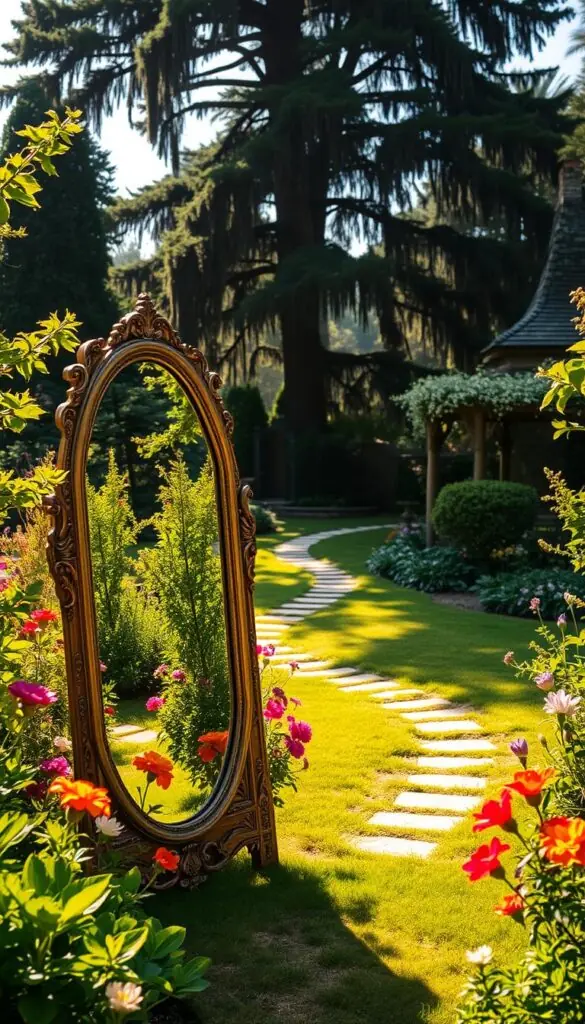
Materials and finishes that stand up to outdoor use
Pick materials that shrug off sun, salt, and damp so your reflection stays crisp season after season.
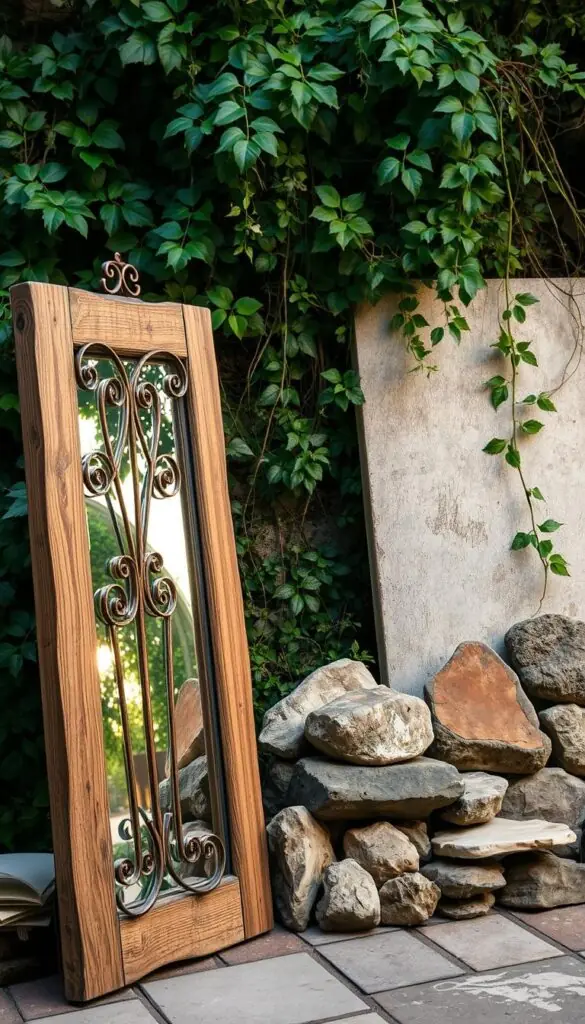
Metal choices and coatings
Powder-coated metal resists rust far better than plain paint. A quality metal frame in aluminum gives you lightweight strength and lower corrosion risk. Steel can add rigidity, but only if seams and coatings are sealed.
Wood options and finishes
If you prefer natural warmth, choose sealed teak or a high-grade faux wood resin. Both give a wood look without much warp. Re-seal real wood every year or two to keep the wood finish fresh.
Glass types and safety
Tempered glass offers a crisp view and better safety. Acrylic panels cut weight for fence mounting. A convex type adds a wider field for dramatic garden perspective without heavy detail.
Durability tips
Look for UV-stable finishes so color and finish don’t fade. Pick pieces rated for outdoor use when possible.
Mount with stainless or coated fasteners and add a small spacer so water can drain behind the mirror and avoid streaks on the wall.
Product ideas from current indoor/outdoor lines
We’ll keep this simple and helpful. Below are friendly, real picks and finishes so you can imagine how a reflective piece fits your space.
Made Goods selections worth considering
Lukas Indoor/Outdoor mirror — $1,240. Comes in Ivory or Dark Gray and pairs well with teak furniture and neutral cushions.
Simone — from $1,700. White or Raw Gray brightens shady corners with a refined, airy style.
Viola and Kaarlo — taller options ($1,760) that read like elegant garden windows opposite leafy borders.
Finishes, filters, and shopping tips
- Flannery ($1,000) in Chestnut suits warm palettes; Paulina ($1,640) in White Plaster or Distressed Gray lightens brick nooks.
- On Meadow Blu, filter by size, price, finish, availability, and free shipping to narrow options fast.
- If you prefer buying direct, email collateral@madegoods.com to set up an account; expect confirmation within 48 hours.
- Match the frame tone to your decor so the piece feels like a natural addition to your furniture and planting.
| Model | Price | Finish |
|---|---|---|
| Lukas | $1,240 | Ivory, Dark Gray |
| Simone | From $1,700 | White, Raw Gray |
| Flannery | $1,000 | Chestnut |
Best placement strategies to make spaces look bigger
Place a reflective panel where sightlines already lead; small adjustments make a yard feel like it opens up. Think about where you naturally look from a seat, a path, or a doorway.
Against a fence to “double” your flower bed
Mount the mirror slightly above plant height so blooms seem to continue. Echo a drift of coneflowers or salvia to make a low bed feel lush and continuous.
Across from a leafy border for layered greens
Angle the piece to capture hosta, fern, and hydrangea layers. Stacked greens in the reflection add calming depth and a stacked, window-like effect.
Near a door to extend the view from the room to garden
Line up the panel with your interior sightline so the room seems to flow outward. Test from inside before final mounting for the best view.
By a pond or water feature for shimmering light
Catch soft ripples and sky; reflections plus gentle lights make golden hour glow and add motion to a mirror garden.
On a shaded wall to bounce light into dark corners
Aim toward brighter foliage — silver-leaved plants glow in reflected light. For outdoor use, keep a small spacer behind the piece so water drains and air circulates.
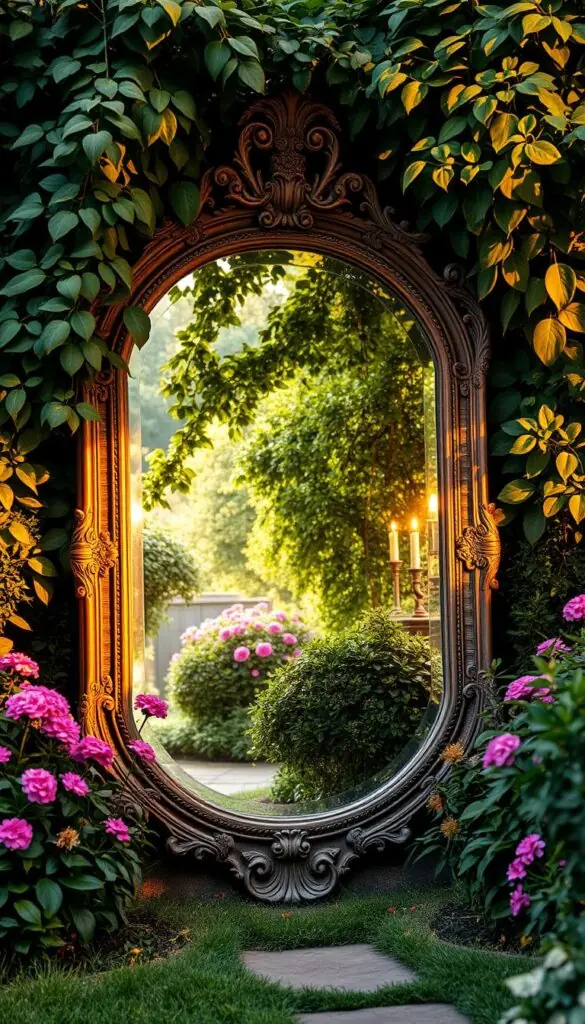
Style tips: create a window or secret-garden look
Small styling shifts can make a fence feel like a secret window into a larger, softer space.
Arched pieces that echo classic walls
Arched “window” mirrors pair beautifully with climbing roses or clematis. Tuck one beside a trellis so the reflection suggests a hidden path beyond the wall.
Grouping for a gentle gallery
Cluster several small pieces to form a quiet gallery. Keep frames in a matching tone and space them evenly so the set reads as one calm element on the wall.
- Use a garden mirror to reflect a single focal point, like an urn or birdbath, for a composed view.
- Partially veil a piece with airy vines for a secret-garden mood that feels discovered, not staged.
- For clean, modern style, choose a slim-framed rectangle aligned with pavers to create a tidy window rhythm.
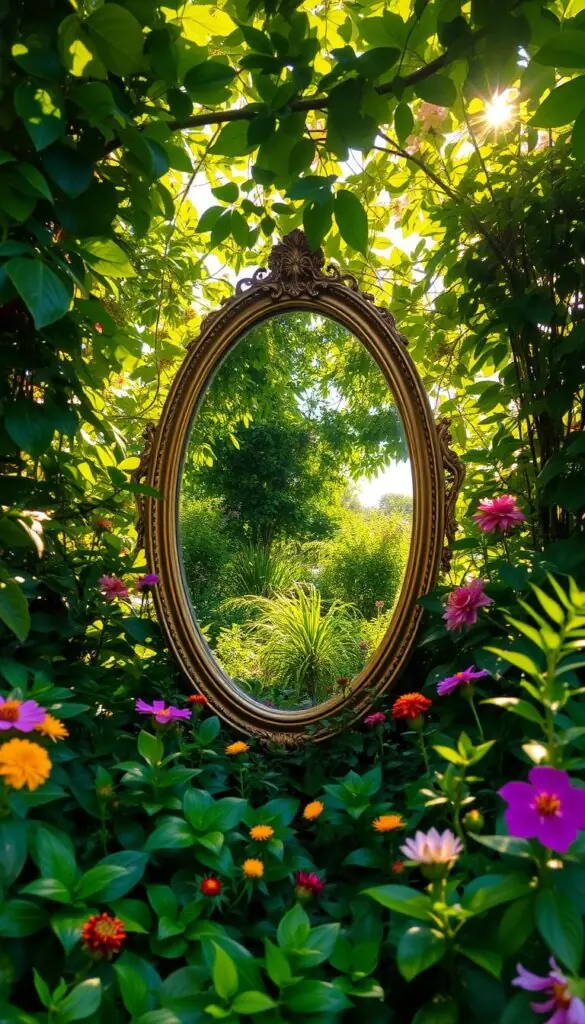
| Look | Best spot | Quick tip |
|---|---|---|
| Arched window | Near climbing plants | Tuck into a trellis for depth |
| Gallery cluster | Small wall panel | Match frame tones and spacing |
| Slim rectangle | Along pavers | Align with sightline for calm |
Installation basics: secure, level, weather-smart
Start by picturing the exact view you want to borrow from your yard before you touch a tool.
Good installation keeps the piece steady and the reflection where you want it. Below are calm, clear steps and the right gear for brick, siding, or a wood fence.
Tools and hardware
- Gather basics: level, tape measure, pencil, drill/driver, and a weather-rated adhesive.
- Choose anchors by surface: masonry anchors for brick, sleeve or toggle anchors for hollow siding, and exterior screws for solid wood.
- For heavy frames, pick exterior-rated D-rings or a French cleat to simplify leveling and removal.
Mounting on brick, siding, and fence
On brick or block, pre-drill with a masonry bit and insert anchors. Leave a thin spacer so moisture can drain behind the wall-mounted piece.
For siding, locate studs when possible. If not, use the correct hollow-wall anchors and respect the manufacturer's type and weight limits for the mirror outdoor.
On a wood fence, reinforce rails or add a backer board. Spread screws to reduce flex in wind and protect the fence long term.
Final checks: angle, lines, and finishes
- Tip the mirror a few degrees downward so plants and paths show, not just sky. Check the view from your door and seating before final tightening.
- Mind electrical and irrigation lines; use a stud finder with wire detection if unsure.
- Stage lights so fixtures don’t glare into faces. Lay a drop cloth to protect the floor and tidy up as you work.
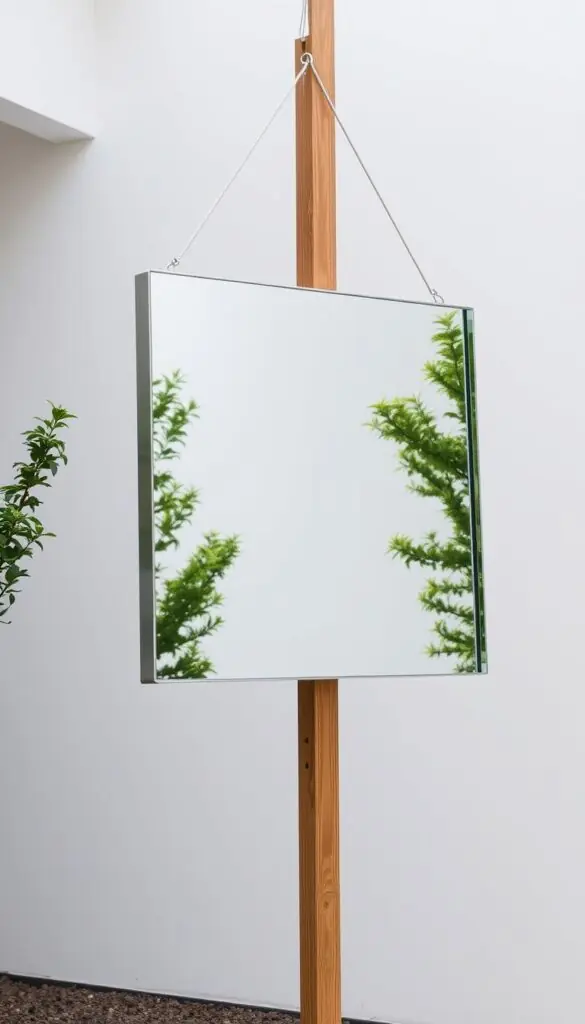
Safety first: birds, pets, and high-traffic paths
Start by thinking how the reflective piece will sit in daily life — near a bench or a busy path makes a difference for safety.
Prevent bird strikes with decals, texture, or plants
To deter birds, avoid placing the mirror where flight paths aim straight at the reflection. Angle it slightly so the view reads as depth, not open sky.
Break up large reflections with small decals, a subtle grid, or a trailing vine. Planting airy grasses or climbers around mirror edges gives birds visual cues that the surface is solid.
Shatter-resistant glass and tempered options
Choose tempered or shatter-resistant glass for safer outcomes. These options reduce injury if an accident occurs and are widely available for outdoor use.
For homes with pets, mount the piece securely above curious nose level and avoid leaning heavy frames where they might tip.
"Make a simple seasonal check: tighten hangers, inspect frames, and refresh decals so wildlife and people stay safe."
- Keep mirrors out of narrow, fast-moving paths; place them where people naturally slow.
- Consider a small convex mirror for wider awareness in tight spots without creating a runway illusion for birds.
- Add a motion chime or soft planting nearby as a gentle boundary cue.
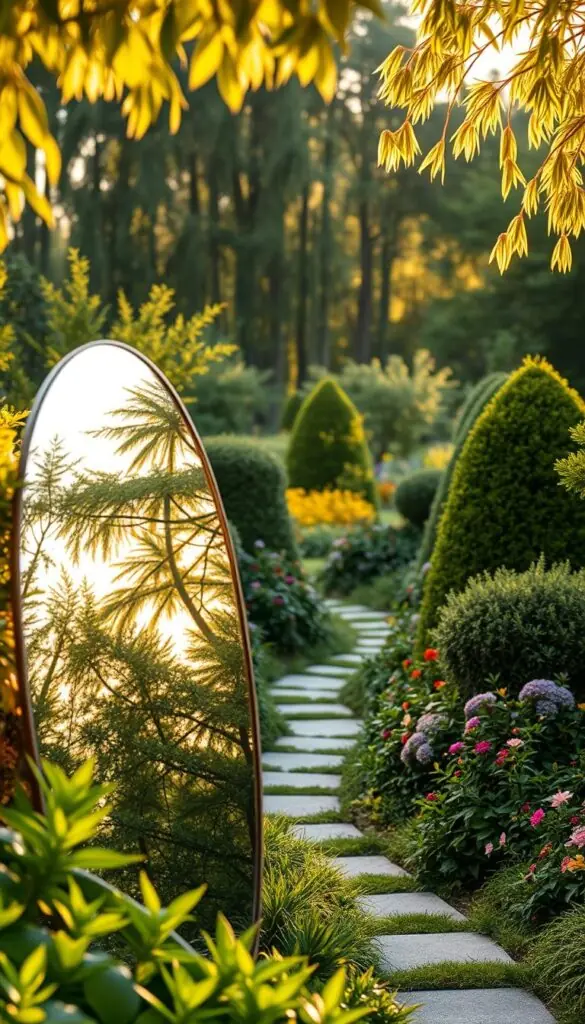
Seasonal ideas for year-round beauty
Use the year’s changing light and color to make a mirror read like a living window into more garden.
Spring blooms: Angle the piece toward tulips, lilacs, and fresh chartreuse foliage for an instant double of color. Choose one bright bed and let that single focal group do the work so the reflection stays lively, not busy.
Summer evenings: Layer soft string lights and a couple of lanterns so the reflection adds warm glow during dinners and relaxed living. A compact pond bowl or fountain reflected nearby brings movement and a gentle sparkle to twilight.
Fall color: Face the mirror toward maples, asters, and a few pumpkins to amplify rich oranges and golds. The doubled hues make patios feel cozy without extra furniture or heavy decoration.
Winter interest: Echo evergreen shapes with a simple lantern and hardy boxwood or hellebores for life on short days. A light dusting of snow looks magical when captured in a calm reflection.
- Keep one focal plant group per season to avoid clutter.
- Swap cushions or a throw to tie room and garden palettes together.
Color, scent, and texture pairings that shine
Choose plants and frame finishes that complement one another so the reflected scene reads as one calm view.
Silver frames with lavender and rosemary
Cool metal tones pair beautifully with silvery herbs. Lavender and rosemary offer soft purple blooms and a calming scent.
Place a silver-toned metal frame beside clipped rosemary and a band of lavender. The bloom color and scent make the scene feel intentional and serene.
Warm wood finishes with coneflowers and grasses
A warm wood finish brings bronze-gold warmth that echoes coneflowers and prairie grasses.
Choose a simple wood frame and plant sunny coneflowers with dancing seed heads nearby. Add a woven stool or a rough stone for texture so the reflection feels layered, never busy.
- For modern style, a charcoal frame with glossy camellia leaves keeps the look crisp.
- Weathered gray frames and sage tones read coastal and calm.
- Limit palettes to two or three hues and tuck a sprig of rosemary by the path for scent that greets you as you pass.
Common mistakes to avoid for outdoor mirror projects
Before you drill, take a moment to check sightlines and sun patterns so your installation works for everyone.
Direct sun glare and heat reflection on plants. Avoid aiming a mirror into strong midday sun; glare can hurt eyes and focused heat may stress nearby plants. Near a pond, test the reflection at different times of day so water doesn’t create blinding glare.
Reflections into neighbors’ windows or busy roads. Stand where neighbors or passersby might be and verify angles. You want a calm, private window effect, not a surface that points into someone else’s view or toward traffic.
Hanging too high or too low for the intended view. Mount at the right height for seats or paths. A piece too high on the wall will lose its window feel. Too low and you lose the layered plant reflection that creates depth.
- Use solid anchors on a fence or backer board to prevent flex and sag.
- Secure heavy frames with multiple fix points in windy spots.
- Watch bird flight paths and add small decals if you see near-misses.
- Keep the scene uncluttered; simplicity yields the best results.
Care and maintenance for long-lasting results
Simple routines keep a reflective piece looking clear and welcoming. A few minutes now and then protect the view and the investment behind it.
Cleaning glass and frames with gentle, safe products
Dust the frame regularly and wipe the glass with a soft cloth and an outdoor-safe cleaner. Avoid harsh abrasives that haze or scratch the surface.
Keep nearby furniture and plant debris swept away so grit won’t abrade the finish on windy days.
Protective sealants and seasonal checkups
For wood-look frames, refresh sealant as needed. For metal, touch up chips to prevent rust.
Give hardware a seasonal check—tighten D-rings or cleats and add a dab of exterior-rated adhesive where screws loosen.
Bringing mirrors in during severe weather
After storms, inspect for moisture trapped behind the piece; the spacer you added lets air flow and helps dry things out.
In extreme weather, either bring a portable mirror inside or add temporary straps for extra security. Limit sprinkler spray on the glass to prevent mineral buildup.
- Quick wipe during spring and fall cleanups keeps the view fresh.
- A fast visual check and small tune-ups usually cover all the care you need for long-term use.
Budget, value, and where to buy in the United States
Smart shopping makes a big difference when you want a lasting, beautiful addition to your garden.
Price ranges and what to expect. Expect a wide band of options. Meadow Blu lists several Made Goods pieces that sit between roughly $1,000 and $1,800. Models include Lukas (Indoor/Outdoor) at $1,240 in Ivory or Dark Gray, Simone from $1,700, Viola and Kaarlo around $1,760, Flannery at $1,000, Paulina $1,640, and Anders at $1,800.
Think beyond sticker price. Materials, warranty, and an outdoor rating affect long-term results. A slightly higher price can mean better finish, lower maintenance, and a piece that pairs with your furniture and home palette.
Use retailer filters to save time
Filter by product type (Mirror/Outdoor Décor), size, finish, and availability. Toggle Free Shipping to see true cost—large frames add freight quickly. Sort by price or date to spot new arrivals or budget finds.
- Compare finishes—Ivory, Dark Gray, Chestnut, Distressed Gray—against photos of your space before you buy.
- If a favorite sells out, shortlist a similar-sized second choice so your project keeps moving.
- For direct Made Goods orders, email collateral@madegoods.com to request an account; allow 48 hours for confirmation.
| Model | Price | Finish |
|---|---|---|
| Lukas | $1,240 | Ivory, Dark Gray |
| Simone | From $1,700 | White, Raw Gray |
| Flannery | $1,000 | Chestnut |
| Anders | $1,800 | Varied |
Value tips: Look for bundle savings when pairing a mirror with planters or lanterns to refresh decor with one order. Keep measurements and photos on your phone so comparing pieces across sites is quick and stress-free.
Quick-start project plan you can do this weekend
Spend a Saturday measuring, mounting, and styling, and watch a single reflective piece change your garden's mood.
Measure, choose, mount, and style with plants and lights
Gather photos and measurements. Snap phone pics of the wall and note width and viewing distance. Mark the sightline from your door and main seat so the view aligns with daily life.
- Choose: Pick a size and frame that fits your garden and matches nearby tones. Keep it simple for your first of these projects.
- Mount: Put mirror where it reads like a window. Gather a drill/driver, anchors, exterior screws, a level, and a bead of outdoor-rated adhesive. Angle slightly downward for best reflections.
- Style: Place lavender, rosemary, or ferns opposite the piece so reflected greens feel lush. Add one string of warm-white lights or a lantern for soft evening glow.
- Check & safety: View from the living room and the path. Protect the floor during install, confirm clear paths, and tighten hardware.
Finish: Enjoy your project—sit back with a cool drink and admire how this small change makes the garden feel larger and more inviting.
Conclusion
With one modest addition, the wall beside your door can feel like a soft, leafy window.
A well-placed mirror makes a small garden feel larger, brighter, and more tied to your home. A few thoughtful touches — a lantern, a chair, a pot of rosemary — finish the scene without clutter.
Choose the right frame and angle and the piece will extend your living sightline into green. Try a second mirror or shift the door-side panel if you want deeper flow. Refresh reflections by season — spring blooms, summer vines, fall color, winter evergreens — so your gardens stay inviting year-round.
Enjoy the light, the views, and the calm moments your project brings. It should feel effortless to live with and welcome you outside every day.
FAQ
How do mirrors make small garden spaces look bigger?
Mirrors create the illusion of depth by reflecting light and planting layers, so a narrow yard feels like it has a “second room.” Place a reflective surface to echo a border or pathway and the eye reads more space where there isn’t. Using a tall “window” mirror or a group of smaller pieces can simulate windows and pull a living room view into the garden for a seamless indoor-outdoor flow.
What types of mirror glass are best for outdoor use?
Choose tempered or acrylic mirrors for durability. Tempered glass is strong and shatters into small, safer pieces; acrylic is lighter and resists breakage, though it can scratch more easily. Convex glass adds a panoramic effect for tight patios. Look for weather-rated options and metal frames with powder-coated steel or aluminum to prevent rust.
Should I use a wood frame or metal frame for a garden mirror?
Both work well when finished correctly. Sealed teak or faux wood resin offers warm, natural looks and resists moisture. Powder-coated steel and aluminum frames give a modern, low-maintenance finish and stand up to humidity and UV. Match the frame finish—chestnut, distressed gray, or dark gray—to nearby furniture and fencing for cohesion.
Where’s the best place to hang a mirror to visually expand a yard?
Mount it where it reflects attractive elements: across from a leafy border to layer greens, against a fence to “double” a flower bed, or near a door to extend an indoor view. Positioning by a pond or water feature adds shimmering light. Keep mirrors slightly angled downward for the most natural reflection and to avoid glare.
How do I secure a heavy mirror to different surfaces?
Use the right hardware: masonry anchors for brick, exterior screws for wood fences, and heavy-duty wall anchors for siding. For lighter pieces, weatherproof adhesive or mirror clips can work on smooth surfaces. Always use stainless steel or galvanized fasteners to prevent corrosion and check level and stability during installation.
Can mirrors harm birds or pets, and how do I prevent that?
Large reflections can confuse birds. Reduce strikes with decals, strings, subtle texture, or surrounding plants that break up reflections. Choose shatter-resistant glass or acrylic to protect pets and people. Place mirrors away from high-traffic paths when possible to avoid collisions.
What maintenance keeps a garden mirror looking good year-round?
Wipe glass with a gentle, outdoor-safe cleaner and a soft cloth; avoid abrasive pads. Rinse frames to remove salt or pollen, and reapply protective sealant on wood frames annually. Inspect mounting hardware each season and bring lightweight mirrors indoors during storms or heavy snow to extend life.
How do I avoid glare and heat problems from reflected sun?
Avoid pointing mirrors toward direct, mid-day sun or reflective surfaces that could intensify heat on plants. Position mirrors to catch morning or late-afternoon light and angle them slightly to diffuse harsh rays. Using shaded walls or placing mirrors near foliage helps soften glare and protects sensitive plants.
What mirror shapes work best for different garden layouts?
Tall rectangular mirrors act like windows in narrow side yards. Arched “window” mirrors suit classic walls and create a secret-garden look. Round and convex mirrors expand small patios by offering panoramic views. Grouping small mirrors creates a gallery effect that adds texture and movement to borders.
How do I match mirror finishes to my outdoor decor?
Pick finishes that echo nearby tones: silver frames pair well with lavender and rosemary, warm wood finishes lift coneflowers and ornamental grasses, and distressed gray or ivory complements stone paths. Use retailer filters for size, price, and finish to find pieces that coordinate with your fence, door, or patio furniture.
Are indoor-rated mirrors acceptable for covered patios or porches?
Indoor mirrors can work in sheltered spaces with low humidity and minimal temperature swings. For exposed areas, choose outdoor-rated or indoor/outdoor models made to resist UV, moisture, and rust. When in doubt, select tempered glass and sealed frames for longer-lasting results.
What budget should I expect when shopping for garden mirrors in the U.S.?
Prices vary widely: small decorative pieces can be affordable, while large, weatherproof designs cost more. Compare materials—acrylic tends to be less expensive than tempered glass—and use retailer filters for free shipping and availability. Balance cost with durability to get value over seasons.
Can mirrors improve evening ambiance in the yard?
Yes. Mirrors amplify string lights and lantern glow, creating depth and a warm, sunlit-like shimmer after dark. Place reflective pieces opposite light sources to double the effect and enhance seating areas for cozy summer evenings.
What common mistakes should I avoid when adding mirrors outdoors?
Don’t hang mirrors where they reflect busy roads or neighbors’ windows. Avoid placing them in direct, harsh sun that can damage plants or create glare. Measure the sightlines before mounting—hanging too high or too low weakens the illusion. Finally, avoid untreated frames that can rust or warp quickly.
How quickly can I complete a simple mirror project this weekend?
Fast projects follow four steps: measure the wall or fence, choose a size and finish, mount with proper anchors or clips, and style with plants and lighting. With basic tools and one helper, you can install and style a focal mirror in a few hours and enjoy immediate impact.