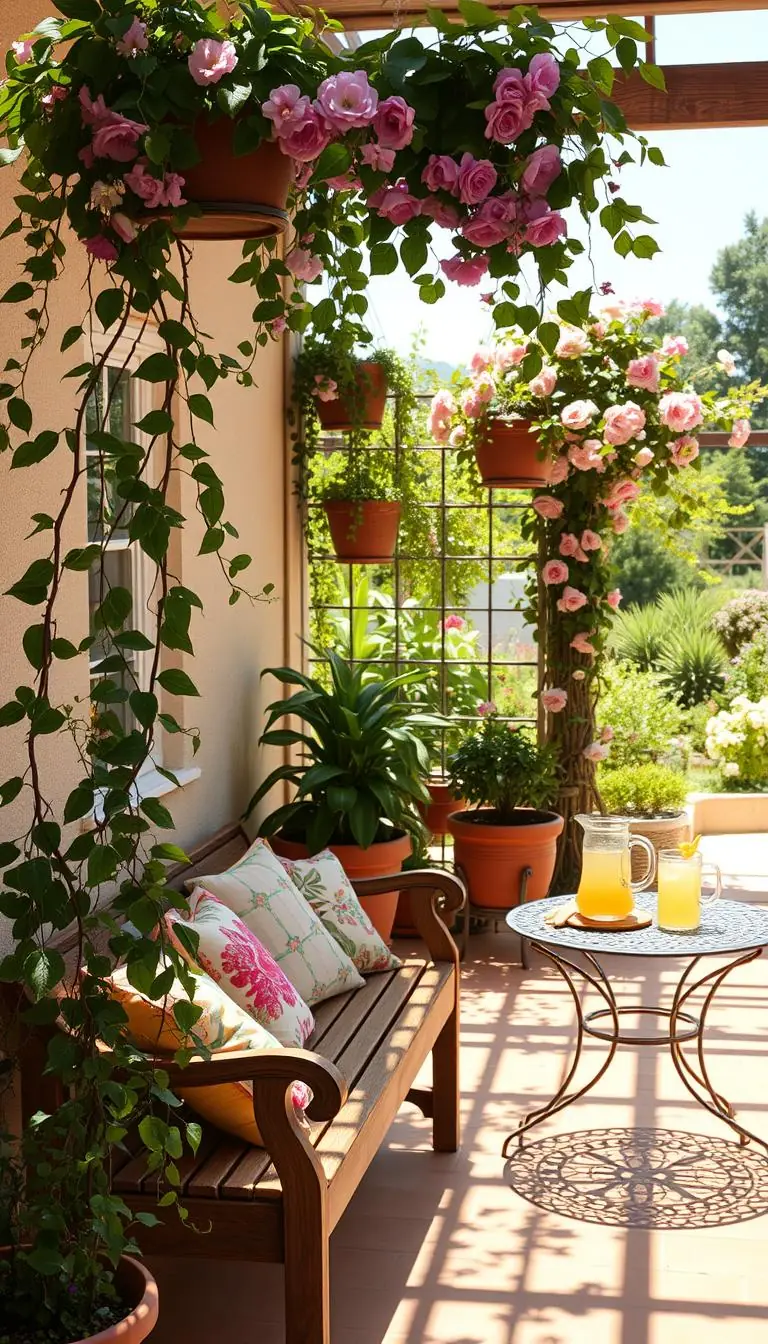
Imagine stepping outside at dusk, the air warm and lavender-tinged, the low hum of conversation under soft lights.
You want a small, welcoming extension of your home that fits morning coffee and family dinners. This is about practical comfort and calm style.
We’ll give you friendly, step-by-step guidance you can use in a weekend. Think string lights on a pergola, a cozy firepit, or swapping in teak furniture for a quick lift.
Start by picturing zones for lounging, dining, and sun. Note breezes, sun paths, and the views you love so the space improves your every-day experience.
Concrete slabs cost about 15% less than pavers, and stamped concrete can mimic natural stone for lower upkeep. Conversation groupings work best when seats face each other within eight feet.
Key Takeaways
- Decide the mood first — relaxed, social, or both.
- Treat the space as an extension of your home for cohesive style.
- Pick weekend-ready projects: lights, rugs, or a small bistro set.
- Choose materials you want to touch: smooth concrete, warm teak, quick-dry fabrics.
- Add layered lighting so the space works after sunset.
- Measure first and pick fewer, better pieces to avoid clutter.
Start with a Smart Layout: Zones for Living, Dining, and Sun
Begin by sketching simple zones so each outdoor area has a clear purpose. A quick plan helps you see where a lounge, dining spot, and sunny nook will sit. Keep sketches loose — pencil lines, not final plans.
Map your rooms. Draw three blocks: a lounge for conversation, a dining area near the kitchen, and a sunny corner for daybeds or herbs. Aim for clear sightlines so you can watch kids and the grill from the kitchen door.
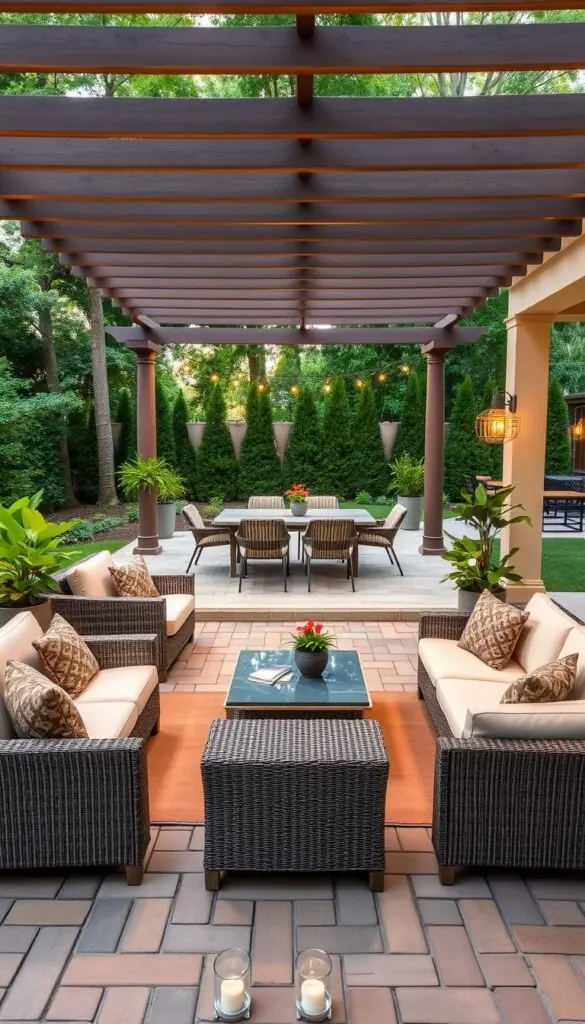
Flow matters
Walk the space to test paths. Keep walkways at least 36 inches wide so two people can pass comfortably.
Practical tips
- Place sofas and chairs within eight feet to encourage talk and warmth for family gatherings.
- Link rooms with a concrete walkway (stamped if you want tile or stone look) to unify the zones.
- Seat the dining set under shade so meals stay pleasant during midday sun.
Mark zones with texture changes — a rug under seating or low grasses by a path. These little anchors make the whole backyard patio feel liveable and easy to use.
Create Comfortable Shade: Covered Patios, Pergolas, and Umbrellas
Shade makes an outdoor room usable from spring through fall, so pick covers that match your weather and budget.
Covered options like overhangs, prefab covers, and gazebos give year-round shelter and expand your lighting choices. You can hang a pendant or chandelier under a fixed cover for warm pools of light.
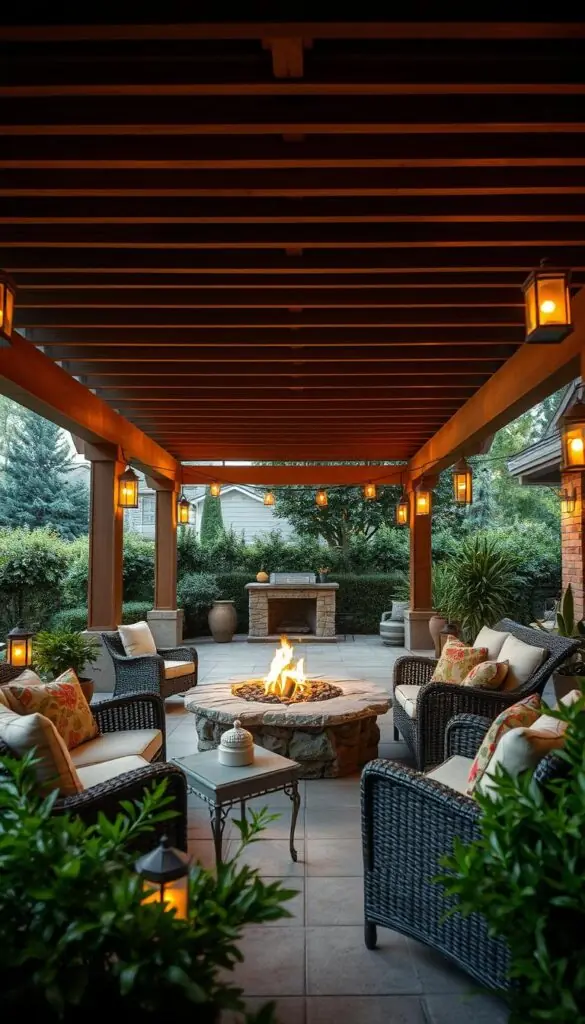
Pergola power
Pergolas with lattice support vines such as wisteria or grape for cool, dappled sun. Plant in spring, train stems along the lattice, and prune lightly after flowering to keep the growth tidy.
Budget fixes
Large umbrellas offer flexible shade and color. Use weighted bases, secure them in wind, or place them on a simple concrete pad extension for extra stability.
Cool comfort
Add a damp-rated ceiling fan under a cover to move air, deter mosquitos, and add gentle white noise. Match fabrics and furniture to outdoor performance weaves for lasting style.
- Match your climate to the cover for the longest use.
- Measure so dining seats sit fully in shade at midday.
- Use coordinating umbrellas to create a clean sightline across the backyard.
Patio Seating Ideas for Lounging, Dining, Working, and More
Pick seating that matches how you actually spend time outdoors — reading, dining, or working.
Lounge deep. A reclining chaise or cushy daybed in gentle sun becomes a daily retreat for reading or naps. Choose performance fabrics so cushions dry fast and clean up easily.
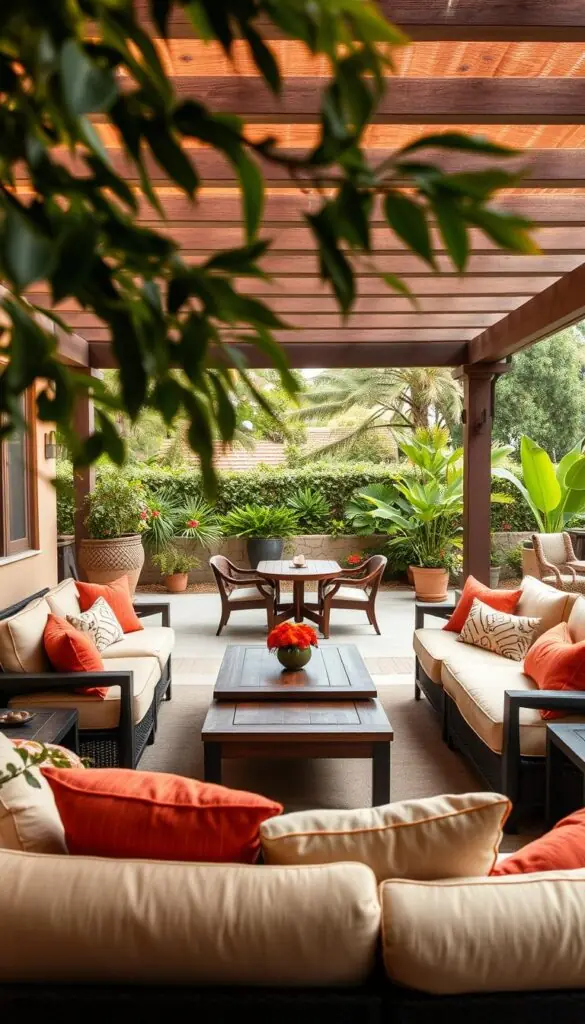
Daytime comfort
For conversation, place sofas and armchairs facing each other with no more than eight feet between them. That distance keeps talk natural and warm during gatherings.
Mix and match
Mix teak frames, wicker chairs, and a weatherproof rug so the living space feels tactile and inviting. Add low side tables by every seat for drinks and small items.
- Pick lounge pieces first if you crave quiet time: chaise, daybed, or cushioned bench.
- If you work outside, use a steady table height and a supportive cushion; add a small plant as a simple focal point.
- In a small backyard, swap bulky sectionals for two armchairs and a compact loveseat to keep paths clear.
Use soft neutral fabrics and washable pillows for seasonal refreshes. Place seating where breezes pass and glare is low so you spend more time outside, the easy way.
Concrete Patio Confidence: Durable, Stylish, and Low Maintenance
A well-laid concrete base makes outdoor rooms simple to maintain and easy to enjoy.
Stamped concrete can mimic slate, flagstone, or limestone so you get the look of natural stone without the upkeep. It costs about 15% less than laying pavers, which makes it a smart start for a durable outdoor patio.
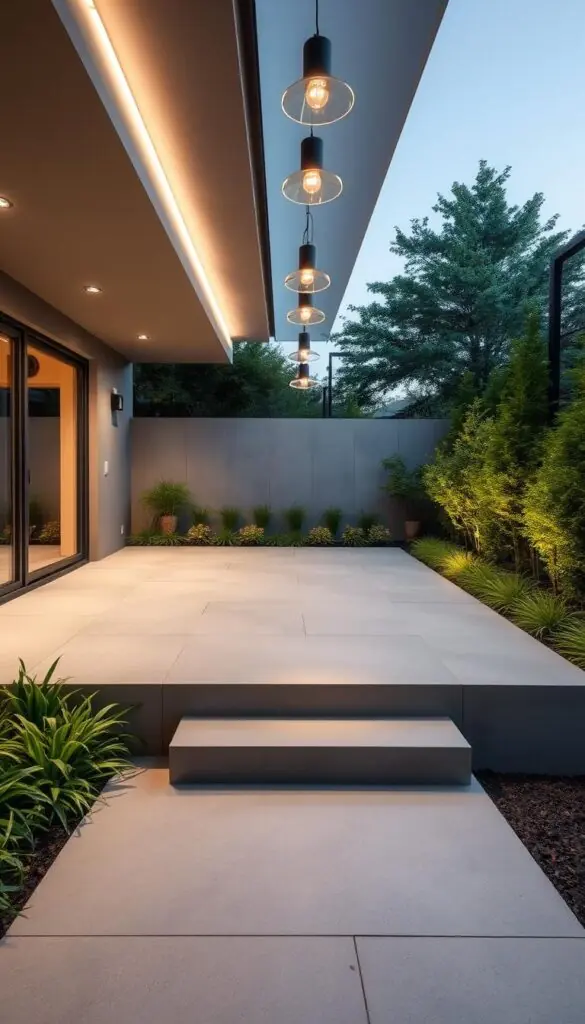
Pick a hue and soften the surface
Choose a darker gray tint to reduce glare and hide light stains. Then warm the slab with wooden planters, wicker seating, and a weatherproof rug so the flooring feels cozy rather than cold.
Texture, transitions, and built-in options
Modular concrete panels make tidy benches, privacy walls, and steps that move you smoothly across the backyard. Stamp a tile pattern if you love clean grids but want to skip grout upkeep.
"Treat concrete as your reliable base, then layer in plants and textiles to make it feel lived-in."
- Use stamped paths to link lounge, dining, and fire zones without trampling grass.
- Add a slight slope away from the house for drainage and fewer puddles.
- Edge with low grasses or raised beds to soften hard edges and add movement.
Stone Patio Charm: Natural Stone, Tile, and Mixed Flooring Ideas
Choosing the right flooring turns an ordinary backyard into a place you want to linger.
Natural stone warmth — flagstone and slate bring organic texture and soft color shifts that feel timeless underfoot. Pick slate for cooler, smooth surfaces on hot days and flagstone if you want a gently textured, rustic look.
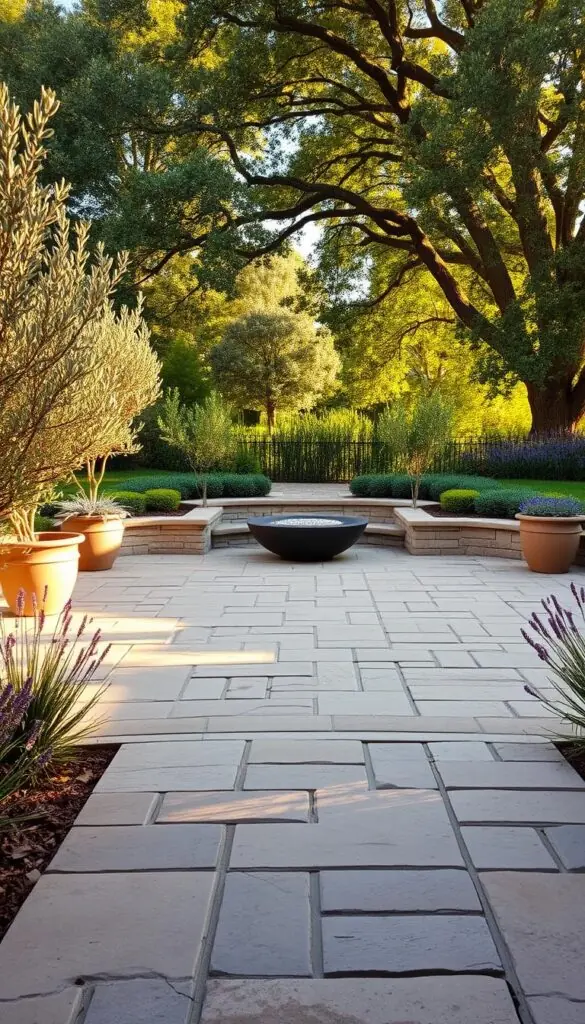
Outdoor tile tips
When you choose tile, hunt for slip-resistant, frost-rated porcelain so your outdoor patio handles summer storms and cold snaps. Keep grout lines narrow and use a quality sealant where recommended to cut maintenance and prevent staining.
Mixing materials
Pair a stone patio near the house with a stamped concrete path to the fire zone so spaces feel coordinated but not matchy. Add teak or wicker furniture and a woven rug to warm the hard surfaces.
- Edge with herbs and low perennials; brushing past lavender releases a welcoming scent.
- Place a small water bowl or birdbath on stone for soft sound—avoid locations that create slippery spots.
- Choose stone hues that complement your home so the whole composition reads as calm and cohesive.
Outdoor Lighting That Sets the Mood and Extends the Day
Careful placement of warm bulbs creates pockets of comfort that call you outdoors, even after busy days.
Build layers: start with an overhead glow, add task light for cooking, and finish with uplights to highlight a fireplace or specimen plant. Use warm bulbs (2700–3000K) so evenings feel cozy and natural.
For covered patio areas, a pendant or chandelier adds drama without hard wiring if you choose plug-in or battery models. String lights make any evening feel festive and work as a soft canopy over living spots.
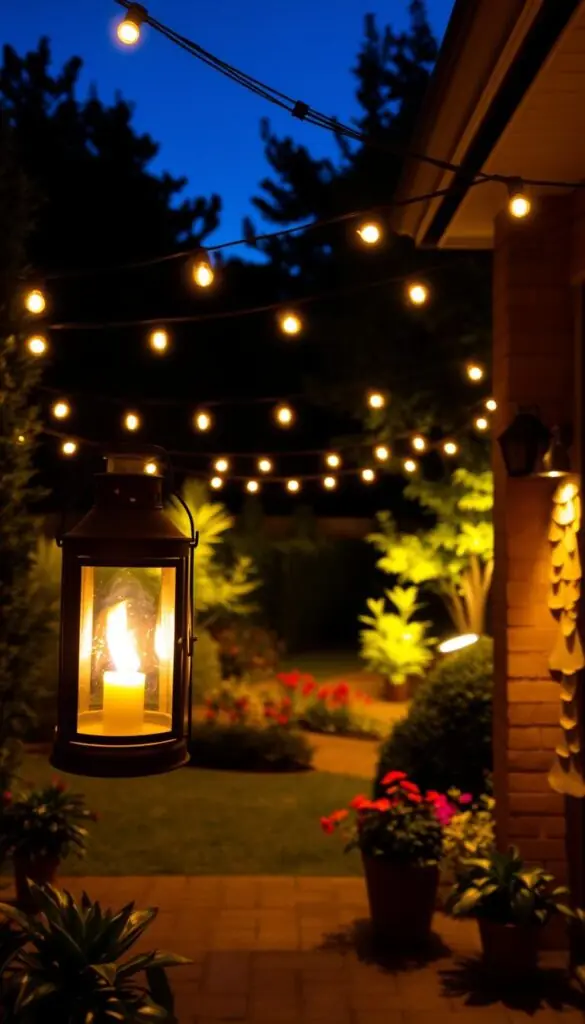
Portable, renter-friendly, and low-effort ideas
Solar stakes guide footsteps along concrete paths and save power. Rechargeable lanterns cozy up tabletops for intimate dinners. For renters, clip-on cafe lights and magnetic puck lights give big impact with no drilling.
- Angle fixtures down and shield bulbs to avoid glare for neighbors.
- Use timers so lights come on as the day fades and you don’t worry about switching them.
- Wash a fireplace or water wall with a low uplight to create a true focal point after dark.
| Fixture | Best for | Notes |
|---|---|---|
| String lights | Ambient canopy | Warm white, overhead sparkle; easy to hang |
| Pendants / Chandeliers | Covered areas | Room-like glow; plug-in options avoid rewiring |
| Solar stakes & lanterns | Paths and tabletops | Battery-free paths; rechargeable lamps for tables |
"Good lighting feels effortless: it guides steps, flatters faces, and draws you back outside."
Outdoor Dining Made Easy: Tables, Benches, and Breezy Serving Zones
Think of your outdoor table as the heart of backyard living — place it where shade, flow, and comfort meet.
Size matters. Measure before you buy and leave about 36 inches around the table so chairs glide easily and no one feels cramped. This simple step keeps movement smooth from the kitchen to the table.
Materials that stand up to use
Choose teak or powder-coated aluminum for tables and benches. Pair them with performance fabric cushions that shrug off spills and sun.
Practical serving and comfort tips
Park a rolling cart near the kitchen door for plates and drinks. Add a storage bench for cushions and extra seating. If your floor is concrete, use a flat-weave outdoor rug to soften sound and anchor the set.
- Make sure every seat fits under shade at midday — a pergola, umbrella, or covered patio preserves food and keeps family comfortable.
- Plant a small herb pot nearby for basil, mint, and chives so you can clip fresh flavor while you grill.
- Add dimmable lanterns on the table so dinners stretch into evening without harsh glare.
"Place the table to catch late-day sun on your shoulders but not in your eyes, and let a cross-breeze do the rest."
Fire and Water Features: Focal Points that Invite Conversation
A central hearth or a quiet fountain gives a yard a clear visual anchor for evenings. Pick a fire feature sized to your seating circle so everyone sits within eight feet for warmth and easy talk.
Safety and choice matter. Place the unit on a noncombustible base such as concrete or a stone patio. Choose gas for quick, clean light or wood for crackle and scent. Always check local codes and clearances before you install.
Add a water element to soften sound and attract birds. A small fountain, reflecting pool, or birdbath helps mask street noise and brings life to the space.
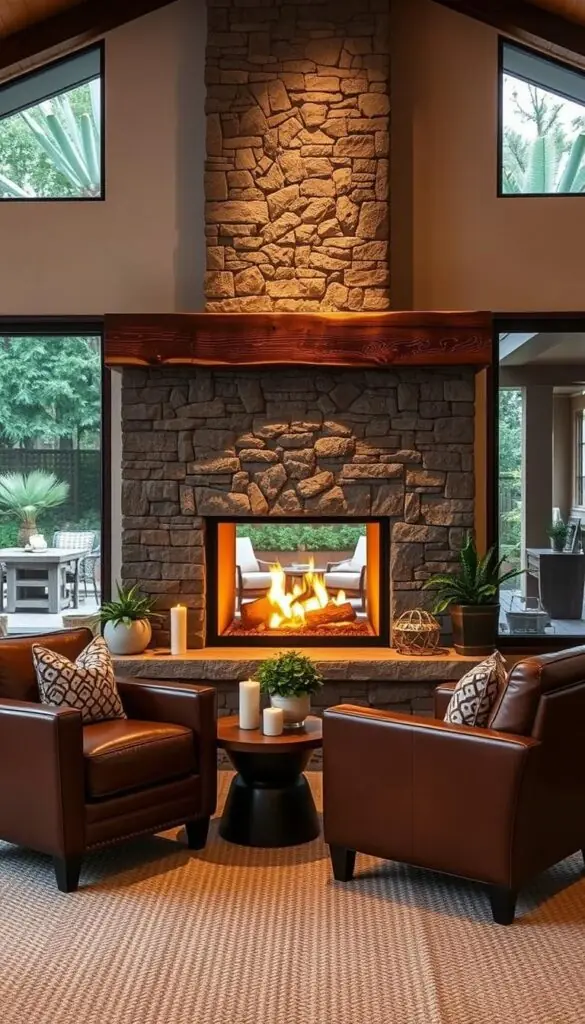
Connect zones with a stamped-concrete path and solar markers so nights feel safe and welcoming. Keep a low stone ledge for extra seating and a storage bench with blankets for chilly days.
- Center your lounge around a firepit or fireplace to make an instant gathering place.
- Frame the area with heat-friendly grasses and low shrubs to keep sightlines open.
- Place features where you can see them from indoors so glow draws you outside.
| Feature | Best for | Notes |
|---|---|---|
| Fireplace / Firepit | Evening gathering | Seat within 8 ft; check clearances and local codes |
| Fountain | Calm sound | Small pumps, low maintenance; attracts birds |
| Reflecting pool | Visual focal point | Place near windows for year-round enjoyment |
"Centering a hearth or water element creates spaces that feel lived-in and loved."
Privacy with Beauty: Screens, Plants, and Sound Softening
Privacy can feel generous, not shut-off. Use living screens and simple structures to craft quiet corners where you can relax, read, or chat without feeling boxed in.
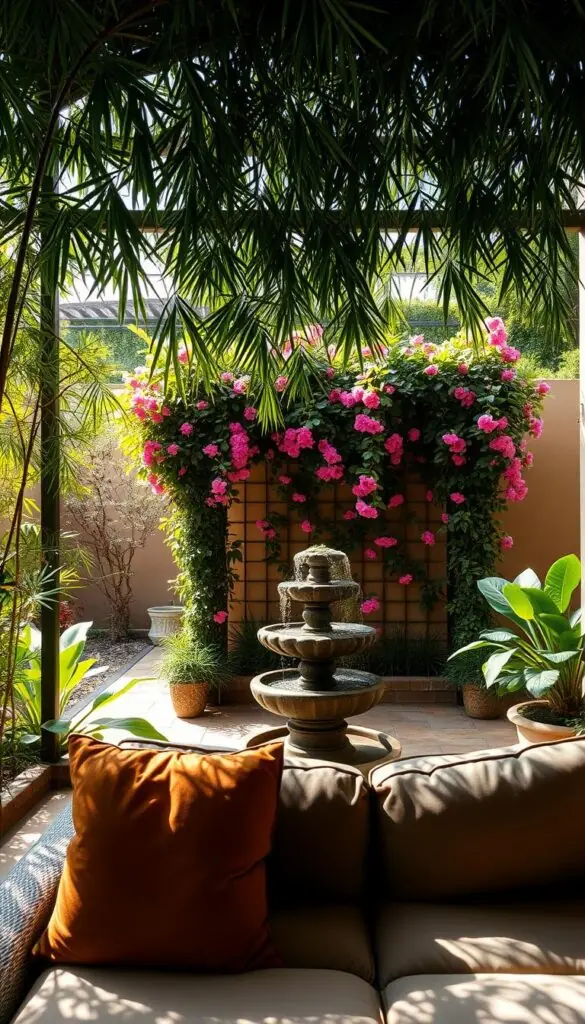
Tall, slim plantings that buffer views
Clumping bamboo or narrow evergreens make a slim, green wall that softens sightlines and hushes street noise. Plant them along a fence line and leave room to prune.
Weave ornamental grasses at the base for movement. They add texture and a whispering sound that improves the overall experience of the space.
Built solutions for lasting coverage
Combine a trellis or lattice with climbing vines to create a seasonal living wall. Modular concrete panels behind a bench give a clean, low-upkeep screen and can echo nearby stone features.
- Stagger heights—low grasses, mid trellis, tall evergreens—for a natural look.
- Add a small bubbler near seating to mask distant noise without stealing conversation.
- Keep maintenance access and respect breezes so the seating stays cool in summer.
Small Backyard Patio Ideas with Big Impact
Make the most of a small yard by choosing one high-impact upgrade that lifts the whole space.
Splurge smart. Because your footprint is small, spend on a beautiful surface — porcelain tile or a tight pattern of pavers — to upgrade the whole backyard patio at once.
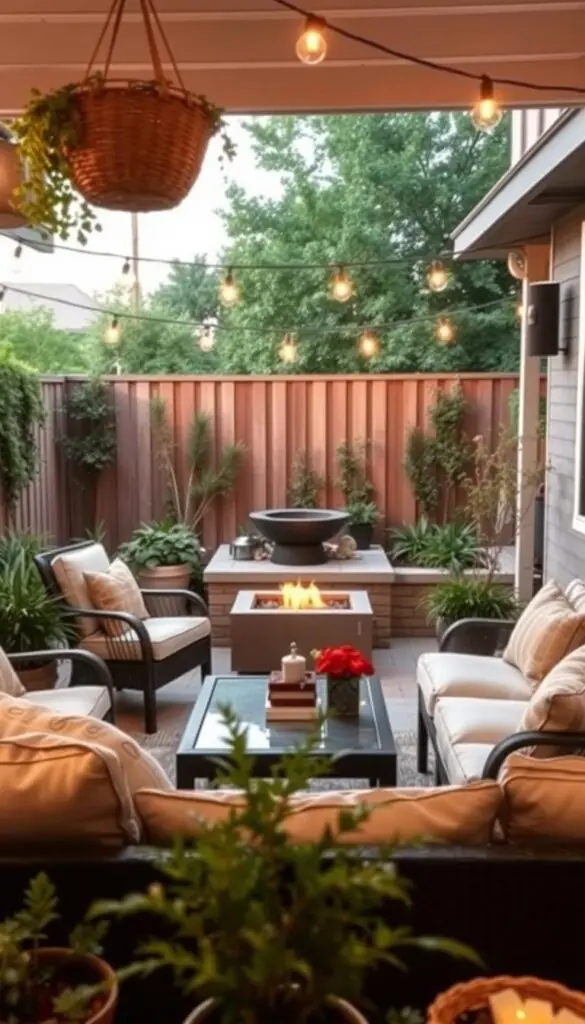
Splurge smart: fewer square feet = better pavers or tile
Splash out on a striking tile or small-format stone patio. You get a luxe look without endless costs.
For a concrete patio, tint to soft charcoal and add a flat-weave rug to warm the area.
Decorate, don’t remodel: rugs, compact furniture, and vertical planting
Choose compact furniture with slim arms and float pieces slightly off walls. A bold outdoor rug defines seating without crowding.
Go vertical with hanging planters and wall pots so herbs and flowers thrive while the floor stays clear.
- Add a petite fountain or tabletop water feature for calming sound and wildlife visits.
- Use a storage bench for cushions and tools so your home feels tidy and the space is ready fast.
- Keep pathways clear and pull furniture inward a bit to make the space breathe.
- Set one flexible dining setup — a folding bistro pair that moves with the sun and shade.
| Focus | Why it works | Quick tip |
|---|---|---|
| Premium surface | Transforms the look instantly | Porcelain tile or tight pavers |
| Vertical planting | Frees floor space, adds greenery | Hanging baskets and wall planters |
| Multiuse furniture | Saves space, stores gear | Storage bench or folding bistro set |
| Mini water feature | Soothes sound, attracts birds | Tabletop fountain or birdbath |
"Spend on one standout surface or piece — it will lift the whole backyard and make smaller spaces feel intentional."
Outdoor Kitchens and Accessories: Grills, Bars, and Simple Add-Ons
A compact cook station keeps meals flowing and guests close without swallowing your yard.
Right-size your outdoor kitchen by pairing a single quality grill with a 24–36 inch prep counter and a slim bar ledge. Place the setup near your indoor kitchen so quick trips make the backyard feel like a true extension of the house.
Practical station tips
Use modular concrete panels to form a sturdy grill surround, bench, or short privacy return wall. Finish with warm wood accents so the concrete reads as crafted, not cold.
Add task lighting over the prep zone, a heat-resistant mat under the grill, and weatherproof drawers for tools. Tuck storage into a bench so cushions and utensils stay neat and ready.
Weekend upgrades that matter
- Install a simple pergola kit or a slim bar ledge for guests to gather without crowding the seating.
- Swap in a larger coffee table or add hooks for tools to boost function fast.
- Downloadable outdoor kitchen plans help you estimate materials and cost before you start.
If you entertain, add two or three bar stools for a casual, luxury-leaning feel that stays neighborly and relaxed.
"Start small, place smart, and add thoughtful lighting — then the kitchen becomes the backyard's easiest upgrade."
Conclusion
A single comfortable spot — a chair, a lantern, and a rug — can start your transformation and spark fresh inspiration.
Begin small, then layer in light, plants, and seating. Pick one zone to shape into an outdoor living retreat. Choose durable flooring that suits your climate — stamped concrete or natural stone give different looks with low upkeep.
Keep scale right: seating within eight feet invites conversation, covered zones protect dinners, and a modest outdoor kitchen or grill station extends use. Add warm outdoor lighting, weatherproof furniture, and seasonal textiles.
Take a breath. Start with one step, enjoy the evenings, and let your backyard grow into the luxury living space you and your family will love.
FAQ
What’s the first step when planning an outdoor living layout?
Start by mapping zones for lounging, dining, and sun. Sketch clear paths and sightlines so people move easily between a conversation nook, an outdoor kitchen or grill station, and a dining area. Think about a focal point like a fireplace or water feature to anchor each zone.
How do I create shade without blocking light or views?
Choose flexible shade solutions. A pergola with climbing vines gives dappled sun; a covered overhang or gazebo provides year-round shelter; large umbrellas offer portable coverage. Add a ceiling fan for airflow and insect relief while preserving an airy feel.
What seating works best for mixed uses—lounging, dining, and working?
Mix pieces by function: deep daybeds or recliners for quiet reading, a durable dining table with benches for meals, and a compact bistro set or movable chair for work. Keep conversation seating within about eight feet so gatherings feel intimate.
Is concrete a good choice for a durable outdoor surface?
Yes. Stamped concrete can mimic natural stone with lower upkeep. Pick a darker hue to reduce glare and pair the slab with wood or wicker furniture and weatherproof rugs to soften the look. Consider modular panels or built-in benches for easy transitions.
When should I choose natural stone or tile over concrete?
Opt for natural stone like flagstone or slate when you want organic texture and warmth. Choose outdoor tile for precise patterns but pick slip-resistant, frost-rated options. Stone and tile suit smaller yards where material quality makes a big impact.
How can lighting improve the atmosphere and safety after dark?
Layer lighting: string lights for sparkle, pendants for drama over dining, and path lights for safe circulation. Use solar stakes or portable lanterns for renter-friendly options. Highlight focal points—fireplaces, water walls, or specimen plants—with accent washes.
What are low-maintenance focal features that still feel luxurious?
Fire features like gas firepits and built-in fireplaces offer instant warmth and a gathering spot. Simple water elements—fountains or reflecting pools—add calm without constant upkeep. Both pair beautifully with surrounding plantings and outdoor lighting.
How do I add privacy without making the space feel closed in?
Combine tall, narrow plantings such as bamboo or evergreens with structural screens like trellises or modular concrete walls. Lattices with climbing vines create a living barrier that filters light and sound while keeping the space green and inviting.
Any tips for making a small backyard feel larger and more functional?
Spend on higher-quality pavers or tile since you have fewer square feet. Use compact, multiuse furniture and vertical planters or hanging pots to free floor space. A bold outdoor rug and layered lighting will create depth and personality without a full remodel.
What should I include in a practical outdoor kitchen for weekend entertaining?
Right-size with a reliable grill, a prep counter, and bar seating. Add storage benches or a compact cabinet for tools and dinnerware. If space allows, a small sink and fridge make hosting easier. Shade from a pergola or pergola-mounted shade keeps the cook comfortable.
How do materials and finishes affect long-term comfort and upkeep?
Choose weatherproof materials like teak, powder-coated aluminum, and performance fabrics that resist fading and moisture. For flooring, select slip-resistant finishes and frost-rated stone or tile. Mixing textures—concrete with wood or wicker—keeps the space livable and low-maintenance.