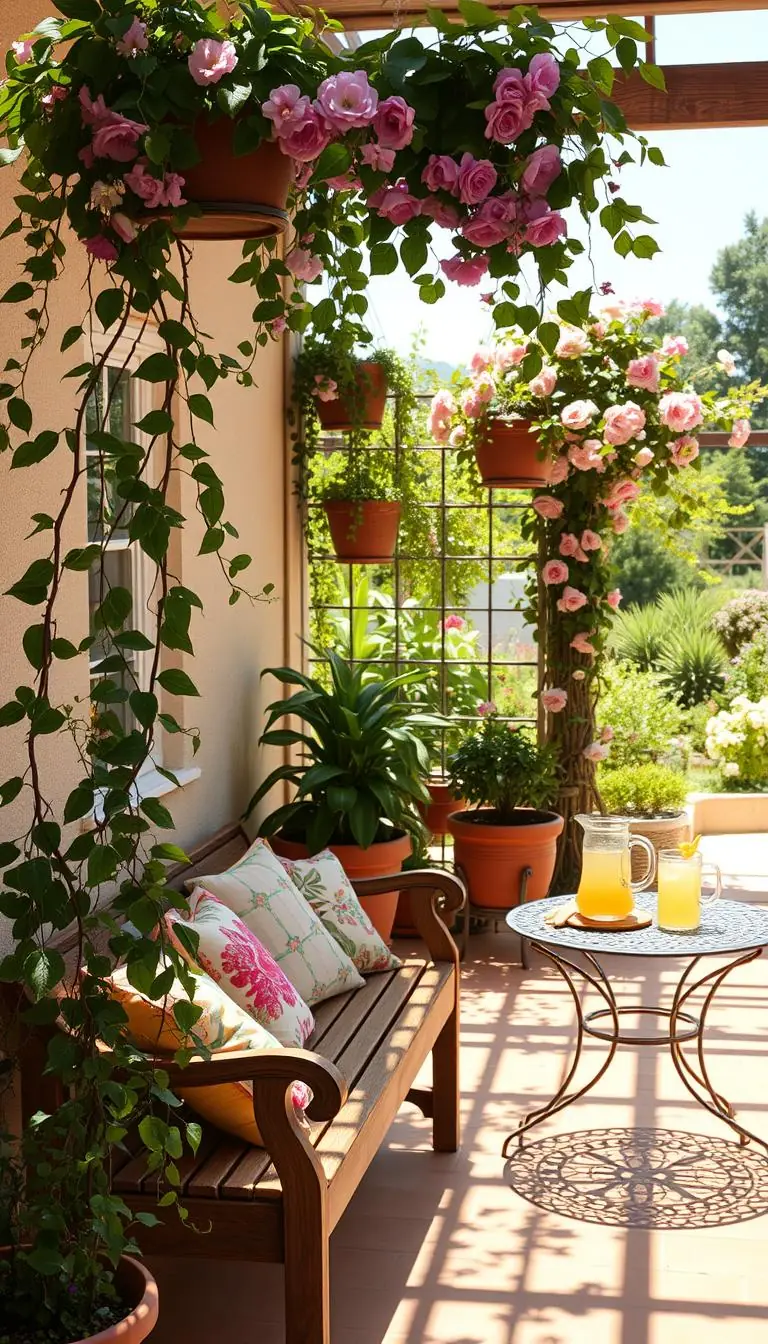
Warm sunlight, a soft jasmine breeze, and the low rustle of ornamental grasses. Have you ever wished your outdoor space would feel like a small, calm retreat where you can sip coffee without feeling watched?
We’ll show you simple, calming steps to make that happen. Think layered solutions: screens, trellises with clematis, planter-trellis combos for renters, and evergreens like Thuja or boxwood for year-round cover.
Small city lots often feel exposed near decks and patios. By mixing movable pieces—canvas panels, lattice sheets, bamboo rolls—and living plants, you get gentle screening that keeps your yard friendly to neighbors and your home feeling private without a solid wall.
Expect quick wins you can do in an afternoon and plant choices that grow richer with time. We’ll explain sightlines, seasonal tips, and simple ways to avoid common landscaping mistakes so your outdoor room truly feels like a cozy retreat.
Key Takeaways
- Use layered elements—plants, screens, and movable pieces—for a welcoming feel.
- Choose Thuja, boxwood, clematis, and climbing hydrangea for reliable coverage.
- Renters can use planter-trellis combos and canvas panels as easy options.
- Start small with lattice or bamboo rolls for quick screening wins.
- Place pieces to block specific sightlines and keep the space neighborly.
Start Here: A Calm, Simple Plan for a More Secluded Yard
Begin by picking a single seating area to transform — quick wins build confidence. This small focus helps you test materials, placement, and how the space will feel like a gentle, private retreat near the house.
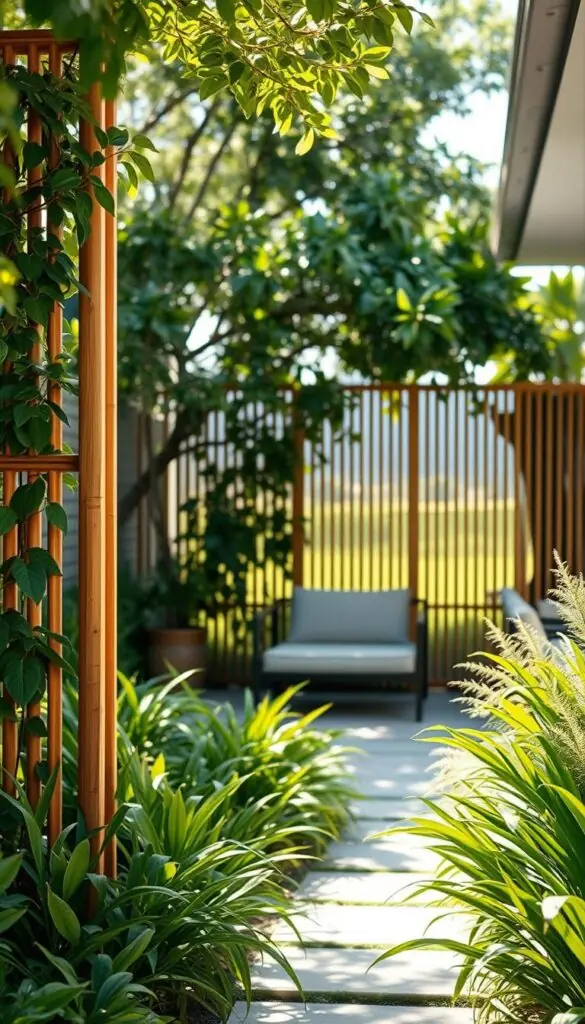
What this approach looks like
Think in layers: a freestanding screen or framed lattice nearest your chair, a trellis with vines behind it, and planters that soften edges. Soft shadows, leafy texture, and a hint of fragrance make the area feel like a calm outdoor room.
Tools and materials to gather
Gather planters, 4' x 8' lattice or trellis panels, wood posts or metal stakes, stainless screws, zip ties, potting mix, a cordless drill, a hand saw, and pruners. Add bamboo rolls or movable canvas panels for a quick, stylish screen you can shift with time.
- Start small: pick one area by the house to try screens and plants.
- Layer: screen, then plants, then a second soft layer for depth.
- Test placement: use wheeled planters or temporary panels until it feels right.
| Material | Typical Use | Key Advantage |
|---|---|---|
| Lattice (4' x 8') | Framed screen or trellis backing | Airy look, easy DIY |
| Planter-trellis combo | Portable plant support | Quick setup, moves with you |
| Bamboo rolls / canvas panels | Temporary screens | Soft texture, flexible placement |
Map Your Sightlines and Placement for Maximum Effect
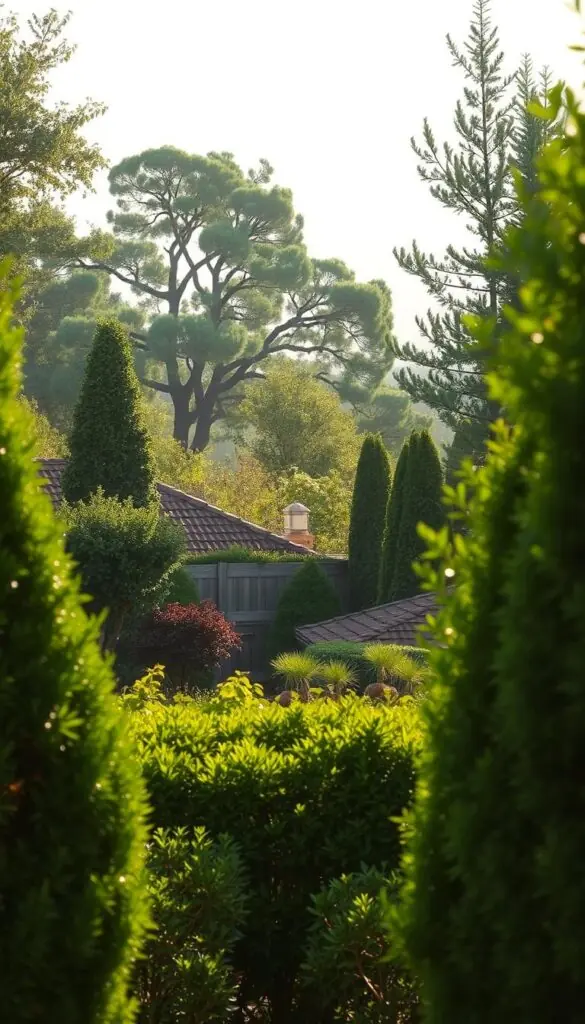
Stand in your favorite seat and trace every line of sight that makes you feel exposed. Use stakes or string to mark those lines so you can see exactly where screens or plantings belong.
Identify ground-level vs. second-story views
Note whether the eyes come from street level or a higher window. A high window needs a close, taller screen. Ground-level views can sit a bit farther out and use layered plants.
The golden rule: closer for higher views, denser for sound
Closer screens break second-story sightlines. Denser barriers muffle voices and add comfort. A trellis with vines often looks friendlier than a solid wall.
Check bylaws and HOA rules
Confirm height limits and permit rules before you build. Simple pre-approval can save time and keep neighbors happy.
Patio example: a quick, testable setup
- Set a freestanding trellis behind your bench.
- Flank it with tall planters and step back to test the view.
- Use tape on the floor to tweak furniture angles so backs turn to unwanted sightlines.
"Start with the spot you use most and make small changes until it feels right."
| Scenario | Recommended placement | Best material |
|---|---|---|
| Second-story view | Bring screen close to seating | Trellis + fast vine |
| Ground-level view | Screen a bit farther out, layer plants | Bamboo roll + shrubs |
| Noise from street | Dense, layered barrier near source | Thick planters or evergreen hedge |
Movable Screens, Trellises, and Lattice: Flexible Privacy Solutions
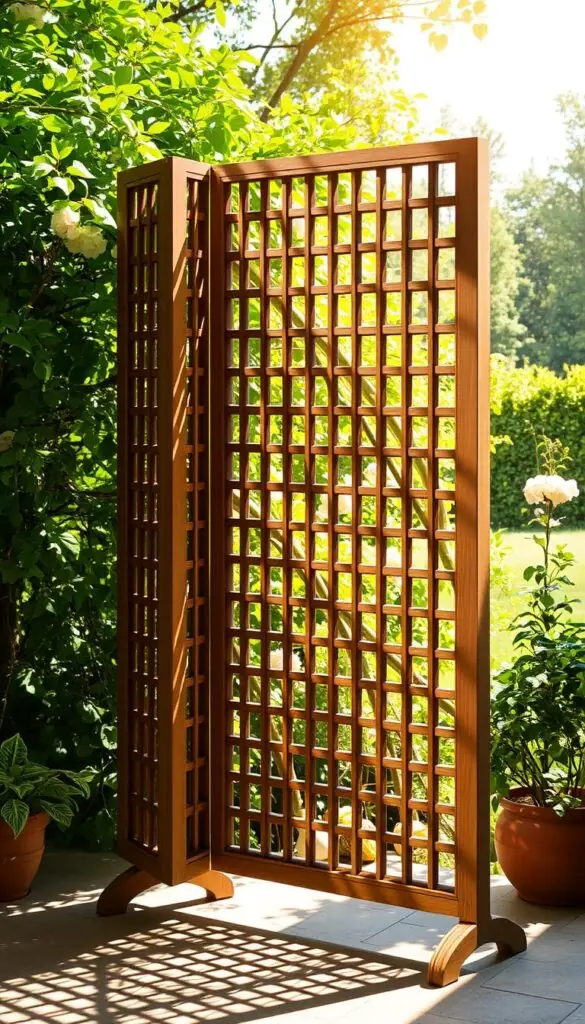
Moveable screens and trellises let you shape a calm, sheltered spot that you can change as moods or seasons shift. Choose pieces that blend good design with simple function so your seating area feels restful and inviting.
Freestanding style: look for horizontal slat panels or metal cutouts for a modern, airy look. Framed lattice from 4' x 8' sheets makes a quick DIY screen. Bamboo rolls add soft texture and gentle curves.
Buy or build: materials and choices
Buy options include three-part metal screens, PVC trellises, arched panels, and wheeled planter-trellis units. DIYers can frame lattice with 2x2s and add a cap rail for durability.
Anchoring and care
- Anchor with weighted planters, ground spikes, or discreet L-braces.
- Space slats tighter near seating and wider toward the garden for airflow.
- Seasonal maintenance: rinse panels, tighten fasteners, and refresh potting mix.
"Start light and layer—move pieces until the view feels right."
| Option | Best use | Key advantage |
|---|---|---|
| Horizontal slat screen | Seating zones | Modern look + airflow |
| Planter-trellis on wheels | Renters, patios | Portable green wall, self-watering models available |
| Framed lattice + bamboo | DIY curved screens | Affordable, soft texture |
Plant Your Privacy: Evergreens, Shrubs, Ornamental Grasses, and Vines
Planting smartly gives you quick green screening that grows stronger with time.
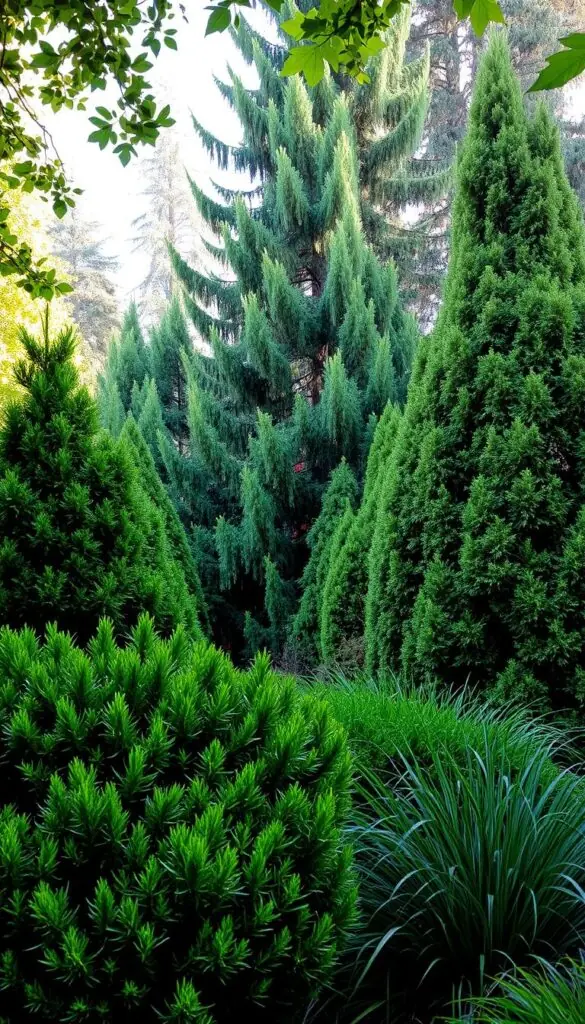
Build a backbone with evergreens. Thuja gives fast height and year‑round cover. Boxwood adds tidy structure where space is tight.
Layer in flowering shrubs like hydrangea and dogwood for seasonal color. Mix broadleaf evergreens (rhododendron, camellia) and needle evergreens for varied texture and scent.
Vines and trellis choices
Choose vines that suit your trellis: clematis for bright blooms, jasmine for sweet evening fragrance, and climbing hydrangea for steady shade. Train euonymus as a semi‑evergreen screen that tolerates regular pruning.
Ornamental grasses and movement
Ornamental grasses soften edges and add a calming rustle. Their motion blurs sightlines and eases noise, giving your sitting area a gentle soundtrack.
Container strategies
Use long trough planters with a simple lattice for fast, movable screening. Plant bamboo only in containers to prevent spread.
- Water: deep, infrequent watering the first season helps roots establish.
- Mulch: holds moisture and keeps roots cool.
- Prune: light clipping after bloom keeps forms neat and neighborly.
"Mix fast growers with long‑term choices so you get cover now and a richer garden later."
| Plant type | Best use | Maintenance note |
|---|---|---|
| Thuja (evergreen) | Quick hedging, year‑round cover | Prune annually; tolerates shaping |
| Boxwood (shrubs) | Formal edges, tight spaces | Slow growing; trim for neat lines |
| Clematis / Jasmine (vines) | Cloak trellis, add scent & flowers | Train on support; prune by type |
| Ornamental grasses | Soft borders, sound buffering | Cut back in late winter; low water |
Create Cozy Zones with Lighting and Furniture Placement
With gentle lighting and the right furniture placement, you can shape an inviting space that draws the eye inward. Small moves make a big mood shift at dusk. The goal is a warm, sheltered retreat that feels private and calm.
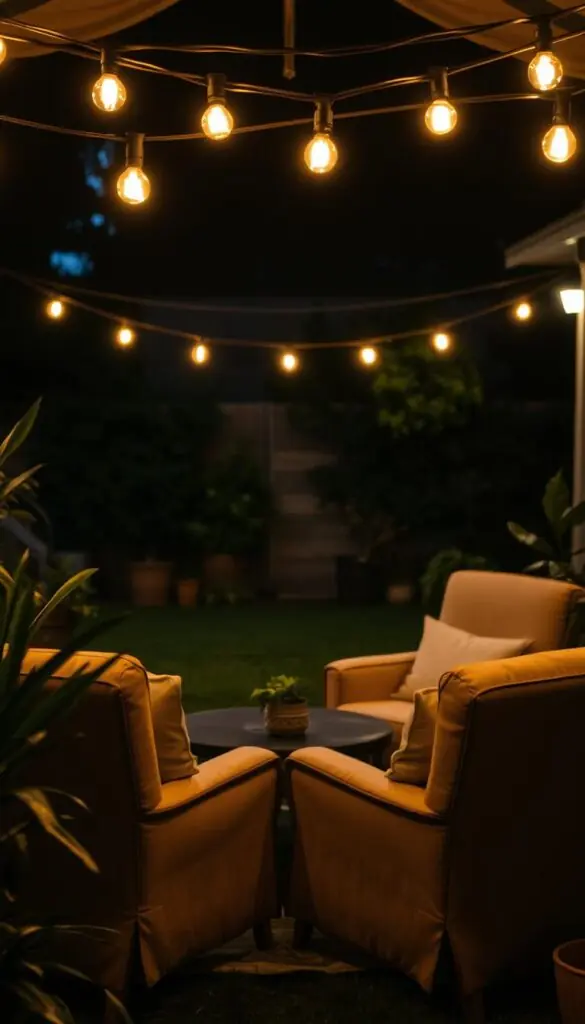
Start by layering light. Drape warm string lights above your patio table to form a soft ceiling that keeps attention inside the seating area. Tuck solar lanterns at knee height near lounge chairs to create a low, contained glow.
Use furniture as a quiet wall
Turn a bench with its back to unwanted views and flank it with tall planters. Angle a sectional into the greenest corner so your look lands on leaves and blooms, not the property edge. Pop up a patio umbrella beside an exposed chair to make an instant visual shield.
Choose one cocooning piece—a hooded chair or egg-shaped seat—to give a small porch a private nook without bulky changes. Keep cords neat or pick solar fixtures to stay renter-friendly.
Quick tips to shape the mood
- Keep lights warm (2700K–3000K) so the glow feels cozy and doesn’t glare at neighbors.
- Place a small uplight behind ornamental grasses or a trellis to backlight foliage and add depth.
- Add a dimmer or zone switches so dinner can be bright while the garden stays softly lit for layered interest.
"Soft layers of light and a focused furniture arrangement make any small area feel like a private retreat."
| Move | Why it helps | Renter-friendly option |
|---|---|---|
| String lights above table | Creates a contained ceiling that draws the eye inward | Clip-on bulbs or tension wire |
| Solar lanterns at knee height | Gentle glow, defines the seating area | Battery-free, no wiring |
| Bench back toward street | Forms a quiet, visual wall | Weighted planters instead of fixed anchors |
| Uplight behind plants | Backlit leaves add depth and dramatic interest | Low-voltage, stake lights |
Overhead Options for Shade and Privacy
A light overhead layer can transform how your patio feels and what neighbors see from above.
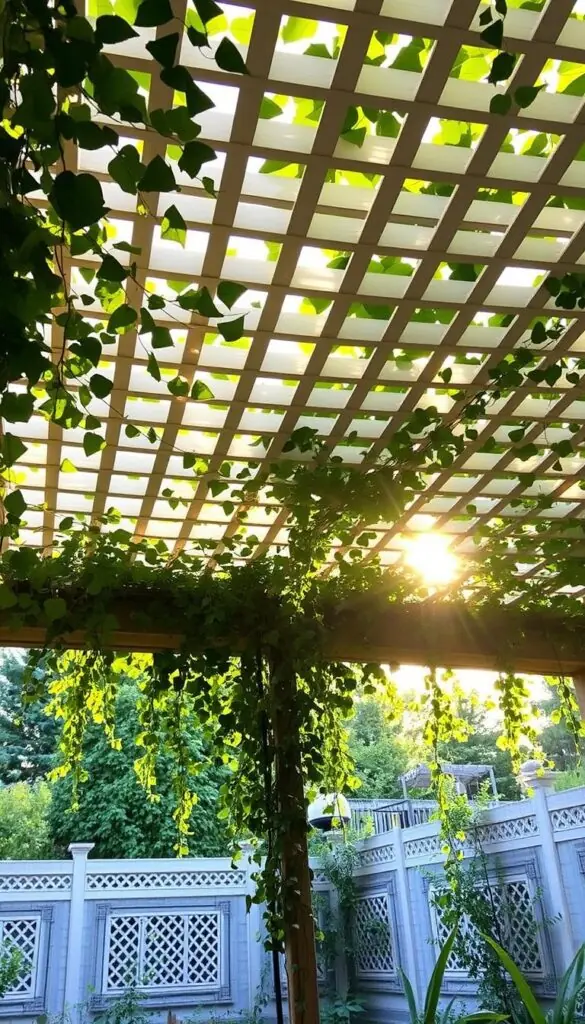
Think of a slim pergola or a stretched sail as a gentle roof. These elements cast dappled shade and interrupt second‑story sightlines from a nearby house. A framed lattice panel above eye level or an arbor with trained vines adds leafy coverage without heavy walls.
Simple, approachable options
- Slim pergola: breaks high-angle view and adds cooling shade.
- Sailcloth canopy: clip at three points for a quick triangle cover that shifts the view.
- Extend a trellis: add a framed panel to existing posts to block the final bit of sightline.
Use removable panels and seasonal hardware so you can take them down before storms. Anchor posts with surface mounts on concrete or buried footings on lawn installs. Match materials to your landscape—warm wood for softness, painted metal for a modern look.
"A single stretched sail or a narrow crossbeam often gives as much comfort as a full roof."
| Option | Best use | Key note |
|---|---|---|
| Pergola | Patio shade + screening | Pairs well with climbing vines |
| Sailcloth | Quick canopy | Fast install, removable |
| Framed panels | Second‑story screening | Simple add‑on to posts |
Tip: combine overhead elements with tall planters and trees to create a two‑tiered shelter that feels tucked in and lasting in your backyard. Regular spring checks—tighten bolts, re‑seal wood—keep the structure looking its best and the view modest.
backyard privacy Ideas That Grow Over Time
Pick a single exposed view and plan a mix of instant screens and plants that grow taller each season. This lets you enjoy quick cover now while the living layers mature into a soft, lasting screen.
Vertical gardens and living walls:
Use a freestanding vertical garden or faux greenery panels on an expandable trellis for immediate green. Living walls with pockets can host herbs and small plants. Faux panels work well where planting is limited or for renters.
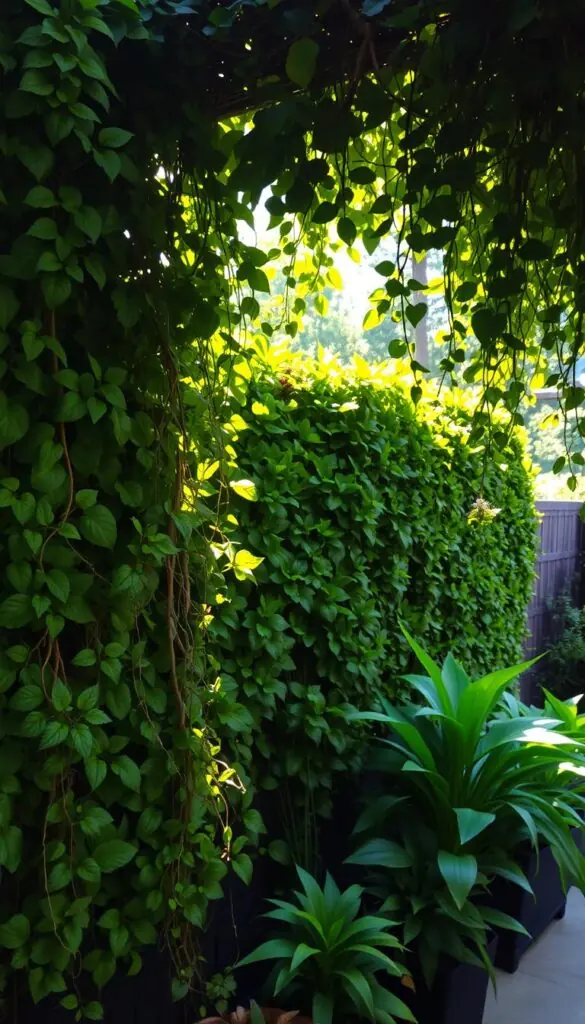
Layer now, grow later
Place a privacy screen close to seating for instant calm. Then plant evergreens, shrubs, and ornamental grasses behind it. Over months and years the plantings fill gaps and soften the look.
Seasonal timing and care
Plant in spring or early fall for best root growth. Install screens in dry, mild weather so anchors set well. Water deeply the first season, refresh mulch each spring, and prune lightly to keep forms tidy.
Mistakes to avoid
- Avoid overly solid walls that feel harsh and echo sound; choose slats or lattice instead.
- Keep running bamboo and other invasive plants in containers—do not plant them in-ground.
- Don’t block views you want to keep; map sightlines before you build or plant.
"Start with a temporary piece and remove it once the green has grown in—it's the best proof your layered plan works."
| Quick fix | Long-term partner | Why it works |
|---|---|---|
| Faux greenery panel | Evergreen hedge | Instant cover then year-round living growth |
| Freestanding privacy screen | Shrubs + ornamental grasses | Moveable now, softens into a natural border |
| Vertical pocket planter | Vines on trellis | Fast color and scent that vines will later enrich |
Conclusion
Think layered—and start small, with one screen or planter by the spot you use most.
Simple screens, thoughtful plantings, and smart placement make a big difference fast. Freestanding trellises, framed lattice, and planter panels give instant cover while trees and shrubs mature.
Use warm lights and furniture to shape the view at dusk. Add a slim overhead shade for higher sightlines from a neighbor’s house. Check local rules so your work stays stress‑free.
Enjoy the process: blend movable pieces with lasting plants, keep the look kind to neighbors, and sip something warm as the garden grows into your calm, private space.
FAQ
What does “privacy without fences” really look like?
It’s a layered approach that uses soft edges and natural materials to create a sheltered feel. Think trellis panels, lattice, tall shrubs, ornamental grasses, and planter-trellis combos arranged so sightlines are blocked but the space still feels open and lush. This gives you a calm retreat without a solid wall.
Where should I start when planning a more secluded yard?
Start by mapping sightlines from neighboring windows, balconies, and common paths. Note ground-level and second-story views, then place movable screens, planters, or taller plantings closer to the house for higher views. Keep tools and materials handy—planters, lattice or trellis panels, posts, slats, zip ties, quality potting mix, a cordless drill, and pruners—so you can test arrangements quickly.
How do I choose placement for screens and plants for the best effect?
Use the golden rule: the closer the possible eye line, the closer and denser the screen should be. For second-story views, raise screens or add overhead elements like pergolas. For sound softening, use denser plantings or layered hedges. Always measure sightlines from multiple angles before installing.
Do I need permits or permission to add screens, trellises, or tall plants?
Often you don’t, but check local bylaws and HOA rules before building permanent structures. Freestanding panels and container plantings are usually allowed, while built walls or permanent decking may require permits. When in doubt, call your municipal planning office or HOA for clear guidance.
Which freestanding screens and materials work best for small spaces or renters?
Lightweight, portable options like framed lattice, slatted wood panels, PVC vinyl trellises, and folding screens are ideal. Planter-trellis combos and portable panels give privacy and greenery without permanent changes. Use zip ties or removable brackets to anchor them safely without damaging walls.
What plants give quick screening and year-round coverage?
Evergreens like Thuja and dense boxwood provide fast, all-season screening. Ornamental grasses add movement and soften sound. Combine fast growers in the short term with longer-lived trees or layered shrubs to build a living wall that matures gracefully.
What climbing plants work best on trellises and lattices?
Clematis, star jasmine, climbing hydrangea, and trained euonymus climb well and add blooms or fragrance. For fast cover, consider fast-growing vines suited to your climate. Use trellis spacing that supports roots in containers if you’re in a rental situation.
How can furniture and lighting help create private, cozy zones?
Arrange seating so backs face potential sightlines and use high-backed benches, sectionals, or tall planters as gentle barriers. Add soft lighting—string lights, solar lanterns, and low uplighting—to draw the eye inward and make the space feel intimate and inviting at night.
What overhead options help with second-story views and shade?
Pergolas, arbors, sailcloths, and tall trellis add-ons extend screening upward and provide shade. Climbing vines or shade cloth on these structures increase coverage and create a sunlit, sheltered feeling underneath.
How do I combine quick fixes with long-term plantings so things look good right away?
Layer movable panels or container bamboo for instant screening while you plant evergreens, shrubs, and perennials that will fill in over time. Vertical gardens, living walls, and faux greenery panels can add immediate texture while living plants establish.
What common mistakes should I avoid when creating outdoor screens?
Avoid solid, tall walls that feel harsh and block all light. Don’t plant invasive in-ground species without checking local guidance. Avoid poor placement that blocks views you actually want, and don’t neglect anchoring and seasonal maintenance—spacing, pruning, and replacing annuals keep screens attractive and safe.