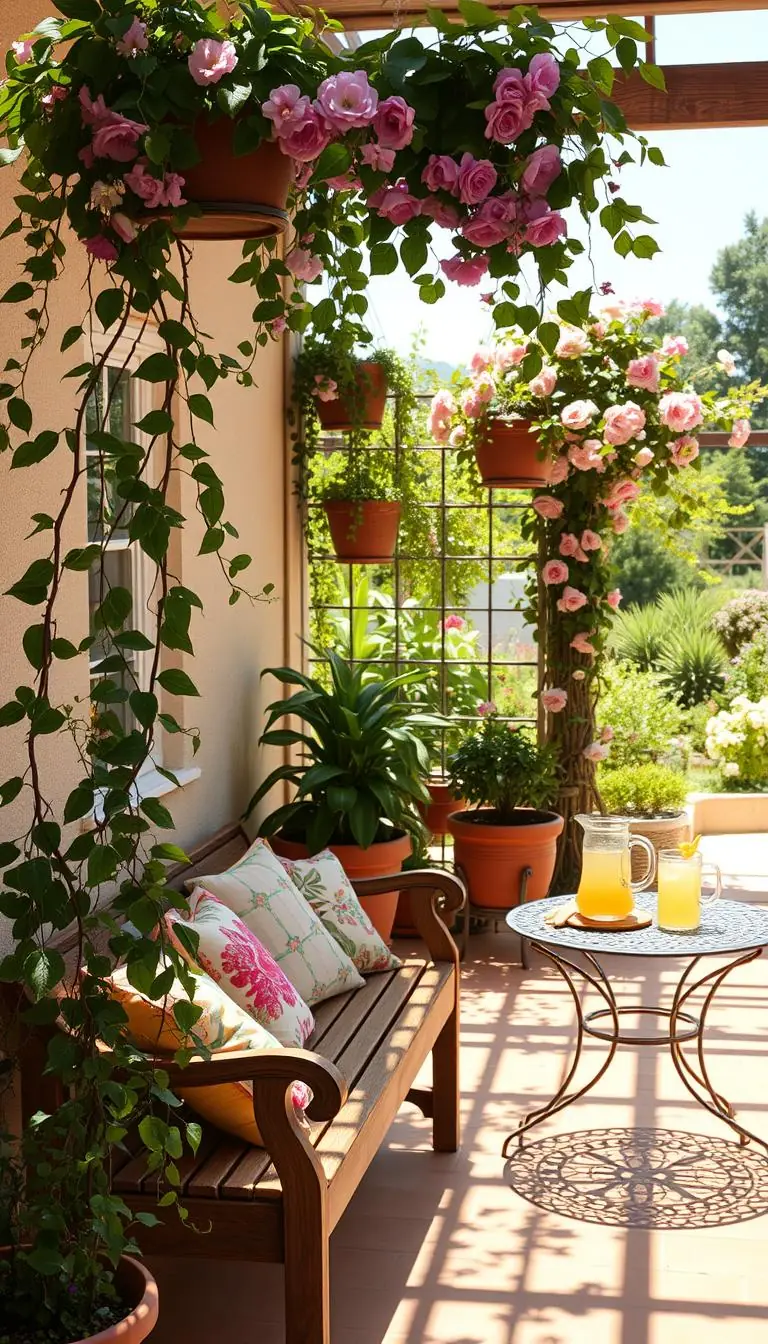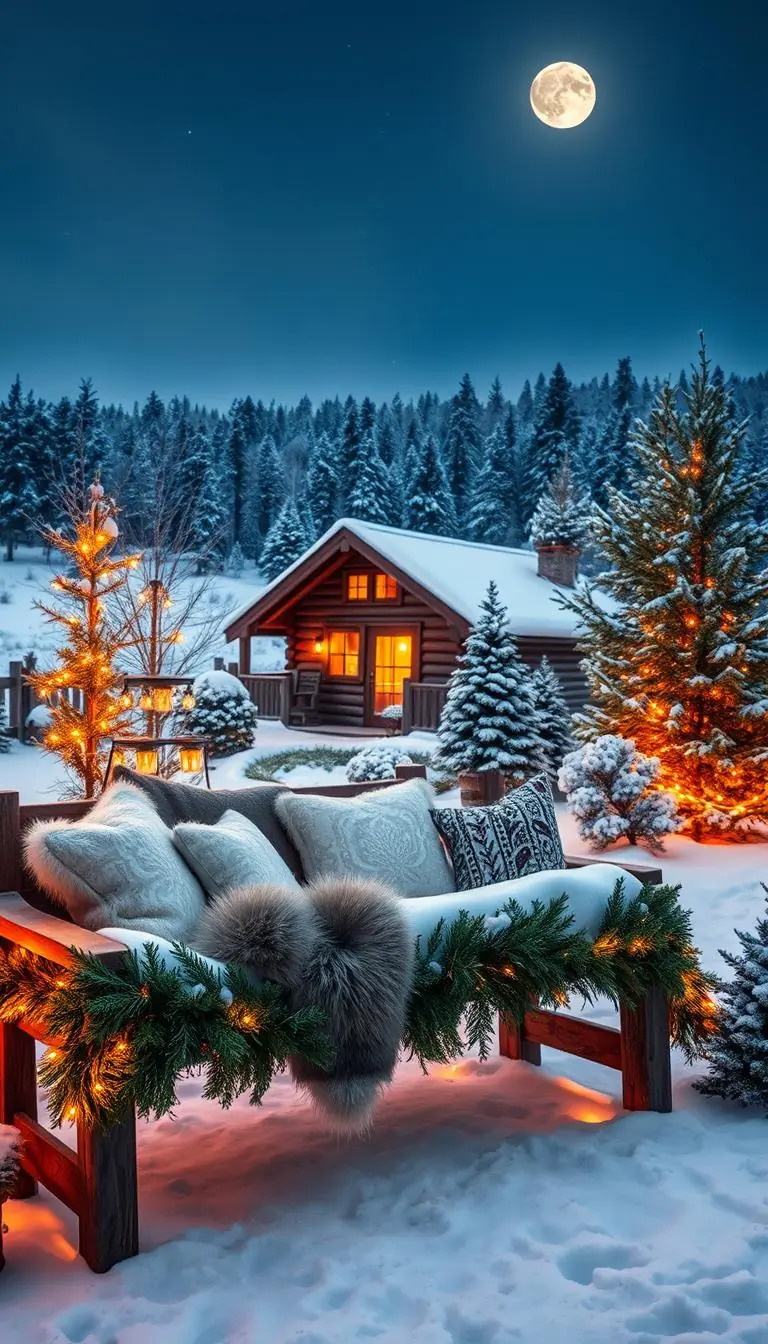
Imagine stepping outside at dusk, the scent of jasmine drifting past a row of compact trees and the soft crunch of pea gravel underfoot.
Do you dream of a calm retreat just beyond your kitchen door? You can make even the tightest yard feel like an outdoor living room with thoughtful design and a few smart moves.
Start by setting priorities: what moments matter most — morning coffee, a kid’s play spot, or an evening for friends? Then plan a simple layout that blends indoor and outdoor living with French doors or an extended deck surface.
Use clean edges, vertical planters, and well-placed lighting to open sight lines. Choose one compact tree for dappled shade, swap a strip of turf for a pea-gravel patio, and keep tools like a level and hand pruners handy.
We’ll guide you through quick, seasonal steps—plant in fall or early spring, hang string lights before winter—and practical tips to avoid clutter and over-planting so your backyard space feels roomy and inviting.
Key Takeaways
- Pick priorities and plan a clear layout to maximize space.
- Blend indoor-outdoor living with doors, decking, and container plants.
- Use visual tricks: clean edges, vertical planting, and simple materials.
- Choose right-sized trees, pea gravel, and built-in seating for big impact.
- Keep tools ready (measuring tape, painter’s string, hand pruners) and work by season.
Start with Purpose: Priorities and a Functional Layout
Start with why you use the space and let that guide every layout choice. When you name needs first, you avoid filling the area with things that look nice but don't work for day-to-day living.
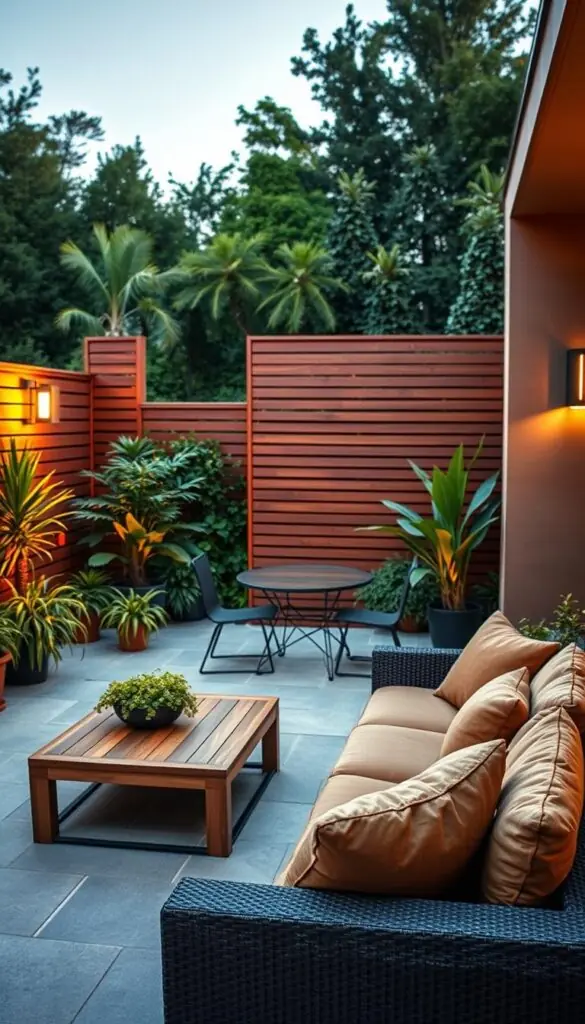
Map must-haves vs. nice-to-haves
Spend 20 minutes listing what matters. Rank items so a bar area never replaces a family dining zone.
- Must-haves: dining table, shade, play corner, clear path to the house.
- Nice-to-haves: bar cart, water feature, decorative screen.
Plan traffic flow and test footprints
Measure the patio and yard edges with a tape measure. Sketch a plan to scale on graph paper or chalk the layout on the ground.
Use cardboard cutouts to test seating and grill footprints. Keep lanes at least 36 inches wide so people move easily without bumps or spills.
| Task | Location Tip | Tool to Test |
|---|---|---|
| Prep near kitchen | Within a few steps of the house for quick trips | Measuring tape, chalk |
| Grill placement | Downwind and away from play routes | Cardboard mockup |
| Seating area | Tuck where morning breeze and light meet | String line, stakes |
Group functions by task: prep near the door, dining close to the grill, and lounging out of the main way. Leave corners for storage or an herb rack to keep the whole yard feeling open.
Quick tip: Live with the chalked plan for a week. Small tweaks after a few uses often make the layout more comfortable.
Blend Indoor-Outdoor Living for an Instant Space Boost
Let light and one continuous floor tone erase the line between home and garden. Open, bright openings make your patio read like an extra living room rather than a separate plot.
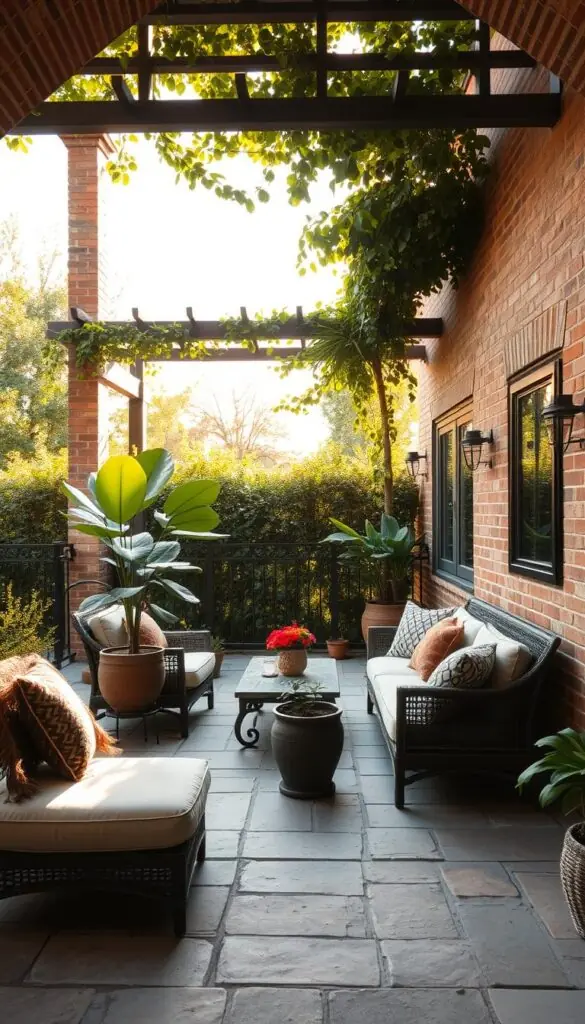
French doors, big windows, and matching floor materials
If you can, upgrade to French doors or widen a slider to bring in light. That single change makes the outdoor patio feel like a natural extension of your house.
Continue the look of your interior floors outside with a similar-tone paver or porcelain tile that mimics wood. When surfaces match, your eye reads more space and your furniture choices feel cohesive.
Container plants by the threshold to bridge house and yard
Place two generous planters at the door—rosemary and dwarf bay are great picks for year-round scent and kitchen use. They add structure and invite you outside.
- Anchor the doorway with a weatherproof rug and an outdoor rug pad to stop slipping and define the entry.
- Use door sweeps and a proper threshold to keep leaves and water out, and re-oil wood thresholds in spring for long life.
- Match indoor furniture tones—light oak or woven pieces—so the transition feels seamless.
Quick tip: Add a dimmer to interior lights near the door so evenings fade gently from living to outdoor space.
Small Backyard Visual Tricks That Make Rooms Outside
Clear lines and a focused palette let your outdoor space breathe. A few careful edits—clean edges, fewer materials, and open sight lines—change how your landscape reads. These moves make the whole area feel calmer and more useful.
Start by edging beds with steel or pavers for crisp, intentional lines. Removing bulky railings that cut a deck in half can open view corridors. If code allows, swap them for cable or glass rails to keep the horizon visible.
Tools to keep on hand: a half-moon edger, a spade for planting, and a tamper for compacting paver base. These small tools deliver big visual returns.
- Use a half-moon edger to create smooth curves; crisp edges make a patio look larger.
- Limit hardscape materials to two or three—concrete pavers, pea gravel, and cedar work well together.
- Keep taller plantings to corners so the center of the yard feels open and inviting.
- Lay pavers in a running bond parallel to the longest edge to trick the eye into more length.
- Hide hoses and bulky gear; uninterrupted sight lines are the easiest way to widen a view.
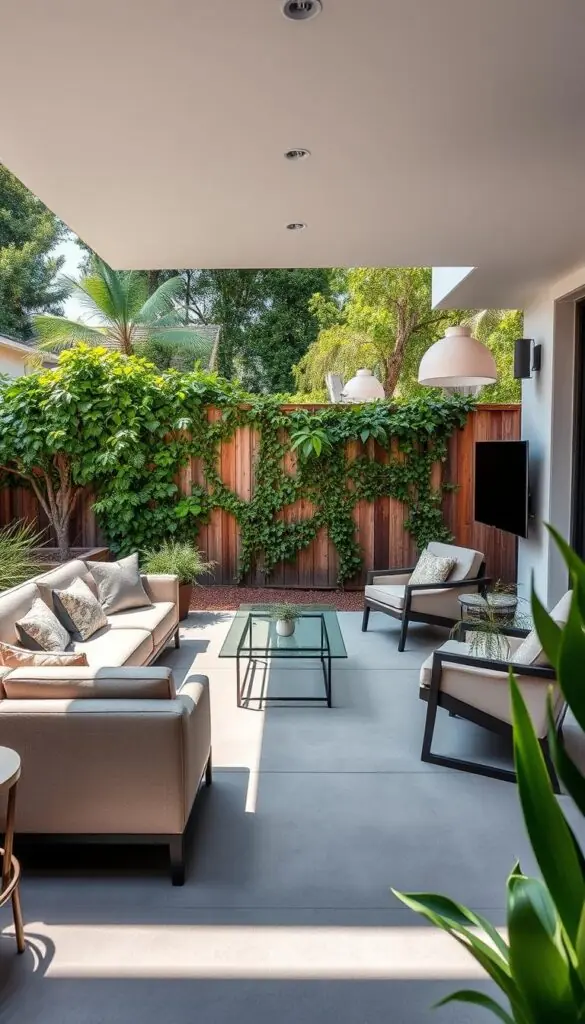
Create Outdoor Rooms and Zones without Clutter
Give each activity its own spot and the whole patio will read larger. Start by picturing a dining room, a living room, and a prep zone outdoors. Then mark them gently—no walls needed.
Simple zoning tools work best:
- One outdoor rug per zone acts like an invisible wall for the dining area and the lounge area.
- Match planters at the corners to tie zones together; herbs near the kitchen smell lovely as you pass the table.
- Keep the grill just outside the dining rug and use a heat-resistant mat beneath it for safety and clean floors.
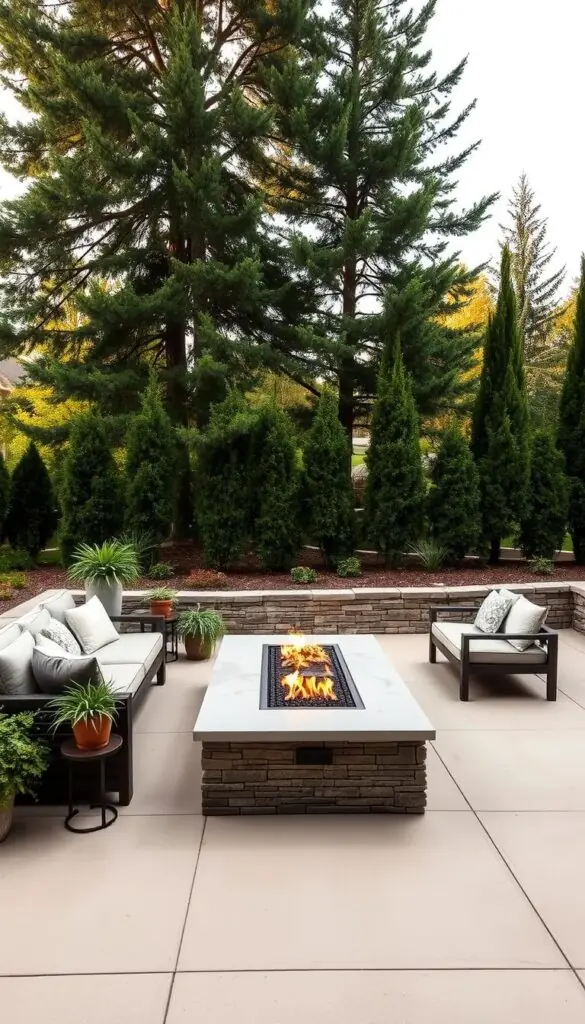
Choose a compact, extendable table and benches that tuck under when you’re not entertaining. A single strand of warm string lights stitches the zones into a cozy, shared living space.
- Pick low-slung seating in the lounge so sight lines stay open across the backyard and garden.
- Leave at least 3 feet for walkways; test spacing with blue painter’s tape before you buy furniture.
- Use outdoor-rated extension cords and a GFCI outlet for lamps or a prep cart near the kitchen door.
Quick tip: Battery lanterns or solar markers highlight edges without cords. Consistent colors and one overhead light make separate zones read as one calm, usable room.
Go Vertical with Greenery to Free Up Floor Space
Take your planting up a level to free the floor and make the yard feel taller.
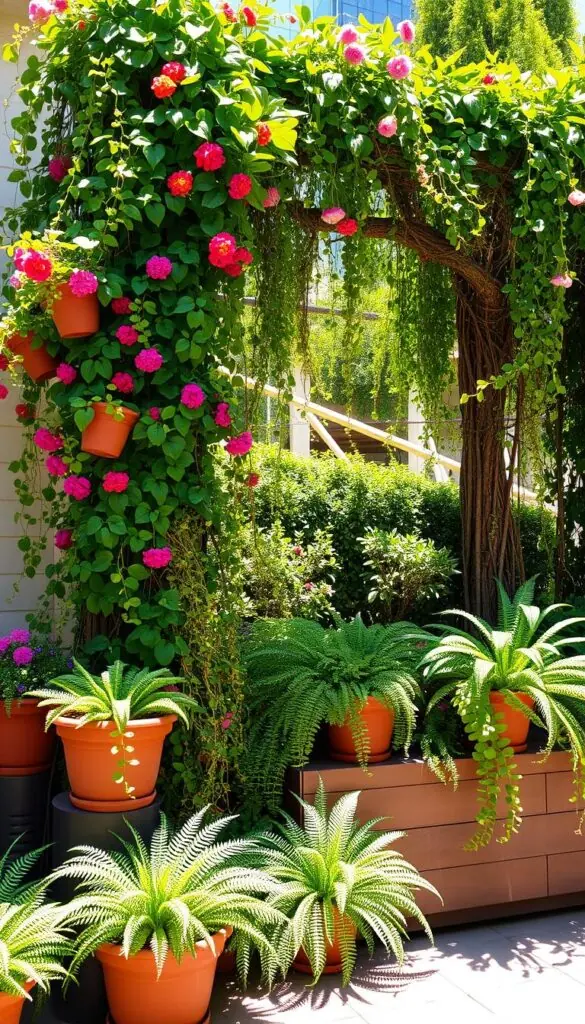
Vertical systems stretch your garden upward and save usable space. They let you grow food and fragrance without filling the center of the patio or lawn.
Easy systems that work
Try modular wall planters clipped to a cedar or powder-coated steel panel for herbs and lettuces. Mount panels on a wall or fence and harvest at arm’s reach.
Trellises, towers, and scented screens
- Run a trellis for cherry tomatoes or cucumbers; tie stems loosely with garden tape so air flows and fruit stays clean.
- Use a stacked herb tower by the patio for basil, thyme, and mint to keep flavors near the grill and free floor space.
- Plant a scented climber such as star jasmine or honeysuckle along a fence to add privacy, soft movement, and evening fragrance.
- Keep tall elements at the side property line so the center of the yard stays open and airy; reserve trees for corners or boundaries.
- Pre-drill with a masonry bit and use proper anchors for brick or stucco; secure heavy planters safely with zip ties or brackets.
- Choose lightweight potting mix and slow-release fertilizer to avoid nutrient loss in vertical planters.
- Water from the top; a drip line on a timer makes summer care simple and consistent.
- Mix evergreen vines with seasonal bloomers and prune lightly after flowering to keep paths and sight lines clear.
Timing tip: Install trellises in late winter before vines leaf out so roots settle early. With a few vertical moves, your space will feel more immersive, lush, and easier to live in—right outside your door in the backyard.
Add a Pergola for Shade, Charm, and Structure
A well-placed pergola makes a modest patio read like a true living room outdoors.
Use a compact 8x10 pergola to define a dining room or seating nook without heavy walls. It creates instant destination, offers shade, and draws people in.
Pick materials that match your style: cedar for a warm, natural look or powder-coated aluminum for low maintenance. Both age nicely and suit a tight patio beside trees or near a lawn.
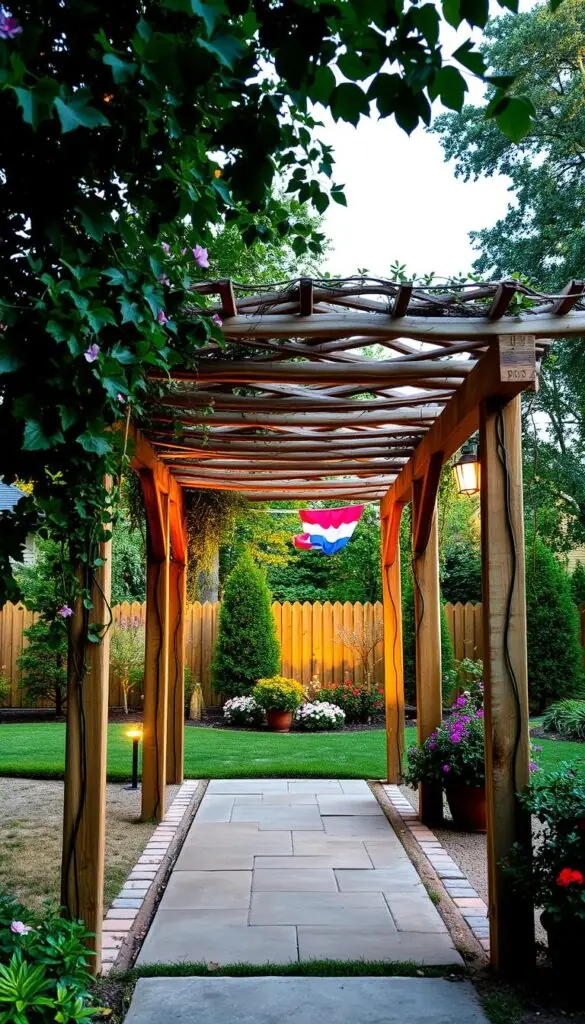
Train a light climber such as clematis for seasonal flowers, or add shade cloth for steady cover. Hang a pendant or lantern hooks to make this outdoor room cozy after dusk.
- Align posts with patio edges for clean lines.
- Set posts in quick-set concrete using a post hole digger and a level; brace while curing.
- Keep at least 7'6" head height and orient slats east-west for more midday shade.
- Check local utility lines before digging.
| Material | Look | Maintenance | Best use |
|---|---|---|---|
| Cedar | Warm, natural | Stain/seal every 2-3 years | Dining nook, classic style |
| Aluminum (powder-coated) | Sleek, modern | Low; occasional wash | Low-maintenance living area |
| Shade cloth & vines | Soft, green | Seasonal pruning or tension checks | Filtered shade under trees |
Furnish Smart: Multi‑Use, Low‑Slung, and Foldable Pieces
Smart furniture choices turn a tight patio into a flexible living area you actually use. Pick multi‑use pieces that fold or hide storage so you keep sight lines open and the space feels larger.
Start with a foldable bistro set. A two‑person table and chairs work for weekday meals and fold flat for projects or yoga. Look for lightweight aluminum frames with acacia or teak accents so the set is easy to move but still warm in tone.
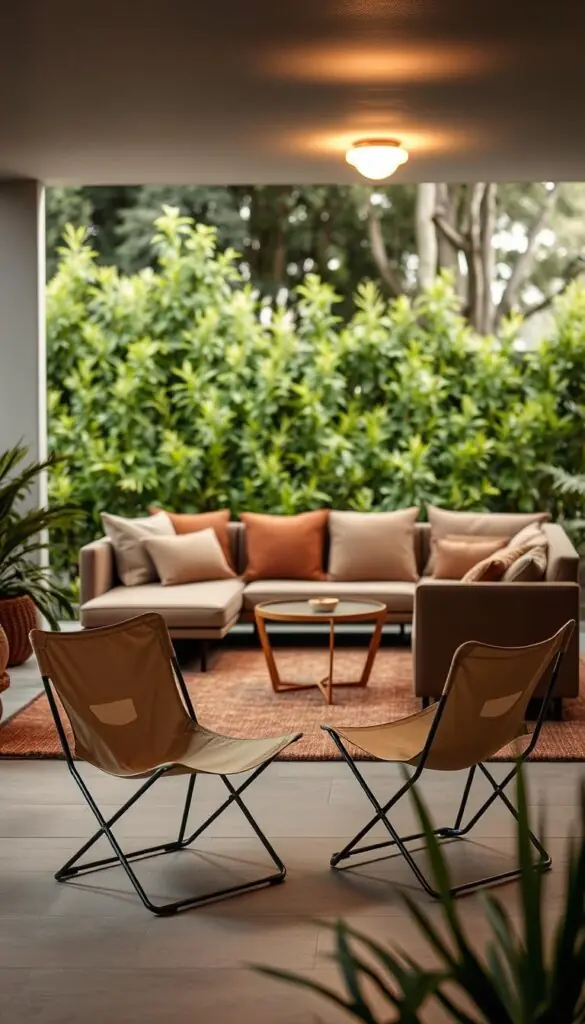
Go dual-purpose and low
Choose a storage bench to stash cushions, throws, and garden tools. Fewer loose items equals cleaner sight lines and less clutter.
Consider a propane fire pit table with a solid lid. By day it reads as a coffee table; by night it becomes a cozy fire pit for marshmallows and conversation.
- Keep seating low-slung so you can see across the yard; tall backs can make the space feel boxed in.
- Measure seat height and circulation: leave 24–30 inches behind chairs and check tabletop heights for comfort.
- Match cushion colors and use covers when rain is forecast to extend life; rubber feet or glides protect the patio and ease rearranging.
Materials and small maintenance wins
Mix a durable aluminum frame with acacia or teak accents for a light look that lasts. Choose outdoor-rated covers and a propane table with a locking lid to keep sparks and debris contained.
Quick tip: Keep a small rolling cart for drinks or herbs. It tucks against a wall when you need open floor space and pulls out for living and dining moments.
Dial In Color and Texture for Big Impact in a Small Space
A focused palette and layered textures can make your patio feel like a full room.
Pick one accent color and repeat it in two or three places — a pillow, a glazed planter, and a rug border. That repeat gives the whole yard a calm, intentional look.
Let foliage do most of the work. Use boxwood or compact hollies for structure, then add grasses and hydrangeas for form and seasonal bloom.
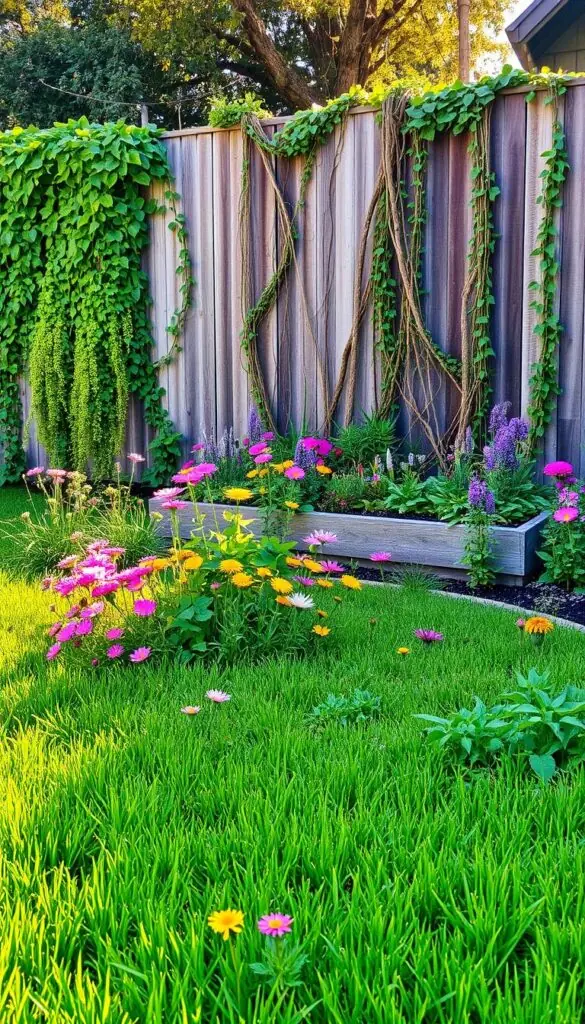
Blend textures: smooth pavers underfoot, woven chairs, and a soft outdoor throw create a layered, welcoming room. Keep metal finishes consistent on lanterns and planters so the space reads cohesive.
"One bold planter beats five tiny pots — it gives scale and reduces clutter."
- Repeat your accent color in cushions and a pot glaze for a unified style.
- Use a narrow pea gravel band along an edge to add a formal touch and lengthen sight lines.
- Swap neutral covers for bright pillow covers in summer to refresh the mood without new furniture.
Tip: Add a slender tree or trellis for vertical interest so you gain height without sacrificing floor space. The right picks and a simple palette will make your garden feel calmer and larger, right outside your door.
Upgrade Hardscape: Concrete, Pea Gravel, and Wood in Balance
Extend your patio without breaking the bank by mixing concrete, gravel, and timber. This design approach opens spaces and keeps the look modern and calm.
Step-by-step way to extend a slab:
- Outline the new patio edge with pavers where you want the landing.
- Lay landscape fabric, add 3–4 inches of compacted base rock, and level with a hand tamper.
- Keep a gentle slope (~1/8" per foot) away from your home for drainage.
- Top with 2–3 inches of pea gravel and bed pavers so tones match the existing concrete.
Use gravel to make a side landing for a grill or a kitchen prep nook. Add a slim pergola post line at the edge to frame the space without blocking movement.
Pick furniture with slender legs so the gravel stays easy to rake. Thread planting pockets—thyme or sedum—between pavers and plant upright trees for height without stealing floor area.
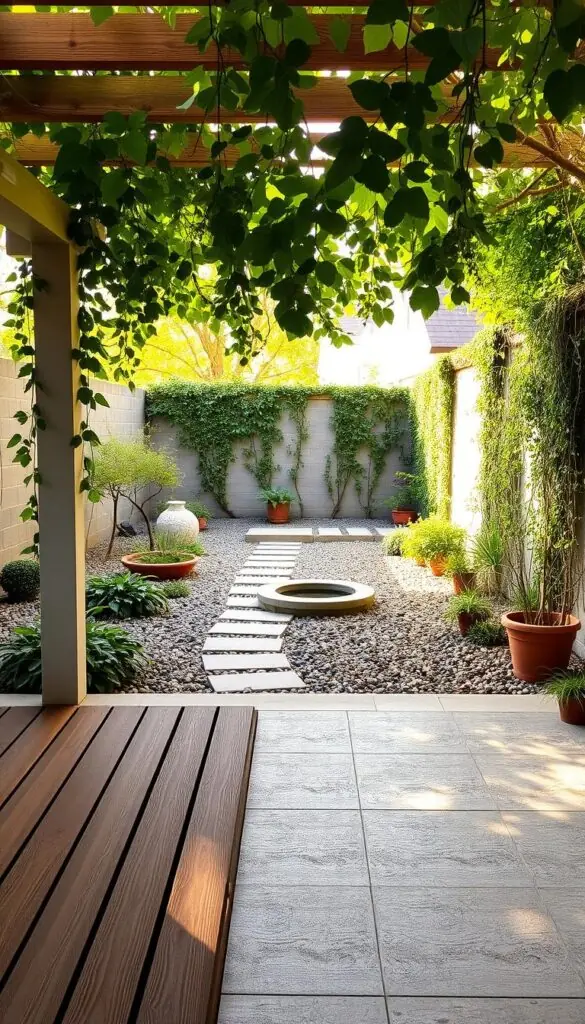
| Task | Material | Tool |
|---|---|---|
| Base prep | Landscape fabric + base rock | Shovel, rake, hand tamper |
| Edge & match | Pavers to match concrete tone | Level, string line |
| Top finish | Pea gravel landing | Rake, broom |
| Optional | Step-down deck meeting gravel | Drill, saw, stain |
Shade Solutions for Sunny Days
Midday heat can make a lovely patio feel unusable — the right shade brings it back to life. Portable options give instant relief. Fixed systems add long‑term structure and style.
Portable vs. fixed: An adjustable cantilever umbrella swings with the sun and keeps seating free of a center pole. Shade sails and pergola attachments create steady cover and read as part of the design.
Pick a compact, well‑behaved tree on the southwest side to block harsh afternoon sun while keeping winter light. Prune yearly so dappled shade falls over the seating zone and pathways.
- For instant relief, use a cantilever umbrella that clears the table and moves as the sun shifts.
- Install a triangle shade sail with rated hardware; anchor to post anchors and tighten with a socket wrench, but avoid over‑tightening.
- Pair a pergola with reed screens or shade cloth for breathable coverage on hot summer days.
- Test shade at 3 p.m. where the area gets hottest and aim for about 60–70% coverage in the main seating spot.
Tip: Choose light fabrics and add a small fan or misting line to extend comfort. Thoughtful shade makes your backyard feel usable and calm again — a true extra space for daily life.
Light the Night: String Lights, Path Glow, and a Hint of Drama
Add light and your outdoor area becomes usable after dusk. The right plan highlights the landscape, flatters greenery, and makes your patio feel like an extra living room.
Layer task, ambient, and accent lighting to extend evenings
Start with three layers:
- Path markers at ankle height for safe steps and a soft welcome.
- Warm string lights overhead to turn the seating nook into a twinkly living room after sunset.
- One accent uplight on a specimen tree or fountain to create depth and drama.
Use 2700K bulbs for a cozy, firelight glow that flatters wood, furniture, and plants. Position a task light near the grill and dining table so cooking and conversation stay easy.
Safety tip: Hide cords along beams or fence rails and plug into GFCI outlets. Add a smart timer so lights click on at dusk and off at bedtime. Solar path lights work well where wiring is tricky.
Cozy Heat: Fire Pit or Fireplace for Four‑Season Evenings
Lighting a fire invites conversation, extends dining hours, and turns your patio into a welcoming room.
Choose a portable gas fire pit if you want quick heat and little fuss. A compact gas bowl can take less than five square feet and moves when you need the space. It’s smokeless, easy to light, and neighbor‑friendly for weeknight use.
If you prefer a statement, a built-in fireplace gives a lasting, room-like focal point. Scale it to the patio so it doesn’t overwhelm the space and let it anchor a semi-circle of chairs for easy conversation.
- Keep clearances: at least 10 feet from buildings and trees; avoid overhangs.
- Use a spark screen, a fire extinguisher nearby, and a heat-resistant mat under portable units.
- Angle seating in a gentle arc and add small side tables for cups and plates.
- Store fuel safely in a deck box; pick a pit with a serving lid if you entertain.
Consider wind direction and local codes before you build. In summer, lower the flame for a softer glow. In shoulder seasons, keep extra blankets on hand and enjoy longer nights outdoors.
Water Adds Calm: Fountains and Small Features That Fit
Water softens sound and scale, turning your open area into a private, soothing spot.
A compact fountain can transform a patio into a gentle retreat without eating valuable floor space. Pick a self-contained, plug-in model that runs to a GFCI outlet for quick setup and minimal fuss.
Space-saving options work best: a wall-mounted spout over a narrow basin frees the floor, and a small, freestanding bowl tucks beside seating so the sound of water softens street noise and improves the experience of your outdoor room.
- Match the fountain finish to nearby planters for a cohesive garden look.
- Top up water during hot spells; pumps last longer when fully submerged.
- Clean the pump monthly — a quick rinse cuts algae and keeps flow steady.
- Add one or two moisture-loving plants nearby and a stone splash zone under the basin for easy maintenance.
- Light the feature softly from below at dusk so water shimmers without glare.
Keep it simple: in a limited area, a quiet trickle beats a roaring cascade for daily use and makes the backyard space feel like an intentional addition to your home.
Walkways, Retaining Walls, and Built‑In Seating that Save Space
A clear path and a few low walls can turn a tight plot into a visitable, layered room. Use paths to guide movement and make the entire yard feel longer.
How to lay a simple paver path:
- Excavate 4–6 inches along the line you want; a straight run or a gentle curve both work to lead the eye.
- Add compacted base rock, check level, then set pavers tight on a 1/4" joint. Tools: spade, compactor, level, masonry saw.
- Finish edges with concrete or stone steps where levels change so transitions feel natural and safe.
Terraces and tucked seating
Build a short retaining wall to carve a planting terrace on a slope. Level pockets are easier to use and maintain, and they add distinct landscaping rooms.
Cap the perimeter wall with wide stone or a wood ledge to double as extra seating. A slim bench along the fence frees the patio floor and packs more guests into the same area.
Carry the same path material to the patio edge and align a pergola post with the way you walk for clean geometry. Plant narrow trees along the route to add height without crowding the space.
Family‑Friendly Touches: Kids’ Corners, Storage, and Privacy
Create a kids' corner that tucks fun against a fence so the main patio stays clear. When play goes up instead of out, you keep living areas usable and peaceful.
Vertical play saves floor space. Mount a chalkboard on a wall and add a row of mini climbing holds to the fence. These anchors keep activity contained and easy to supervise.
Use low, lidded benches and deck boxes for toys and cushions. They give seating and hidden storage in one move so the space looks tidy fast.
Privacy that’s neighbor‑friendly
Plant a slim hedge of arborvitae or container clumping bamboo along the side for a green screen that won’t crowd the yard. Choose a good‑neighbor fence that looks attractive from both sides to keep peace with nearby homes.
Simple routines and safe zones
- Rotate outdoor toys seasonally; store extras to avoid clutter and extend toy life.
- Use a covered sandbox in a narrow side strip with a fitted lid to keep it clean and out of traffic.
- Stash scooters and balls along the wall when not in use to remove trip hazards from the main seating area.
"Make play vertical and storage invisible — the yard will feel larger and calmer for everyone."
| Feature | Benefit | Quick tip |
|---|---|---|
| Fence chalkboard & holds | Active play without taking floor space | Use weatherproof plywood and safe holds |
| Lidded bench / deck box | Seating + hidden storage | Choose a lockable lid and drain holes |
| Slim privacy hedge | Green screening that respects neighbors | Plant 3–4' apart for quick coverage |
Keep plantings simple and non‑toxic near play zones. With a few vertical choices and tidy storage, your backyard stays inviting for kids and adults alike.
Conclusion
Start with one simple weekend project and watch your patio feel more generous overnight. Edge a bed, hang a warm string of lights, or add a container by the door—pick the move that excites you most.
Keep the plan simple: one unified color, clear paths, and a couple of features you’ll use every day. Treat the outdoor area like another living room—match tones to the interior and anchor a compact table near the kitchen for easy meals.
Add a vertical element—a trellis, slim trees, or a pergola—to lift the eye and free up floor space. Tidy edges, layered lighting, and seasonal comfort (shade or a throw) will help the landscape grow with you.
Enjoy the process. Small changes, done with care, make a big, lasting difference in how your home and garden feel.
FAQ
How do I choose the right purpose and layout for my compact yard?
Start by listing what you need most — dining, play, grill, or growing food — and what would be nice to have. Sketch a simple plan that groups related activities (like dining near the kitchen) and creates clear paths so seating, grill, and circulation don’t collide. Prioritize one or two zones to avoid clutter and keep the space feeling calm and usable.
What’s the easiest way to blend indoor and outdoor spaces?
Use large openings such as French doors or sliding glass to connect rooms visually. Match or complement flooring materials at the threshold and place container plants or a small rug to bridge the two areas. This continuity makes the outdoor area feel like an extension of your living room or kitchen.
How can I make a compact yard feel larger without major construction?
Rely on visual tricks: keep edges clean, limit the number of materials, and maintain unobstructed sight lines. Use long, narrow planting beds or a linear path to draw the eye outward. Light colors for paving and pared‑back furniture help create an airy, more spacious feel.
What are low‑clutter ways to create distinct outdoor rooms?
Define zones with rugs, planters, and layered lighting instead of bulky partitions. A small rug anchors a dining area, a planter or low wall separates a lounge, and task lighting signals the grill station. These subtle cues organize the space without crowding it.
Are vertical gardens a good solution for limited floor space?
Yes. Wall planters, trellises for tomatoes, and herb towers free up ground area while adding lush greenery. Vertical plantings also increase privacy and introduce scent and texture without taking valuable square footage.
Do pergolas work in a compact setting, and what should I consider?
A right‑sized pergola adds shade, structure, and a visual focal point without overwhelming the yard. Choose a design that fits the scale, use climbing vines or a retractable fabric for extra shade, and place seating underneath to create an inviting outdoor room.
What furniture types work best for a modest outdoor area?
Pick multi‑use, low‑profile, and foldable pieces: bistro sets, storage benches, and nesting tables keep the area flexible. Low‑slung seating preserves sight lines and makes the room feel larger. Opt for durable materials like powder‑coated steel or teak for easy upkeep.
How do I use color and texture effectively in a small space?
Use a limited color palette with one or two bold accents to avoid visual chaos. Mix textures — soft cushions, woven planters, smooth concrete — to add depth. Lighter paving and reflective surfaces increase perceived space, while a single vivid planter or cushion provides punch.
What hardscape materials should I combine to extend a patio affordably?
Balance concrete, pea gravel, and wood to create interest on a budget. Use concrete pavers for a stable dining area, pea gravel for casual zones, and wood decking to warm up seating spots. Thoughtful transitions between materials make the yard feel larger and more intentional.
How can I add shade without planting a large tree?
Consider shade sails, cantilever umbrellas, or a compact ornamental tree. These options provide immediate relief from sun and can be scaled or moved as needed. A pergola with retractable fabric also offers adjustable shade without permanent canopy growth.
What lighting plan makes evenings feel cozy and safe?
Layer ambient string lights, task lighting for cooking or paths, and accent lights for plants or architectural features. Low‑voltage path lights guide movement, while dimmable fixtures or LED string lights extend time outdoors and set a relaxed mood.
Is a fire pit a good investment for year‑round use?
Yes — a small fire pit or compact fireplace creates warmth and extends the season. Choose a model sized for your seating arrangement and local codes. Built‑in seating around the pit saves space and keeps sight lines clean.
Can water features fit into a modest area without overwhelming it?
Small fountains, bubbler basins, or wall‑mounted features add calming sound and visual interest without taking much room. Place them near seating or the entry to create a peaceful focal point and help mask neighborhood noise.
How do walkways, retaining walls, and built‑in seating save space?
Paver paths guide movement and make the yard feel longer. Low retaining walls create terraces for planting and seating, while integrated benches tuck into perimeters to free up central floor space. These elements organize the yard and reduce the need for extra furniture.
What family‑friendly additions keep the yard tidy and welcoming?
Add vertical play features like a fence‑mounted climbing panel or chalkboard, hidden storage benches for toys and cushions, and green screens for privacy. These keep clutter out of sight, maintain clear sight lines, and make the space safe and inviting for kids.
How do I maintain a cohesive design across all these ideas?
Choose a consistent material palette and two primary colors, then repeat key elements — a plant type, a light style, or a furniture finish — across zones. That repetition ties areas together so even a modestly sized yard feels thoughtfully designed and peaceful.