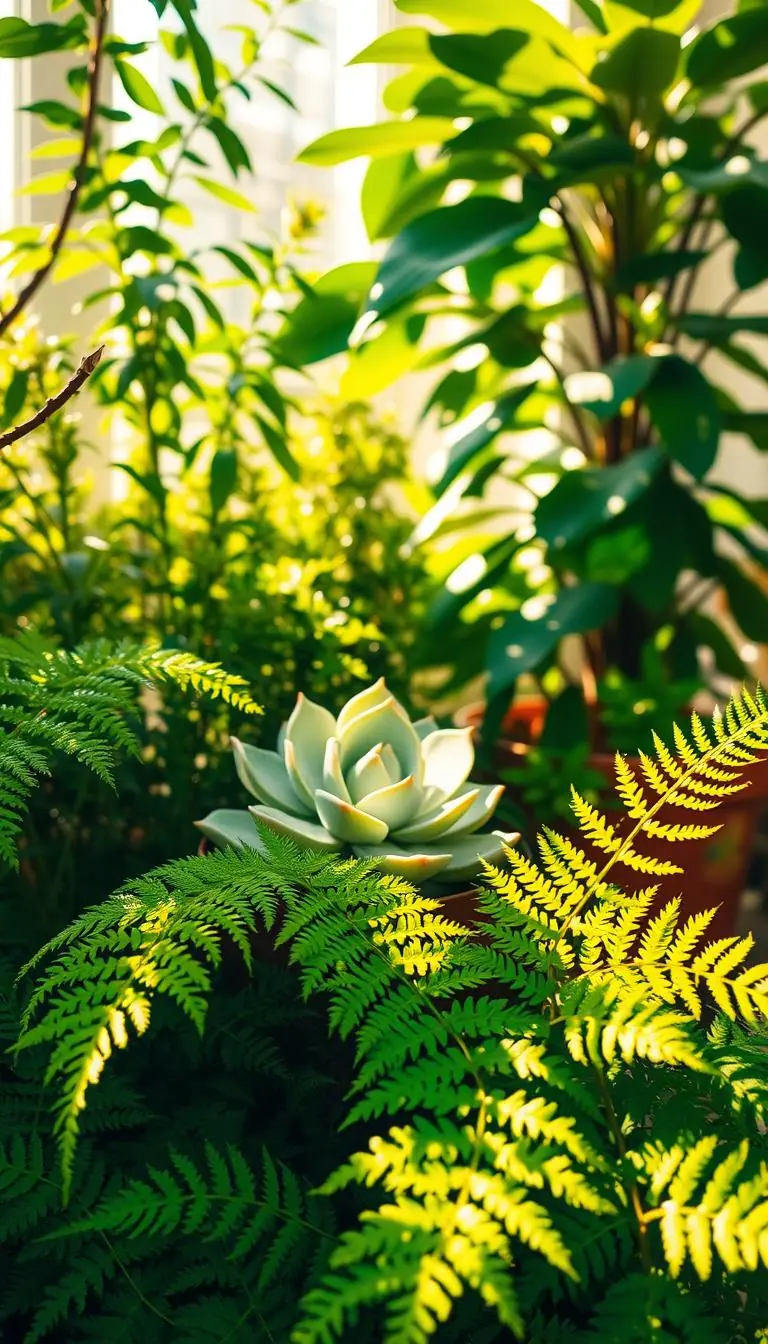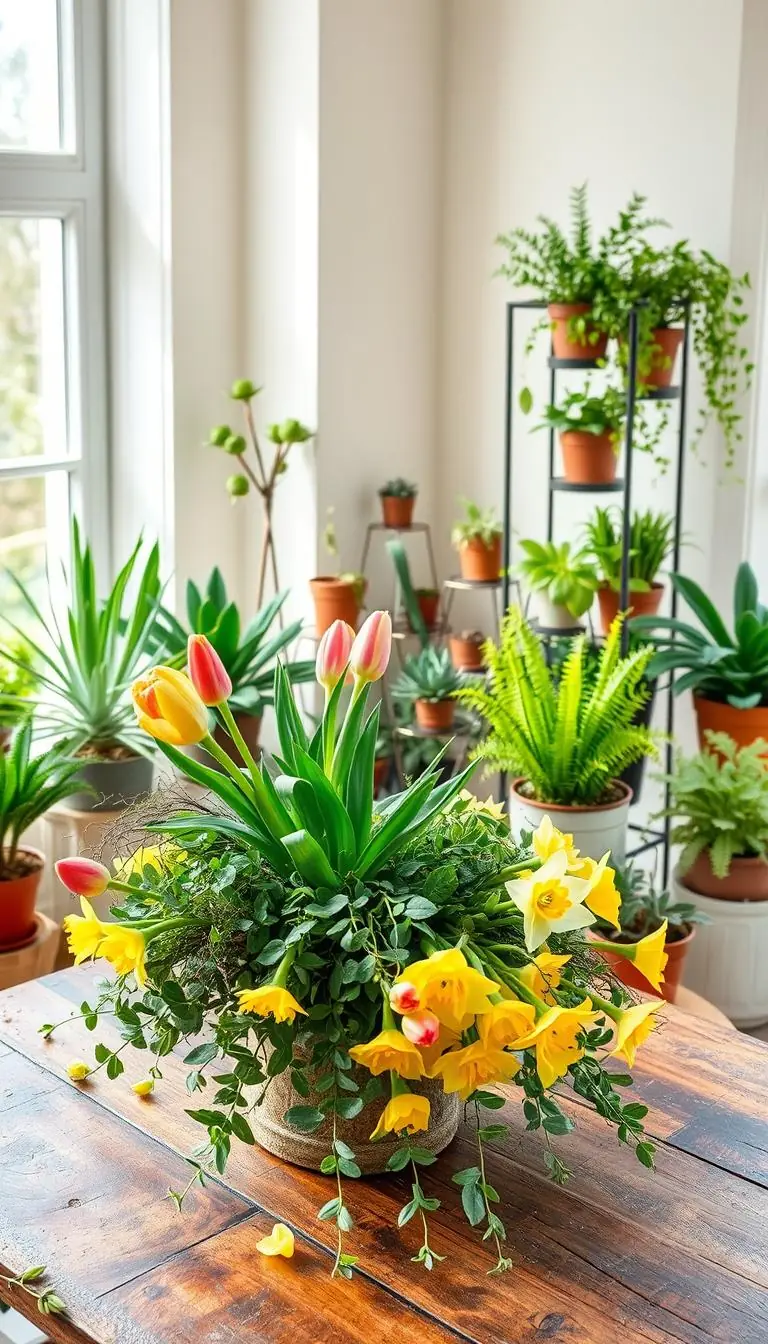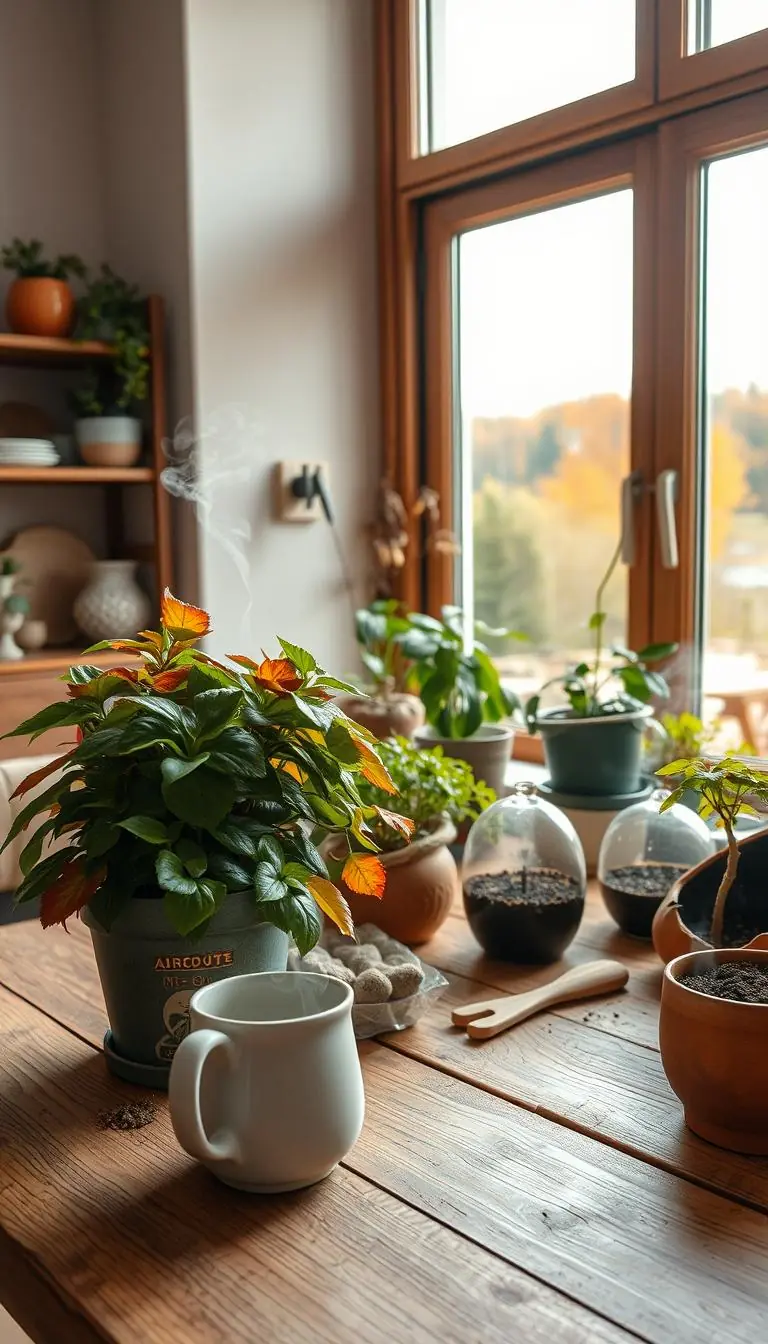
Imagine a sunlit corner with glossy green leaves and a soft, calming scent of soil. You might wonder which living accents will make your rooms feel fresher and more inviting without daily fuss.
We promise a clear, friendly guide that shows simple, step-by-step ways to choose and place houseplants that improve the feel of your indoor air and the look of your rooms.
NASA research tested many common species and found they can absorb common pollutants like formaldehyde and benzene under controlled lab conditions. In real homes, you’d need many pots to match a filter, but these green accents still add humidity, calm, and a soft, green glow.
Along the way, we’ll point out helpful tools—planters with drainage, LED grow lights, and a compact indoor compost bin—and seasonal care tips. You’ll learn easy care cues by sight and touch, avoid common mistakes like overwatering, and place each plant where light and your routine match.
Start small and build confidence one plant at a time; beauty and function can grow together in your home.
Key Takeaways
- You’ll get a simple guide to choose air purifying plants that suit your light and schedule.
- Plants can modestly improve air quality while adding humidity and calm.
- Use practical tools—draining pots, LED lights, and good potting mix—for easy care.
- Seasonal routines and common mistakes are covered so you avoid setbacks.
- Place species by room: kitchen, bathroom, bedroom, and living space needs differ.
- Grow confidence slowly—one healthy plant at a time.
What the science says about plants and indoor air quality
Past experiments give a realistic view of what greenery can and cannot do for your home. In sealed lab tests, researchers found certain houseplants removed chemicals such as formaldehyde and benzene from the room.
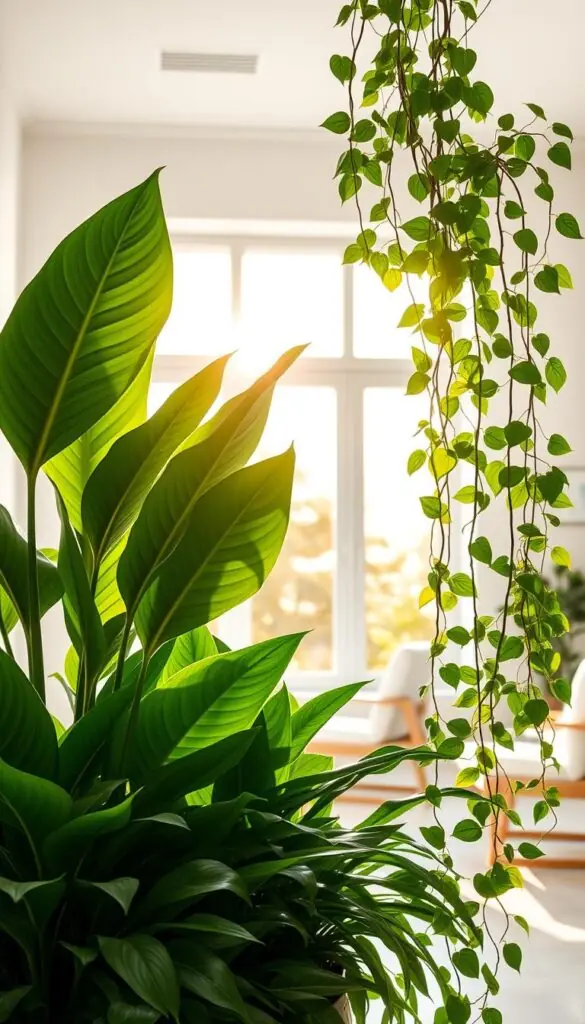
NASA’s tests and practical meaning for homes
In 1989, NASA placed a dozen-plus specimens in sealed chambers and measured drops in VOCs. The results proved a process called phytoremediation, where leaves and roots take up some pollutants and soil microbes help break them down.
Understanding VOCs and everyday sources
VOCs include formaldehyde and benzene and come from paint, pressed wood furniture, and some cleaners. In a typical room, you’d need many pots to match the speed of mechanical filters.
| Method | How it works | Strength | Best use |
|---|---|---|---|
| Phytoremediation | Leaf uptake + root microbes | Slow, steady humidity and comfort | Complement to other steps |
| Filtration | HEPA and activated carbon remove particles and VOCs | Fast, measurable removal | High-risk rooms, allergies |
| Ventilation | Fresh outdoor exchange | Immediate dilution of pollutants | Use with fans and open windows |
Practical pairing: Ventilate on mild days, run range hoods and bath fans, choose low-VOC products, and use a monitor like the CM-INK-1 to track CO2, humidity, and temperature. Think of greenery as a gentle helper for better indoor air and mood, while purifiers handle faster pollutant removal.
Best air purifying plants to improve indoor air quality
Match a plant's needs to your room and routine, and you'll have thriving greenery that also helps reduce common VOCs.
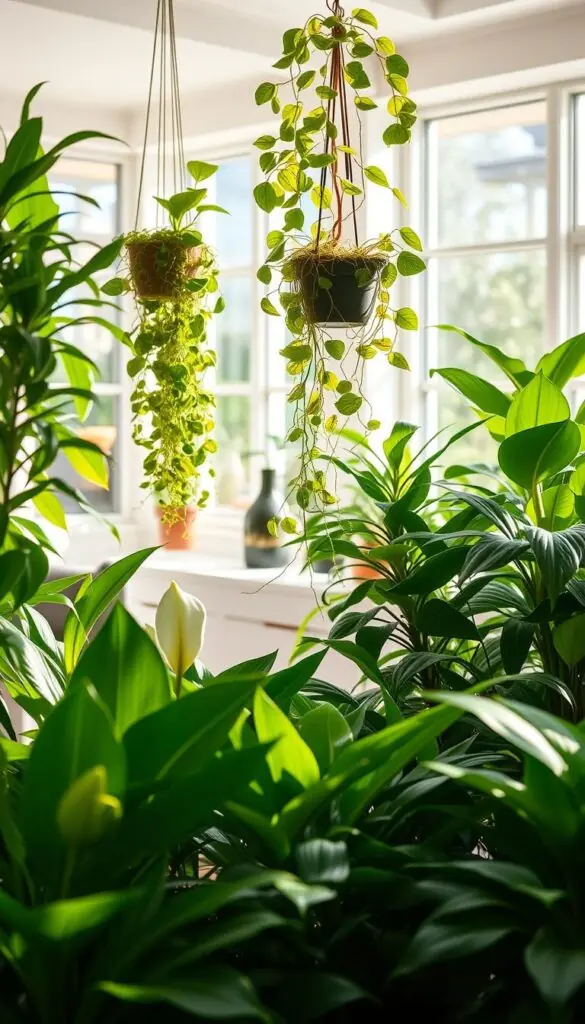
Low-light, easy-care winners: go for snake plant or golden pothos for hardy, architectural or trailing forms. Chinese evergreen adds patterned, forgiving foliage and tolerates missed waterings.
Humidity lovers for bathrooms: boston fern and peace lily thrive in steam and have soft fronds or glossy blooms. Kimberly queen fern stays tidy on a stand; mist or use a pebble tray.
Statement picks for bright, indirect light: rubber plant offers broad, glossy leaves; areca palm and bamboo palm bring airy fronds; a weeping ficus (ficus/fig) gives a light canopy effect.
Pet-friendlier choices: spider plant, boston fern, and areca palm are safer around curious cats and dogs. Keep other species elevated if pets nibble.
- Pollutant targets: many of these classic choices have shown reductions in formaldehyde and benzene in tests.
- Care tips: check the top inch of soil before watering, match light—low light for snake plant/pothos, indirect light for statement trees.
- Pot advice: start in 6–8 inch pots, use fast-draining mix and drainage holes so roots stay healthy.
Where to place plants for beauty, function, and better air
Smart placement makes each green companion both a style move and a functional addition to your rooms. Think of light, distance from windows, humidity, and daily use as you choose spots.
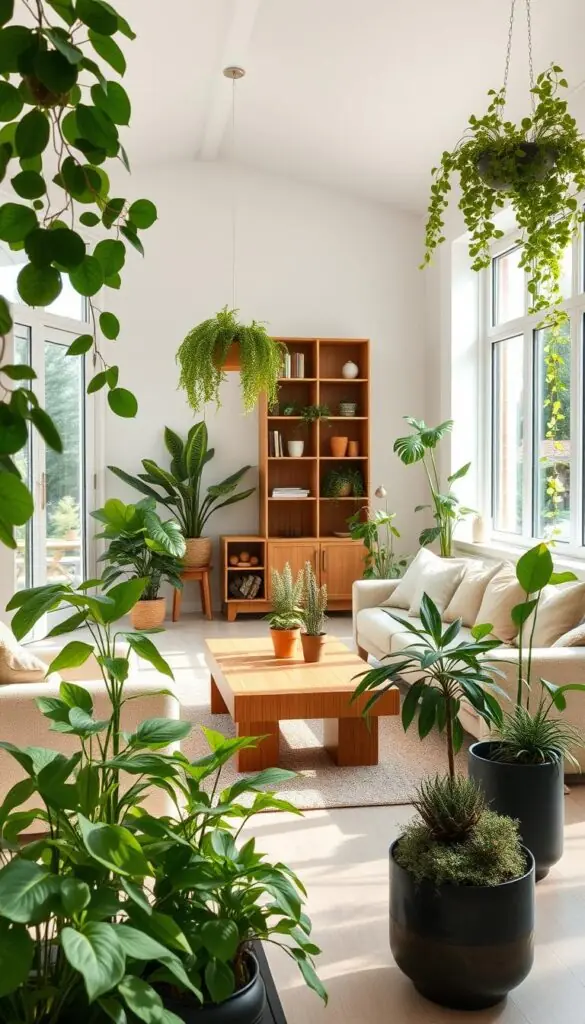
Bedroom calm
Place a snake plant 2–3 feet from a north or east window for steady, low light. Tuck a spider plant on a shelf so striped leaves cascade without touching bedding.
Keep bedside greenery away from drafts. Use a cachepot and cork mat to protect furniture from moisture.
Kitchen resilience
Trail pothos from a high ledge, away from burners and draughts. Set aloe where it gets bright, indirect light but not harsh midday sunlight.
Safety note: Ventilate while cooking and keep a carbon monoxide detector in the kitchen—plants don’t manage CO. Use range hoods during heavy cooking.
Bathroom and living room
Give a peace lily a plant stand so blooms sit above splashes. Place a boston fern on a pebble tray for steady humidity.
In the living room, stage a rubber plant in a tall planter to show broad leaves. Soften corners with an areca palm or a weeping ficus/fig for dappled light.
| Room | Distance from window | Styling & function |
|---|---|---|
| Bedroom | 2–3 ft (north/east) | Low light, shelf for spider plant, protect furniture with cachepot |
| Kitchen | 3+ ft from direct heat | High ledge for pothos, aloe in bright indirect light, CO detector recommended |
| Bathroom/Living | Side of window for indirect light | Pebble tray for boston fern, tall planter for rubber plant, rotate monthly |
Care basics: light, watering, humidity, and soil made simple
Simple habits—checking light, testing soil with your finger, and boosting humidity—make a big difference. Use these easy steps to keep leaves healthy and to match each plant's needs.
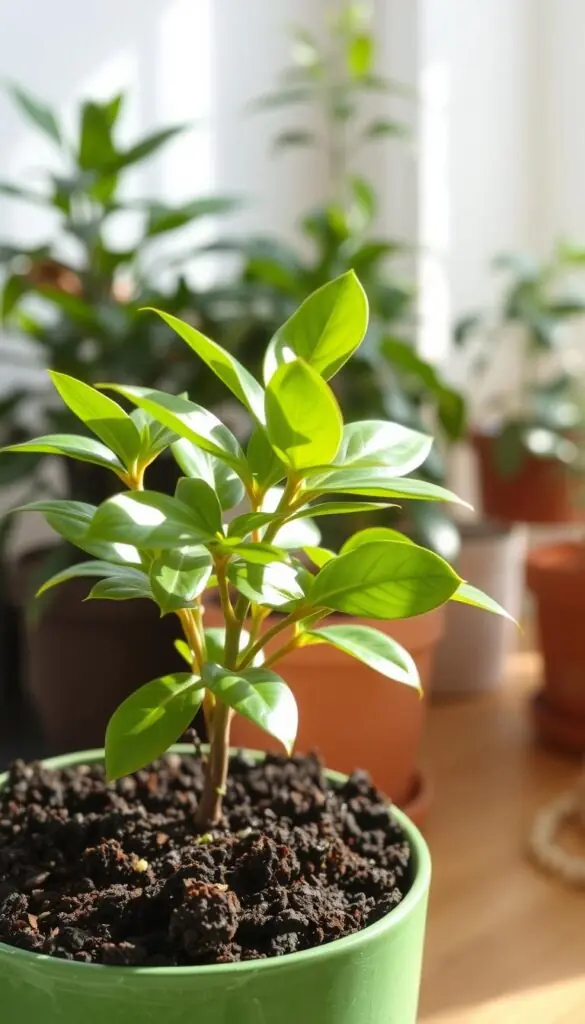
Light levels decoded
Direct sun is the bright beam that falls on the floor or a windowsill.
Bright indirect means a bright room beside that beam; ideal for rubber plant and Kimberly queen fern.
Low light is a few feet back where you can still read; good for pothos and peace lily.
Watch leaves: crisp brown edges often mean too much sunlight. Stretched stems with tiny leaves mean too little light.
Watering by touch
Press your finger into the top inch of soil (use 2–3 inches for large pots). If it feels dry, water slowly until it trickles from drainage holes.
Empty saucers after 10–15 minutes so roots never sit in standing water. This prevents rot and fungus gnats.
Optional tool: a simple moisture meter helps you learn each pot’s rhythm without guesswork.
Humidity tips
Boost humidity with a pebble tray: fill a shallow tray with stones and add water below their tops, then rest the pot on the stones.
Cluster multiple specimens together to create a moister pocket of air. For thirsty ferns like Boston fern, place a small cool-mist humidifier nearby.
Soil and planters
Choose a fast-draining indoor mix and add perlite or orchid bark for extra airflow. Repot when roots circle the pot or water runs straight through.
Use planters with drainage holes and slip them into a decorative cachepot for a clean look and easy cleanup.
| Care step | What to do | Why it helps | Example species |
|---|---|---|---|
| Check light | Place by window or a few feet back | Prevents scorch or legginess | Rubber plant, pothos |
| Finger test | 1" top soil (2–3" for large pots) | Avoids overwatering and drought stress | Peace lily, pothos |
| Humidity boost | Pebble tray, group, or small humidifier | Supports fronds and glossy leaves | Boston fern, Kimberly queen fern |
| Soil & planter | Fast-draining mix, drainage holes | Prevents root rot and improves growth | Rubber plant, peace lily |
Quick weekly loop: check soil, prune yellow leaves, rotate pots, and top up pebble trays. These simple routines keep care low-stress and your home feeling fresh.
Combine plants with air purifiers and monitors for cleaner indoor air
A layered approach—filters, monitors, and a few well-placed greens—keeps rooms healthier and more pleasant.
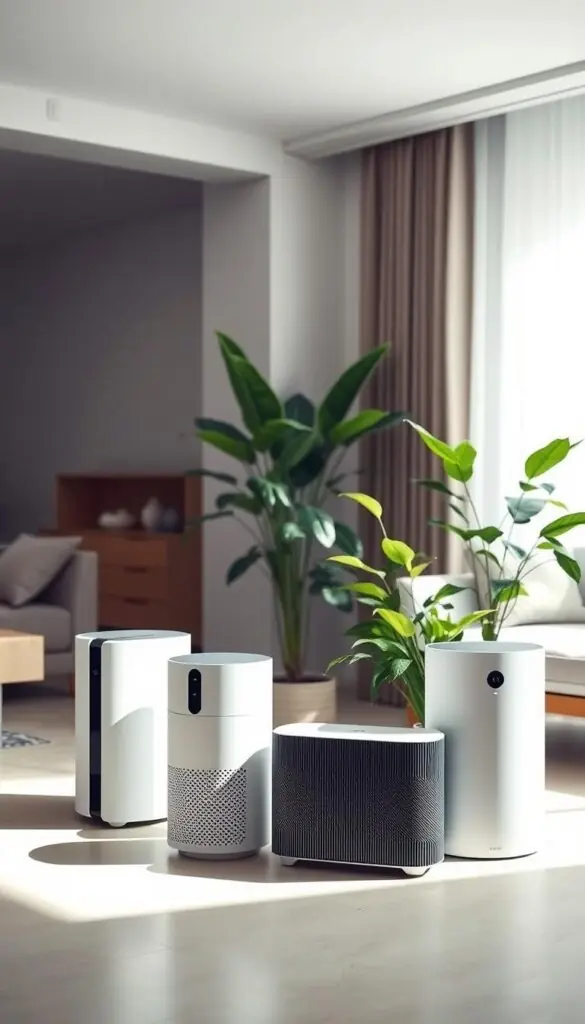
HEPA filters trap up to 99.97% of fine particles like dust, pollen, and pet dander. Activated carbon adsorbs gases and VOCs such as benzene and formaldehyde from new paint or furniture.
Use both: the filter catches particulates quickly, while carbon helps reduce odors and gaseous pollutants. Your green companions add humidity and aesthetic calm, making this a gentle, balanced way to improve home comfort.
Right-size and place your purifier for best results
Match the unit to your room by square footage and CADR so the unit cycles the air several times per hour. Place purifiers a few feet from walls and big furniture and keep intake grilles clean.
For bedrooms choose a model with a quiet sleep mode under 30 dB so filtration runs without disturbing rest. Keep purifiers and greenery a few feet apart so strong airflow doesn’t dry leaves.
- Monitor: use a simple IAQ device (CO2, humidity, temperature) to guide ventilation and placement.
- Safety: keep a carbon monoxide detector in every sleeping area—filters and monitors do not replace CO alarms.
Seasonal routines to keep plants thriving year-round
Think of seasonal care as a gentle rhythm that helps each specimen thrive through shifting light and temperature.
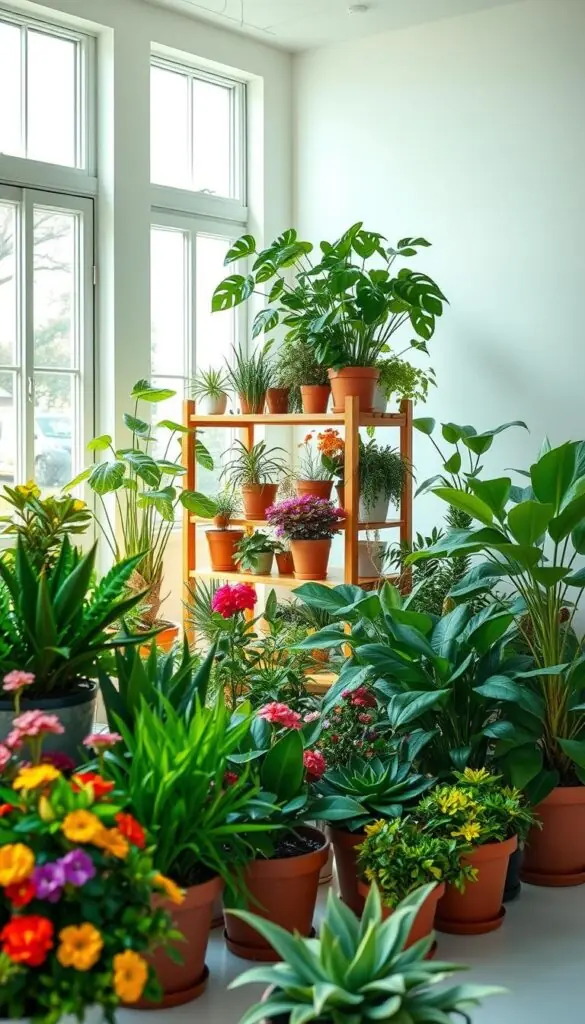
Spring refresh
Slide root-bound pots into containers 1–2 inches wider. Refresh the top third of soil and prune leggy stems to encourage bushier growth.
Add a slow-release fertilizer at repotting for steady feeding, but ease back for sensitive varieties like peace lily.
Summer growth
Keep bright, indirect light steady and rotate pots monthly so leaves color evenly. Water more often as days lengthen.
Check soil by touch: water deeply when the top inch feels dry, then let excess drain.
Fall and winter
Reduce watering—let soil dry a bit more between sessions. Hold off on fertilizer as growth slows.
Raise humidity with pebble trays or a small humidifier for ferns and areca palm. Add LED grow lights 10–12 inches above the canopy for 10–12 hours on short days.
Be gentle with ficus: keep it stable in place and avoid sudden moves to prevent leaf drop.
| Season | Key steps | Good notes |
|---|---|---|
| Spring | Repot + prune + slow-release fertilizer | Repot up 1–2" and refresh soil; prune for fullness |
| Summer | Rotate pots, steady light, frequent watering | Water by touch; protect from hot direct sunlight |
| Fall/Winter | Reduce watering, boost humidity, add grow lights | Skip fertilizer; keep ficus stable to avoid leaf drop |
Common mistakes to avoid, safety notes, and handy tools
Little errors add up quickly, but a few clear fixes keep your greenery healthy and your home safe.
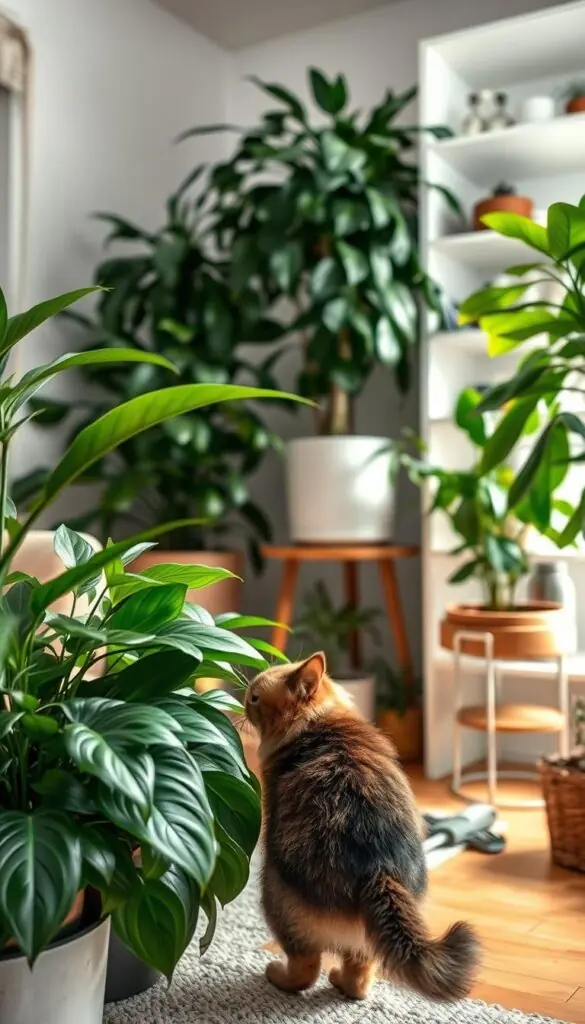
Top slip-ups and quick fixes
Overwatering is the most common issue. Check the top inch of soil before you water. Use pots with drainage and empty the saucer after 10–15 minutes.
Poor drainage causes soggy roots. Up-pot only when root-bound and choose a container 1–2 inches wider. Add perlite to the mix to speed drainage.
Light mismatch leads to leggy growth or scorched leaves. Match species to indirect light or genuine low light spots in your home.
Cold drafts from winter windows can shock tender specimens. Keep pots a few inches off cold glass to protect roots and leaves.
Pet safety and placement
Many common varieties—rubber plant, dracaena, and peace lily—can be toxic if chewed. Keep them out of reach or use barriers.
Choose pet-friendlier options like spider plant, Boston fern, and areca palm when curious pets share your space.
Useful gear and when to use it
Moisture meter: learn each pot’s rhythm—use when you’re unsure, not every day.
Pebble trays and small humidifiers: raise humidity for ferns and peace lily without overwatering.
LED grow lights: place 10–12 inches above foliage on darker days and avoid constant full power to prevent leaf scorch.
Indoor compost bin: sprinkle finished compost on top of tired soil and water in to revive soil life.
| Problem | Quick fix | Why it helps |
|---|---|---|
| Overwatering | Finger test + drainage holes | Prevents root rot and fungus gnats |
| Light mismatch | Relocate to indirect light or low-light nook | Stops legginess and leaf burn |
| Cold drafts | Raise pot off windowsill & insulate | Protects roots and stabilizes growth |
| Pet access | Elevate, hang, or choose safer varieties | Reduces risk of ingestion and pet injury |
Source control matters: ventilate while you clean, favor low-VOC products, and use purifiers with activated carbon to help reduce formaldehyde and other indoor pollution sources.
Conclusion
Choose a couple of favorites and place them where you'll notice them every day. Small, steady care brings calm and confidence.
Start with one or two air purifying plants and a simple routine: check soil by feel, watch each leaf for cues, and rotate pots for even light. Pair greenery with right-sized air purifiers, regular ventilation, and a basic IAQ monitor to best protect indoor air and improve air quality.
Over time add pieces that suit your home — a fern for the bathroom or a sculptural tree for the living room. Enjoy each fresh leaf and the gentle comfort it brings; we’re cheering you on, one peaceful corner at a time.
FAQ
What research supports using plants to improve indoor air quality?
NASA studies showed certain species can remove volatile organic compounds like formaldehyde and benzene in controlled settings. While real homes differ, combining plants with ventilation and a HEPA or activated carbon purifier helps lower pollutants more reliably than plants alone.
Which low-light, easy-care options work best for bedrooms and offices?
Snake plant, pothos, and Chinese evergreen thrive in low to bright indirect light and need minimal watering. They’re good for north-facing windows, shelves, and corners where you want a lush, low-effort focal point.
Which species do well in humid bathrooms?
Boston fern, peace lily, and Kimberly queen fern love humidity and bathroom steam. Place them on a stand or shelf with indirect light and keep soil evenly moist for firmer, greener leaves.
What are good statement plants for bright, indirect light?
Rubber plant, areca palm, bamboo palm, and weeping fig make dramatic living-room accents. They prefer bright, filtered light, roomy planters, and regular but moderate watering to stay vibrant.
Are there pet-friendlier houseplants that still help with indoor pollutants?
Spider plant and Boston fern are among the more pet-tolerant picks. Always double-check toxicity—peace lily and rubber plant can be harmful—and place any risky species out of reach.
Which pollutants can plants help reduce?
Some species can metabolize or trap VOCs such as formaldehyde, benzene, trichloroethylene, xylene, and toluene. For gases like carbon monoxide or nitrogen oxides, rely on ventilation and appropriate purifiers alongside plants.
How should I place plants for both beauty and function?
Group plants where you want a visual impact and to raise local humidity. Put a snake plant or spider plant near the bedroom, pothos or aloe in the kitchen, peace lily in the bathroom, and a rubber plant or areca palm to soften living-room corners.
How do I judge light levels: direct sun, bright indirect, and low light?
Direct sun casts sharp shadows and warms leaves. Bright indirect light is diffused but strong; a sheer curtain works well. Low light means no direct sun and soft shadows—ideal for snake plant and Chinese evergreen.
What’s the easiest way to know when to water?
Use the top inch of soil as your guide—if it’s dry, water until excess drains. Overwatering is the most common mistake; ensure fast-draining potting mix and drainage holes.
How can I increase humidity without a humidifier?
Group plants together, use pebble trays with water under pots, or place ferns in naturally steamy rooms. These simple steps boost leaf moisture and help tropical species thrive.
How do HEPA and activated carbon purifiers complement plants?
HEPA filters capture particulates like dust and pet dander; activated carbon removes many gases and odors. Plants add aesthetic and minor VOC uptake, so using both creates a fuller indoor air strategy.
How do I choose the right purifier for my room?
Match purifier CADR and coverage to room square footage, check noise levels for bedrooms, and choose models with activated carbon if you’re tackling odors or VOCs.
What seasonal routines keep plants healthy year-round?
In spring, repot or top-dress and prune. Summer needs steady watering and bright indirect light. In fall and winter, reduce watering, increase humidity, and add LED grow lights if natural light drops.
What common care mistakes should I avoid?
Avoid overwatering, poor drainage, placing a low-light plant in a bright sunny spot, and exposing tropical species to cold drafts. Use a moisture meter or touch test to prevent soggy soil.
What handy tools make indoor plant care easier?
Useful gear includes a moisture meter, pebble trays, small humidifiers, LED grow lights, and a fast-draining potting mix. These tools help keep leaves lush and soil healthy.
Are there safety tips for homes with pets?
Check plant toxicity before bringing new specimens home. Keep toxic-leaf plants like peace lily and rubber plant out of reach or in rooms pets can’t access, and consider pet-safe alternatives when possible.