Imagine the first sweet scent of cut grass on a cool morning — the air feels fresh and the yard looks hopeful. Have you noticed thin patches or pale green blades near the sidewalk? That small nudge is often the start of a seasonal plan that keeps your turf thriving.
We’ll guide you calmly through simple timing cues: the first green-up, the first mow, and the cooler evenings that mark fall. You’ll learn when to fertilize lawn across regions, how a little nitrogen at the right moment sparks steady growth, and why soil and spreader choice matter.
Think of the process as quiet, neighborly care — a clean spreader, a calm morning, and water after spreading. We match calendar cues to your area and space feedings by weeks so you won’t guess or overdo it.
Key Takeaways
- Follow simple seasonal windows for a green lawn: early spring, late spring, summer, and fall.
- Use the right fertilizer and add modest nitrogen for steady, healthy growth.
- Match timing to local cues like first mow and steady green-up.
- Space applications by weeks and avoid peak midday heat.
- Water after spreading and follow product directions for best results.
Start Here: How to Tell What Your Lawn Needs Today
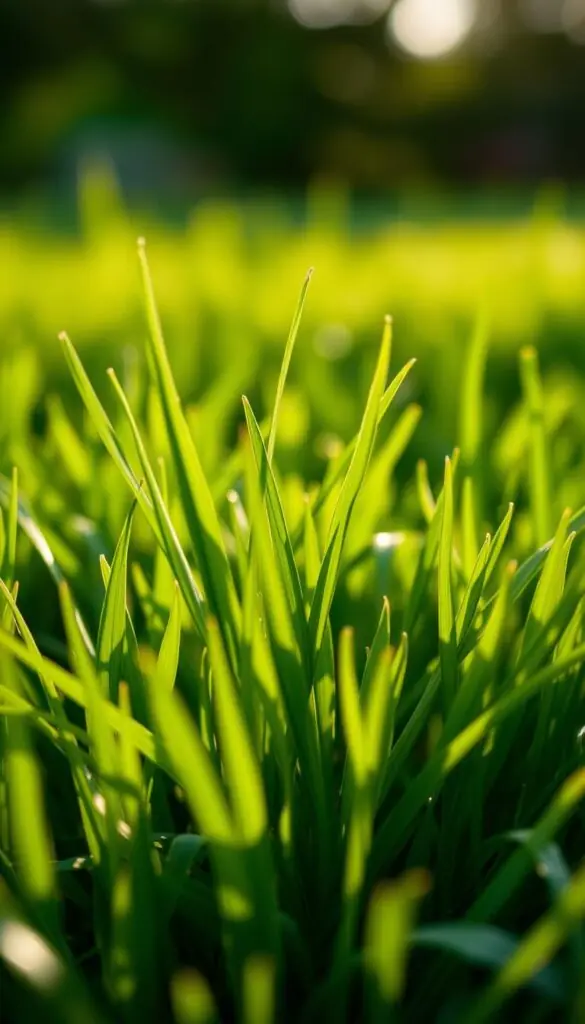
Begin with a hands-on check: rub a blade between your fingers, look for deep green or pale patches, and note sunlit versus shaded spots. This slow, simple scan gives quick clues about health and care.
Identify your grass type: cool-season vs. warm-season
Feel the blades. Fine, cool, and soft growth usually means cool-season grasses like Kentucky bluegrass or tall fescue. Thick, coarse, heat-loving blades point toward warm-season types such as Bermuda or Zoysia.
Match your region and climate to a timing window
Think of your yard on a map: northern areas lean cool-season; southern areas lean warm-season; transition areas can have either. Jot down sun, shade, and your mowing rhythm — these will guide product choice and timing.
- Check visible cues: first mow, steady green-up, or cool evenings for fall windows.
- Plan follow-up feedings about 6–8 weeks apart.
- Consider soil and thin turf: pale or patchy spots may need lighter, more frequent applications.
- Choose mornings or evenings and water after applying; this helps nitrogen and other fertilizers reach roots.
Quick neighborly tip: if you’re unsure, bring a small clump to a local garden center. They can confirm grass type and help pick a simple plan for spring, summer, or fall care that fits your areas and soil.
When to Fertilize Lawn: Quick Answers by Grass and Season
Notice the first steady green and the hum of a mower — those are your cues. Use simple sights and short windows for clear action. This keeps care steady and stress low.

Cool-season grasses like kentucky bluegrass and tall fescue do best with a spring boost and a fall rebuild. Aim for early spring at first mow, then a follow-up in autumn for root recovery and stored energy.
Warm-season grasses such as Bermuda, Zoysia, and St. Augustine peak from late spring through summer. A feeding around mid-May to early June sets color and growth, then another 6–8 weeks later if needed.
- Peak windows: early spring, late spring, summer, and fall.
- Use sensory cues: first mow, steady green-up, and cool evenings.
- Space applications by weeks, not guesswork, and water after each pass.
Aim for steady nitrogen rather than quick spikes. In hot months choose slow-release fertilizers to protect turf and keep growth even. If you need a mid-year touch on thin grass, pick a light, balanced product and apply in the cool of morning or evening.
Regional Timing Guide: North, South, and the Transition Zone
Your yard’s calendar shifts by state — a neighbor in Minnesota will feed on a different schedule than one in Texas.
Northern states follow four clear touchpoints. Aim for first green-up and the first mow (Feb–Apr). Follow with late spring (Apr–Jun), a mid-summer slow-release pass (Jun–Aug), and a fall rebuild (Aug–Nov) before winter.
Southern areas start at spring green-up and run steady through summer. Add a light fall application to strengthen roots before cooler nights. Slow-release forms protect turf during hot spells.
Transition Zone needs flexibility. Watch local heat waves and cool snaps. Shift plans earlier if warm spells arrive, later if springs stay cool. Your grasses will give easy cues.
Real examples
Upper Midwest (Minneapolis): first mow in April, another in late May or June, slow-release in July, finish with a strong fall feeding in Sept/Oct.
Gulf Coast (Houston): begin in March at green-up, refresh in May/June, slow-release in July/August, and a light fall feed in October.
- Space applications by weeks — most areas prefer 6–8 weeks between passes.
- Choose fertilizer that fits your soil and weather; slow-release works well in heat.
- Water after each application and pause a week for an extreme cold snap or heat wave.
| Region | Typical Windows | Quick Tip |
|---|---|---|
| North | Feb–Apr, Apr–Jun, Jun–Aug, Aug–Nov | Four touchpoints; fall rebuild before winter |
| South | Spring green-up through summer; light fall | Steady summer feedings; bolster roots in fall |
| Transition | Shift with local heat and cool snaps | Watch weather; let grasses guide timing |
Your Seasonal Playbook: What to Apply and Why
Picture the first cut of the season: that fresh scent and a hint of green underfoot. Follow simple seasonal snapshots so you act with calm confidence.
Early spring
As blades green and the first mow arrives, use a balanced lawn fertilizer for steady growth. In northern yards, add a pre-emergent for crabgrass if last year had issues.
Late spring
About 6–8 weeks later, keep momentum with a light feed. Use weed-and-feed only if broadleaf weeds are actively growing and grass shows green vigor.
Summer
Choose slow-release products that supply steady nutrients through heat and heavy use. Apply in cool morning or evening and water after for best movement into soil.
Fall
Focus on roots and stored nitrogen. A fall pass rebuilds root systems and sets up a vivid spring green.
Winter note
Avoid feeding dormant turf. Instead, schedule a soil test and record products, dates, and weather so next season is simpler.
- Keep applications light but consistent; heavy doses stress growth.
- When dry, water day before and after an application for better uptake.
- Match product choice to goals: straight fertilizer if weeds are minimal.
Choose the Right Fertilizer: Nitrogen First, Then K and P
Pick a fertilizer that matches your rhythm and your yard's needs. Start with nitrogen — it drives color and density. Aim for about 0.5–1 lb N per 1,000 sq ft each application for most yards.
Slow-release options (SCU, PCU, IBDU, organics) give steady feedings and cut the risk of burn. Quick-release products green up fast but need careful timing and watering.
Organics build soil life over time. Synthetics show quicker results when you want a visible change soon.
Practical notes
- Keep phosphorus low unless a soil test shows a need.
- Potassium helps stress tolerance; include it in summer plans.
- Use weed-and-feed only when weeds are actively growing; apply pre-emergent early spring for crabgrass prevention.
- Liquids are great for spot fixes; granular gives even, longer-lasting coverage across turf.
- Read the label, match rates, and favor steady, modest applications over heavy doses.
Soil Testing, pH, and Lime: Set the Stage for Success
Start with a simple scoop and a calm plan — testing removes guesswork.
Gather a few small cores from several spots and mix them in a clean bucket. Pack a sample and send it to a lab that serves your area. Labs report levels for nitrogen, phosphorus, potassium, and pH and give clear recommendations based on your turf type.
Read results as guidance: treat nitrogen as a seasonal management target, not a fixed demand. Use the report to decide on phosphorus and potassium; many lawns show adequate phosphorus, so apply it only when tests read “low.” Potassium often helps stress tolerance in hot or dry areas.
pH ranges by grass type and lime basics
Match pH to grass: Kentucky bluegrass prefers 6.0–7.0. Tall fescue and fine fescue do best near 5.5–6.5. Bentgrass likes 5.0–6.5.
If pH is low, add lime. Choose agricultural lime (calcium) if magnesium is fine, or dolomitic lime (calcium + magnesium) when magnesium is low. Keep applications sensible: no more than 50 lb per 1,000 sq ft per application and 100 lb per 1,000 sq ft per year. Split doses between spring and fall.
Practical cautions and simple cues
Never apply nitrogen sources with or immediately after lime; let lime settle before your next feeding. Blow stray iron or granular products off patios and sidewalks before you water to avoid stains.
- Test soil every year or two for reliable results.
- Healthy soil smells earthy and crumbles; water moves in and feeds the root zone.
- Use lab guidance to dial in phosphorus and potassium — skip phosphorus unless the test shows low.
Step-by-Step: How to Apply Fertilizer the Right Way
Start with a quick weather check so your spread sticks where it belongs. Skip days with heavy rain or high winds. That keeps your application from washing off or drifting away and protects nearby soil and waterways.
Check the forecast and water plan
Pick a day with calm skies and moderate temperatures. Plan to water shortly after you apply fertilizer so granules move into the soil and out of leaf tips.
Mow first, but don’t scalp
Mow a day ahead and keep blades about one-third taller. Taller leaves shade crowns and reduce stress during heat or active growth.
Pick and calibrate your spreader for even coverage
Use a broadcast spreader for big yards and a drop spreader for edges. Calibrate with a test pass on a tarp and follow the product label setting for accurate rates.
Apply in the cool of morning or evening; then water deeply
Move at a steady pace and slightly overlap passes for uniform coverage. Apply fertilizer in early hours or late light to cut burn risk during peak heat.
After spreading, water deeply enough that granules reach the soil. Deep watering encourages roots and reduces surface residue.
Stay off the grass briefly to let nutrients settle
Keep foot traffic low for 24–48 hours so the product can settle and start feeding turf. Note your date and rate, and wait several weeks before the next application.
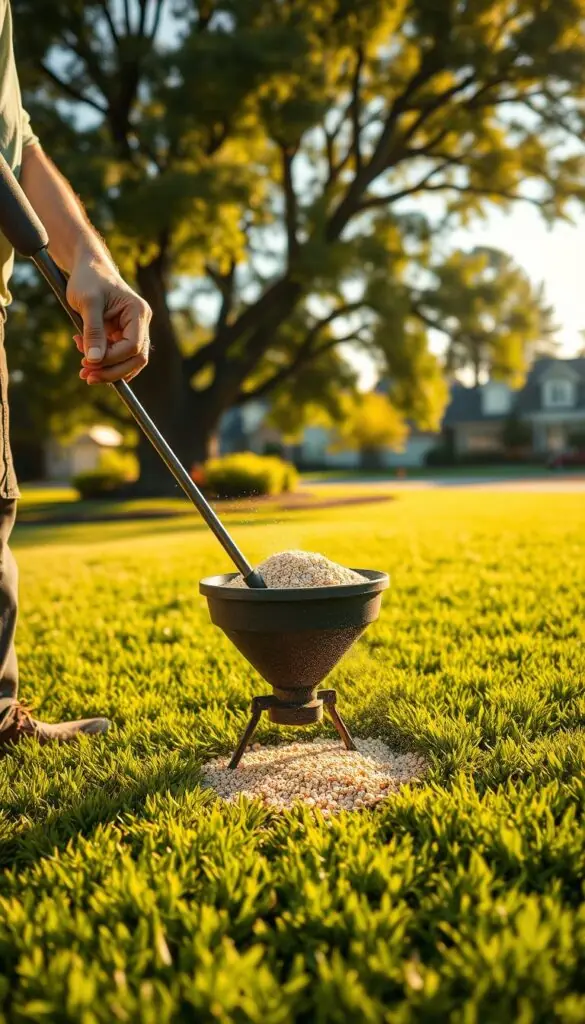
| Task | Best option | Quick tip |
|---|---|---|
| Spreader choice | Broadcast for big areas; drop for edges | Use broadcast for speed, drop for precision |
| Calibration | Test on tarp; follow label | Adjust speed or setting if coverage is uneven |
| Timing | Cool morning or evening | Avoid midday heat to lower burn risk |
| Watering | Deep, short session after apply | Blow granules off hardscape before watering |
Tools and Materials That Make Fertilizing Easy
The right tool makes a weekend plan feel effortless and even a little pleasant.
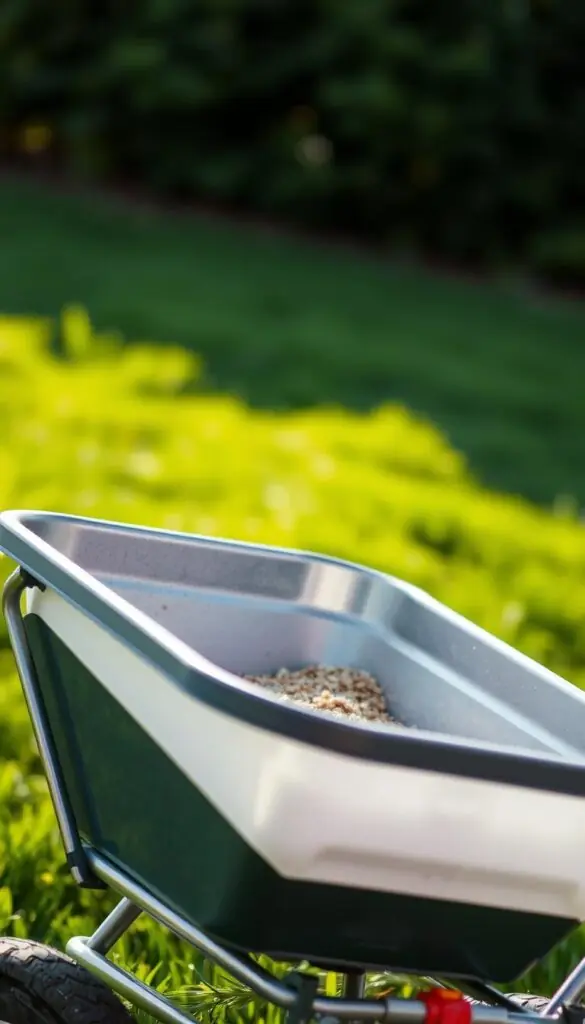
Pick a spreader that fits your yard. For most medium and large areas, a broadcast spreader covers wide swaths quickly. A drop spreader gives precise control along edges and beds. For tiny patches, a compact hand spreader works well and stores easily.
Labels, settings, and a quick calibration routine
Read the product label for the recommended setting. That setting is a solid starting point for most applications. Then do a fast calibration: measure a small area, spread a known amount, and check coverage. Adjust the setting or your pace if you see gaps or piles.
- Keep the hopper closed at turns and starts to avoid stripes.
- Rinse the spreader gently after use and let it dry.
- Store fertilizers in a sealed bin so granules stay free-flowing.
- Walk at a steady pace—the best way to get even turf color and growth.
| Spreader | Best use | Quick tip |
|---|---|---|
| Broadcast | Large yards; fast coverage | Good for regular fertilizer applications; steady pace |
| Drop | Edges, beds, precise work | Prevents granules on sidewalks and in soil beds |
| Hand compact | Small spots; patch work | Easy storage; great for spot apply fertilizer |
Avoid These Common Mistakes That Lead to Burn and Waste
A friendly heads-up can save your grass from avoidable scorch and stress.
Simple habits keep your yard healthy. Read the short list below and make small changes that add up.
Overdoing nitrogen or using quick-release in peak heat
Heavy nitrogen can cause burn during hot summer afternoons. Pick steady rates and slow-release formulas for safer, even growth.
Skipping the post-application water
Water moves granules into the soil and protects leaf tips from scorch. If you skip this step, nutrients sit on blades and risk burn.
Fertilizing drought-stressed or dormant turf
If the turf is dry or resting, pause. Water first, then follow a calm schedule when active growth resumes.
Mis-timed weed-and-feed and pre-emergents
Apply weed-and-feed only when weeds are actively growing. Put pre-emergents down before seed germination. Bad timing wastes product and may harm grasses.
Iron stains on concrete and sidewalks
Blow granules off hardscape and sweep before watering. Iron and some products stain stone and pave more easily than soil.
Quick friend’s checklist: read the label, pick morning or evening in hot spells, note the date, and keep light, steady applications for long-term reward.
| Mistake | Why it harms | Quick fix |
|---|---|---|
| Too much nitrogen | Scorch, fast weak growth | Use slow-release; follow rates |
| No post-water | Surface burn; poor uptake | Water right after applying |
| Applying during drought | Wasted product; stressed turf | Water first; wait for active growth |
| Weed product mistimed | Ineffective control; harm grasses | Match product timing to weeds |
Conclusion
Small, regular steps build deep roots and a lawn that greets you each evening.
Keep a simple seasonal plan: spring and fall feedings for cool grasses like kentucky bluegrass, and slow-release blends during summer for warm types. Focus on steady nitrogen, low phosphorus unless a soil test says otherwise, and include potassium for stress resilience.
Water after each pass and let roots and soil do the quiet work. Steady, light care beats heavy, rushed pushes. Note what works this year and your next season will feel easier.
Enjoy the result: barefoot evenings, a deep green lawn, and the calm pride of turf you understand. We’re here with friendly lawn care tips whenever you need a nudge.
FAQ
What’s the best time in spring for feeding cool-season grasses like Kentucky bluegrass?
Aim for early spring once the grass shows steady green-up and you’ve done the first mow. A light, slow-release feed helps rebuild energy without encouraging weak, spindly growth. Match the timing to your region’s thaw and soil temperature—roughly when soil reaches about 50°F.
When should warm-season types such as Bermuda or Zoysia get their first application?
Wait until active growth begins in late spring—after the last hard frost and when soil temps hit the 60s°F. A starter feed as turf comes out of dormancy supports top growth and roots through summer heat.
How often should you apply nitrogen during the growing year?
Use smaller, strategically timed applications rather than heavy, frequent doses. Cool-season turf benefits most from a spring and fall focus, while warm-season lawns do well with late spring through summer nutrition. Prefer slow-release nitrogen to reduce burn and wash-off.
How do I know if my yard needs phosphorus or potassium?
Get a soil test. Test results tell you exact levels of P and K and whether pH adjustments are required. Apply phosphorus only when the test shows deficiency; applying it blindly can harm waterways and waste money.
What’s the difference between slow-release and quick-release fertilizers?
Quick-release gives a fast green-up but raises burn risk and needs more frequent reapplication. Slow-release delivers steady nutrition, lowers burn risk, and supports roots longer—ideal for heat and drought periods.
Can I use a weed-and-feed product during spring?
Yes, but time it carefully. Apply weed-and-feed when grass is actively growing and weeds are young. Avoid use on drought-stressed or recently seeded areas. Read the label for temperature and mowing restrictions.
How should I water after applying fertilizer?
Lightly water after application to move granules into the soil and prevent burn. For slow-release products, one gentle watering is usually enough; for quick-release, follow label guidance. Deep, infrequent watering afterward helps roots take up nutrients.
What spreader should I use for even coverage?
For large yards, a broadcast spreader is faster; for precise coverage near beds and walkways, a drop spreader is better. Calibrate your unit using the product label setting and cover a measured area to check rate before treating the whole yard.
Will fertilizing in summer harm my grass in heat waves?
Heavy quick-release nitrogen during peak heat can stress turf and cause burn. If you feed in summer, use a low-rate, slow-release formula and avoid application during extreme heat or drought. Focus on root health and moisture management instead.
Should I fertilize in fall, and what type should I use?
Yes—fall is key for cool-season grasses. Use a higher-nitrogen, slow-release mix in late fall to rebuild roots and store energy for spring. For warm-season turf, a lighter fall feed helps winter hardiness but avoid late applications that delay dormancy.
How does soil pH affect nutrient uptake and when should I lime?
pH controls availability of many nutrients. Cool-season grasses prefer slightly acidic to neutral soil; warm-season types tolerate a broader range. Test pH with your soil report and apply lime only when recommended to raise pH gradually.
Is organic fertilizer better than synthetic?
Both have roles. Organics improve soil health and microbial life but act slowly. Synthetics deliver predictable nutrients quickly. Many homeowners combine them—organic for long-term soil building, synthetic for targeted, timely needs.
Can fertilizer cause staining on sidewalks and driveways?
Yes. Granules and iron-containing products can stain concrete. Sweep or blow granules off hard surfaces immediately and rinse spills to prevent dark spots and rust-like marks.
How do I avoid fertilizer burn and waste?
Use proper rates from the label, choose slow-release products, calibrate your spreader, don’t treat stressed or dormant turf, and water as instructed. Small, accurate applications beat heavy, uneven ones every time.
When is the right time to run a soil test?
Test in early spring or fall—before major fertilizing seasons—so you can correct pH or nutrient imbalances ahead of feeding. Retest every 2–3 years or after major amendments to track changes.
How long should I wait after applying before walking on the grass?
Wait until granules settle and are watered in—usually a few hours to a day depending on product and weather. Check the product label for specific drying and re-entry guidance.
What adjustments should I make in the transition zone where climates vary?
Tailor timing to local heat waves and cool snaps. Monitor soil temperature and turf response rather than calendar dates. Split applications and choose resilient, slow-release products to bridge unpredictable seasons.
How much nitrogen per 1,000 sq ft is safe for one application?
Follow label recommendations, but a common safe range is 0.5–1.0 pound of actual nitrogen per 1,000 sq ft for many residential feeds. For established turf, split the seasonal total into multiple applications rather than one large dose.