Imagine the warm scent of basil crushed between your fingers and sunlight on a row of bright tomatoes by the railing.
Do you wish you had fresh vegetables and lush greens but only a small balcony or a narrow step? This guide helps you start simply and confidently.
We walk you through what to buy, how to set up containers and pots, and the watering rhythm that fits your life and time. You’ll learn soil mixes that stay airy and hold moisture, how much sun different vegetables need, and which plants move well in limited space.
In short: choose the right size containers, avoid heavy garden dirt, water deeply in the morning, and give support for tall crops. With a few tools and steady care, you gain control over your mini garden and faster harvests.
Key Takeaways
- Start with pots that match your space and the plants you want to grow.
- Use a light soilless mix for steady moisture and healthy roots.
- Place sun-loving vegetables where they get 6–8 hours of sun.
- Water deeply in the morning and check drainage to avoid soggy soil.
- Choose simple supports and tools to make care easy and peaceful.
Why Container Gardening Works: Benefits, Sun, and Space-Savvy Placements
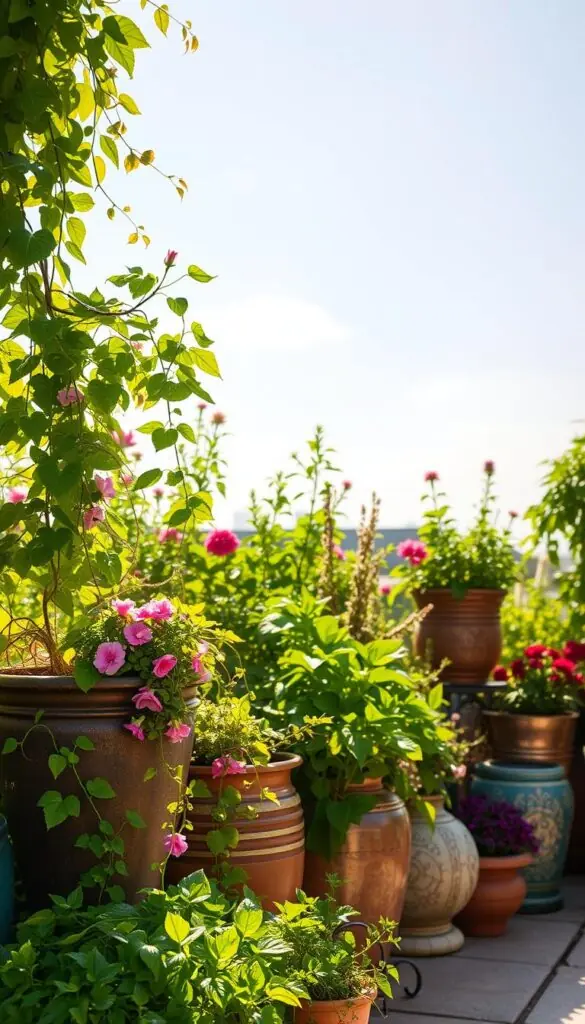
Small spaces can still give you a lush, edible oasis if you place pots where the light and warmth work for you.
Top benefits you’ll notice right away: faster harvests, easier pest control, and the joy of fresh herbs within reach. Good placement saves time and water. It also helps plants set fruit and stay healthy.
- Track sunlight for a full day. Mark spots that get 6–8 hours for tomatoes and peppers and 3–5 hours for greens.
- Use microclimates. South- or west-facing walls add warmth but can dry quickly. Shaded nooks keep lettuces crisp.
- Keep pots near a spigot or hose reel. A short walk makes watering simple—consider a drip kit for grouped pots.
- Shield from wind. Anchor tall pieces with stones, cinderblocks, or ropes to prevent tipping and lost water.
Group containers by similar needs so you water and feed efficiently. Put large planters on caddies to follow the sun or move them inside during cold snaps.
"Place your sun-loving plants where they get true light, and let shade spots grow the cool greens."
Avoid common mistakes like tucking pots into deep shade or exposed corners. With a few tools and smart placement, your container garden will feel peaceful and productive.
Pick the Right Containers, Size, and Drainage for Healthy Roots
Right-sized pots with proper holes make watering simple and keep roots happy.
Match the pot material to how you live. Plastic is light and holds moisture, so it’s great for busy renters. Unglazed terra-cotta breathes and helps soils dry faster, while glazed ceramic keeps moisture longer but can crack in winter. Fabric pots improve root structure but can dry quickly. Cedar or redwood boxes resist rot; avoid old arsenic-treated lumber. Metal looks sleek but warms up and needs more watering.
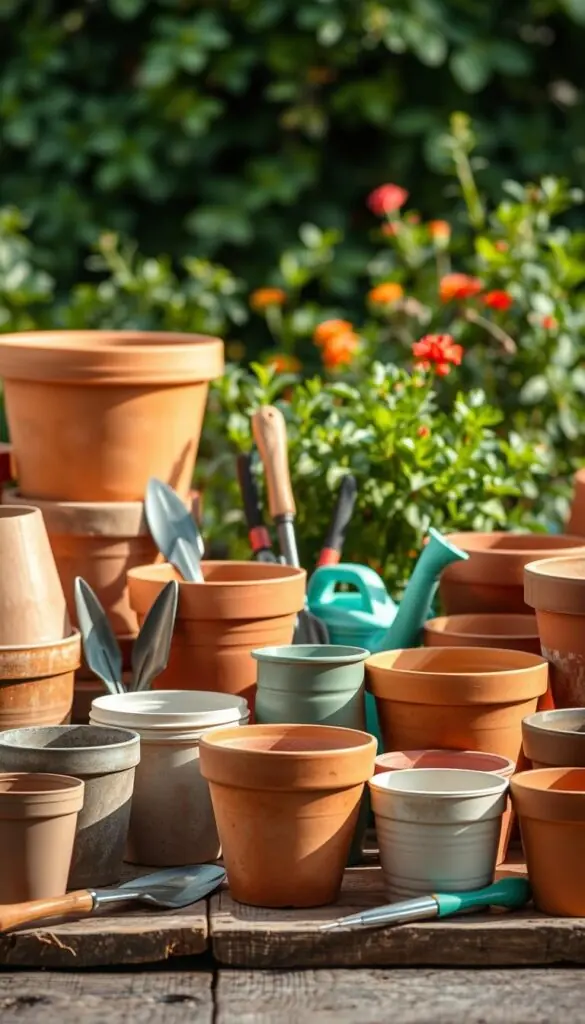
How big should your pot be?
Give crops room: tomatoes and squash need at least a 5-gallon pot (about 12" across, 18–24" deep). Peppers do well in 3-gallon vessels. Cucumbers like 5-gallon, and lettuces or small herbs fit 1-gallon (6–7" diameter). Depth keeps roots cool in heat.
Drainage done right
For 4–6" diameters, drill 3–6 drainage holes with a 1/4" bit. Bigger pots benefit from 6–8 holes to avoid waterlogging and to let air reach roots. Always use a saucer and empty it after watering to prevent soggy soil and mosquitoes.
Mobility and safety
Use rolling caddies for heavy planters and felt pads under pots to protect decks. Anchor tall pots with bricks low in the base, choose squat shapes in windy spots, and install trellises or cages at planting.
"Right drainage and the correct size are the easiest investments for healthier, happier plants."
| Material | Pros | Cons | Best for |
|---|---|---|---|
| Plastic | Lightweight, moisture-retentive, affordable | Can fade; choose food-grade for edibles | Balconies, mobile setups |
| Terra-cotta / Ceramic | Classic look; unglazed breathes, glazed holds moisture | Unglazed dries faster; can crack in freeze | Patios, decorative spots |
| Fabric | Air-pruning roots; portable handles | Dries faster; needs frequent watering | Vegetables needing strong root systems |
| Wood / Metal | Natural aesthetic (wood); sleek look (metal) | Wood may rot if untreated; metal heats up | Raised planters, modern designs |
The Best Potting Mix and Nutrients for Strong Growth
A light, airy soil mix is the single best step you can take for stronger, faster plant growth.
Use a soilless potting blend for healthy starts. It keeps roots disease-free, drains well, and holds just enough water.
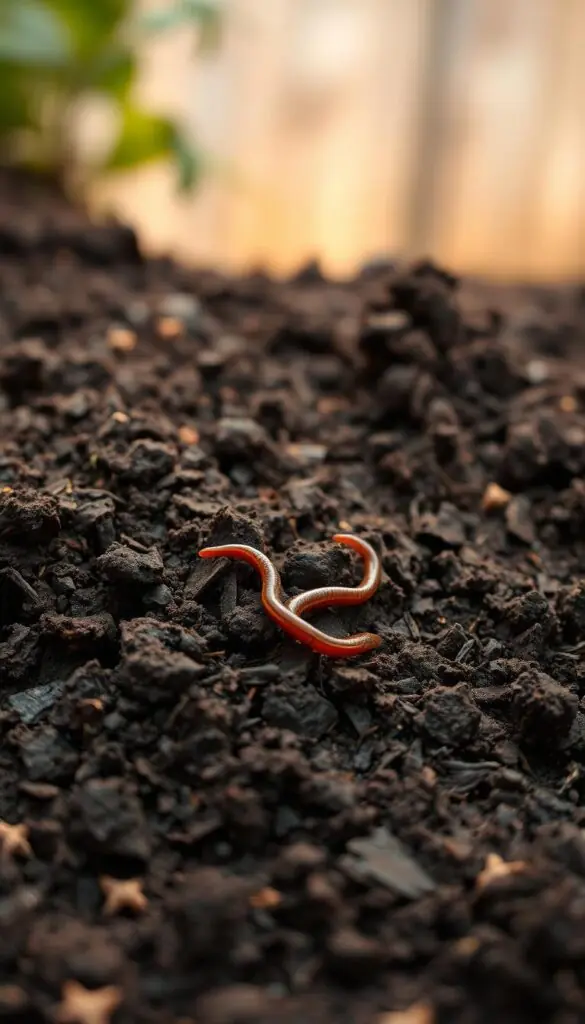
What to put in the pot: soilless components and why they matter
Recipe (by volume): 2 parts coconut coir or peat, 1 part perlite, 1 part vermiculite. This potting mix balances water-holding and air space.
Why each material matters:
- Coir/peat holds moisture without becoming dense.
- Perlite creates air pockets so roots breathe.
- Vermiculite helps with water retention and gentle nutrient exchange.
Compost and amendments: when and how to blend for flavor and yield
Stir in a few handfuls of screened compost per 5 gallons of mix. Compost adds nutrients and improves texture.
Organic options: bone meal, kelp meal, or well-rotted manure give long-term benefits and richer vegetable flavor.
Fertilizer plan and common soil mistakes to avoid
At planting, mix a slow-release granular fertilizer into the top few inches or use an organic starter. Then feed with liquid fish emulsion or seaweed every two weeks during growth.
- Keep moisture even with a light mulch to reduce evaporation.
- Avoid garden soil or heavy topsoil—they compact and invite pests.
- Don’t add gravel to the bottom; it reduces true drainage.
"Look for a springy, sweet-smelling mix — not sour — and refresh the top few inches between seasons to keep nutrients high."
How to Plant and Arrange Your Container Garden
Planting well starts with a clear plan: fill, firm, water, and give each plant room to breathe. A few careful steps now make care easy and steady yields later.
Step-by-step planting
- Fill the pot two-thirds with fresh potting mix. Nest seedlings so the top of the root ball sits 1–2 inches below the rim.
- Backfill gently and firm so roots touch the soil without compacting. Water slowly until moisture runs from the drainage holes.
- Add a thin mulch to keep the surface cool and to reduce splash.
Design: thriller, filler, spiller
Pick a vertical thriller (a dwarf tomato), mid-height fillers (basil, oregano), and trailing spillers (thyme, nasturtium) for scent and color.
Real spacing and depth
- Tomatoes: one plant in a 5-gallon, 18–24" deep.
- Peppers: one per 3-gallon pot.
- Lettuce: 3–4 in a 1-gallon, 6–8" depth.
- Bush beans: 2–3 in a 2-gallon pot.
Supports and companions
Install trellises, cages, or stakes at planting to avoid disturbing the root system later. Tie with soft twine as stems grow.
Group compatible companions: tomatoes with basil and onions; pole beans with lettuce and radishes. Use a hand trowel, scoop, stake driver, pruners, twine, and cages for quick, tidy work.
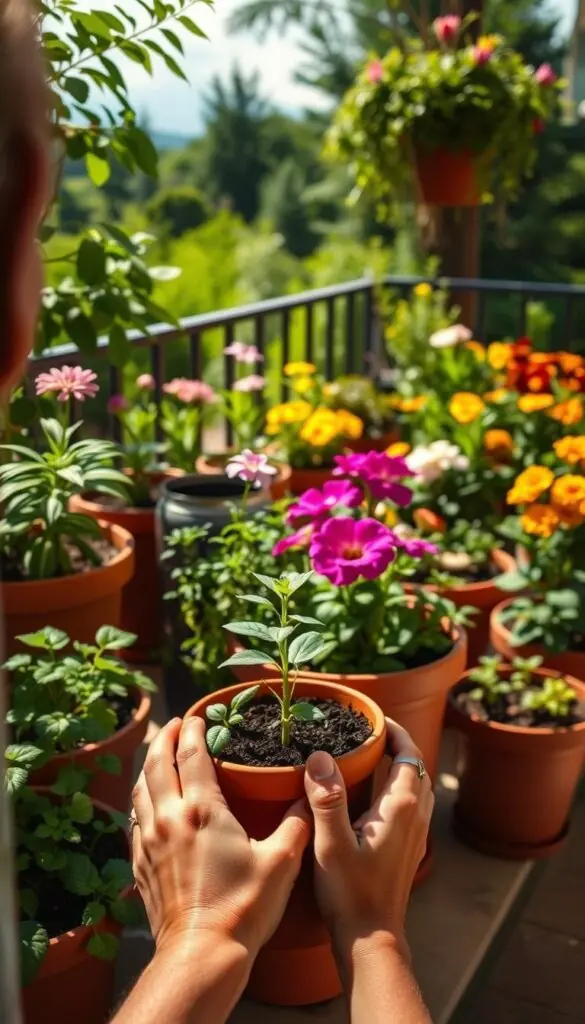
"Install supports at planting—it's the easiest way to protect roots and save time later."
Watering, Fertilizing, and Seasonal Care That Keep Pots Thriving
Little shifts in how and when you water can turn thirsty pots into steady producers all season.
Daily rhythm: check soil each morning and water deeply so water runs from the holes. Aim to soak until excess drains, rest, then soak again if the mix still feels dry. For dense root balls, use bottom-watering trays—fill and let the soil wick up until uptake stops.
Tools that save time: a watering wand, a drip kit on a timer, and a moisture probe make care simple when you’re busy or away.
Beating heat: shade sensitive plants during afternoon sun and double-pot to keep roots cooler. Small pots may need watering once or twice a day in hot, windy weather.
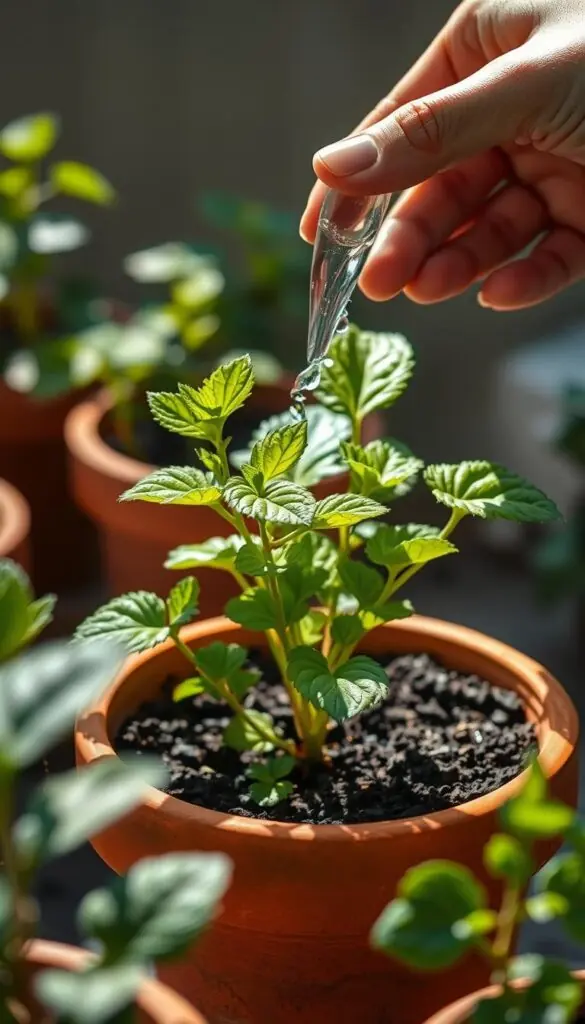
Feeding and seasonal care
Mix a slow-release fertilizer at planting, then feed liquid fertilizer every two weeks during active growth. Use fish emulsion or seaweed for micronutrients and follow label amounts.
- Top-dress with compost midseason and prune to refresh growth.
- Overwinter tender perennials by moving pots to a sheltered spot and watering sparingly to keep soil barely moist.
- If soil repels water, soak the whole pot or run a slow drip until the mix rehydrates.
"Check your pots each morning—consistent care beats last-minute fixes."
Container gardening plant ideas for beauty and harvest
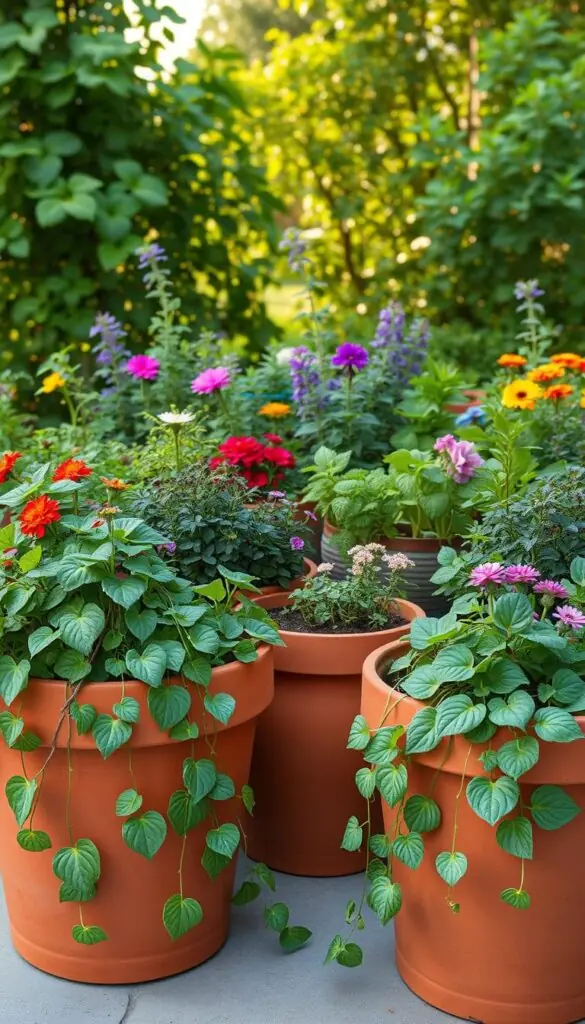
Turn a small ledge or sunny step into a riot of flavor and color with a few well-chosen plants. Pick compact varieties, match pot size to the crop, and group by thirst to keep care simple.
Full-sun flavor
Try a 5-gallon pot with a patio tomato (look for "patio" or determinate types). Ring it with sweet basil and spill nasturtiums for edible flowers and scent. Add a sturdy cage or stake at planting.
Cool-season and partial shade
In a shallow window box, plant 3–4 loose-leaf lettuces per 1-gallon pot or box. Mix parsley and chives for texture and regular snips. These vegetable and herb pairings like even moisture and cooler temps.
Small-space showstoppers
Use hanging baskets for cherry tomatoes bred for containers, paired with trailing basil and compact flowers. For a tidy patio planter, set a 3-gallon pot with a compact pepper and underplant oregano and marigolds.
- Grow bush beans in a 2-gallon pot with dwarf marigolds to boost blooms and pods.
- Choose varieties labeled "dwarf," "bush," or "compact" so pots stay balanced.
- Use a light potting mix so roots breathe and moisture feels even to the touch.
"Pick plants that suit the pot—then the space will give you both beauty and harvest."
Conclusion
Begin with one sunny spot, one good pot, and one plant you love. Pick a size that fits your space and be sure the pot has proper drainage holes. Use a light, soilless mix and place the pot where it gets true sun.
Keep a simple rhythm: morning water, steady feeding, and seasonal refreshes. Watch leaves and soil to judge the right amount of water and food for steady growth.
Start small, learn slowly, and enjoy the scents and colors as your plants respond. With a calm routine and a little curiosity, your garden becomes a peaceful, productive spot to return to each day.
FAQ
What size pot do I need for tomatoes, peppers, and lettuce?
For healthy roots, choose sizes based on the plant: tomatoes do best in 5–10 gallon pots, peppers in 3–5 gallon pots, and lettuce in 1–3 gallon containers. Use deeper pots for long roots and wider for sprawling varieties. Ensure each vessel has drainage holes and enough soil to retain moisture between waterings.
Which materials hold moisture best: plastic, terra-cotta, or fabric?
Plastic retains moisture longest and is lightweight, terra-cotta breathes but dries faster, and fabric pots offer excellent aeration and root pruning but lose water quickest. Match material to your routine: if you prefer less frequent watering, choose plastic; if you like better airflow and cooler roots, use fabric or glazed ceramic.
How many drainage holes do I need and what size should they be?
Aim for several ¼–½ inch holes across the bottom for even drainage. Multiple holes prevent water from pooling and keep roots from sitting in soggy soil. Add a saucer to catch runoff and lift the pot slightly to avoid clogging the holes.
What should I use for potting mix and does garden soil work?
Use a soilless potting mix made of peat or coconut coir, perlite or vermiculite, and compost for nutrients. Garden soil is too dense and can compact, choking roots and reducing drainage. A light, airy mix helps roots breathe and holds just the right amount of moisture.
When and how often should I fertilize potted vegetables and herbs?
Start with a slow-release fertilizer at planting, then supplement every 2–4 weeks with a balanced liquid feed or compost tea during active growth. Fruiting plants like tomatoes need higher potassium once they set fruit. Follow label rates to avoid salt buildup.
How do I water deeply without overwatering shallow pots?
Water slowly until you see runoff from the bottom—this ensures the entire root zone is moist. For small or shallow pots, water in short bursts and check moisture with your finger an inch down. Morning watering reduces fungal risk and gives plants a full day to use moisture.
What are good spacing and depth guidelines for beans and herbs?
Plant bush beans 2–4 inches apart; pole beans need 6–8 inches and a trellis. Herbs like basil and parsley do well 6–12 inches apart depending on variety. Depth is shallow for most seeds—about twice the seed’s thickness—and transplant seedlings at the same soil level they grew in.
How can I keep pots from drying out quickly in hot weather?
Use mulch, move pots to partial shade during peak heat, double-pot with an insulated outer container, or install a drip kit or self-watering reservoir. Choose heat-tolerant varieties and check moisture daily when temperatures spike.
Which support structures work best for tomatoes and vining plants?
Sturdy cages work well for determinate tomatoes; tall cages or strong stakes are better for indeterminate types. For vining beans and cucumbers, use trellises or netting anchored securely to the pot or nearby structure. Install supports at planting to avoid root disturbance later.
Can I reuse potting mix from last season and how should I refresh it?
You can reuse mix if you refresh it. Remove old roots, amend with fresh compost, add perlite for aeration, and apply a slow-release fertilizer. Solarize heavy-used mix or replace it if it smells bad, is compacted, or shows disease or pest signs.
What are common soil mistakes to avoid in pots?
Avoid using garden soil, overcompacting the mix, skipping drainage, and neglecting regular fertilization. Also don’t let pots sit in standing water. These errors lead to poor root health, nutrient deficiencies, and increased pests and disease.
How do I overwinter tender perennials and vegetable pots?
Move tender plants indoors or to a sheltered spot, trim back growth, and reduce watering. For heavy pots, lift and wrap or insulate with bubble wrap or burlap. Store lightweight pots upside down in a dry place to prevent cracking from freeze-thaw cycles.
What are easy, productive plants for small spaces and window boxes?
Choose compact tomatoes (patio or determinate types), dwarf peppers, leafy greens like lettuce and spinach, culinary herbs (basil, chives), and cascading nasturtiums or petunias for color. Pick varieties labeled for containers to maximize yield in limited space.
How do I spot and fix nutrient deficiencies in potted plants?
Yellowing leaves, poor growth, or purple tints can signal deficiencies. Test by inspecting leaves and comparing symptoms: nitrogen causes uniform yellowing, while iron shows yellowing between veins. Feed with a balanced liquid fertilizer, and correct pH if uptake seems blocked.
Are fabric pots safe for balcony use and do they need saucers?
Fabric pots are fine on balconies, but they dry faster and can leak water. Place a saucer or tray beneath to catch runoff and protect decking. Use a sturdy plant caddy with wheels for mobility and to lift the pot off the surface for airflow.