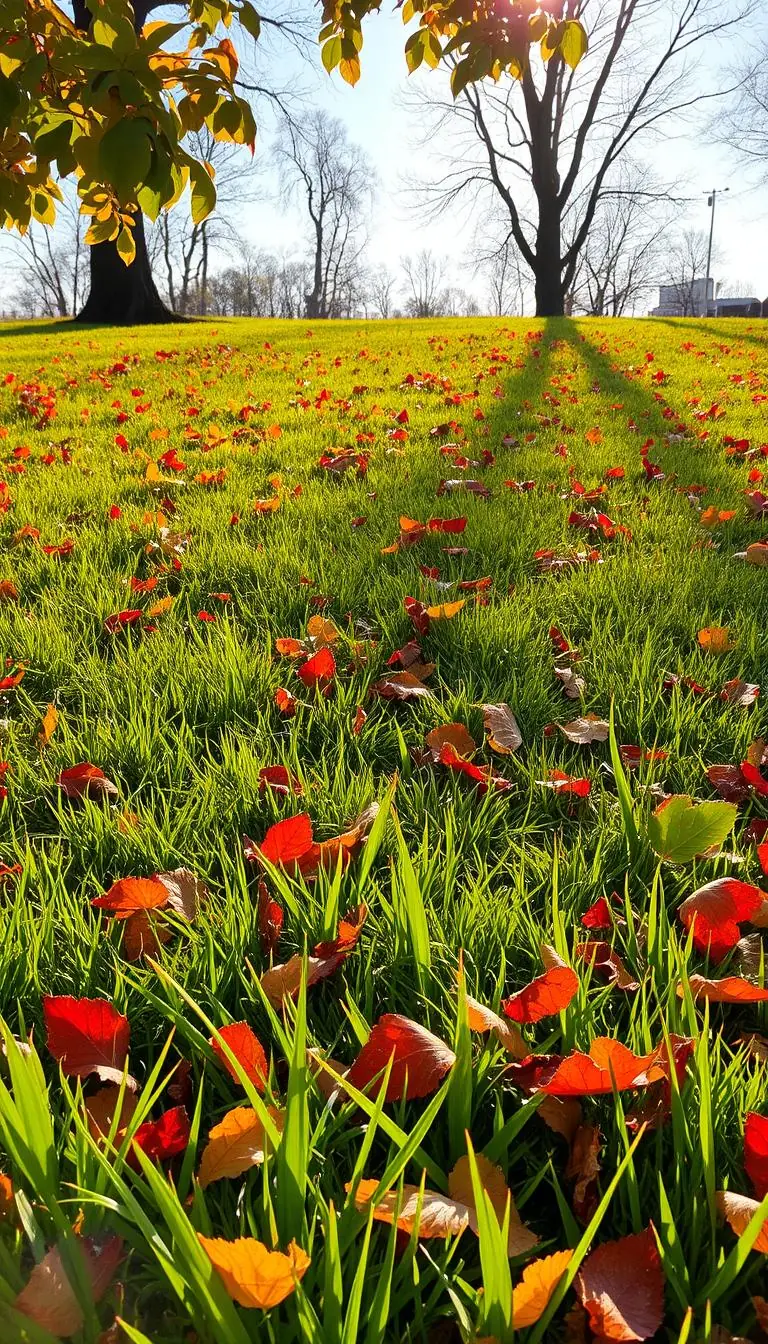
Imagine standing on cool morning grass, dew soaking your flip-flops while a fresh-cut scent drifts from the mower next door. You want a soft, green carpet that bounces back under your feet. This guide speaks like a trusted neighbor and gives simple, steady steps to get there.
Start with the soil: a quick test from your local extension tells you pH and nutrients so you can amend with confidence. Then overseed thin spots and follow a clear feeding plan, with proper fertilizing and deep irrigation—about 1 inch of water weekly.
Mow by the one-third rule, keep blades sharp, and avoid pre-emergent herbicide when you are overseeding. Seasonal care—spring cleanups, summer watering, fall feeding and overseeding, and winter protection—keeps grass resilient all year.
Key Takeaways
- Test and tune your soil first to feed grass well.
- Overseed and fertilize to thicken thin spots.
- Water deeply about one inch per week, not light daily sprays.
- Mow high, change patterns, and use sharp blades.
- Follow a simple seasonal checklist for steady progress.
Start Smart: Understand Your Lawn’s Needs and Your Region
Walk your yard like a detective: note bright spots, shady pockets, and the paths everyone uses.
Spend a morning and an evening walk with a notebook or phone. Snap photos over several days to capture sun patterns and breezes.
Match grass to the place and climate. Use cool-season grasses in northern USDA zones and warm-season grasses farther south. Pick disease-resistant mixes and a grass type that fits each area.

- Note travel routes—kids, pets, and wheelbarrows compact soil and show trouble spots.
- Watch slopes and low spots: hills dry fast, dips stay wet—plant and water accordingly.
- Shade needs extra attention; expect moss in dark, damp pockets and consider shade-blend grasses.
Be honest about time and energy. Set one simple goal this season—like thickening a thin strip by the street—and plan care that fits your routine.
| Site Feature | What to Note | Suggested Action |
|---|---|---|
| Full Sun | Long sunshine, dry midday | Plant sun-tolerant grass; water deeply |
| Deep Shade | Cool, damp, moss-prone | Use shade blends or accept mixed groundcover |
| High Traffic | Worn paths, compacted soil | Reseed with durable grass and aerate |
| Slopes & Dips | Uneven moisture | Adjust watering and select suited grasses |
Soil Testing and Prep: Build Healthy Soil for Deep Root Growth
Start by testing the soil the friendly way: take a short walk with a clean trowel, a bucket, and a plan. Scoop 10–12 small plugs from different areas, mix them in the bucket, and send a cup of that composite to your local extension for a clear read on pH and nutrients.

How to test pH and nutrients like a neighbor
Professional lab results beat DIY kits. The extension will tell you what to add and when. Aim for a pH of 6.0–6.5 so grass can access the feed it needs.
Simple fixes that make a big difference
If the top 2–3 inches feel tight instead of crumbly, loosen with a rake or cultivator. You’ll notice an earthy scent and roots will spread faster.
- Rake in a thin topdressing of screened compost or a compost/sand mix to improve texture and help moisture move evenly.
- Focus work on high-traffic areas—under swings, along sidewalks, or where vehicles turned.
- Follow the lab’s nutrient recommendations; that saves money and avoids over-application.
Prep before you seed or feed
Smooth, loosened soil helps seed-to-soil contact and makes fertilizer more effective. After a rain, watch how quickly puddles clear—slow drainage means aeration before the growing push.
Seed and Overseed for Thickness and Color
Choose your seed with care, then use the right tools and timing to help new grass take hold.
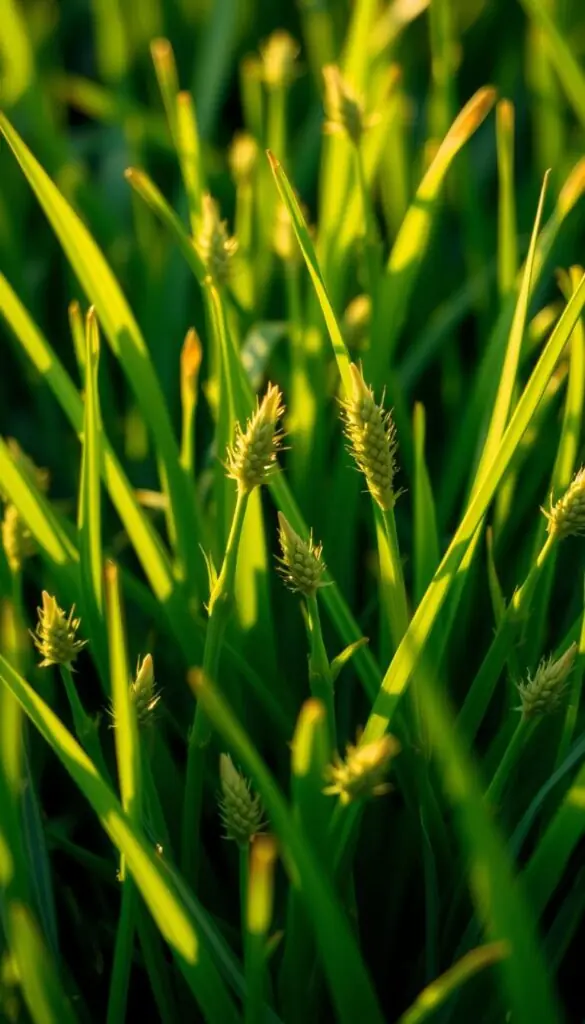
Pick a grass type that fits your sun, shade, and USDA zone. Shade mixes work under trees and sun-loving blends suit open areas. Use quality grass seed matched to your region for the best results.
Timing and simple steps
Cool-season lawns do best in fall and spring. Warm-season turf prefers late spring when soil warms.
How to overseed: a friendly checklist
- Rake away debris and use a dethatching rake where thatch blocks seed contact.
- Lightly roughen soil so seed can nestle in; picture fine specks like pepper over cocoa powder.
- Spread seed with a handheld for tight spots or a broadcast spreader for larger areas.
- Rake gently so seed touches soil, then topdress thinly with screened compost or starter mix.
- Water with light, frequent misting until seedlings appear, then reduce to deeper intervals.
- Avoid pre-emergent products during seeding; they stop seed from sprouting.
"Good seed-to-soil contact and steady moisture beat fancy products every time."
| Tool | Best Use | Pros |
|---|---|---|
| Handheld spreader | Small beds, edges | Precise, low cost |
| Broadcast spreader | Large areas | Even coverage, fast |
| Dethatching rake | Remove thatch | Improves seed contact |
Feed for Strength: A Simple Fertilizer Plan that Works
Think of fertilizing as a regular meal plan for your lawn—small, balanced portions on a schedule.
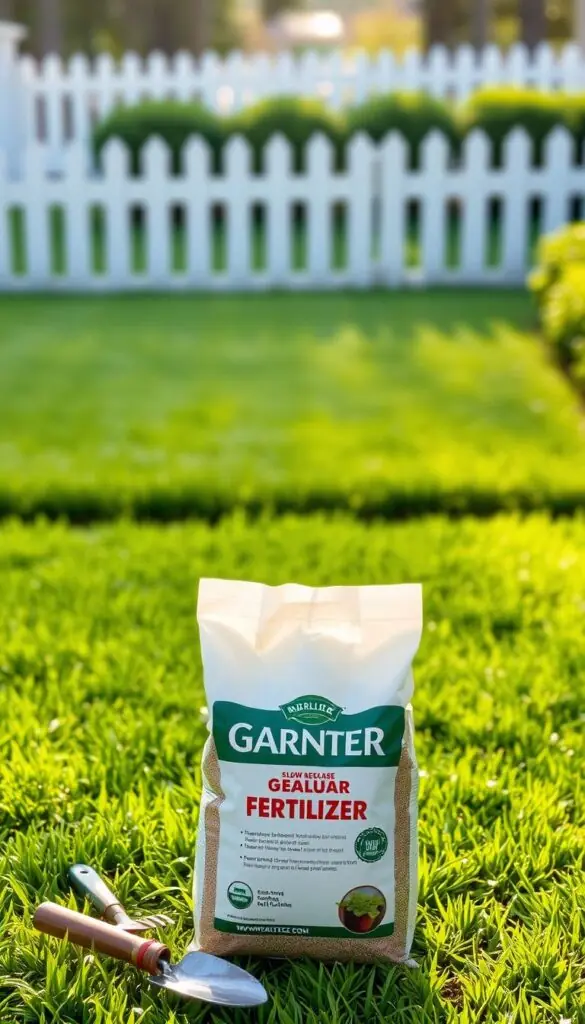
Starter vs. maintenance: Use a starter fertilizer when you seed or overseed. Starter formulas have higher phosphorus to support early root development and quick green-up. Once seedlings are established, switch to a balanced maintenance product that supports steady growth and overall health.
Seasonal feeding without overdoing it
Feed lightly but consistently. Regular fertilization replaces nutrients lost to rain and irrigation. Overfertilized and unfertilized areas both invite pests and disease, so aim for balance.
How to read the bag and use simple tools
Read the N‑P‑K numbers and follow the label. Calibrate your broadcast spreader, walk at a steady pace, and overlap slightly for even coverage.
- Use starter fertilizer at seeding; then move to maintenance once grass is established.
- Sweep stray granules off sidewalks and driveways with a broom to avoid staining and uneven patches.
- Time feedings: spring wake-up, a careful mid-summer touch if needed, and a fall application for strong roots.
"Balanced, seasonal care is easier to maintain and kinder to the soil than heavy, occasional applications."
Watering Made Easy: Hit the Right Inches per Week
When you aim for inches instead of minutes, irrigation becomes easier. Established grass typically needs about 1 inch of water per week, from rain or your system. That simple target keeps roots healthy and stress low.

How much and when
Set sprinklers for early morning so water soaks in while air is cool. This cuts evaporation and disease risk.
Measure and test
Place several tuna cans around the yard to catch water. Stop each session near 1/2 inch so you can repeat if needed.
Use a screwdriver as a moisture probe: if it slides in to the handle, the soil is wet enough. If it stalls near the surface, add more water.
Deep, infrequent sessions
- Aim for deeper cycles rather than daily misting to push roots downward.
- Adjust during hot, dry spells and back off when cool rains return.
- Keep new seed consistently damp until sprouts are steady, then move to deeper sessions.
Tip: Watch for bluish-gray blades or footprints that stay—water before stress stalls recovery.
Mowing for Health: Height, Frequency, and Clean Blades
Think of mowing as a gentle haircut: remove only what’s needed and let the rest protect the soil. A steady routine keeps your space tidy and helps grass recover after heat or traffic.
The one-third rule and recommended heights
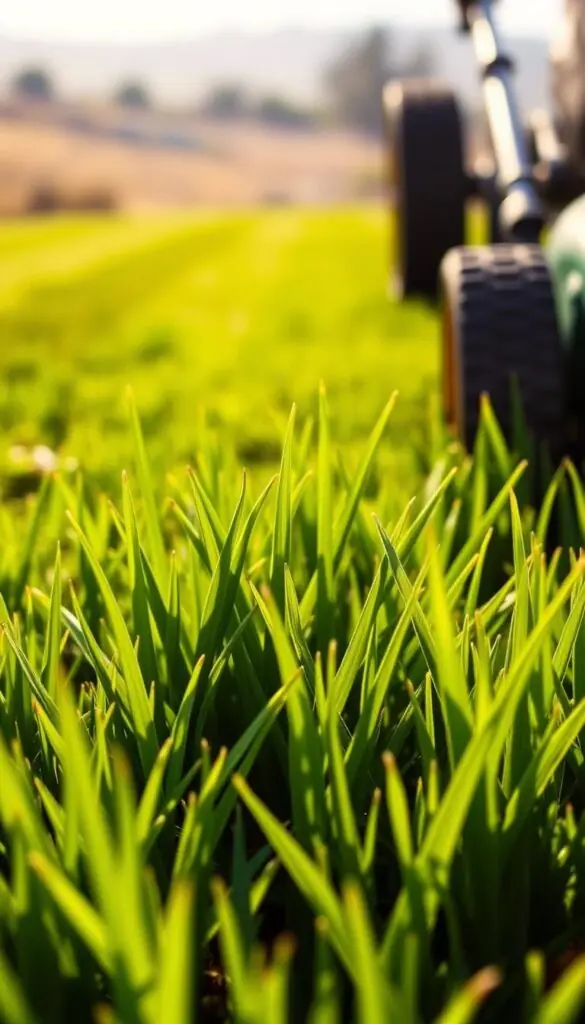
Set your mower so you never take more than one-third of the blade at once. That reduces stress and keeps color richer. For most lawns, aim for a 2–3 inch height.
Raise the height in hot, dry weather to shade roots and support deeper rooting. This simple shift helps recovery and steady growth.
Sharp blades, patterns, and mulch-mowing
Keep mower blades sharp at least once a season. A crisp cut looks clean and heals faster; torn edges invite disease and pests.
Change your mowing pattern weekly—north-south one week, east-west the next—to prevent ruts and encourage upright grass. When possible, mulch-mow and leave clippings. Returning clippings recycles nutrients and keeps moisture near the soil.
- Never cut more than one-third of height in a single pass.
- Aim for 2–3 inch height for most lawns; go higher under stress.
- Sharpen the mower blades regularly for a smooth, even finish.
- Vary patterns weekly and mulch-mow to feed the turf.
- Avoid mowing wet grass to prevent clumps and compaction.
"A clean cut and steady pattern create that soft swish and even look you notice first walking outside."
Weed Control Without Wrecking New Seed
You can tackle stubborn weeds and still protect fresh seed by choosing the right window and tools.
Pre-emergent herbicides do a fine job of stopping annual invaders, but they also stop the grass you plant. Never apply pre-emergent when you are overseeding. If you plan to seed, save these products until the new shoots are well established.
Timing and the important exception
Apply pre-emergent in early spring only when you are not adding seed. For established turf, early fall is a great window to reduce broadleaf pressure while the yard stays actively growing.
Spot treatments that protect new growth
When you must treat, work small and precise. Spot-spray on calm days to avoid drift and limit impact on surrounding grass.
- Use a dandelion weeder or hori-hori to remove roots with minimal soil disturbance.
- Skip sprays during heat or drought—stressed turf can scorch from chemicals.
- Keep mower height a bit higher to shade out tiny weed seedlings naturally.
- After weeds fade, overseed bare patches so open soil doesn’t invite new invaders.
Quick neighbor tip: pre-emergent stops all seed from sprouting—so hold off when you want new grass to come up.
Watch for Pests: Grubs, Insects, and Stress Clues
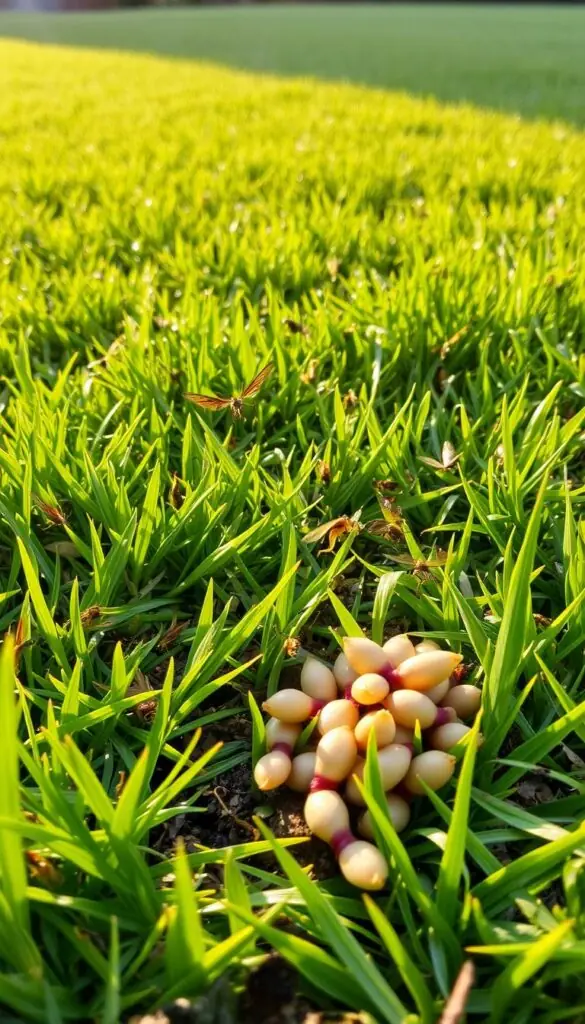
Small signs — birds digging or dark blotches — often tell you more than a full-blown infestation. Pay attention to odd brown patches that lift like a rug and to increased wildlife activity at dusk. Those are classic signals that something is feeding underfoot.
When to check and how to confirm
Grubs chew the root system, causing turf to die in irregular patches. Treat most effectively in late spring to early summer when grubs hatch.
- Look for patches that peel up easily or show birds and skunks digging in your yard.
- Before treating, cut a small square and count grubs — a few is normal; many in one spot means action is needed.
- Prevent issues by encouraging strong roots: water steadily, mow at the right height, and reduce compaction.
- Focus first on sunny, high-traffic areas; they reveal stress sooner.
- After treatment, overseed thin spots so green fills in and weeds stay out.
| Sign | Likely Cause | Action |
|---|---|---|
| Peeling brown patches | Grub feeding | Confirm with a soil check; treat at hatch timing |
| Birds or skunks digging | Insects under turf | Inspect, count grubs, consider targeted control |
| Thin, stressed strips | Compaction or thatch | Aerate, dethatch, strengthen grass |
Note: Use products according to label directions and prefer targeted, timely treatments to protect beneficial insects.
Aeration, Dethatching, and When to Renovate
When soil feels tight underfoot, timely aeration and dethatching can refresh tired turf fast. These are practical, hands-on steps you can take to let air, water, and seed reach roots.
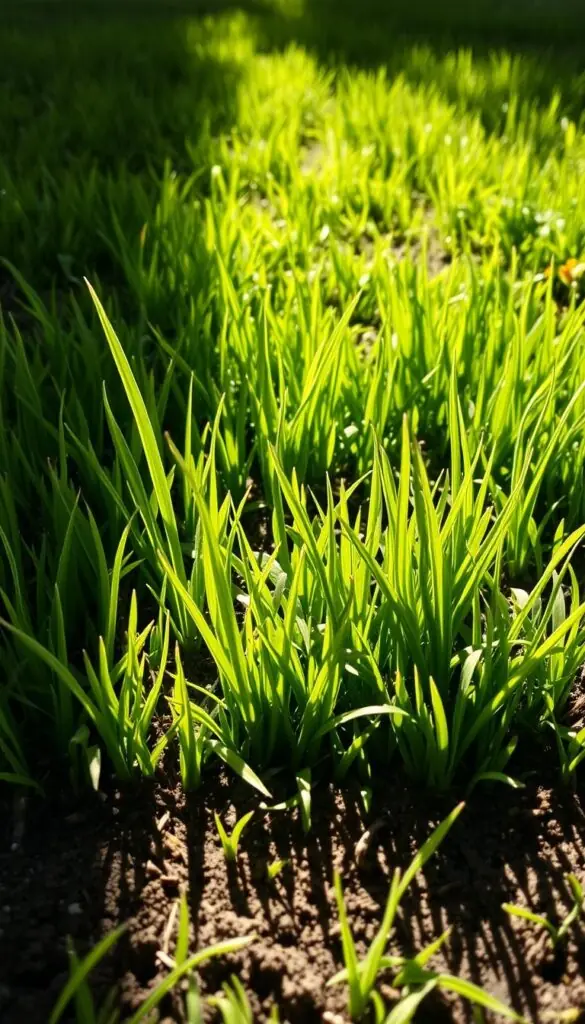
Check thatch and act at the 1/2-inch mark
Cut a small wedge to inspect thatch. If the spongy brown layer measures more than one-half inch, remove it.
Use a rake for small patches. Rent a power dethatcher for bigger jobs and rake debris away so seed touches soil.
Core aeration for compacted spots
Core aerators pull small plugs; when you see firm plugs on the surface, air and water are finally moving where roots need them.
Rent a machine or hire a service for compacted areas. Aeration improves root growth and moisture penetration.
Partial vs. complete renovation
Choose partial renovation when weeds are scattered: dethatch, aerate, and overseed right after. The open channels make an ideal seedbed.
Pick complete renovation in late summer if moss or weeds dominate: remove old turf, dethatch, then reseed or sod.
"Space big steps a few weeks apart so the yard can recover and you can monitor progress."
- Overseed immediately after aeration or dethatching.
- Topdress lightly to improve texture and support even growth.
- Follow with steady maintenance: gentle watering and proper mowing as new grass establishes.
Season-by-Season Lawn Care Calendar for the United States
A short, seasonal calendar helps you match small tasks to the weather and save time. Below is a friendly checklist for spring, summer, fall, and winter. Use the examples and tools to make each step realistic.

Spring
Actions: rake winter debris, set the mower higher, and feed lightly as soil warms.
Patch thin spots with seed and keep new areas evenly moist. Spot-treat weeds on calm, mild days.
Summer
Actions: keep mowing height high and use sharp blades.
Water early in the morning so total irrigation reaches about 1 inch per week from rain and watering. Watch for grubs at hatch time and treat promptly. Feed only if needed to avoid stress.
Fall
Actions: overseed cool-season grass types in the North and apply a fall fertilizer to encourage roots.
Mulch fallen leaves into dime-size pieces to recycle nutrients. Lower mowing height slightly at season’s end to tidy the canopy.
Winter
Actions: limit foot traffic on dormant grass, use ice-melt products labeled safe for turf, and sharpen mower blades so tools are ready.
Plan next season’s feedings and note what worked this year.
Tip: Keep a small notebook of dates and products used. Those quick notes save time and help your maintenance decisions next season.
| Season | Top Tasks | Tools & Examples |
|---|---|---|
| Spring | Rake debris, feed lightly, patch bare spots | Leaf rake, broadcast spreader, starter seed mix |
| Summer | High mowing, morning watering, pest check | Sharp mower blades, timer-controlled irrigation, grub probe |
| Fall | Overseed, fall fertilizer, mulch leaves | Overseeder, compost mulcher, slow-release fertilizer |
| Winter | Protect dormant turf, use lawn-safe ice melt, prep tools | Ice-melt labeled for grass, mower tune-up kit, record journal |
How to grow lush lawn with simple weekly habits
A little weekly care keeps problems from getting big. Set a short ritual: a five- to ten-minute lap to notice thirsty spots, new weeds, compacted paths, and mower needs.
Pluck or spot-treat small weeds before they seed. Where soil is bare, sprinkle a pinch of quality grass seed and press it in so green fills the gap.
Check the mower blades for sharpness and set the height a bit higher during heat or stress. A crisp cut and a soft thud from the mower make the yard feel tidy and help root depth.
- Mulch-mow when possible to return nutrients and hold moisture near roots.
- Measure irrigation with a can—watch inches collect and adjust watering for weather.
- Keep a small seed bucket and hand spreader for quick repairs after edging.
"Weekly, tiny steps—inspection, spot fixes, and neat mowing—add up to steady, healthy progress."
| Weekly Task | Why It Helps | Quick Tool |
|---|---|---|
| Five-minute walk | Find thirsty spots, weeds, compaction | Notebook or phone |
| Spot weed & seed | Stops spread and fills bare soil | Hand weeder, seed pinch |
| Blade check & mow | Clean cuts, better recovery, nutrient return | Mower blade file, mulching deck |
Conclusion
Take a slow last look around your yard and notice the small wins—filled bare spots, fewer weeds, and color returning after a rain.
Start with healthy soil and the right seed. Feed with balanced fertilizer so nutrients go where they help root growth and overall growth. Keep simple weekly habits—check moisture and press a pinch of grass seed into worn spots.
Keep the mower sharp and set the proper height. Measure your water per week and let roots reach down. Watch for pests and treat early so turf recovers fast.
Plan bigger steps in late summer or fall—dethatch, aerate, and overseed when time and weather line up. With steady care, you’ll have a welcoming, healthy lawn to enjoy each season—morning coffee, evening play, and quiet, green afternoons.
FAQ
How often should I water to keep grass healthy without wasting water?
Aim for about 1 to 1.5 inches of water per week during the growing season, delivered in one or two deep, early-morning irrigations. Use a tuna-can or rain gauge to measure runoff and adjust for heavy rain. Deep, infrequent watering encourages roots to grow downward for drought resilience.
When is the best time to overseed my yard?
For cool-season grasses, overseed in early fall or early spring when soil temperatures are mild. Warm-season grasses do best with late spring or early summer overseeding once soil has warmed. Timing matters: avoid overseeding when weeds are actively germinating.
How do I test and adjust my soil pH the neighborly way?
Purchase a simple home soil test kit or send a sample to your local extension office. Aim for pH around 6.0–6.5 for most turf. If pH is low, apply lime; if high, use sulfur per the test recommendations. Make changes gradually and retest after a few months.
How high should I mow and how often?
Follow the one-third rule: never remove more than one-third of blade height at once. Cool-season grasses often do well at 2.5–3.5 inches; warm-season types prefer 1.5–2.5 inches. Mow frequently enough to avoid scalping, and keep blades sharp for clean cuts.
What’s the difference between starter fertilizer and maintenance fertilizer?
Starter fertilizer is higher in phosphorus to boost root establishment for new seed. Maintenance blends focus on nitrogen for green growth and may include potassium for stress tolerance. Always read the label and match the formula to the season and grass type.
When should I aerate and dethatch my yard?
Core aerate when soil is compacted or after heavy foot traffic—typically every 1–3 years for most yards. Dethatch if the layer exceeds 1/2 inch. For cool-season turf, aerate in fall; for warm-season, late spring to early summer works best.
How can I control weeds without harming newly seeded areas?
Avoid pre-emergent herbicides when you plan to seed, because they prevent grass seed from germinating. Spot-treat mature weeds with a selective broadleaf herbicide and wait until the new grass is established—usually after several mows—before applying lawn-wide products.
How do I know if pests like grubs are damaging my turf?
Look for irregular brown patches that lift easily like a carpet when pulled. Increased bird or raccoon activity is also a clue. For heavy grub infestations, treat in late summer when larvae are small; for prevention, maintain healthy turf through proper watering and feeding.
What’s a simple seasonal fertilizer schedule I can follow?
For cool-season grasses: light feed in early spring, main feeding in fall to promote roots, and a summer application if needed at reduced rates. For warm-season grasses: feed from late spring through summer, then taper in fall. Always follow label rates to avoid overfertilizing.
How do I pick the right grass type for sun and shade?
Match grass to your site: Kentucky bluegrass and tall fescue suit cooler regions and full sun to partial shade; fine fescues tolerate shade better. Bermudagrass and zoysia prefer warm, sunny spots. Check your USDA zone and sunlight pattern before buying seed.
How much seed should I use for overseeding or patching?
Follow the bag’s recommended seeding rate for overseeding and use a slightly higher rate for bare-patch repairs. Lightly rake seed into soil, keep the area consistently moist until germination, and avoid heavy foot traffic while young.
How do I measure thatch and when should I remove it?
Dig a small plug and measure the layer of dead organic material above the soil. If thatch is more than 1/2 inch, dethatch. Thin layers can help insulate soil, but thick buildup prevents water and nutrients from reaching roots.
What weekly habits keep turf healthy year-round?
Water deeply once or twice weekly as needed, mow to the proper height and sharpen blades, inspect for pests or weeds, and address problem spots quickly. A short weekly check helps you catch issues early and maintain steady root growth.
Do I need a soil test every year?
Not every year. Test every 2–3 years or when you see persistent nutrient or pH problems. A test helps you target amendments like lime, sulfur, or specific fertilizers rather than guessing.
Can I use mulch-mowing to feed my yard?
Yes. Leaving grass clippings returns nitrogen and organic matter to the soil when clippings are short and evenly distributed. Avoid leaving large clumps and only mulch-mow when the mower blades are sharp.
When is it time to renovate a patchy or weedy area completely?
Consider partial or full renovation when more than 40–50% of an area is weeds or bare, or when soil is badly compacted. Renovation may include dethatching, aeration, soil amendments, and reseeding or sodding depending on severity.