You pause by the kitchen window and notice a row of plump, waxy leaves catching the late light. That calm, simple sight is the start of a small daily pleasure you can keep alive with a little know-how.
In this guide, we share a gentle, step‑by‑step routine for growing succulents indoors that fits real life at home. You’ll learn where to place pots for steady light, how to water without guesswork, and how to read the cues your plant gives.
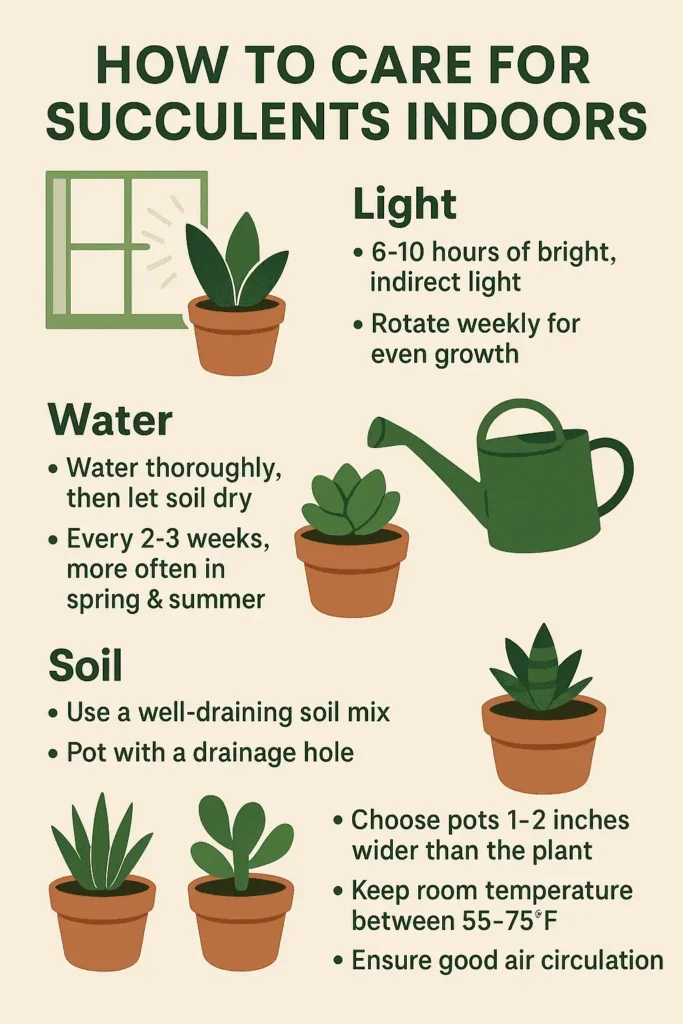
We recommend beginner-friendly choices like Haworthia, Gasteria, Jade, and Aloe, fast‑draining soil (about 1 part organic to 2 parts mineral), and containers with drainage holes. Expect clear numbers—6–10 hours of bright, indirect light, 55–75°F rooms, and a starting rhythm of watering about every 2–3 weeks so the soil can dry between drinks.
Key Takeaways
- Choose forgiving varieties like Haworthia or Aloe for steady success.
- Use a fast‑draining soil mix and a container with a drainage hole.
- Give 6–10 hours of bright, indirect light and rotate pots weekly.
- Water via soak‑and‑dry about every 2–3 weeks; cut back in winter.
- Keep rooms around 55–75°F and ensure light air movement to prevent pests.
Set up your space: the quick-start essentials for beauty and low maintenance
Start by carving a sunny, calm corner where your plants will look cared-for and easy to maintain. This simple step makes daily care feel effortless and keeps your display tidy.
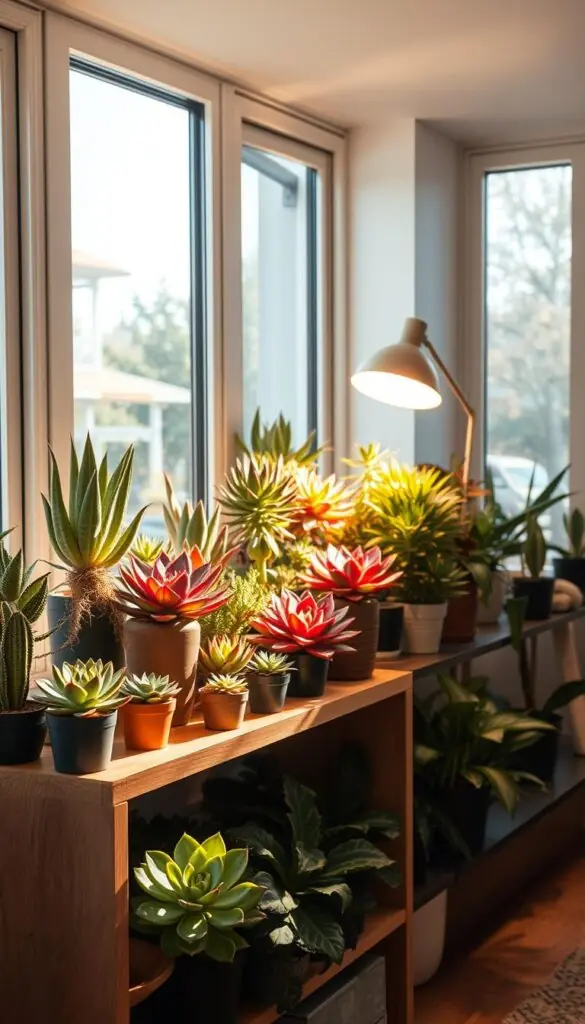
Place for light
Pick a south- or west-facing sill for steady brightness. Aim for 6–10 hours of bright, indirect light that casts a faint shadow.
If window light is weak, add a full-spectrum LED grow light (3,000–5,000K, 20–40W) 8–12 inches above the pots on a 10–12 hour timer.
Soil and container
Use a sharp-draining soil mix: 1 part potting soil to 2 parts perlite, pumice, or coarse sand. The mix should feel gritty and dry quickly after watering.
Choose containers with drainage holes. Terracotta is lovely and breathes, speeding up drainage. If a decorative cachepot lacks holes, use double-potting with a nursery pot inside.
Tools and materials to have on hand
- Terracotta pots and catch saucers
- Potting soil plus perlite/pumice and a scoop
- Full-spectrum LED (3,000–5,000K, 20–40W), squeeze bottle or narrow-spout can
- Moisture meter (optional), pruning shears, gloves or paper band, rubbing alcohol
- Small clip-on fan for gentle air movement and a soft brush for cleanup
Quick checklist: place succulents in bright spots, build the 1:2 soil mix, make sure pots have real holes, and expect to water about every 2–3 weeks as you adjust to your room's light and pot size.
Light, water, and air: daily and weekly care rhythms that keep succulents happy
Daily light, water, and a little airflow form the simple rhythm your plants thank you for. These three elements are easy to check and tune to your home.
Getting light right
Aim for 6–10 hours of bright, indirect light that casts a soft shadow most days. If a plant leans or the leaves look pale, raise light or add a grow lamp for 10–12 hours.
Weekly rotation: turn pots a quarter turn each week so growth stays even and stems don’t stretch.
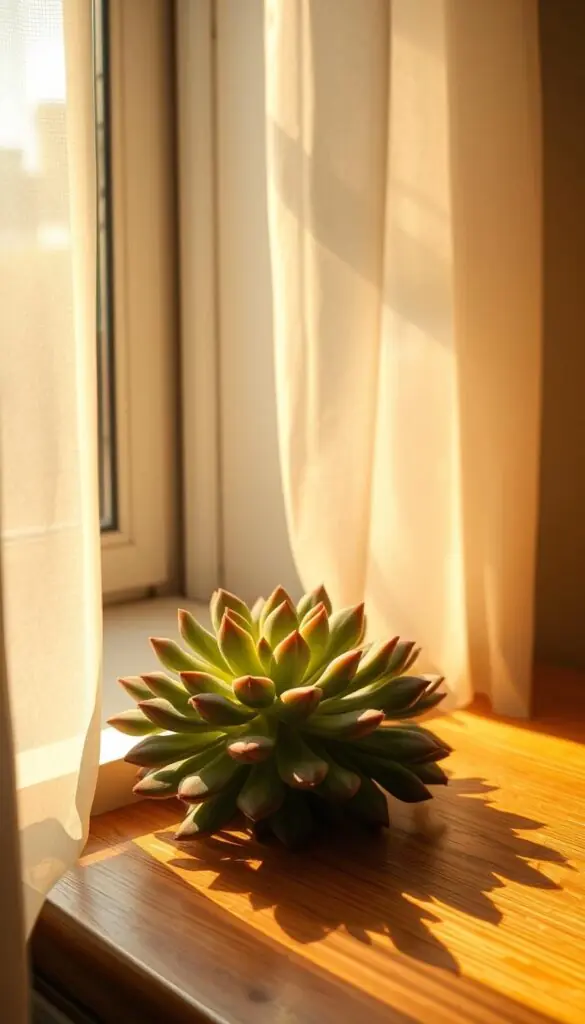
Watering with the soak-and-dry method
Water thoroughly until excess drains, then let the soil dry before the next drink. In spring summer you’ll often water every 2–3 weeks; in especially winter dormancy, wait longer.
- Check 2–3 inches down for cool, dry grit.
- Lift the pot to learn its dry weight.
- Avoid leaving water in saucers for more than a few hours.
Air circulation and humidity
Good airflow lowers pest risk and helps the soil dry. Crack a window on mild days or run a small fan briefly.
If your room is very dry and leaves wrinkle quickly, group pots or move them a bit from heat vents.
Reading the leaves
"Firm, cool leaves mean a happy, hydrated plant; soft, wrinkled leaves ask for water."
Firm and springy leaves indicate good hydration. Wrinkled, bendable leaves mean it’s time to water. Yellow, mushy leaves point to overwatering or root trouble.
Potting, repotting, and propagation for growing succulents indoors
A well-chosen container and the right soil set the stage for healthy growth and easy care. Size and material influence how fast the soil dries and how often you water.

Size and material: simple rules
Pick a container 1–2 inches wider than the root ball so the soil stays active. Terracotta helps the mix dry quickly. Glazed ceramic holds moisture longer. Plastic is light and keeps water.
Always use pots with drainage holes. If a pretty pot lacks holes, double-pot with a nursery pot inside the cachepot.
Fast-draining soil mix
Make a gritty soil mix: 1 part potting soil to 2 parts perlite, pumice, or coarse sand. Aim for a chunky, crumbly texture. Add a handful of pine bark or fine gravel for structure.
Repotting steps and signs to upsize
- Pre-fill a little mix, loosen circling roots, and set the crown just above the rim.
- Backfill, tap to settle, leave a small well, then water lightly to settle the soil.
- Upsize when roots push from holes, the plant is top-heavy, or soil stays wet longer.
"Handle the roots gently; use a folded paper band or gloves for spines."
During spring summer, snip offsets or leggy stems, let cut ends callus 1–3 days, and plant in the same gritty potting soil for fast starts.
Common mistakes and fixes for indoor succulents
A few common errors cause most problems—here’s how to spot them early.
Watch the soil and the leaves first. Soggy soil stays cool and smells faintly earthy. When you press the surface it feels muddy or heavy. Overwatered leaves go soft, yellow, or translucent.
If leaves feel mushy or look translucent, stop watering and let the soil dry completely. Repot into a gritty mix and a pot with good drainage if the soil never seems dry.
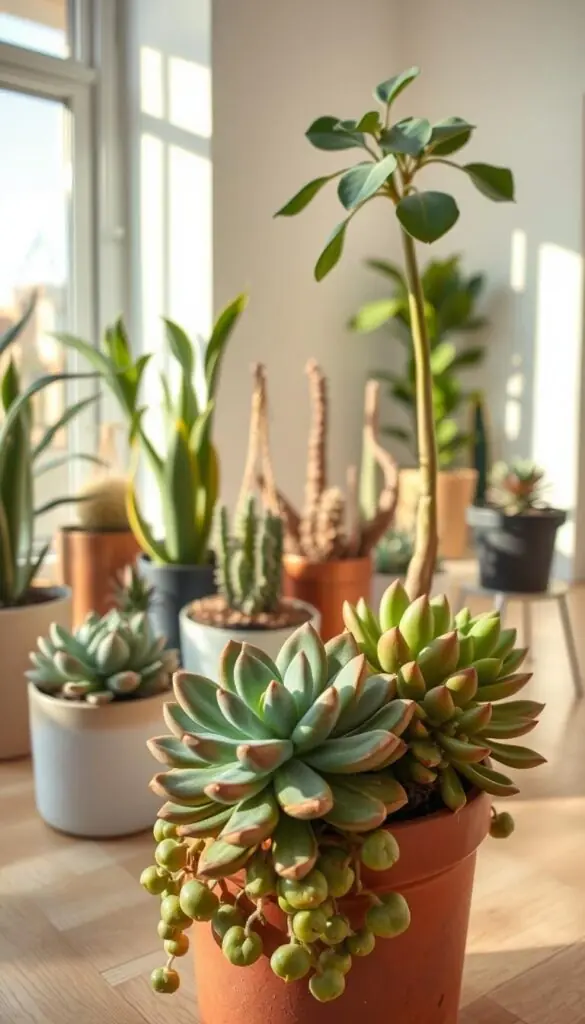
Quick pest and light fixes
Fungus gnats hover when the soil is too wet. Let the soil dry, use yellow sticky traps, and top with coarse grit. Mealy bugs hide in crevices and look like tiny cotton tufts.
For mealy bugs, dab or spray with rubbing alcohol and repeat weekly. Pour a little alcohol over the soil surface to disrupt eggs. Boost air movement with a small fan to reduce pest hiding spots.
Low light shows as stretched stems and faded color. Move your plant closer to a brighter window or add an LED grow lamp for 10–12 hours daily. Introduce direct sun slowly to avoid scorch.
"A simple log of waterings and light changes helps you learn what each pot needs."
| Problem | Key signs | Immediate fix | Preventive step |
|---|---|---|---|
| Overwatering | Yellow, soft leaves; wet soil | Stop water, let soil dry; repot if needed | Use gritty soil and pots with drainage |
| Fungus gnats | Small flies, larvae in soil | Let soil dry, sticky traps | Bottom-water less; top with coarse sand |
| Mealy bugs | Cottony tufts in leaf axils | Apply rubbing alcohol weekly | Inspect new plants; increase air flow |
| Low light / etiolation | Leggy stems, pale leaves | Move closer to light or add LED | Rotate plants and track light hours |
- If leaves are wrinkled and the soil is dry: water—especially in spring summer, check more often.
- Never let water sit in saucers: empty them after a few hours to avoid root rot.
- Keep a simple care log: time between waters, light changes, and pest treatments help you fine‑tune care succulents need.
Conclusion
Finish your care routine by trusting simple cues: light, touch, and timing. You now have a clear, calm rhythm for indoor succulents: steady, indirect light, a deep drink, then a full pause until the soil dry again.
Check leaves with your fingertips. Firm leaves mean wait. Slightly wrinkled leaves mean give water. Yellow or mushy leaves call for rest and repotting into fresh, gritty soil.
Keep containers breathable and true drainage in place. Use terracotta or double-potting, refresh potting mix when it compacts, rotate weekly, and add a full-spectrum LED if light is low.
Start small today—move one pot, top with coarse grit, or set a fan on low. With these easy steps, growing succulents indoors is peaceful, low-maintenance, and gently rewarding for your home and house plants.
FAQ
How do I set up a sunny spot for my plants when I don't have a south window?
Find the brightest west or east-facing window you have and place your pot within a few feet of it. If light is limited, use a full-spectrum LED grow light for 8–10 hours daily. Rotate pots weekly to keep growth even and prevent stretching.
What type of soil and container should I use to prevent soggy roots?
Choose a commercially available fast-draining mix or create one with potting soil, coarse sand, and perlite. Use a pot with drainage holes—terracotta is excellent because it breathes and helps the mix dry faster. Avoid deep, heavy containers that hold moisture.
How often should I water using the soak-and-dry method?
Water thoroughly until it flows from the drainage hole, then let the soil dry completely before the next soak. In spring and summer this may be every 1–2 weeks; in fall and especially winter, extend to every 3–4+ weeks depending on light and temperature.
How can I tell if my plant needs water or more light by looking at the leaves?
Firm, plump leaves mean healthy moisture; wrinkled or soft leaves indicate underwatering. Pale, stretched, or widely spaced leaves point to low light (etiolation). Browning at the base or mushy leaves usually signal overwatering.
What simple tools and materials should I keep nearby for care and repotting?
Keep a watering can with a narrow spout, a small trowel, pruning scissors, a soft brush for pests, extra fast-draining mix, and spare pots with drainage. A hygrometer and a grow light are helpful if your room's humidity and light are inconsistent.
When is the best time to repot or increase pot size?
Repot in spring or early summer when plants are actively growing. Choose a pot only one size larger if roots are crowded. If roots circle the pot or soil stays wet long after watering, it's time to refresh the mix and check drainage.
How do I make a sharp-draining soil mix that dries quickly?
Combine regular potting soil with roughly equal parts coarse sand, perlite, or pumice. For a chunkier mix add crushed gravel or poultry grit. The goal is lots of large particles so water runs through and air reaches the roots.
What should I do if I find gnats or mealy bugs in the pot?
For fungus gnats, let the soil dry and use sticky traps or a thin sand top layer to deter adults. For mealy bugs, dab insects with isopropyl alcohol on a cotton swab, isolate the plant, and repeat treatments. In severe cases, use an insecticidal soap labeled for houseplants.
How can I improve air circulation and lower humidity around my plants?
Place plants where air moves gently—near a window you open or use a small fan on low and intermittent settings. Avoid clustering pots too tightly. Good airflow reduces rot and pest problems without blasting the leaves.
Will direct sun always help, or can it harm my plants?
Morning sun is usually safe; harsh midday sun through glass can scorch leaves, especially for plants new to bright light. Gradually increase exposure and watch for quick color change or brown patches, which mean move to bright, indirect light.