Morning light warms a row of upright, variegated spears and the room smells faintly of earth. Have you ever wanted a bold, low-fuss housegreen that looks tidy by the window and feels steady under your care?
Dracaena trifasciata is an evergreen perennial from West Africa that thrives in bright, indirect light yet forgives lower light in busy homes. It prefers sandy, well-drained soil and a watering rhythm that waits until the mix is fully dry.
We’ll show simple, practical steps you can use today: where to place pots by east, south, or west windows, a no-fuss deep watering method, and the basic tools—terracotta pot with drainage, a watering can, and a microfiber cloth for dusting leaves.
Expect clear cues—firm spears, crumbly soil, and an earthy scent—that tell you when to act. By the end, you’ll feel confident and calm about helping your houseplant thrive.
Key Takeaways
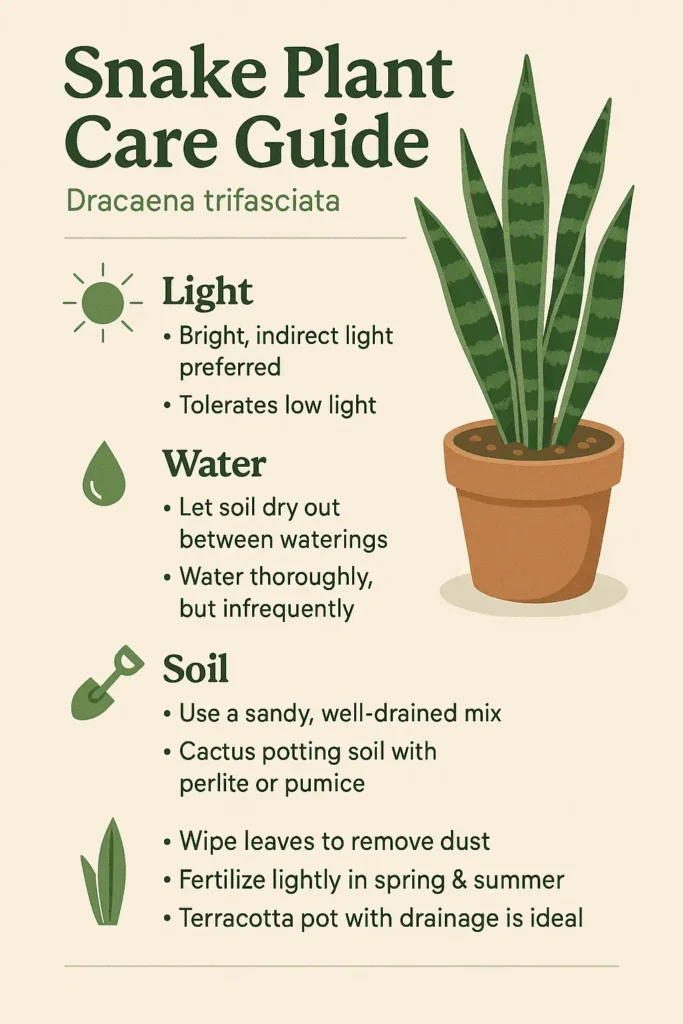
- Dracaena trifasciata likes bright, indirect light but tolerates low light.
- Let soil dry fully between deep waterings to avoid soggy roots.
- Use a sandy, airy mix like cactus mix with perlite or pumice.
- Wipe leaves gently and fertilize lightly in spring and summer.
- Choose a terracotta pot with drainage for steady, healthy growth.
Meet Dracaena trifasciata: What Makes Snake Plants Easy-Care Houseplants
Meet a quiet companion for your windowsill: a tough, architectural evergreen that fits busy rooms.
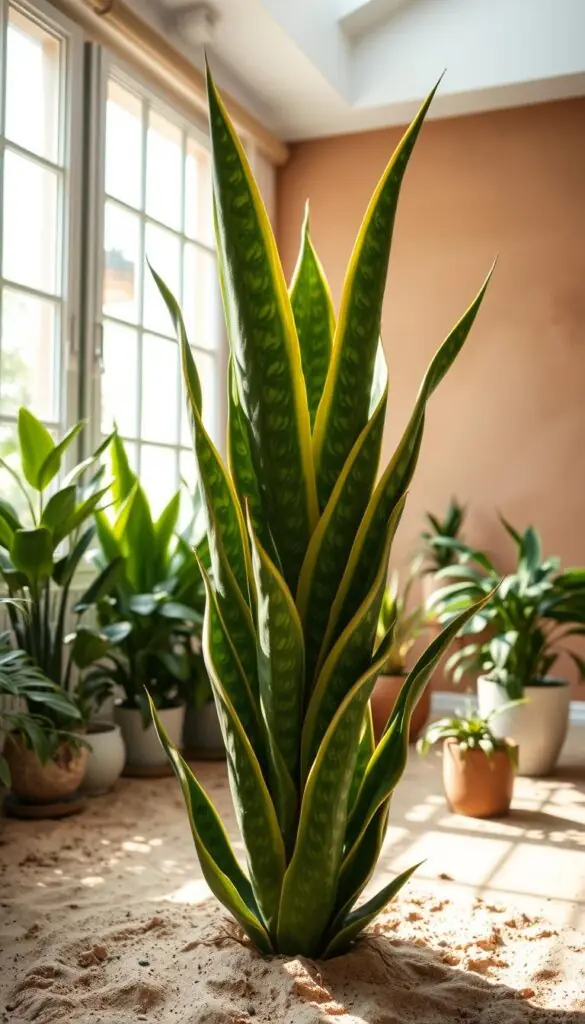
Commonly sold under several names, the botanical name dracaena trifasciata is what you’ll see on modern tags. You may also know it as mother-in-law’s tongue or viper’s bowstring hemp. The leaves are tall and sword-like, banded deep green with creamy or yellow margins.
The size range indoors varies. Compact types stay short and rosette-shaped, while standard forms reach about 2–5 feet tall. Popular cultivars include ‘Laurentii’ with golden edges, ‘Hahnii’ as a tidy rosette, and ‘Bantel’s Sensation’ with white striping.
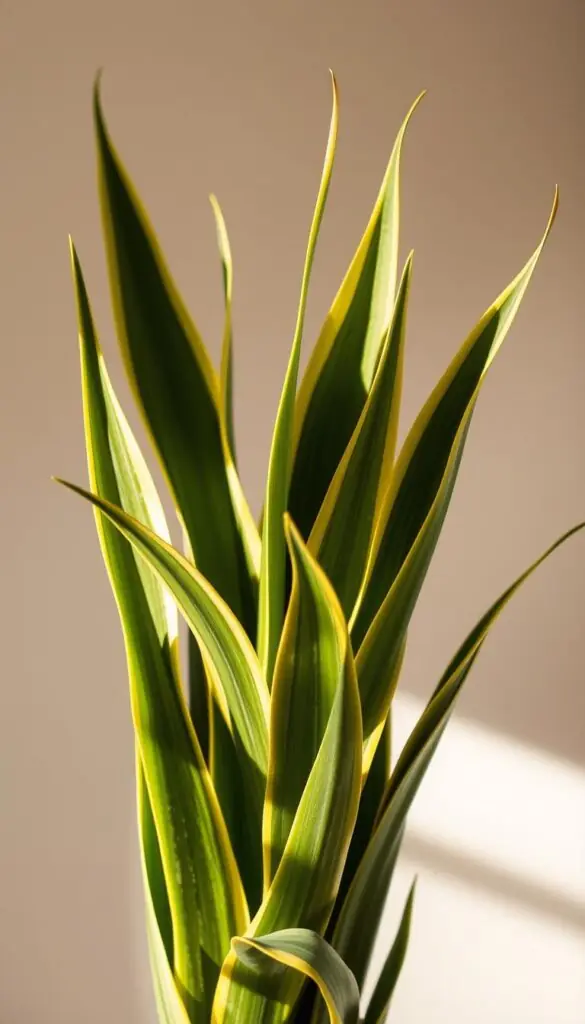
Native range and where it thrives
Native to West Africa and in USDA zones 9–11, this evergreen tolerates tough conditions. It does well in low light but shows its best color in bright, indirect light.
Keep it in normal home temperatures and away from cold drafts. Place it in living rooms, bedrooms, or offices where you can enjoy the clean, upright look and reach it for a quick dusting or a measured sip of water.
Light Made Simple: How Much Sun Snake Plants Need for Strong, Variegated Leaves
The right light makes leaves pop and keeps your indoor green looking confident and crisp. Aim for 8–10 hours of bright, indirect light each day so the foliage holds color and stays upright without leaning toward windows.
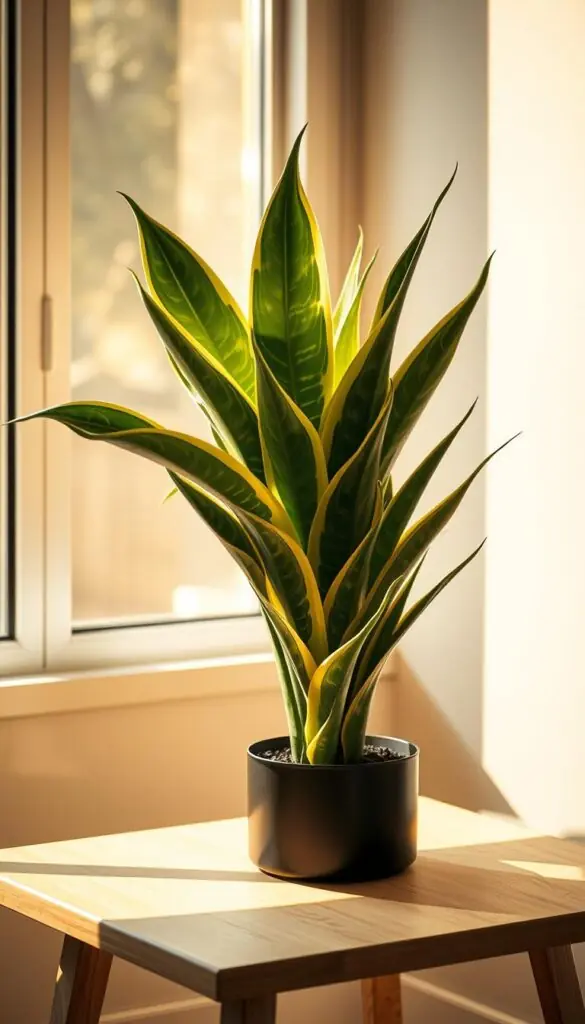
Best placements in a U.S. home
East-facing rooms give gentle morning sunlight that enhances crisp variegation. Place the pot close to the sill for that soft glow.
South windows are brightest; set the pot a few feet back or use a sheer curtain to diffuse harsh midday rays and prevent scorch.
West-facing light brings warm afternoons. Slide the pot a step aside on hot days so leaves don’t get burned by intense sun.
Grow lights and low-light tradeoffs
Low light is tolerated, but growth slows and striping fades. If your living room is dim, a small LED grow light on a timer (10–12 hours) keeps color lush without rearranging furniture.
- Watch signals: leaves stretching or flattening mean your green wants brighter light.
- Keep leaves dust-free so they absorb light and air better.
- Think like growers: more light for stronger variegation; less light for slow, steady care.
Watering Without Worry: The No-Root-Rot Method
You can avoid overwatering with one easy habit and a few checks. This method protects roots while keeping leaves firm and healthy.
Quick rule: only water when the top 2–4 inches of soil dry completely.
The fingertip test
Press your finger into the mix. If the top 2–4 inches feel bone dry, give the pot a drink. If it feels cool or moist, wait.
Seasonal rhythm
In summer, most homes need a deep soak every few weeks. In winter, cut back—often about once a month as growth slows.
Deep watering, step by step
- Use room-temperature water.
- Pour slowly around the rim until water runs from the bottom.
- Let excess drain fully; never leave standing water in a tray or the bottom pot area.
"Err on the dry side—too much water suffocates roots and causes soft, mushy leaves."
Watch for mistakes and red flags
- Yellowing leaves, mushy stems, or a sour soil smell signal early rot.
- If unsure, a simple moisture meter helps, but fingertip checks and lifting the pot by weight work well.
- If you overwater, tip the pot to pour out excess and place it somewhere warm with good airflow.
Soil and Drainage: The Potting Mix That Keeps Roots Happy
Good soil is the unsung hero that keeps roots firm and leaves upright. Start with a gritty, fast-draining potting blend so water passes through and air reaches the root zone.
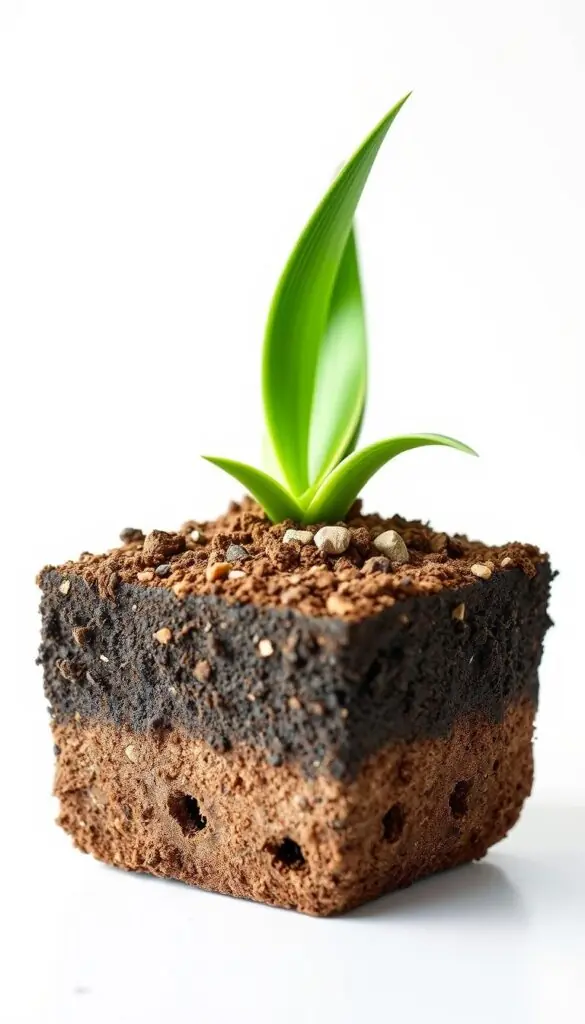
Best base: an all-purpose cactus or succulent mix that feels sandy and light. Avoid heavy peat-based mixes that hold too much moisture and suffocate roots.
Simple DIY recipe
Mix 2 parts cactus mix + 1 part perlite or pumice. That adds airflow and quick drainage so the soil dries evenly between waterings.
Pot choice and fit
Choose terracotta pots with drainage holes. Terracotta wicks extra moisture and helps prevent soggy pockets.
- Keep the rootball snug — about 1/2 inch of space around the sides supports upright growth.
- Healthy roots are firm and pale; your mix should drain within seconds when you water.
- If soil stays wet for days, add more perlite or pumice at the next repot.
"A gritty mix and a draining pot cut the risk of rot and keep your snake plant thriving."
Repotting & Root Health: When, Why, and How
A crowded rootball tells you it's time to choose a new pot and fresh soil. Late winter to spring is the best time, because the growing season helps the root system recover quickly.
Look for clear signs: roots pushing from the bottom, a pot that tips, or water rushing straight through the mix. Those cues mean the root system needs space and fresh soil.
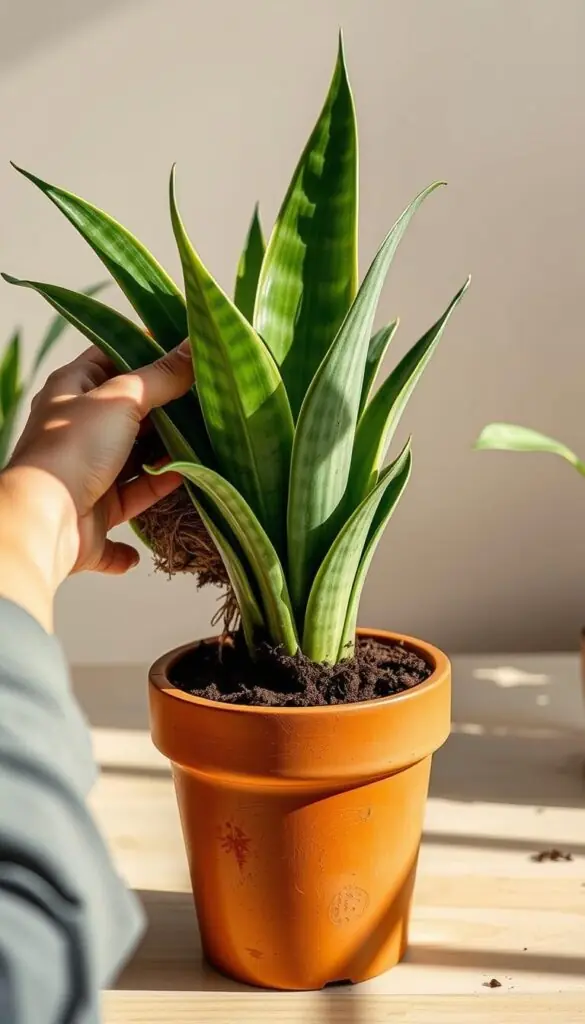
Tools and quick checklist
- Gloves, clean knife or shears, and a tarp or newspaper for cleanup.
- A sturdy new pot about 1–2 inches wider than the current one.
- Your airy, fast-draining potting mix and fresh water.
Step-by-step repotting
- Lift the plant and loosen the rootball gently. Firm roots feel healthy; mushy roots are dead—trim those with clean shears.
- Choose a wide, shallow clay or ceramic pot 1–2 inches larger. Wide pots suit rhizomes and reduce crowding.
- Place a small layer of mix, set the rootball at the same soil line, and backfill. Tap the pot so soil settles without compacting.
- Water thoroughly once, let excess drain, then allow the soil to dry before the next watering.
"Keep the crown at the same level—burying leaves invites rot where they meet the soil."
Common mistakes to avoid
- Avoid oversizing the new pot; too much soil holds moisture and stresses roots.
- Don't bury leaves; keep the original soil line to prevent rot.
- Replace clogged bottom drainage with a mesh to keep soil in and water flowing out.
| Pot Type | Best Use | Fit for Roots | Notes |
|---|---|---|---|
| Terracotta | Everyday repotting | Great — breathes and wicks moisture | Choose sturdy walls to resist cracking |
| Ceramic (drilled) | Decorative, stable | Good — heavy, stable for tall growth | Use mesh if drainage hole is large |
| Plastic | Lightweight handling | Okay — avoid flimsy thin plastic | Strong roots can crack cheap pots |
| Wide shallow | Best for rhizome spread | Excellent — natural fit for root form | Ideal when rehoming every 3–5 years |
Repot every 3–5 years or when roots force their way out the bottom. After repotting, give your snake plant bright, indirect light and steady care so new roots can establish.
Snake Plant Tips for a Healthy Environment: Temperature, Humidity, and Air
Stable indoor conditions help leaves stay glossy, upright, and strong.
Keep your green cozy in the same temperatures you enjoy. Aim for 70–90°F day-to-night in your home. Avoid prolonged exposure below 50°F; cool drafts from doors or leaky windows will chill foliage and slow growth.
Humidity and airflow
Average room humidity around 30–50% is ideal. You do not need to mist regularly.
If the air is dry, a small humidifier helps. If your space is very damp, use a dehumidifier to prevent problems.
Leaf care and simple tools
Wipe both sides of leaves with a damp microfiber cloth to restore a glossy look and improve light capture.
A thermometer/hygrometer combo gives quick, reliable readings so you can tune conditions, especially in winter.
"Protect plants from direct blasts of heat or AC; gentle air movement is fine, but strong drafts stress leaves."
| Need | Ideal Range | Signs to Watch | Tools |
|---|---|---|---|
| Temperatures | 70–90°F (avoid | Chilled leaves, slow growth | Thermometer |
| Humidity | 30–50% | Dry, crispy edges or mold | Hygrometer, humidifier/dehumidifier |
| Airflow | Gentle indirect | Drafts cause wilting | Move pot away from vents |
| Leaf care | Weekly wipe | Glossy leaves after wiping | Microfiber cloth |
Grow, Shape, and Multiply: Pruning and Propagation the Easy Way
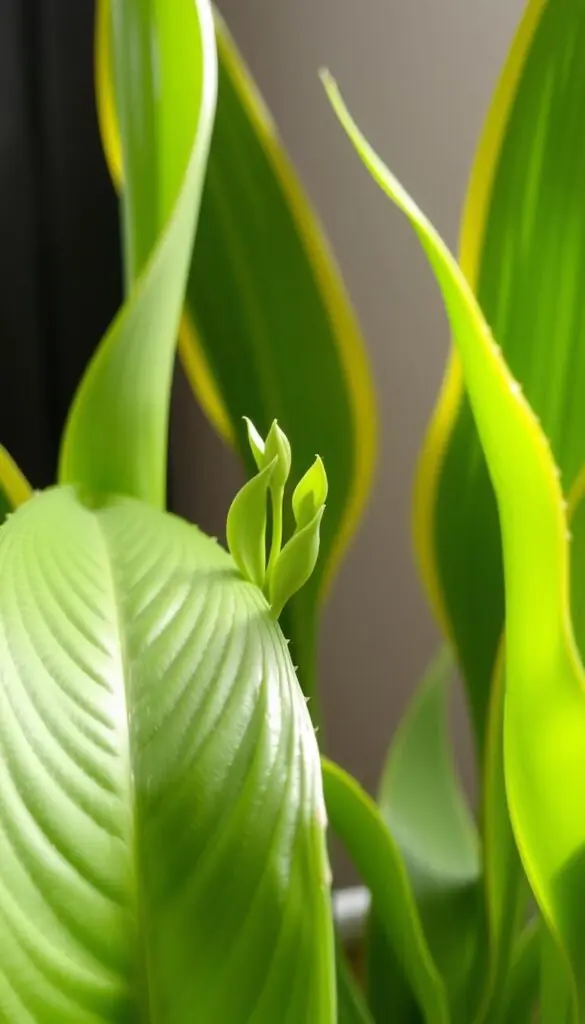
A few careful cuts and a gentle division give new life to crowded rhizomes. When you prune and propagate during active growth, recovery is fast and neat.
Best time: prune in spring or summer so new growth appears quickly. Use clean shears and cut tallest or damaged leaves right at the soil line.
Division: step-by-step
- Unpot the specimen and brush soil away to expose firm rhizomes and roots.
- Sterilize a sharp knife, then slice through rhizomes so each piece has roots and a fan of leaves.
- Replant each division in a snug pot with fresh, airy mix and water once to settle soil.
Leaf-cutting method
Take healthy leaf segments and stand them in water. Change water weekly and watch for about 1-inch roots.
Once roots reach 1 inch, pot cuttings into a cactus mix. This keeps new root systems airy and safe from overwatering.
Practical care and styling
- Label jars and pots with the date so you track time and progress.
- Keep new starts in bright, indirect light and water lightly until steady growth appears.
- Arrange pruned clumps by height in wide pots for a layered, sculptural look.
"Pruning encourages fresh, upright foliage and helps you keep compact, attractive groups for shelves or desks."
| Task | Tool | When | Outcome |
|---|---|---|---|
| Prune leaves | Sterile shears | Spring–summer | Neat form, quick bounce-back |
| Divide rhizomes | Sharp sterile knife | Spring | Multiple healthy pots |
| Leaf cuttings | Jars, water, cactus mix | Any growth season | New rooted starts after ~1-inch roots |
Snake Plant Tips: Troubleshooting Pests, Rot, and Leaf Issues
Small signals from foliage and soil point the way to fast fixes. Catching problems early keeps pots healthy and roots strong. Read the cues, act calmly, and you can often save a stressed housegreen.
Root rot rescue
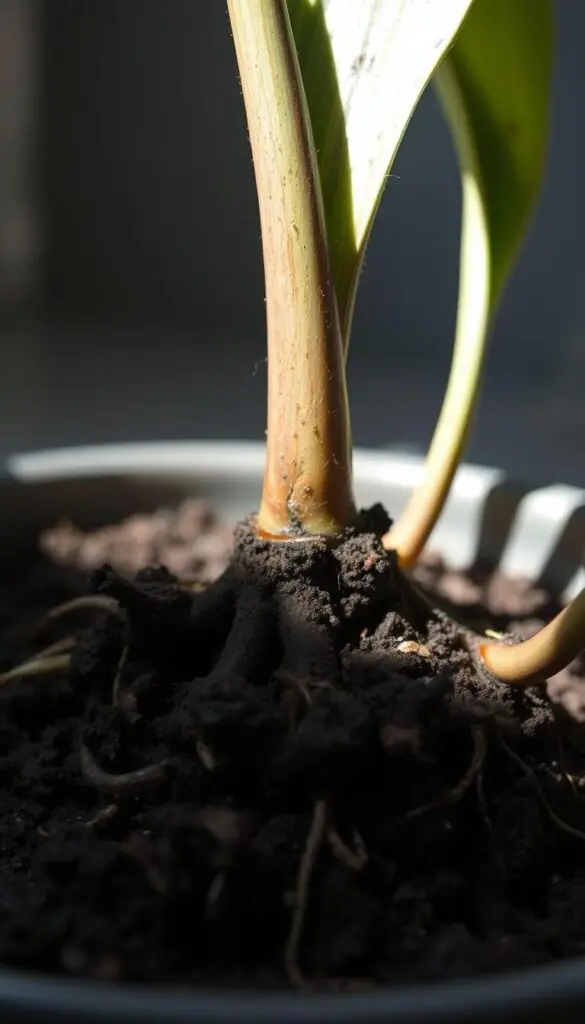
Suspect root rot if the soil smells sour or the leaves turn yellow and mushy. Overwatering is the fastest way to cause rot.
- Unpot gently and rinse the roots to see the damage.
- Trim black, soft sections to healthy, firm tissue with sterile shears.
- Repot in fresh, airy soil with good drainage and a clean pot.
- Water sparingly while the root system recovers and give bright, indirect light.
Pests to watch and clear steps
Fungus gnats, spider mites, and mealybugs are common. Look for sticky residue, fine webbing, or cottony white clusters on leaves.
- Rinse leaves and the root ball with a gentle stream of water.
- Use neem oil weekly until insects clear; follow label directions.
- For mealybugs, dab with isopropyl alcohol on a cotton swab, then rinse and treat with neem.
- Fungus gnats mean overly wet soil—let the mix dry, add a top layer of sand or pumice, and use sticky traps briefly.
Leaf language: quick diagnoses
Droop = too much water or low light. Curl = possible thrips. Wrinkle = thirst or normal aging.
"Clean leaves with a soft cloth so treatments stick and pests have fewer hiding spots."
| Symptom | Likely Cause | Immediate Action |
|---|---|---|
| Yellow, soft leaves | Too much water / root rot | Unpot, trim mushy roots, repot in fresh soil |
| Fine webbing / speckled leaves | Spider mites | Rinse leaves, apply neem oil weekly |
| Sticky residue / tiny flies | Fungus gnats | Let soil dry, top with sand/pumice, use sticky traps |
| Cottony bits on stems | Mealybugs | Wipe with alcohol, rinse, then neem oil |
Prevention is the best way forward: steady, patient watering, airy soil, drained pots, and regular leaf care with a soft cloth keep plants resilient. In winter, water less and avoid cold drafts to cut stress and rot risk.
Conclusion
, Bring a calm routine and your dracaena trifasciata will reward you with steady, sculptural growth.
Keep light bright and indirect, allow the soil to dry fully between deep waterings, and choose a sandy, well-drained mix in a pot with real drainage.
Wipe leaves now and then, reduce water in winter, and repot in spring if roots crowd the pot. Small moves—shift a pot closer to sun, wait one more day before watering, or refresh the top inch of mix—make a big difference.
This is an easy care houseplant that blends beauty with function. Observe, adjust, and enjoy watching these succulents grow. You’ve got this.
FAQ
How much light do Dracaena trifasciata varieties need indoors?
Most do best in bright, indirect light. Place them near east- or north-facing windows for gentle morning sun. They tolerate lower light but will grow more slowly and may lose variegation in very dim spots.
How often should I water to avoid root rot?
Let the top 2–4 inches of soil dry before watering. In summer that often means every few weeks; in winter, once a month or less. Always water until it drains from the pot’s bottom, then discard excess water.
What potting mix keeps roots healthy?
Use a sandy, well-draining cactus or succulent blend. Improve airflow with added perlite or pumice. Avoid heavy peat mixes that hold too much moisture and raise rot risk.
Does the pot type matter?
Yes. Terracotta pots and containers with drainage holes help soil dry evenly. Choose a pot only 1–2 inches larger than the rootball to prevent excess wet soil.
When is the best time to repot?
Late winter to early spring is ideal. The plant is about to enter a growth phase and recovers faster. Repot when roots come out the drainage hole, water runs straight through, or the pot tips over easily.
How do I rescue a plant with root rot?
Unpot gently, trim away black, mushy roots with sterile shears, let healthy roots dry a few hours, then replant in fresh, well-draining mix in a clean pot. Reduce watering while it recovers.
Can I propagate by division or leaf cuttings?
Both work. Division is fastest: separate pups or rhizomes and replant. For leaf cuttings, root the base in water or moist cactus mix until a 1-inch root forms before planting into soil.
What temperatures and humidity do they prefer?
Aim for 70–90°F during the day and keep temperatures above 50°F. Average home humidity (30–50%) is fine. Wipe dusty leaves with a damp microfiber cloth to help air exchange.
What are common pests and how do I treat them?
Watch for fungus gnats, spider mites, and mealybugs. Start by rinsing leaves and soil surface, then treat with insecticidal soap or neem oil if needed. Avoid overwatering to reduce gnats.
Why are my leaves yellowing or soft at the base?
Yellow leaves and mushy bases usually mean overwatering or poor drainage. Check roots for rot and follow the rescue steps. Adjust watering schedule and improve potting mix.
How do I encourage fuller, more upright growth?
Give bright, indirect light, correct watering, and occasional feeding during spring and summer with a balanced houseplant fertilizer. Remove damaged leaves at the soil line to keep the crown tidy.
Are they safe for homes with pets?
Dracaena trifasciata is toxic to cats and dogs if chewed. Keep plants out of reach or choose non-toxic alternatives for pet households.
Can I grow them under grow lights?
Yes. Full-spectrum LED or fluorescent grow lights placed several inches above the foliage work well. Use a 10–12 hour daily light cycle for steady growth in low-window spaces.
How do I prevent compacted soil over time?
Refresh the top inch of soil each year or repot every 2–3 years. Use airy mixes with perlite or pumice and avoid overfertilizing, which can break down structure faster.