You step outside after rain and notice bright green blades against a slightly muddy surface. Does your lawn puddle in low spots or feel firm underfoot? That first, small observation tells a story about compaction and how air and water move through the ground.
We’ll help you protect that lush look with simple, low-effort steps. You’ll learn quick ways to test firmness with a screwdriver or shovel and when a penetrometer is worth the buy. We explain why healthy soil needs pore space for water, air, and roots to breathe and grow.
Think of this as friendly guidance: regional timing for cool- versus warm-season yards, handy tools you already own, and easy habits that limit repeated pressure on busy areas. Small changes now keep nutrients flowing, improve drainage, and make lawn care feel easier — not harder.
Key Takeaways
- Spot firmness after rain as an early sign of compaction and poor drainage.
- Do a quick test with a screwdriver or shovel; use a penetrometer for precise readings.
- Give the ground time to dry before heavy use to protect soil structure and root growth.
- Add organic matter and reduce repeated traffic in problem areas to keep air and water moving.
- Follow seasonal timing for aeration and light maintenance to avoid making compaction worse.
Understand soil compaction so you can stop it early
Beneath the turf, tiny rooms for air and water can get squeezed shut. Picture healthy ground like a sponge: pore space between soil particles holds air and water. When those rooms collapse, gas exchange slows and water sits on the surface.
Compaction presses particles into a tighter arrangement. That raises density and cuts the pore volume roots rely on. The result? Plant roots stay shallow, nutrients don’t reach deep, and anaerobic pockets can smell sour after rain.
Common causes around U.S. yards
- Repeated foot traffic—kids' soccer, pet paths, or the same mower tracks.
- Construction or heavy equipment that crushes a layer quickly.
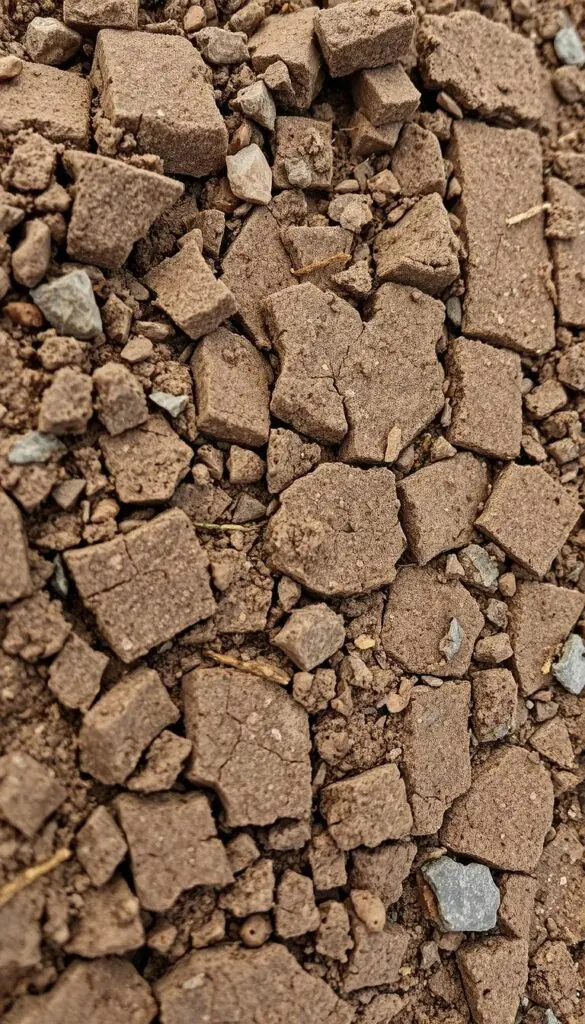
- Rain on bare patches that forms a crust, and clay-heavy areas that pack tight.
Simple cues to notice: puddles that linger, slick muddy paths, or a surface that smells sour instead of earthy. A crumbly, springy feel means better structure; a hard, dense feel means compaction is building.
| Cause | What it does below surface | Quick fix |
|---|---|---|
| Foot or mower traffic | Compresses particles, reduces pore space | Shift routes; avoid when wet |
| Construction equipment | Deep layer densification; loss of structure | Create protective paths; aerate later |
| Rain on bare, clay patches | Surface crusting, poor infiltration | Cover with mulch; add organic matter |
Spot compacted soil fast: simple, at-home checks before you start
A few simple checks at home give you a fast read on how the ground is behaving. Walk the yard after a gentle rain and look for puddles that linger, slick muddy strips, or a thin, hard crust on the surface.
Visual clues: dull, yellowing grass or thin patches often mark problem areas. Plants that stay small or slow to recover hint that air, water, and nutrients aren’t reaching plant roots.
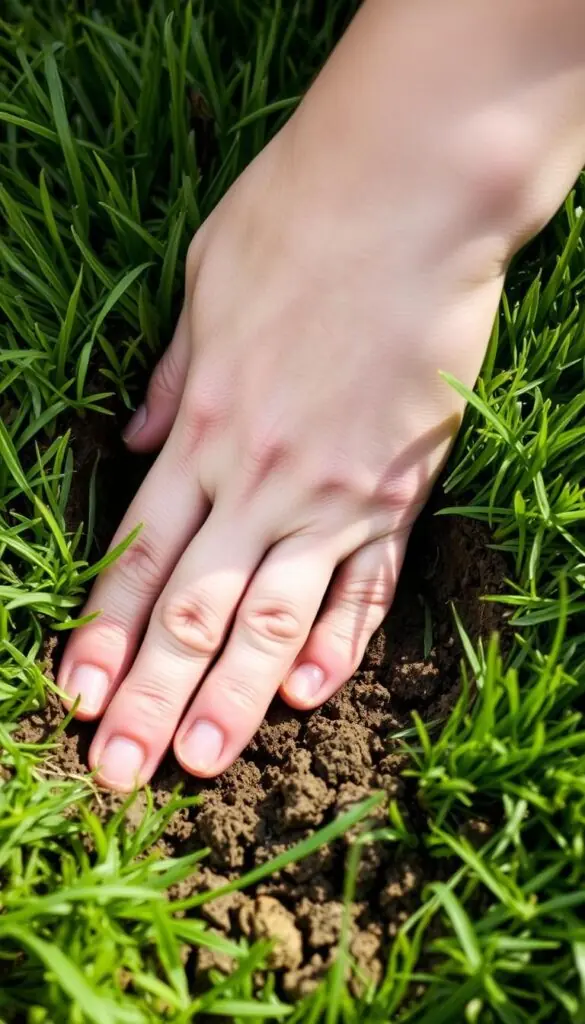
Feel tests with everyday tools
Wait one to two days after rain so the ground is moist, not soggy. Push a screwdriver or wire flag probe straight down—if it bends or stops within a few inches, compaction is likely.
Try the shovel wedge: cut a small slice and lift it. Healthy soils crumble into aggregates and smell earthy. Hard, smooth clods feel plate-like and resist breaking.
When to bring in a penetrometer
A penetrometer gives numbers if you want them. Push steadily until the gauge reads 300 psi, then note the depth. Readings deeper than 12" are good, 4–12" fair, and under 4" signals poor rooting depth for many plants.
| Check | What to look for | Quick meaning |
|---|---|---|
| Surface after rain | Puddles, crusting, muddy slicks | Poor drainage; likely compaction |
| Screwdriver/wire probe | Push depth: >12", 4–12", <4" | Good, fair, or poor root access |
| Shovel wedge | Crumbly aggregates vs hard clods | Loose vs dense layers |
- Test multiple areas to map trouble spots and avoid stones or roots.
- Watch for crabgrass and plantain; they thrive where compaction limits turf.
- Safety: call 811 before digging near utilities or irrigation lines.
Prevent the problem: low-effort habits that protect soil structure
You can stop many problems before they start by changing how and when you use your yard. Small choices keep air and water moving through the ground and help roots stay deep and healthy.
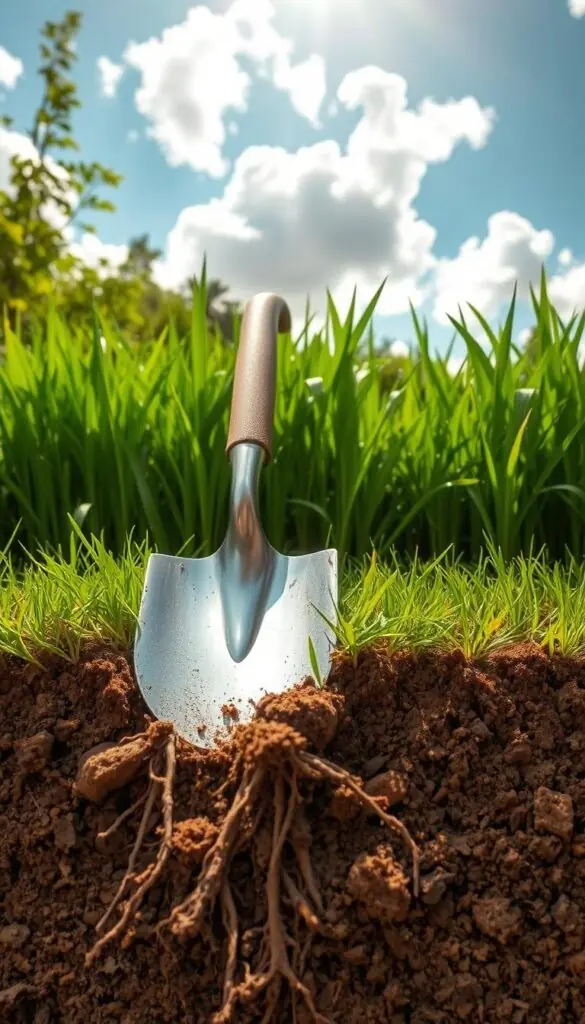
Time your traffic
Wait until the surface firms after rain before you mow, walk, or haul. A day or two makes a big difference; dry ground bears weight far better than wet ground.
Don’t: cut grass or drag equipment when the turf feels spongy—this adds long-term compaction.
Spread the load
Use wide tires, lower tire pressure, or lay plywood for weekend projects to disperse weight. A sheet of plywood under a wheelbarrow feels stable and prevents deep pressure points.
Create durable routes
If a shortcut keeps forming, formalize it. Mulch paths or add stepping stones to concentrate foot traffic where wear is expected.
Soft mulch underfoot feels pleasant and spares the surrounding areas from repeated damage.
Keep the surface covered & choose the right plants
Cover bare spots with 2–3 inches of mulch or dense groundcovers to stop crusting and keep water moving. In wetter, clay-prone pockets, pick plants adapted to those conditions so they don’t struggle and force extra traffic or repairs.
| Habit | Quick action | Benefit |
|---|---|---|
| Wait after rain | Delay mowing 24–48 hours | Allows air back into particles; reduces compaction |
| Spread loads | Plywood, wide tires, low pressure | Less deep pressure; protects structure |
| Design paths | Mulch or stepping stones | Concentrated traffic spared turf |
| Cover bare spots | 2–3" mulch or groundcover | Prevents crusting; keeps water moving |
- Plan heavy deliveries for dry windows; timing saves the most damage.
- Topdress small areas with organic matter each season to keep structure resilient.
- Avoid tight, sharp turns with equipment—gentle curves reduce smearing of particles.
If your lawn is already compacted: practical ways to reopen air and water space
When your lawn feels hard underfoot, there are practical steps to reopen channels for air and water. Start with region-aware core aeration and simple follow-up so plant roots can breathe again.
Core aeration: Aerate cool-season turf in spring or fall; warm-season lawns in late spring. Aim for 1/2–3/4" plugs about 3–4" deep. Let the cores dry, then crumble and rake them so loose particles fall back into the holes. This improves drainage and gives roots space to grow.
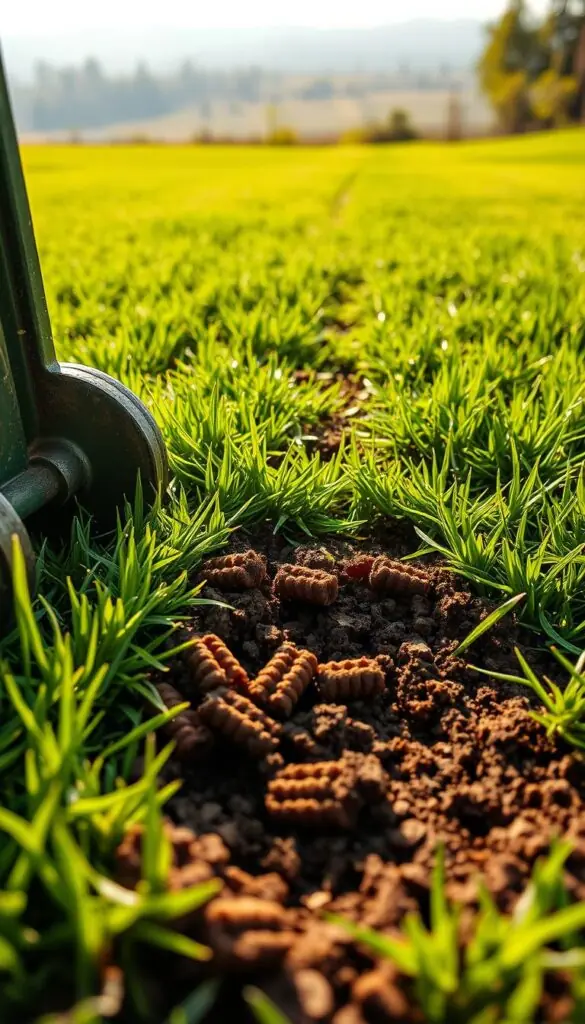
Feed the living layer
Topdress with a thin layer of quality compost after aeration. Ready compost smells earthy and looks dark and crumbly. It adds organic matter that helps the structure resist future compaction and feeds the organisms that bind particles into aggregates.
Match amendments to test results
Always run a soil test first. If both calcium and pH are low, use lime. If calcium is low but pH is fine, gypsum adds calcium without changing pH. Mix either amendment into the loosened layer for best effect.
Tree-safe fixes and deep repairs
For trees, consider radial trenching (4–6" wide, 12" deep every ~3 ft to the drip line) or an Air Spade to protect roots. For severe layers, subsoiling or replacing topsoil to 1.5–3 ft in small areas may be needed.
| Technique | When to use | Key benefit |
|---|---|---|
| Core aeration | Active growth season by region | Reopens pores; improves drainage |
| Compost topdress | After aeration | Adds organic matter; feeds microbes |
| Lime or gypsum | After soil test | Corrects calcium/pH based on need |
| Radial trenching / Air Spade | Around mature trees | Opens layers with minimal root damage |
- Water lightly after work to settle particles without collapsing new channels.
- Keep traffic low while the lawn recovers so roots can explore reopened space.
Season-by-season routine in the United States to avoid soil compacted trouble
A few peaceful routines each season keep air, water, and roots working together. Follow small, friendly habits and your grass and plants will thank you with steady growth.
Spring & fall sweet spots
Spring: when the ground is workable and the air feels cool, aerate cool-season grass, then topdress with compost. Overseed thin patches so roots fill the newly opened space as growth picks up.
Fall: repeat aeration and overseeding. The soil is warm and organisms are active; new leaves and roots establish before winter.
Summer care
Mow a bit higher and keep mower traffic light, especially after rain. Water in the cool part of the day with slow, even cycles to reduce runoff and ruts.
Use paths for high-use areas to spare tender turf during heat waves.
Winter help
Let freeze-thaw loosen shallow compaction while beds stay covered. A crunchy layer of mulch protects foot traffic and holds space for organisms and roots to use in spring.
- All year: add a light layer of compost, shredded leaves, or fine wood chips as food for organisms.
- Choose plants adapted to wetter pockets to stabilize areas and aid drainage.
- Always wait after rain before heavy work — a short pause prevents long-term damage.
Conclusion
With gentle care and a few smart checks, your lawn can stay open, healthy, and easy to maintain.
Spot trouble early, manage traffic and moisture, and use proven methods like core aeration, compost topdressing, or targeted trenching when needed. Tests — a penetrometer or a simple probe and a lab soil test — guide your choices so you take the smallest, kindest step that helps plant growth.
With a few neighborly habits and one clear method at a time, you keep air and water moving so roots explore deeply and plants look effortless.
Enjoy the small pleasures: soft turf underfoot, an earthy scent after light rain, and beds that drain well. You’ve got this—each calm choice builds a resilient, healthy yard you love spending time in.
FAQ
What is happening below the surface when soil becomes compacted?
When particles get pressed together, pore space for air and water shrinks. Roots can’t spread, drainage slows, and beneficial organisms decline. This limits nutrient uptake and leaves grass and plants shallow, stressed, and slow to recover.
What common causes lead to compacted soils in U.S. yards?
Heavy foot traffic, frequent mowing, construction activity, repeated rain on bare ground, and clay-heavy subsoils all increase pressure on the ground. Even lawn equipment and delivery trucks can pack down areas over time.
How can I spot compacted soil quickly after a rain?
Look for puddles or standing water, muddy slicks, a crusted surface, or thinning and yellowing grass. These visual clues tell you water is not soaking into the root zone as it should.
What simple at-home tests show if my soil is compacted?
Try pushing a screwdriver or a wire flag into the ground—resistance signals tight layers. Dig a small shovel slice and check if the crumb structure is missing. Test when the ground is moist, not soaked, for best results.
When should I use a penetrometer and what do readings mean?
Use a penetrometer for precise force measurements, especially where plants struggle. Readings that show high resistance in the top 6–12 inches mean roots will have trouble growing and you likely need aeration or deeper remediation.
Which plants indicate compaction in a yard?
Shallow-rooted turf, plantain, crabgrass, and stunted ornamentals often appear where pore space is limited. These species tolerate tight ground and signal you should test and treat affected areas.
What everyday habits prevent compaction from forming?
Avoid walking or mowing on wet ground, spread loads with wider tires or lower pressure, and use plywood paths during work. Keeping the soil covered with mulch or groundcovers also preserves surface structure.
How can I protect high-traffic routes in my yard?
Create durable paths with mulch, pavers, or hardened stepping stones. Designate routes for frequent use so surrounding turf and beds stay undisturbed and roots remain healthy.
What role does mulch and groundcover play in preventing surface crusting?
A 2–3 inch mulch layer or dense groundcover shields the surface from direct raindrop impact and limits evaporation. That keeps pore spaces open and protects organisms that build structure.
Should I choose special plants for wetter, heavier spots?
Yes. Selecting species adapted to wetter or heavier textures reduces stress and trampling. Deep-rooted options help break up tight zones over time and improve overall drainage.
What is core aeration and when should I do it?
Core aeration removes plugs to open air and water pathways. Timing depends on grass type—spring or fall for cool-season turf, late spring to summer for warm-season. Repeat annually or as needed for heavy-use lawns.
Can adding compost really rebuild soil structure?
Absolutely. Quality compost feeds microbes and binds particles into crumbs, boosting porosity and drainage. Topdress thinly after aeration or mix into planting holes to support long-term soil health.
Do I need gypsum or lime to fix compaction?
Test first. Gypsum can improve structure in sodic clays; lime adjusts pH for nutrient availability. Use amendments based on soil test results rather than guessing to avoid unintended side effects.
How do I address compaction around trees without damaging roots?
Use radial trenching, careful compost topdressing, or an air spade to loosen soil with minimal root harm. Avoid deep tilling near major roots and consult an arborist for large or valuable trees.
When is subsoiling or replacing topsoil the right move?
For severe hardpan layers or construction-compacted sites, mechanical subsoiling or replacing poorly performing topsoil may be necessary. Choose these options when surface fixes won’t restore deep pore space.
What seasonal routine reduces compaction risk across the year?
Spring and fall are best for aeration, topdressing with compost, and overseeding cool-season lawns. In summer, limit heavy traffic and water wisely to avoid runoff. In winter, leave cover where possible—freeze-thaw cycles can help loosen the surface.