Imagine the faint, earthy smell after a morning drizzle and a soft leaf that springs back when you touch it. Have you noticed soggy soil in a bright windowsill or a yellowing leaf despite regular care? In many U.S. homes and gardens, too much water is the quiet culprit.
We’ll show you a simple, friendly way to practice proper watering so each plant thrives on your porch or kitchen ledge. Use quick checks like the finger test or a bamboo skewer to know when to wait.
Roots need oxygen as much as moisture. Constantly wet soil can suffocate roots and invite disease, but a few small changes—right-sized planters with drainage, a fluffy potting mix, and no rocks in the bottom—make a big difference.
Seasonal care matters: hold back in low winter light and expect faster dry-downs in warm summer sun. If a pot looks stressed, move it to gentle shade, check for saucer pooling, and repot into fresh, well-draining mix if needed.
Key Takeaways
- Use the finger test or skewer to check soil before you water.
- Choose pots with drainage and a airy, well-draining mix.
- Watch for yellow leaves when the soil is wet—early sign of trouble.
- Avoid rigid schedules; match watering to light and season in the U.S.
- Move stressed containers to shade and repot if bottoms stay soggy.
Spot the Signs Before It’s Too Late: Diagnosing Overwatering and Root Rot
A few quick checks can tell you whether a thirsty-looking leaf is really drowning. Start with a simple symptom scan: droopy or yellowing leaves while the soil still feels cool is the most telling sign.
What to look for
- Smell and surface: a sour or foul scent and shiny, water-soaked soil surface mean excess water is present.
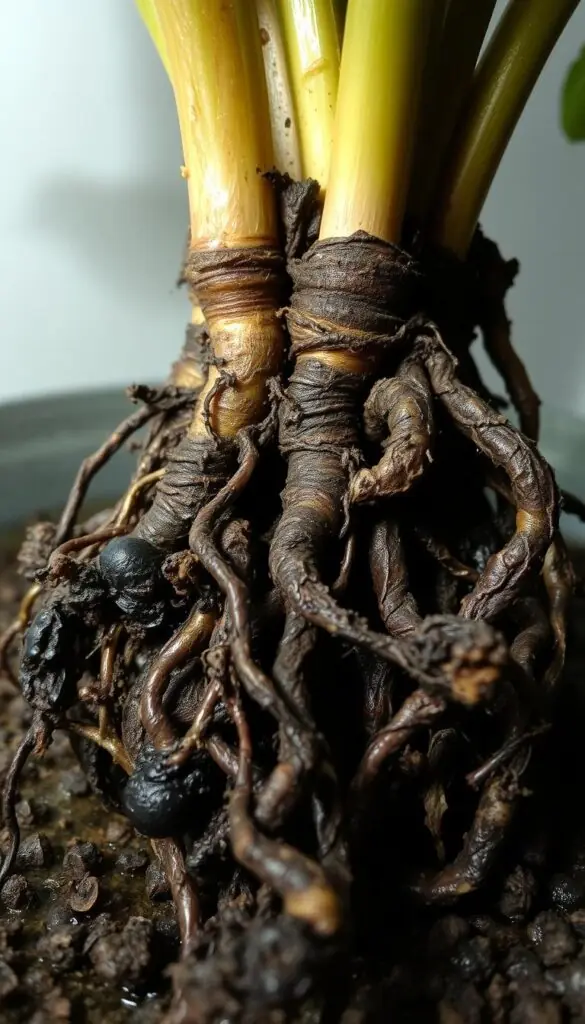
- Tap and peek: slide the pot out and check roots. White, firm roots are good; brown, grey, or slimy roots point to root rot.
- Feel deeper: do the finger test to the first knuckle or push a bamboo skewer to see if the mid‑pot soil is dark and cool or pale and crumbly.
Why it happens and common mistakes
Waterlogged soil displaces oxygen and the root system suffocates. Rigid watering schedules, planters without drainage holes, and rocks in the bottom create perched water that breeds rot.
| Situation | Quick test | Likely diagnosis |
|---|---|---|
| Wilting + wet soil | Finger to first knuckle | Root rot or waterlogged roots |
| Dry top, damp below | Bamboo skewer probe | Soil holds moisture; check drainage |
| Small plant in large planter | Visual pot weight | Soil stays wet too long |
Simple tools—finger, skewer, and a spare nursery liner—give clarity fast. If you spot rot, act now: we’ll cover rescue steps next.
CPR for Drowning Plants: Step‑by‑Step Rescue When Overwatering Plants Strikes
Start by giving the pot a gentler home — bright shade and calm air help stressed roots breathe. Move the planter to bright shade to cut the plant’s water demand and reduce leaf scorch.
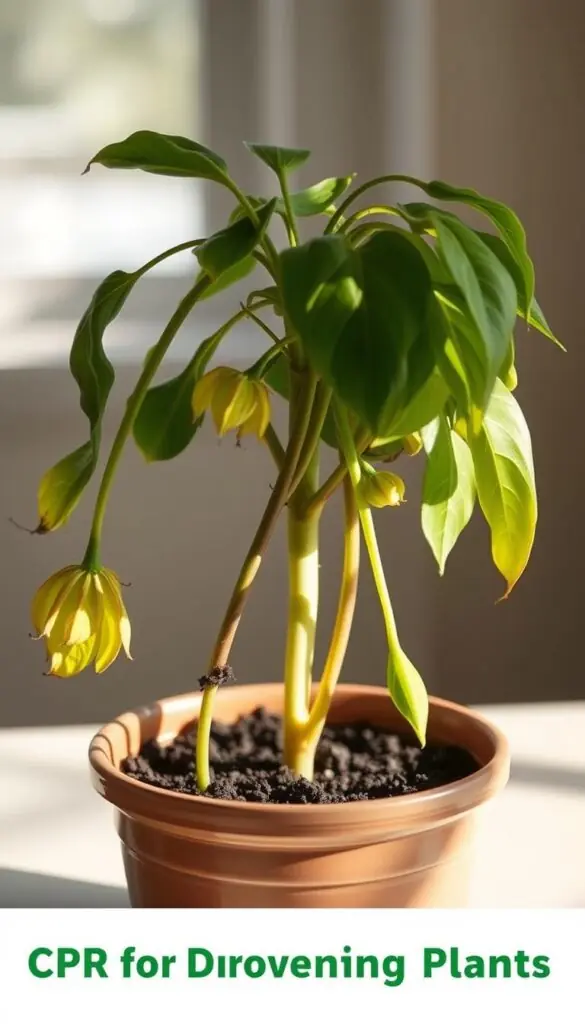
Free excess water and improve drainage
Check that your pot has drainage holes. Stop saucer pooling and tip the container slightly to let excess water escape and small air pockets form.
Unpot, inspect, and trim
Slide the root ball free and use clean shears disinfected with isopropyl alcohol. Trim soft, dark roots and mushy leaves. Let the crown air for 30–60 minutes until the surface feels dry.
Repot and reset watering
Repot plant into a right-sized pot (1–2" wider) with fresh well‑draining mix: 2 parts potting mix, 1 part perlite, 1 part vermiculite or bark.
Care steps and recovery
Only water when the top 1–2 inches pass the finger test to the first knuckle. Hold fertilizer until you see new growth, then feed at 25–50% strength.
"If root rot is obvious, a broad‑spectrum fungicide for Pythium/Phytophthora can help — follow the label."
Expect signs of improvement in about a week. Small tools—nursery liners, clean pruners, a bamboo skewer—make the way back to health easier.
Make Healthy Watering a Habit: Prevention Tips for Easy, Beautiful Care
A gentle routine that matches light and season keeps roots breathing and soil balanced. Build a rhythm, not a calendar: let the soil dry between waterings so air returns to the root system. This habit is your best defense against overwatering plants and future root rot.
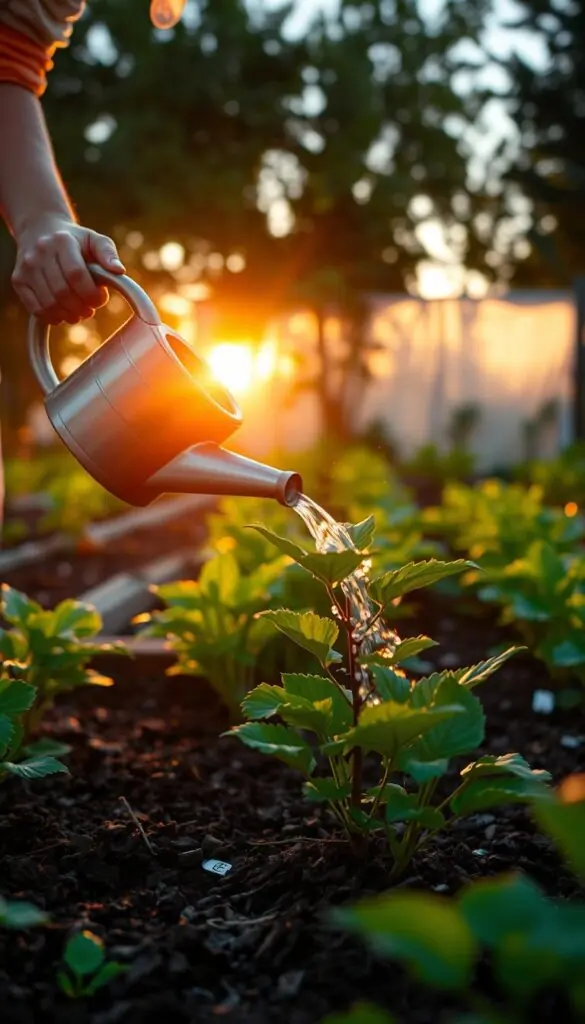
Containers, soil, and right sizing
Pick planters with drainage holes or nest a nursery pot inside a decorative cachepot so water can escape. Avoid upsizing more than 1–2 inches when repotting; too-large planters hold a wet bottom that lingers.
Use a lighter mix for containers: add perlite or bark for a springy texture that helps soil dry quicker. For wet-loving gardeners, choose Cyperus, Colocasia, or Acorus; for drier habits, succulents and cacti forgive missed cycles.
Seasonal rhythm and quick checks
In U.S. winters, lower light slows evaporation—water less. In spring and summer, warmth and breeze help soil dry quicker, so adjust your general watering accordingly.
Trust simple tools: stick finger soil or a bamboo skewer to test moisture. If the probe comes up dark and cool, wait; if it’s pale, give plant a drink.
Tools and common mistakes
- Keep saucers empty and clear any blocked holes.
- Shop spring sales for a soaker hose to water raised beds without overdoing it.
- A lightweight hose, fabric pots, and a moisture meter simplify proper watering and health checks.
| Situation | Best response | Why it helps |
|---|---|---|
| Top inch dry, deeper damp | Wait and test with skewer | Prevents unnecessary watering and keeps roots aerated |
| Large pot, small plant | Repot into slightly smaller planter | Reduces perched water and speeds soil dry |
| Winter, low light | Cut back water frequency | Lower transpiration means soil stays moist longer |
Conclusion
Gentle attention and the right adjustments often revive tired root systems in days. If you spot an overwatered plant or early root rot, act calmly: move the pot to bright shade, free drainage, and refresh the mix.
Watch the soil and the weight of the planter. Use your finger to test the top inch before you water. Recovery often shows within a week when you pause, let the surface dry, and cut back on water and fertilizer.
Quick recap checklist:
• Move stressed pots to bright shade. • Clear holes and empty saucers to keep drainage free. • Wait for the top inch of soil to dry, then give plant a deep drink. • Add light fertilizer only after you see new growth and perkier leaves.
You’ve got this. A few mindful minutes each week bring steady growth and a sunlit, lush way to enjoy your plants.
FAQ
How can I prevent overwatering and save a dying plant?
Start by using a pot with drainage holes and a light, well-draining soil mix (add perlite or vermiculite). Let the top inch of soil dry before you water again—use the finger test to the first knuckle. Match pot size to the root system and avoid oversized planters that hold excess moisture. Adjust how often you water with the seasons: water less in low winter light and more in active spring and summer growth. Finally, give plants bright, indirect light and hold off on fertilizer until you see steady new growth.
What are the quick signs that a plant is waterlogged or has root rot?
Look for wilted foliage that feels wet instead of dry, yellowing leaves, a soggy or foul-smelling soil surface, and brown or blackened stems near the soil line. If roots look brown, grey, or slimy instead of firm and white, that’s a clear sign of trouble.
Why do roots rot when soil stays too wet?
Roots need oxygen to function. Waterlogged soil fills pore spaces with water and starves roots of air, so they suffocate and die. Dead tissue then invites fungal pathogens that accelerate rot.
What common mistakes cause waterlogging even when I’m trying to be careful?
Rigid watering schedules, pots without drainage holes, putting rocks at the bottom of a pot to “help” drainage, using heavy garden soil in containers, and oversized planters that keep the soil wet are all common culprits.
What simple tools can help me know when to water?
Use the finger test (push to the first knuckle), a bamboo skewer or knitting needle to check moisture deeper down, and consider a cheap moisture meter for extra clarity. Nursery pots and a well-draining mix also make it easier to judge soil moisture.
My plant looks drowned—what’s the first thing I should do?
Move it to bright shade to reduce stress and slow water loss. Stop watering and remove any saucers that trap water. Ensure the pot’s drainage holes are clear so excess water can escape.
How do I safely inspect and treat the root system?
Gently unpot the specimen and rinse the root ball to see the damage. Trim away soft, dark, or slimy roots with clean scissors until only firm, pale roots remain. Let the root ball dry briefly in a shaded spot before repotting.
How should I repot a plant recovering from root rot?
Choose a pot with drainage holes that’s just slightly larger than the root ball. Use fresh, airy potting mix with perlite or pumice. Place the plant at the same soil depth as before and water lightly only when the surface feels dry to the first knuckle.
When can I resume fertilizing a rescued plant?
Wait until you see new growth and the plant begins to recover—usually several weeks. Then resume with a diluted, balanced fertilizer to avoid shocking the recovering root system.
Should I use fungicide for root rot?
Only consider a broad‑spectrum fungicide after you’ve removed rotted roots and repotted in fresh mix, or if you have clear fungal symptoms that keep returning. Fungicide is a backup, not a replacement for good drainage and proper cultural care.
How do I build a better watering rhythm so soil dries quicker between sessions?
Use lighter mixes, smaller pots matched to the plant, and containers with drainage. Water less often and always check moisture before adding water. During spring and summer the soil dries faster—expect to water more then; reduce frequency in winter when light and growth decline.
What container choices help prevent soggy soil?
Choose pots with adequate drainage holes and breathable materials like terracotta for faster drying. Use nursery pot liners to make swaps easier, and avoid large planters unless you improve drainage with coarse, well-draining mix.
How does seasonality in the United States affect watering?
In winter, low light and cool temperatures slow growth and evaporation, so water much less. In spring and summer, higher light and warmth speed drying and boost growth—expect to water more often. Adjust based on your home’s light and temperature, not a rigid calendar.
Which soils and plant types are best if I’m prone to watering too much?
For containers, choose a light, well-draining mix with perlite, pumice, or coarse sand. Pick species that tolerate extra moisture if you know you’ll err on the generous side—look for plants labeled “moisture tolerant.” For most indoor greenery, however, aim for airy mixes and good drainage.