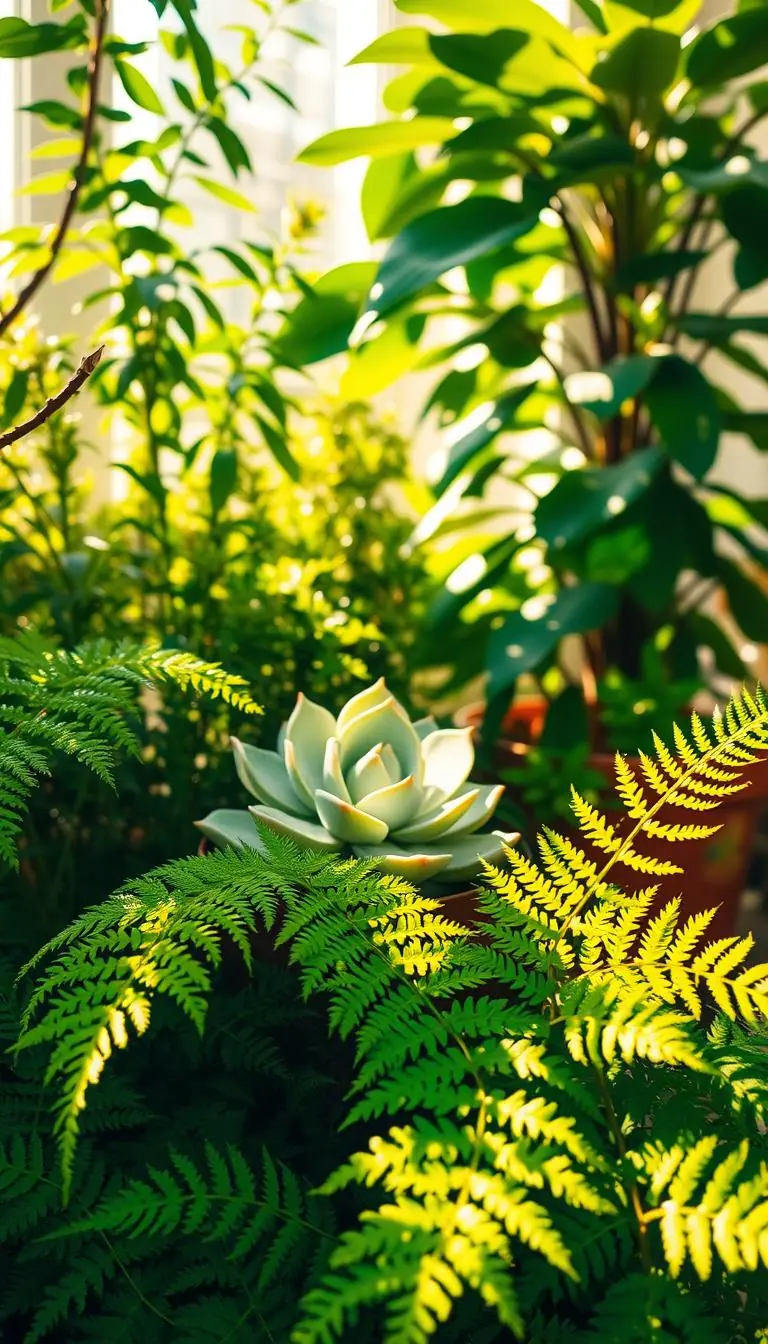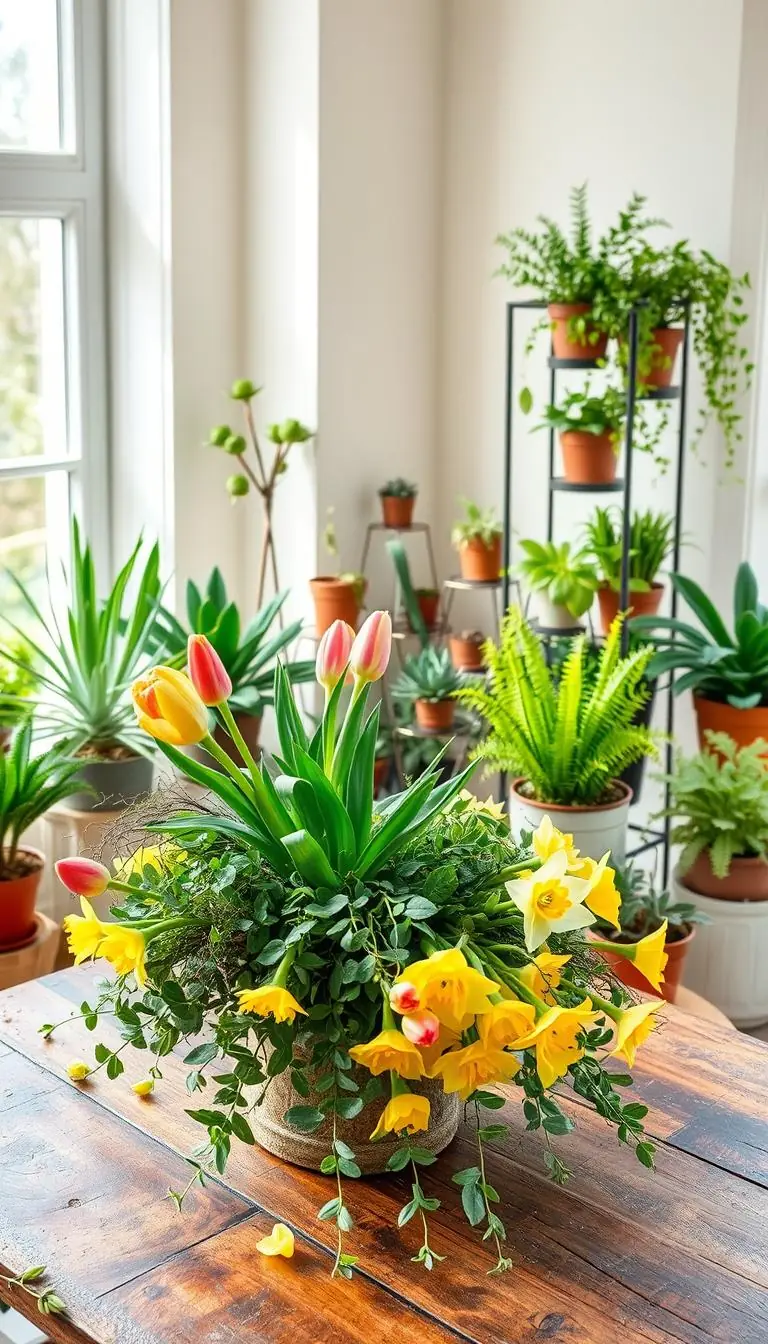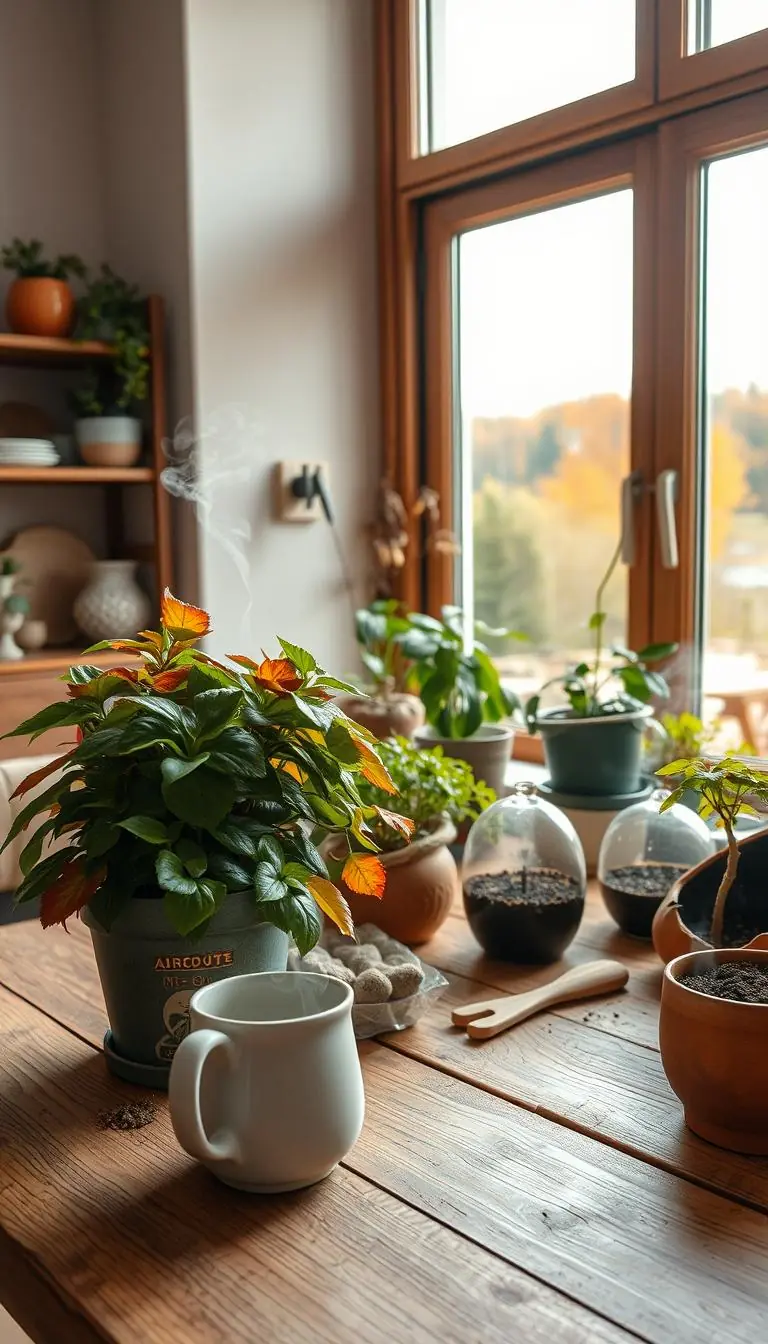
Imagine a soft, sunlit corner with glossy green leaves and the faint, earthy scent of fresh soil. Do you picture a calm spot where your morning coffee feels quieter and brighter? That gentle change is easy to achieve.
Indoor plants bring real benefits: they ease stress, improve air quality, and make your home feel more alive. Start with a simple plan—choose a style, pick containers that suit your furniture, and place pieces by light.
We’ll walk you through easy steps: best starter species, how far from a window to place each one, tools to use like misters and moisture meters, and quick styling tips that add height and balance without clutter.
Expect short seasonal tweaks and common mistakes to avoid, so care stays simple. Try one small change and watch your living space feel fresher, calmer, and more inviting.
Key Takeaways
- Begin with easy plants—ZZ, pothos, snake plant—for low fuss and big impact.
- Match containers to your style and group similar pots for a cohesive look.
- Use tools like a moisture meter and rolling stand to make care effortless.
- Place items by light and add height with stools or tall stands for balance.
- Rotate weekly and adjust seasonally to keep leaves healthy and thriving.
Start with a Vision: Choose a Style, Palette, and Containers That Fit Your Home
Start by choosing a cohesive palette and container mix that complements your living space. Decide whether you want a rustic, modern, or eclectic look, then let that choice guide materials and finishes.
Match planters to your interior: wicker baskets for rustic charm, metal urns for classic elegance, neutral ceramic for modern rooms, and painted clay for a Southwestern touch. Group same-color or same-finish pots to unify displays and make scattered pieces read as one curated set.
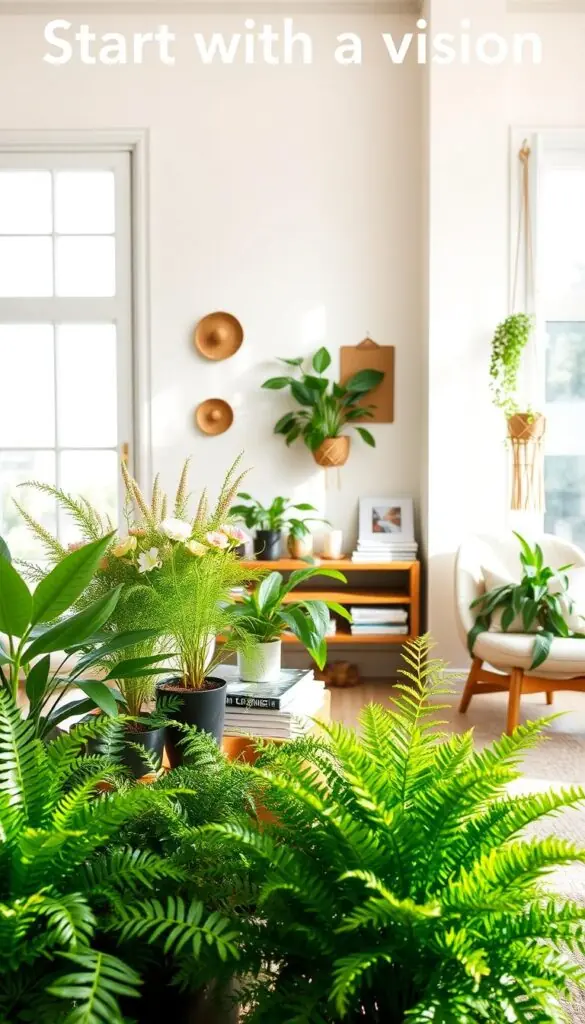
Think texture and contrast: glossy leaves pop against matte clay, while soft preserved moss softens concrete or metal. Use terracotta for thirsty roots and glazed ceramic where overwatering is a risk.
- Gather three reference photos and note shared colors and shapes to guide choices.
- Repeat two finishes across the room (for example, matte terracotta + woven baskets).
- Map display zones on shelves, tables, and stands; allow 2–3 inches clearance for airflow.
- Mix sizes: one anchor 10–12 inch pot, two 6–8 inch supports, and one trailing 4–6 inch piece.
Tip: Use baskets as cachepots and clear jars for single-cutting propagation art—group three for a gallery moment.
This approach keeps styling low-maintenance and cohesive. With a clear palette and a few reliable materials, your houseplants will look intentional and thrive in your actual home.
Plant Decor Ideas: Place With Purpose for Light, Traffic, and Easy Care
Start by reading windows and walkways. Stand at each window at noon and note its direction. South gives the brightest sun, west brings hot afternoons, east offers gentle mornings, and north is the lowest.
Measure 2, 4, and 6 feet from the glass to mark bright, medium, and low-light zones. Then match species to distance: snake and ZZ do well 6–10 feet back, pothos and philodendron suit 3–6 feet, and fiddle leaf fig or rubber plant like bright, indirect light 2–5 feet from glass.
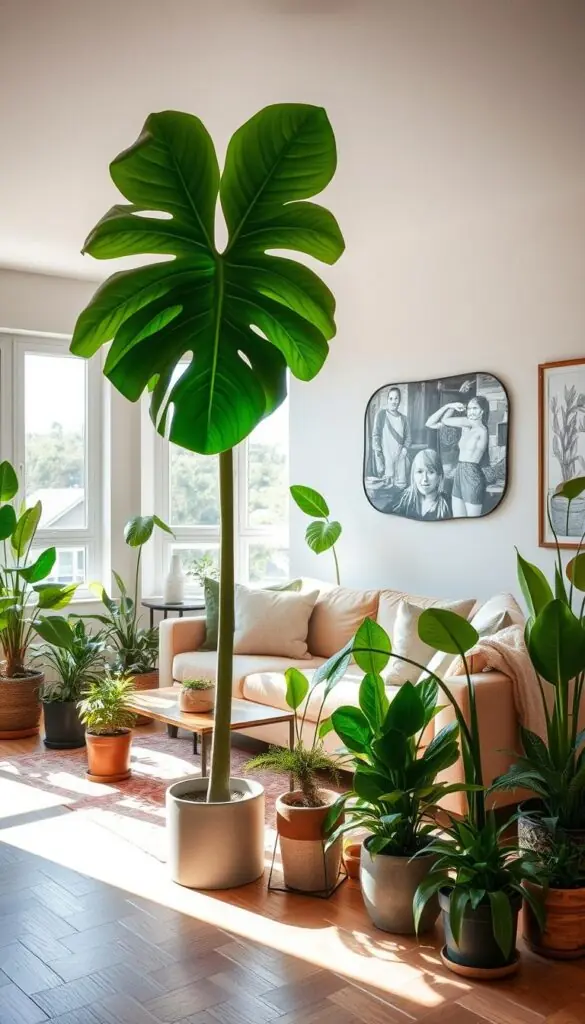
Protect leaves and airflow. Keep most pieces at least 12 inches from cold or hot glass and away from vents. In high-traffic areas, allow a 36-inch walkway clearance or move pots to a corner or stand.
US zones, humidity, and tools
For drier homes aim for 40–50% relative humidity. Group plants or mist ferns and calathea to raise local humidity. In dry US regions choose succulents; in humid areas or bathrooms pick ferns and orchids.
- Use a clip-on grow light on a 12–14 hour timer for dark walls or halls.
- Check soil with a moisture meter and water when the top 1–2 inches are dry.
- Put large pots on rolling stands to slide them nearer windows in winter and back in summer.
- Train trailing vines along a wall with removable hooks spaced 12–18 inches apart.
Tip: Rotate pots weekly so foliage gets even light and stays healthy.
Add Height and Balance: Use Floor Plants, Stands, and Stools to Lift the Eye
A tall green specimen can fix a low ceiling and make the eye travel up the room. Use upright choices to give scale and a quiet focal point. Even one piece can shift how your furniture feels in the space.
Tall, narrow picks include snake, rubber, dracaena (corn), fiddle leaf fig, and majesty palm. Place snake and rubber in a corner to keep sightlines open. Give each specimen at least 18 inches from the wall for airflow.
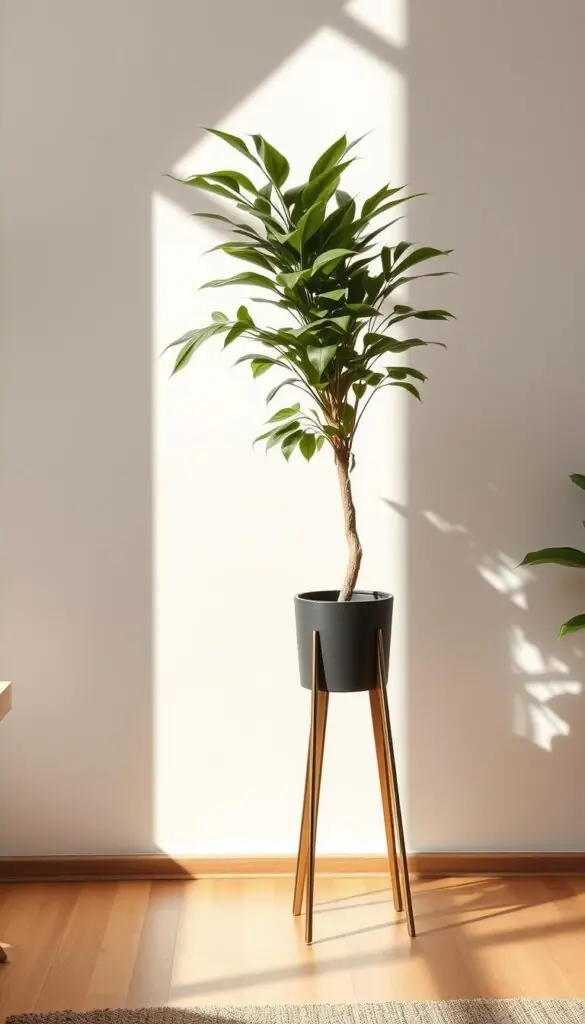
- Ceiling guide: 8-ft rooms → 5–6 ft total height on a stand; 9–10 ft → 6–8 ft looks natural.
- Raise midsize pieces 8–14 inches on a wood stool or modern plant stand for layered interest.
- Keep a 36-inch clear walkway so leaves aren’t clipped in daily use.
| Species | Best Spot | Stand Type |
|---|---|---|
| Snake | Corner, low light | Slim cylinder on floor |
| Fiddle leaf fig | 2–4 ft from bright window | Wider low bowl or tall stand |
| Majesty palm | Bright, indirect light | Wide pot on rolling bar cart |
Tip: Roll a bar cart green “tower” near windows to move pieces easily and keep care tools handy.
Soften Lines and Corners: Trailing, Flowing Plants for Movement
Flowing vines bring motion and a quiet, living art to shelves and walls. Use a trailing pot to soften a hard corner or a straight-edged shelf and make the space feel calm and lived-in.
Design fixers you can reach for include pothos, heartleaf philodendron, compact peperomia, and creeping fig. Place a 4–6 inch pothos on a shelf and let vines trail 12–24 inches to blur a sharp corner or row of cabinets.
Train vines along a wall with removable hooks or mounts so leaves float above the floor and avoid scuffs. Mix chartreuse, deep emerald, and variegated foliage for a living art look that adds subtle scent and texture.
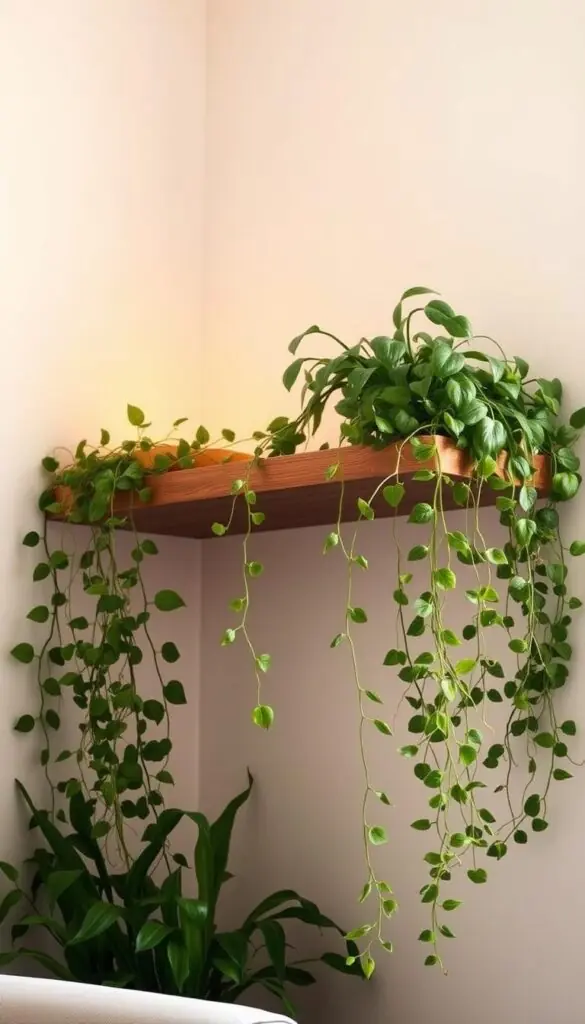
Keep care simple: rotate pots weekly for even light, water when the top inch is dry, and dust leaves monthly. Add moss at the soil line for a soft finish and a faint, earthy scent when you water.
- For desks and nightstands, pick compact peperomia for lush texture without crowding.
- Use clear jars with cuttings as a small propagation gallery and extra style points.
Tip: One trailing pot on a high shelf is the easiest way to change the look of a corner—instant softness, little fuss.
Room-by-Room Wins: Living Room, Bathroom, and Work Nooks That Thrive
Give each room a small green purpose so it feels lived-in and calm. Below are simple, actionable setups that work for light, humidity, and daily life.
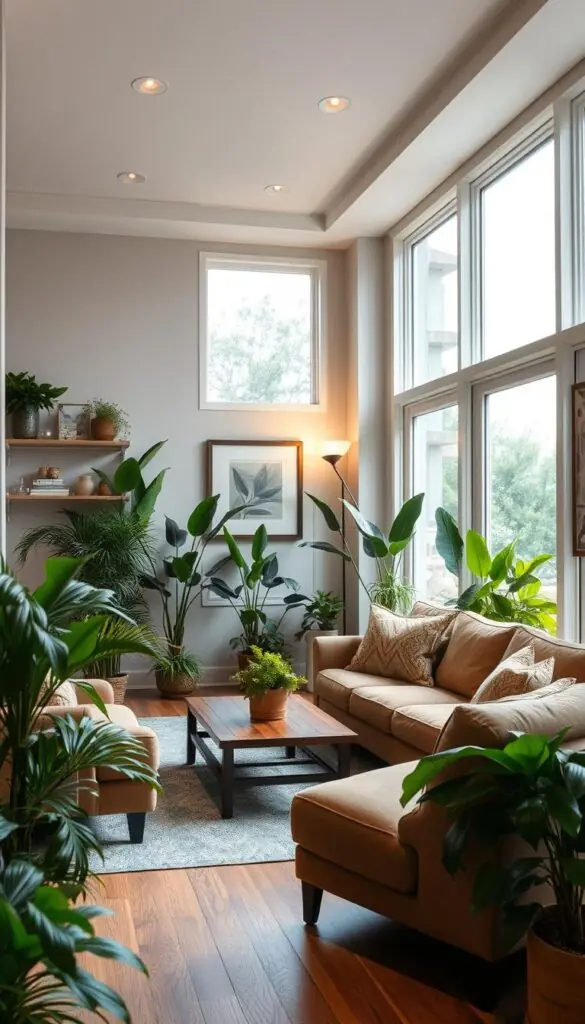
Living room focal points
Create a cozy reading nook by hanging a trailing philodendron above the chair and placing a rubber plant nearby for broad, glossy leaf texture.
Style a mantle with a trio: one upright specimen, one trailing piece, and one small accent. Keep the tallest under 16 inches so it doesn’t block the TV view.
Revive an empty corner with a snake on a stool, leaving 6–8 inches from each wall for airflow and easy cleaning.
Bathroom oasis
Bathrooms suit ferns, calathea, begonias, and orchids because steam raises humidity. Place them where steam builds but avoid direct splash zones.
If your window is small or north-facing, add an LED grow light on a timer. For a windowless bath, use the space as a short-term propagation or isolation area with a grow light to protect the rest of your home from pests.
Office uplift
Keep your desk clear: hang a planter 18–24 inches above the edge and choose compact peperomia or spider for a tidy workspace.
Mount a narrow shelf near a window for space-saving house plants and rotate pots weekly so each side gets even light. Use command hooks to guide vines around a mirror or wall without drilling.
Keep a mister and microfiber cloth in a drawer to boost humidity and wipe leaves so foliage breathes and your workspace stays fresh.
Quick tip: Check midday light; if it’s too dim, add a clamp-on grow light for about 12 hours to mimic a bright day.
Shelves, Walls, and Windows: Vertical Styling That Saves Space
Vertical styling turns unused wall space into a living gallery that saves floor room. This is an easy way to add life and keep walkways clear.
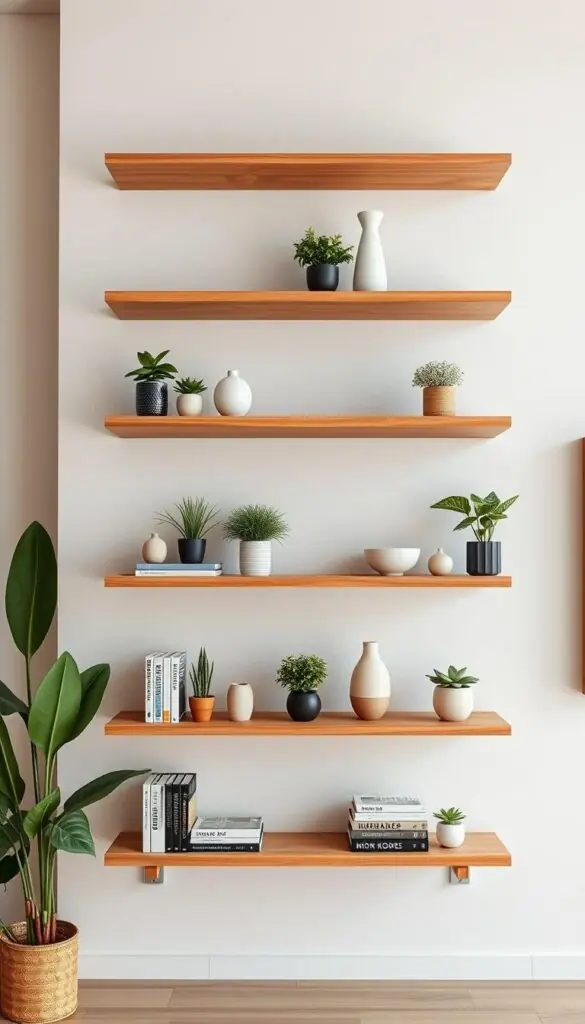
Install floating shelves 18–24 inches below the ceiling to create a light canopy. Place trailing pieces so vines hang freely without blocking the window. Use adhesive hooks and tension rods for renter-friendly hanging.
Rotate pots a quarter turn each week so growth stays even. If light is sparse, mount a low-heat grow light above a key shelf and set a 12–14 hour timer.
Train, Tuck, and Top-Shelf Safety
Train philodendron, Scindapsus, and monstera with removable hooks spaced 12–18 inches. Guide vines around mirrors or frames to add intentional, artful lines on the wall.
Move large pieces to top shelves for pet safety and a soft canopy feel. Add a discreet plant stand beneath a column to layer height from floor to ceiling.
Propagation as Wall Art
Use a pegboard gallery with test tubes or clear jars for cuttings. Keep tubes topped with fresh water and swap weekly to avoid rot.
Tip: Anchor each shelf with one medium pot, flank with two small ones, and leave negative space so the layout breathes.
| Solution | Best Use | Renter-Friendly Fix |
|---|---|---|
| Floating shelf 18–24" below ceiling | Trailing vines, canopy effect | Adhesive brackets or tension rod |
| Pegboard + test-tube shelves | Propagation display, water cuttings | Command strips for pegboard |
| Top shelf + plant stand below | Pet-safe placement, layered height | Sturdy shelf anchors; avoid drilling when rental limits apply |
- Rotate pots weekly for even growth and less leaning.
- Train vines with removable hooks to keep walls tidy.
- Use a small, low-heat grow light above dark shelves to support healthy growth.
These vertical solutions work well in apartments and houses alike. They save floor space, add visual height, and make care simple and renter-friendly.
Small Spaces, Big Impact: Apartment-Friendly, Low-Maintenance Houseplants
Small footprints don’t mean small style—smart choices bring big life to compact interiors.
Start slow with forgiving options: pick ZZ, pothos, philodendron, snake, and spider for steady, low-effort growth. These house plants do well a few feet back from a window and tolerate the usual apartment light swings.
Use narrow stands and a compact plant stand to stack vertical interest without blocking walkways. Keep the total base under 16 inches so you can move around easily.
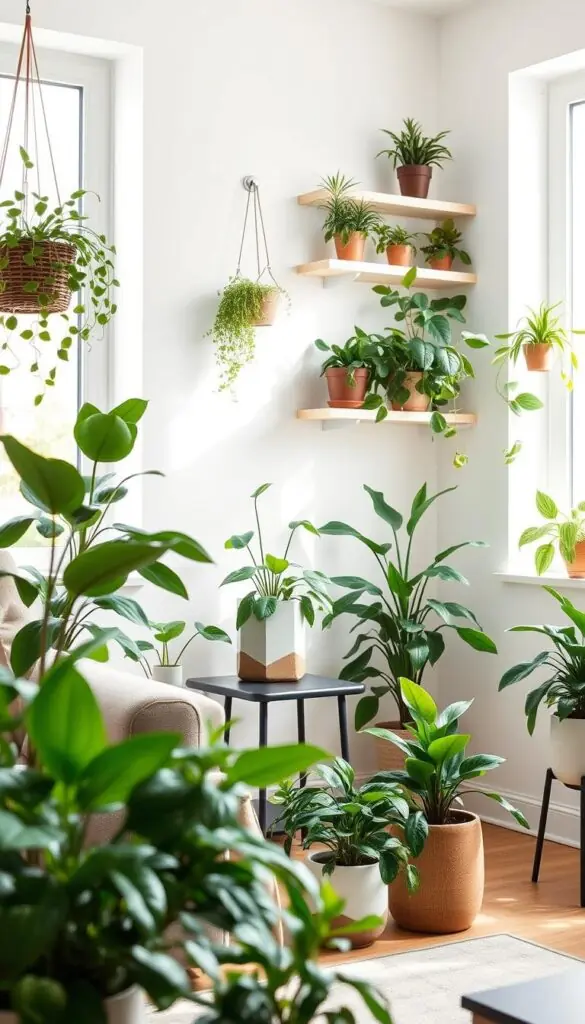
Slip nursery pots into woven baskets as cachepots for warmth and quick swaps. A rolling bar cart is a renter-friendly way to bring lots of green closer to light in winter, then roll it back in summer.
- Anchor a vignette with one medium pot and two tiny ones for depth without clutter.
- Keep one or two pot colors for a cohesive, airy look in a tight space.
- Mount a single hanging piece near a window to free surfaces and add vertical flow.
Tip: Stash a moisture meter and small mister in a caddy. Quick checks once a week prevent overwatering and keep leaves looking lush.
Seasonal Refresh: Swap, Layer, and Light for Year-Round Beauty
Rotate, refresh, and relight: three easy ways to keep your house greenery happy. These small seasonal moves protect leaves, boost growth, and keep your living room looking intentional.
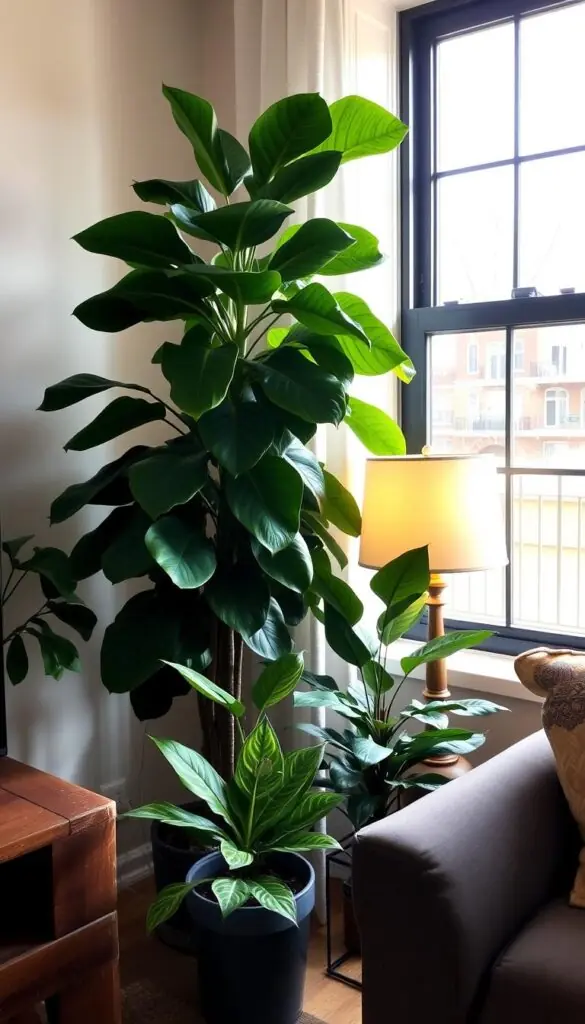
Spring & summer: move items 1–2 feet closer to the window as days lengthen. Check soil more often—growth and evaporation speed up. Refresh the top inch of potting mix or repot root-bound specimens and add a slow-release fertilizer for steady feeding.
Fall & winter: pull pots back 1–2 feet from drafty glass and cut watering by checking moisture first. Add a low-heat grow light on a 12-hour timer for short days and dust leaves monthly so they can photosynthesize without obstruction.
Humidity and care: group houseplants or use a small humidifier when heating dries the air. Change propagation water often to prevent rot. Lift pots on feet or trays if you spot condensation on sills.
Holiday harmony
Combine greenery with seasonal accents but keep centerpieces under eye level so conversations and sightlines stay open. Use one runner or tray to corral small pots—this simplifies watering and makes post-season cleanup quick.
Tip: Rotate displays seasonally—one fresh fern in spring and a sculptural rubber in winter—to refresh the look without a full re-style.
Common Mistakes to Avoid (and What to Do Instead)
A few common errors—overwatering, wrong light, and clutter—are quick to spot and quicker to correct.
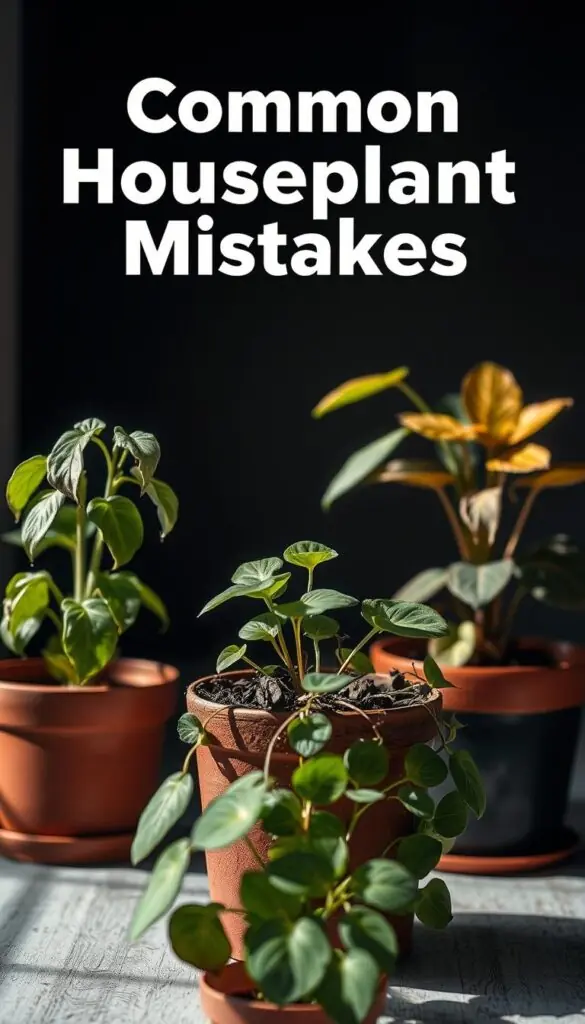
Overwatering and poor drainage
Don’t water by calendar. Check soil with your finger or a moisture meter 1–2 inches down before you add water.
Water until it drains into a saucer, then empty that saucer after 10 minutes. Use risers or pot feet inside decorative pots so roots don’t sit in water.
Ignoring light needs
If leaves lean to the sun, rotate pots a quarter turn weekly. Move a piece 1–2 feet closer to a window if growth slows or stems stretch.
Measure light zones and match species to the spot. A clip-on grow light on a 12-hour timer helps darker corners without fuss.
Cluttered clusters
A tidy group looks intentional. Pick one pot finish per zone and vary height with a small stand or stack of books to add depth.
On shelves, leave negative space: one medium item and two small accents keeps things airy and keeps tables and the floor tidy.
“Simple checks—moisture, light, and spacing—save time and keep your room looking calm.”
- Check soil 1–2 inches deep before watering.
- Lift pots on risers and use saucers; empty after 10 minutes.
- Rotate a quarter turn weekly and move closer to light if leaves reach.
- Unify pots by finish and vary height with a plant stand or books.
- Note changes: yellow leaves often mean too much water; crispy edges may mean too much sun or low humidity.
| Problem | Quick Fix | Tool |
|---|---|---|
| Overwatering | Check moisture, use saucer, lift pot | Moisture meter, risers |
| Poor light | Rotate weekly, move nearer window | Clip-on grow light, tape measure |
| Cluttered displays | Unify pots, add stand for height | Small plant stand, decorative tray |
Conclusion
Start with one corner and watch how a single choice lifts an entire room.
Choose a look you love, place pieces by light and traffic, and add height where the eye needs it. Work in small steps: a shelf trio, a rolled cart by a sunny window, or a tidy bathroom shelf can change the feel of your house without fuss.
Keep care simple. Check moisture and light first, use a meter or mister when needed, and slide larger pots on a rolling stand for seasonal moves.
Rotate displays with the seasons—more light and water in spring, gentler routines in winter—and trust small adjustments by inches, not feet.
You’ve got this—one corner, one shelf, one sunlit spot at a time—and your home will grow into a calm, thriving space you enjoy every day.
FAQ
How do I choose a style and containers that fit my home?
Start by picturing the mood you want — cozy, modern, or airy. Match containers to that palette: wicker and baskets for warmth, terracotta for rustic earthiness, ceramic for gleam, and metal for a modern edge. Think about texture too: glossy leaves pair well with matte pots, while soft moss or woven baskets add contrast against concrete or metal. Aim for harmony with your furniture and wall colors so the greenery feels like part of the room.
What’s the easiest way to assess light in my living room?
Stand by each window at different times of day and note direction and intensity. South- and west-facing windows give bright light; east-facing gives morning sun; north-facing is gentler. Measure distance from glass — a plant on the sill gets stronger light than one several feet back. Use these observations to place low, medium, or bright light-friendly specimens and consider a grow light if natural light is limited.
Which low-, medium-, and bright-light picks work well in living spaces?
For low light, choose ZZ plant, snake plant, or pothos. Medium light welcomes philodendron, spider plant, and rubber plant. Bright spots suit fiddle leaf fig, succulents, and majesty palm. Match each species to its preferred exposure and rotate pots periodically so growth stays even. Remember humidity and temperature in your apartment or house can affect what thrives.
How can I add height and balance without crowding walkways?
Use tall but narrow choices like fiddle leaf fig, dracaena, or rubber plant to lift the eye. Layer with plant stands, wood stools, or a slim rolling plant stand to create vertical interest while keeping paths clear. Keep at least 24–30 inches of safe walkway clearance and scale pots to ceiling height and nearby furniture for a balanced look.
What trailing options soften shelves and corners nicely?
Choose cascading varieties such as pothos, heartleaf philodendron, creeping fig, or certain peperomias. Place them on floating or picture shelves and allow vines to spill gently over edges. The movement of chartreuse and deep-green leaves creates a sensory layer that makes a room feel lived-in and lush.
How do I style plants in bathrooms and work nooks?
Bathrooms with warm, humid air suit ferns, calathea, begonias, and orchids — just check light levels by the window. For home offices, keep desk areas clear by using hanging planters or narrow shelf pots. Choose compact or slow-growing varieties to avoid clutter and use shelves or pegboards to elevate cuttings in jars for a tidy, green uplift.
What tools help maintain indoor greenery effectively?
A few essentials save time: a moisture meter to avoid overwatering, a plant mister for humidity-loving species, grow lights for dim rooms, and rolling plant stands for mobility. Simple tools like a small watering can with a long spout and pruning shears keep maintenance neat and easy.
How can I maximize vertical space in a small apartment?
Use floating shelves, tall stands, and wall-mounted planters. Train vines like Scindapsus or monstera around mirrors and frames to add height without using floor space. Top shelves keep plants out of pet reach and create a canopy feel. Choose compact containers and narrow stands to fit tight corners while keeping sightlines open.
What are common mistakes and how do I fix them?
Overwatering and poor drainage are top offenders — always use pots with drainage, saucers, and check soil moisture before adding water. Ignoring light needs causes leggy growth; rotate pots weekly and move specimens closer to windows or add a grow light if needed. Avoid cluttered clusters by unifying pot finishes and varying heights and textures for a curated look.
How should I change care with the seasons?
In spring and summer give brighter light, more frequent water, and refresh potting mix as plants grow. In fall and winter, supplement with grow lights, cut back watering, and dust leaves to improve light absorption. Small seasonal swaps and layered lighting keep greenery thriving year-round without overhauling your setup.