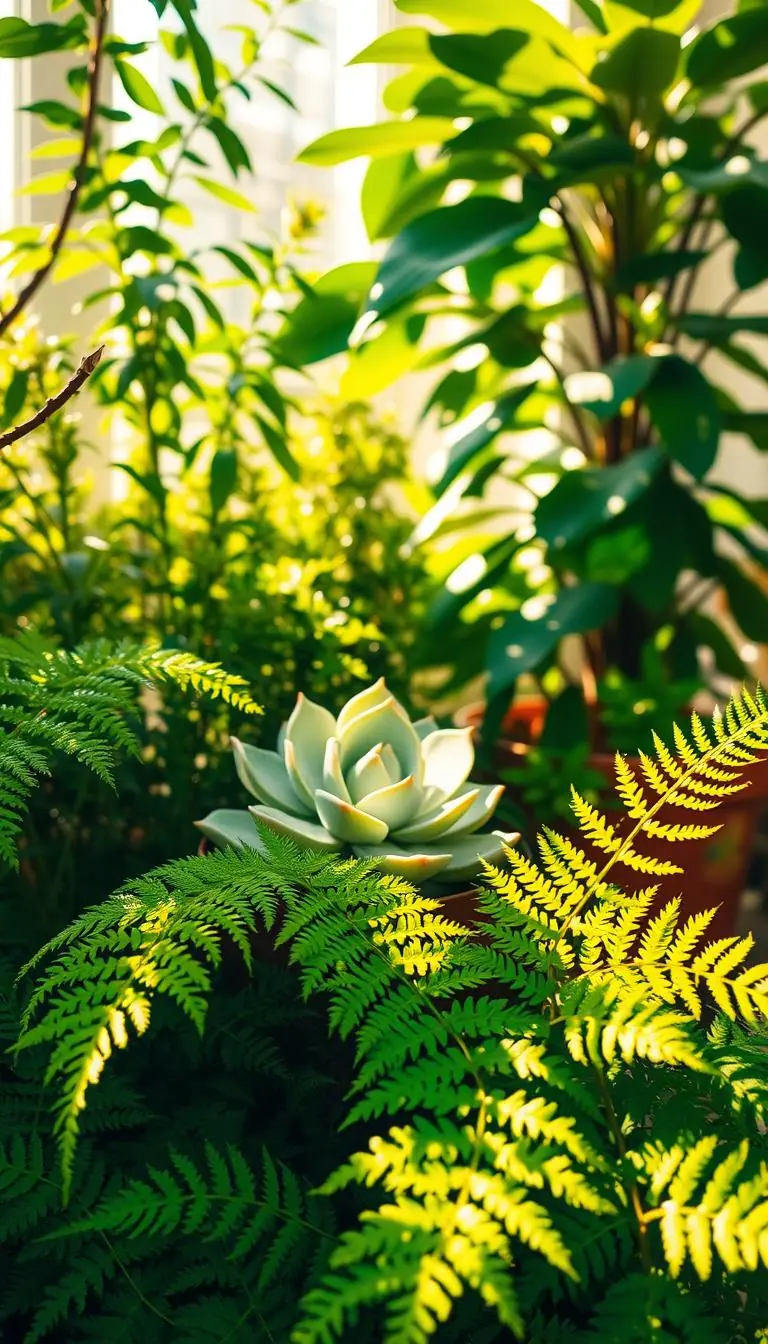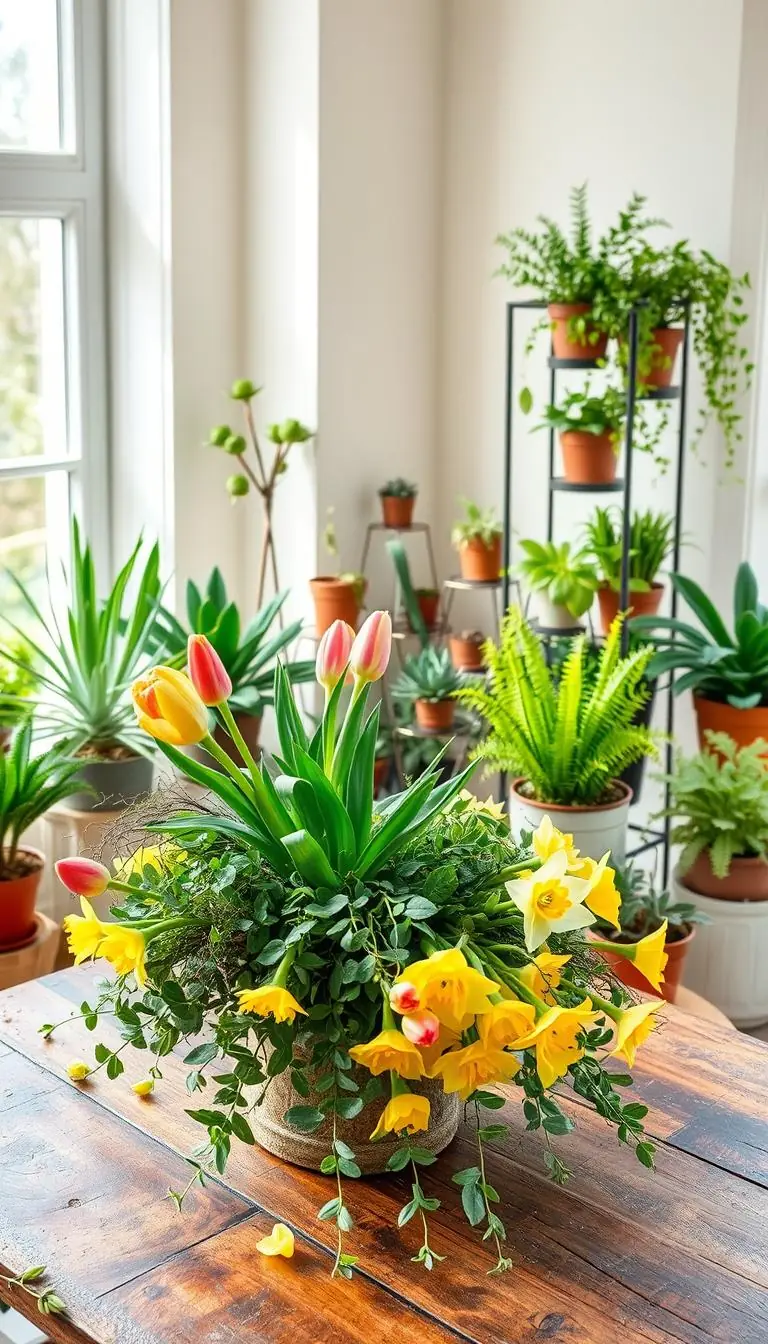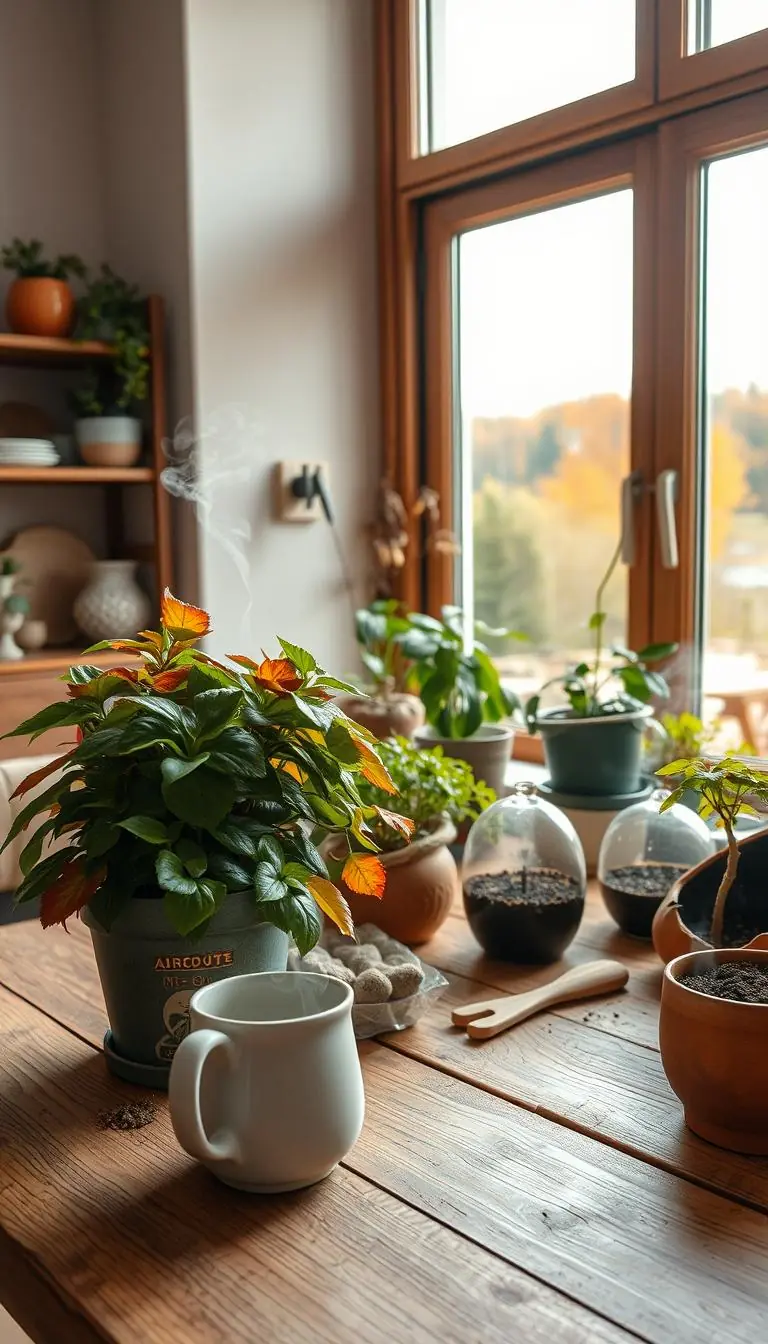
Feel the cool edge of a matte clay pot and the soft, filtered light on glossy leaves. Have you noticed a bare corner that could use a touch of life? This guide helps you pick easy-care plants and simple setups that suit your living room and whole home.
We share a clear, repeatable way to match size and light to each spot. Think a tall Rubber Tree in a sunny bay, or a String of Pearls tucked on a shelf. Small tools—planters, saucers, ceiling hooks, grow lights, a moisture meter—make care predictable.
Expect practical tips: choose pet-friendly species like Areca palm, learn when to water a Peace Lily, and move large leaves a few feet closer to windows in winter. You’ll avoid common mistakes like no drainage or crowded corners and gain confidence to create a calm, green look that fits your style and daily life.
Key Takeaways
- Match plant size to room scale and light for a balanced living room.
- Use simple tools—moisture meter, saucers, grow lights—to simplify care.
- Combine tall statement pieces with small tabletop accents for cohesion.
- Choose pet-safe options and note species needs (e.g., Rubber Tree, Peace Lily).
- Make seasonal moves and avoid common pitfalls like poor drainage.
Quick-start styling checklist for modern homes
Start by scanning each room at noon to see how sunlight moves through the space. This quick test shows where to place plants and which pots need extra light or shade.
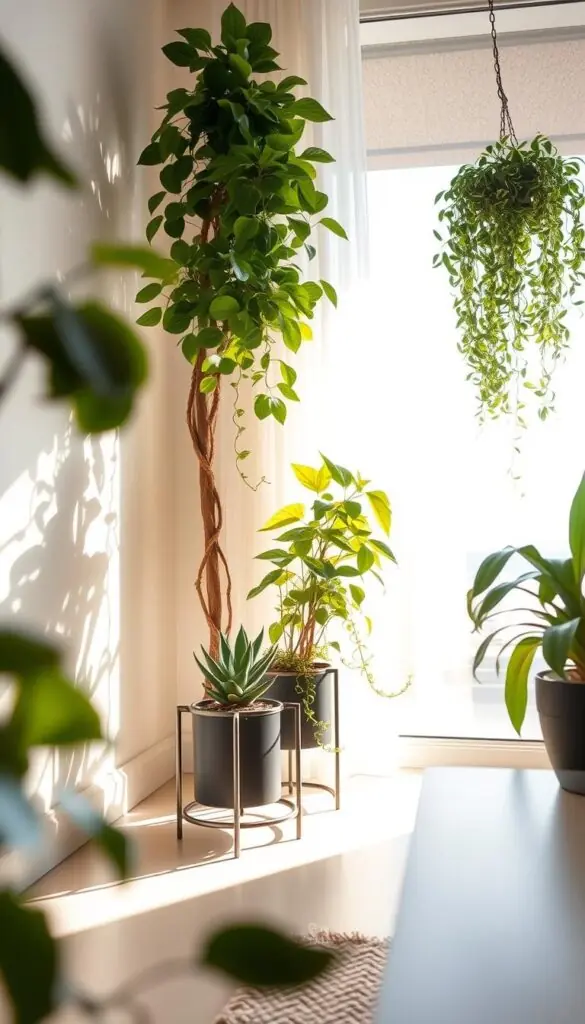
Step-by-step: match light, scale, and flow
- Read your light. Stand by the window at noon. If you can read comfortably, it's bright indirect. Bright lovers: 2–5 feet from the window. Low-light: 6–10 feet back.
- Scale to the space. Anchor open rooms with a 5–8 ft floor specimen. Use 4–8 inch pots on shelves for tighter spots.
- Map the flow. Keep walkways clear. Angle big pots out of traffic and soften corners.
Tools and materials you’ll use
- Planter with drainage + matching saucer; decorative cachepot for style.
- Moisture meter, narrow-spout watering can, microfiber cloth, pruning snips.
- Command hooks and a stud-safe ceiling hook for hanging and training vines.
- Full-spectrum grow light hung 12–24 inches above foliage; run 10–12 hours daily.
- Bar cart or rolling caddy to move heavy pots and chase gentle light.
Maintenance rhythm: Check soil weekly; water when the top 1–2 inches are dry (succulents: 2–3 inches). Dust leaves monthly and rotate pots a quarter turn so plants receive sunlight on all sides.
modern plant decor ideas that work in real rooms
Start with light and movement—then pick pieces that fit the room’s rhythm.
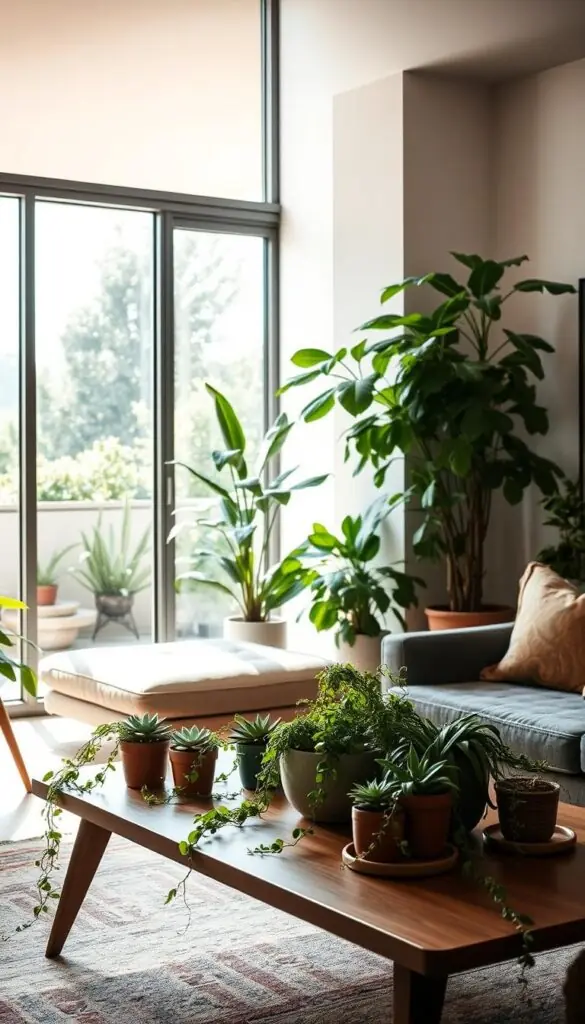
Living room focal points
Place a Rubber Tree or Areca Palm 2–4 feet from a bright window as a floor statement. Use a 12–14 inch pot with a sturdy saucer to protect flooring and keep the floor area clear of traffic.
For sculptural drama, set a fiddle leaf fig in a matte planter near a sunny bay. Soften harsh noon sun with sheer curtains to protect the big, glossy leaves and maintain that calm, sunlit look.
- Layering: add a 6–8 inch Philodendron on a side shelf and a trailing Pothos on the media unit to soften furniture lines.
- Spacing: leave 18–24 inches between large pots and seating for easy movement.
Entryways, hallways, bedrooms, and offices
Turn a bar cart into a rolling plant stand: Snake Plants on the bottom shelf, a Peace Lily on top. Roll it away from direct beams when suns get harsh.
Group 3–4 Snake Plants in similar planters for a small doorway to add vertical texture and guide the eye down the hall.
In bedrooms, choose calming air-purifying picks like Spider Plant and ZZ Plant. Keep tall pots about 3 feet from the bed for clear walking space.
For offices, hang a Philodendron or place a compact succulent on the windowsill. Rotate pots weekly for even growth and a tidy look.
| Room | Recommended Species | Pot Size | Placement Tip |
|---|---|---|---|
| Living room | Rubber Tree, Areca Palm, Fiddle Leaf Fig | 12–14 in (floor) | 2–4 ft from bright window; add rug under pot |
| Entry / Hallway | Snake Plant, Peace Lily (on cart) | 6–10 in (grouped) | Group 3–4 snake plants; use bar cart for mobility |
| Bedroom / Office | Spider Plant, ZZ Plant, Philodendron | 6–12 in (table/hanging) | Keep 3 ft from bed; hang in office or place on sill |
Choose the right plant for your light, space, and vibe
Choose a spot, read the light, and pick a plant that fits both scale and vibe. Start with the window and the room’s size. That tells you which species will thrive and where to place them for healthy growth.
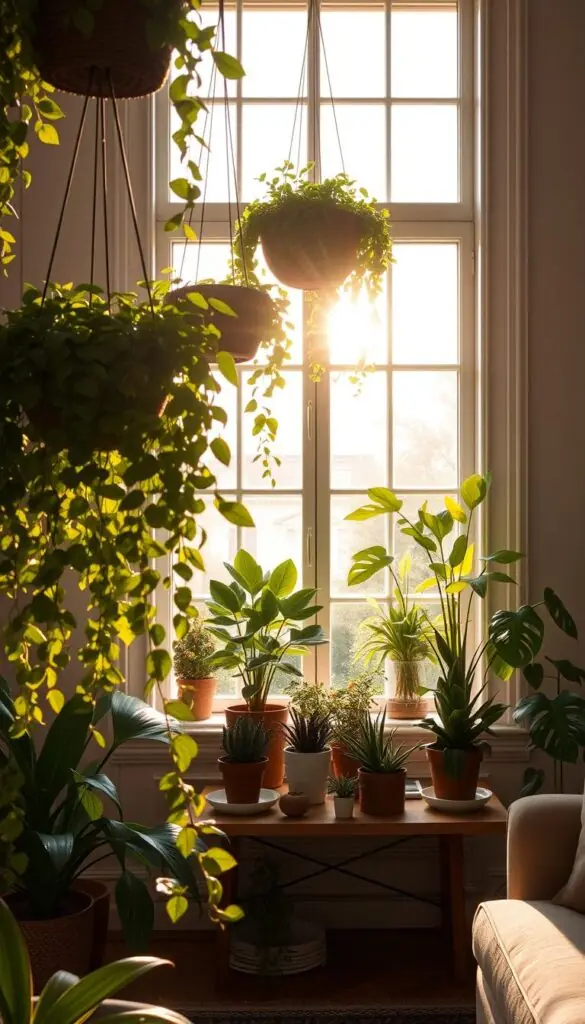
Bright, indirect light stars
Monstera deliciosa, Fiddle Leaf Fig, and Rubber Tree love bright, filtered sun. Place these 3–6 feet from an east or sheltered south window.
Use a sheer curtain to prevent leaf scorch. Expect a Monstera to spread 3–4 feet; give it a moss pole so it unfurls naturally.
Low-to-medium light heroes
For rooms with no direct sun, pick ZZ Plant, Snake Plant, Pothos, or Peace Lily. Position these 6–12 feet from a window or in bright interior corners.
They tolerate infrequent watering. Peace Lily prefers more even moisture; others like ZZ prefer to dry between drinks.
Pet-aware options and what to keep out of reach
- Safe picks: Areca Palm, Spider Plant, Peperomia — friendly for curious pets and good for air quality.
- Keep out of reach: English Ivy and some common species are toxic. Place toxic varieties high, behind gates, or on shelves.
- Seasonal tweak: In winter, move bright-lovers 1–2 feet closer to the window for steady, living-room growth.
- Scale tip: Tall trees fit 9–10 ft ceilings; choose compact varieties for small rooms.
- Lighting backup: If windows are limited, add a full-spectrum grow light 12–24 inches above foliage for 10–12 hours daily.
Scale, shape, and composition: build a balanced look
Think of each grouping as a small still life: tall, mid, and trailing pieces set the scene. Start by arranging by height, texture, and negative space so each element has room to breathe.
Use a simple rule: tall-medium-trailing. Place a 5–6 ft statement, a 10–12 inch tabletop piece, and a trailing species to soften edges.
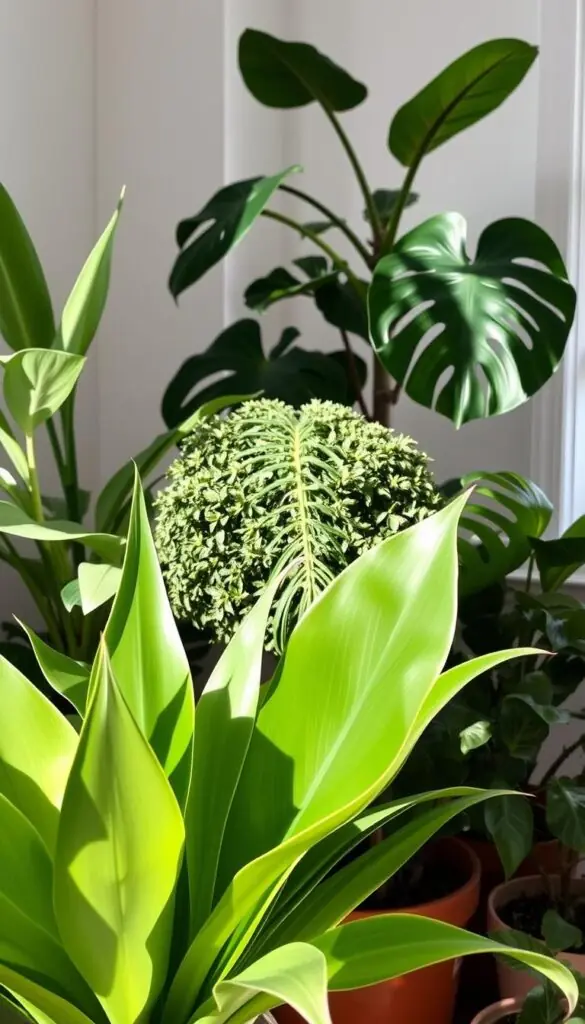
Odd numbers feel natural. Groups of three or five create rhythm without clutter. If one side holds a large tree, mirror weight with a lamp or two medium pots on shelves.
Play with shape: upright swords like Snake Plant, rounded leaves like Peperomia, and split leaves like Monstera. Keep at least 6 inches between pots so foliage can shine and you can water without mess.
- Place the tallest piece slightly angled toward the room in a sunny corner for a welcoming stance.
- Repeat materials—two terracotta, one concrete—to tie the design without matching exactly.
- Choose grouping mates with similar light and water needs so maintenance is one easy routine.
| Composition Step | Why it works | Quick tip |
|---|---|---|
| Tall-Medium-Trailing trio | Creates a clear focal flow and soft edge | Use a stand or books to vary height |
| Odd-number groupings | Feels collected and balanced | Group 3 or 5 for natural rhythm |
| Balance weights | Prevents one-sided heaviness in a living room | Echo height with a lamp or paired shelves |
| Wall as canvas | Background color shifts how greens read | Light walls make leaves pop; dark walls highlight variegation |
Step back and check from your main seat. Adjust heights with low stands or stacked books. Rotate pots on shelves for even light and a steady, thriving look.
Planters and finishes: form meets function
Good planters combine material, drainage, and scale to protect roots and lift a room.
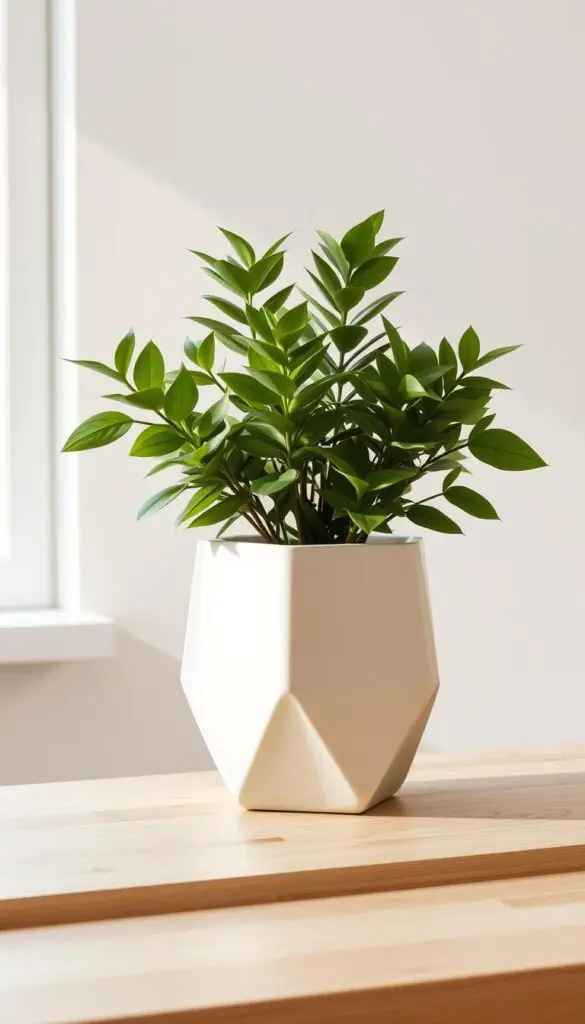
Choose function first. Always pick a pot with a drainage hole and a snug saucer. Healthy roots are the base of beautiful decor.
Materials and care
Terracotta is tactile and breathable. It wicks moisture, so it suits plants that dislike soggy soil like Snake Plant and ZZ.
Glazed ceramic and concrete hold water longer. Pair those with thirstier species such as Peace Lily or Calathea to avoid daily watering.
Color, texture, and shelf styling
Pair deep, glossy leaves with raw clay for contrast. Silver-variegated foliage looks striking in a black planter.
Keep a consistent finish across a shelf—two matching planters plus one accent ties the scene together.
- Pick pots 1–2 inches wider than the nursery pot to limit overwatering.
- Use felt pads under heavy pots to protect floors and ease moves.
- Hide plastic nursery pots inside decorative planters for quick swaps and cleaning.
- Wipe planters with a damp cloth; leave terracotta’s patina for a cozy touch.
Quick tip: If you love baskets, slip a waterproof cachepot inside to keep fibers dry and protect living floors.
Vertical and hanging solutions for small spaces
A few well-placed hanging pieces make a compact room read like a tiny urban jungle.
Start by choosing the right anchors. Install a ceiling hook into a joist and hang so the pot bottom sits 6–12 inches below the ceiling. This gives airflow and makes watering easier.
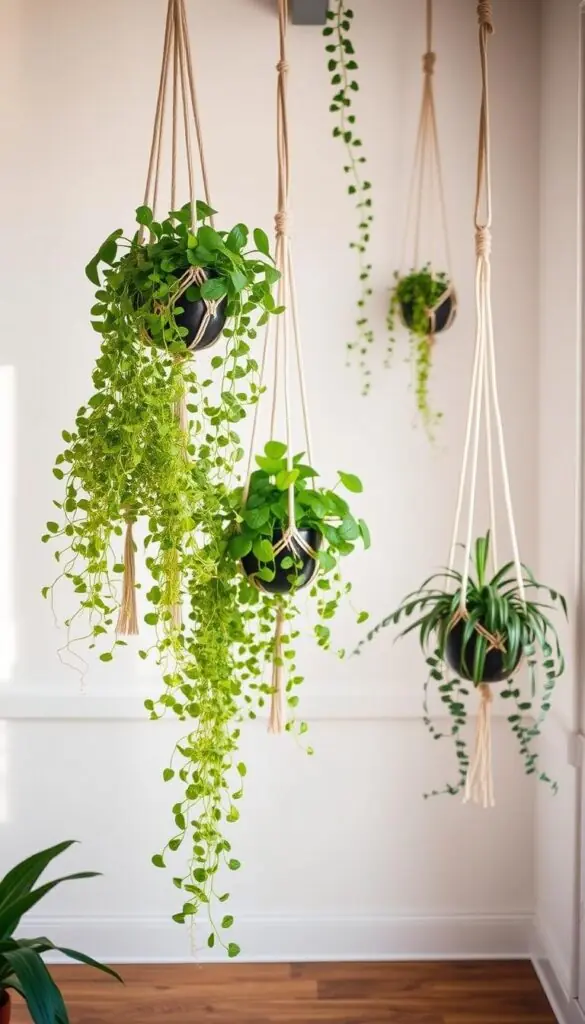
Hanging hardware and quick install
- Locate a joist, drill a pilot hole, then screw in a weight-rated ceiling hook.
- Use an S-hook with a safety latch for extra security on chain links.
- Place hanging planters near a window for bright spots, or 12–18 inches under a slim grow light in deeper rooms.
Living wall ideas with shelves and mirrors
Create a staggered grid of shelves or a pegboard and leave 10–12 inches between tiers for trailing growth. Wrap vines gently around a mirror frame with soft ties to keep leaves off the floor.
Plant choices and pet safety
- String of Pearls loves hanging planters and tolerates occasional underwatering.
- Philodendron vines do well in gentler light and drape nicely from shelves.
- Avoid English Ivy if pets roam; hang it high or choose Spider Plant as a safer way to get the same cascade.
| Solution | Best for | Placement | Notes |
|---|---|---|---|
| Ceiling hook + hanging pot | Trailing vines, String of Pearls | Pot bottom 6–12 in below ceiling | Use joist; S-hook with latch |
| Staggered shelves | Mix of trailing and upright plants | Leave 10–12 in between tiers | Add slim grow light if deep room |
| Mirror-wrap | Vines for entry or hallway | Frame edge, leaves above floor | Tie loosely; rotate monthly |
Windows, walls, and corners: place plants like a designer
Treat each wall and window as a frame; position greenery so it highlights sightlines rather than blocking them.
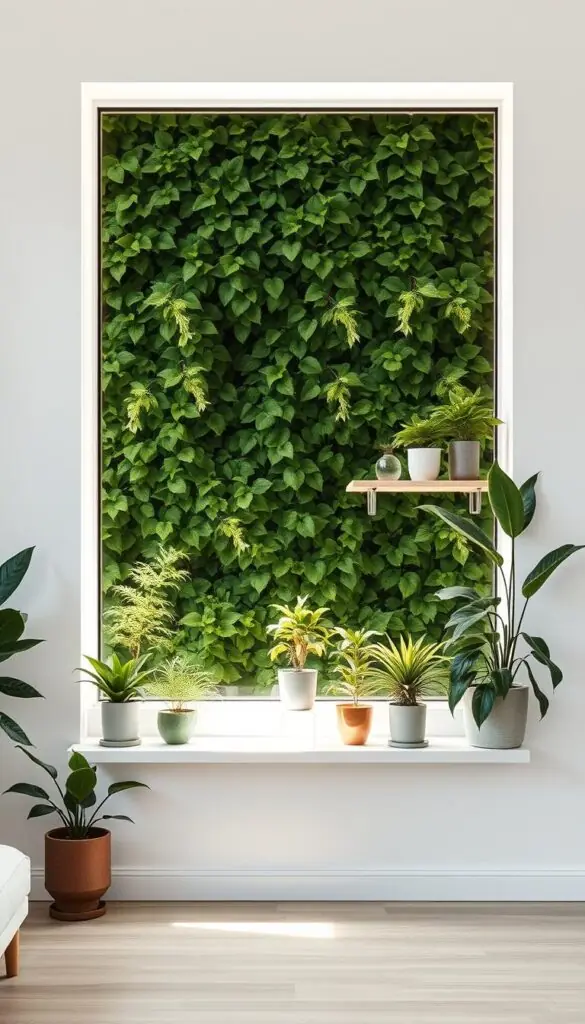
Keep pots 12–18 inches from a wall to allow airflow and easy dusting. This simple gap keeps leaves healthy and helps soil dry evenly.
Frame a window with tall pieces at the sides. That clears the glass and lets light pour into the living space.
Avoid drafts—place plants 2–3 feet from vents and busy doors. In corners, angle the tallest item slightly toward the room and layer a medium piece in front for depth.
- Floor placement: leave 24 inches in tight walkways and tuck specimens into alcoves to save space.
- Furniture anchors: use media consoles or nightstands as staging points; add one trailing piece to soften straight lines.
- Busy homes: elevate large pots on top shelves to protect them from bumps and curious pets.
Float a shelf 12–16 inches below a window top for a sun-catching ledge. For windowless baths, add a discreet grow light on a timer for steady, hands-off care.
Rotate pots a quarter turn weekly so every side gets light and growth stays balanced. Small moves like these make your interior look intentional and calm.
Light strategy and grow lights for year-round success
A quick window check can tell you whether a spot will help your greenery thrive. Start by observing at noon and late afternoon for a few minutes. Note where the strongest rays fall and where shade lingers.
Reading your windows and using sheer curtains
South windows give the strongest sun; buffer them with sheers and place bright lovers 3–6 feet back to avoid leaf burn.
East windows bring gentle morning beams—great for most plants that enjoy bright, indirect light.
West windows send hot afternoon sun; pull specimens 5–8 feet back or use curtains to soften the rays.
North windows are soft and steady. Use these spots for low-light champions or add supplemental lighting in winter.
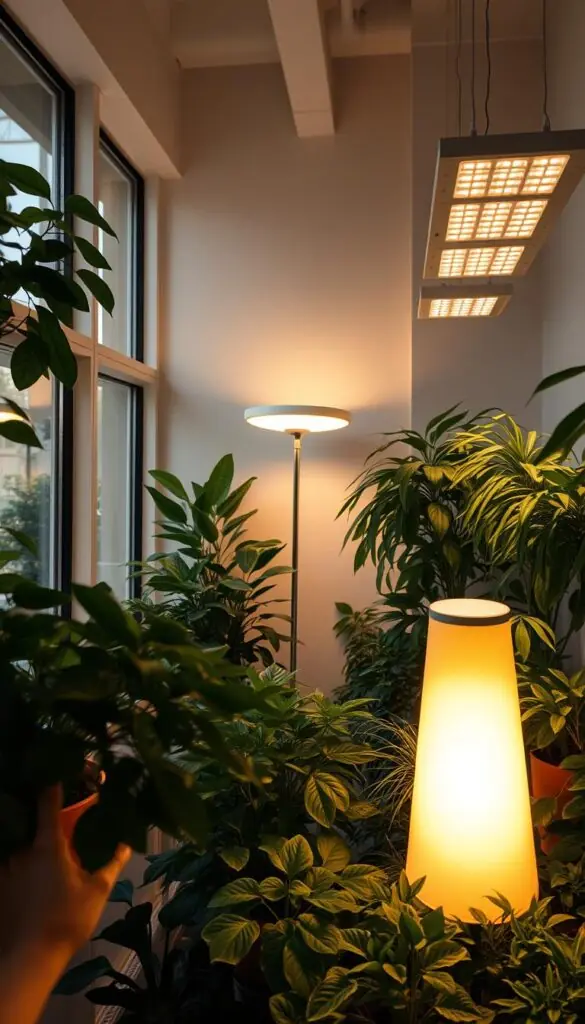
When to add a grow light, heights, and runtimes
Watch for signs: new leaves stay small, internodes stretch, or color fades—these mean more light is needed.
- Hang full-spectrum LED fixtures 12–24 inches above the canopy.
- Run lights on a timer for 10–12 hours daily; in winter add 1–2 extra hours if natural light drops.
- Tilt a clip-on at 30–45 degrees to mimic angled daylight and reduce harsh glare in the room.
- A grow light above a plant wall helps train vines upward and evens out growth.
Keep air moving with a low fan to lower fungal risk and help leaves breathe. Rotate pots a quarter turn weekly so every side gets even exposure.
| Window | Best use | Quick tip |
|---|---|---|
| South | Bright, indirect lovers | Sheer curtain; place 3–6 ft back |
| East | Gentle morning light | Good for most houseplants; close to window |
| West | Hot afternoon rays | Filter with drape; move 5–8 ft back |
| North | Low to medium light | Use low-light species or add a grow light in winter |
Remember: More light (within reason) powers growth; more water does not. Let the soil guide your watering so life in your living spaces stays steady and healthy.
Room-by-room styling playbook with real examples
Treat your home like a set of small scenes; place greenery where it supports activity and sightlines. Below are clear, usable ideas for three common spots. Each suggestion lists species, placement, and a seasonal tweak so you can swap things easily.
Bathroom spa vibes: ferns, air plants, and humidity lovers
Make a small, spa-like corner with humidity lovers. Try Lemon Button Fern on a vanity tray for a fresh scent.
Tuck air plants into wall holders by the mirror and mist weekly. Soak them 20–30 minutes once a week for a deeper refresh.
If the bathroom has no window, create a propagation corner with a slim grow light and glass vases. Keep new cuttings isolated for a pest check.
Kitchen and laundry nooks: compact succulents and trailing accents
On a sunny sill, plant a small succulent trio in matching pots for a tidy glow. Add a trailing Pothos on the fridge top to soften stainless steel.
In the laundry room, a Spider Plant beside the washer brightens chores. Hang a Philodendron from a ceiling hook to save counter space and add movement.
Patio / indoor threshold: large-leaf drama that blurs indoor-outdoor lines
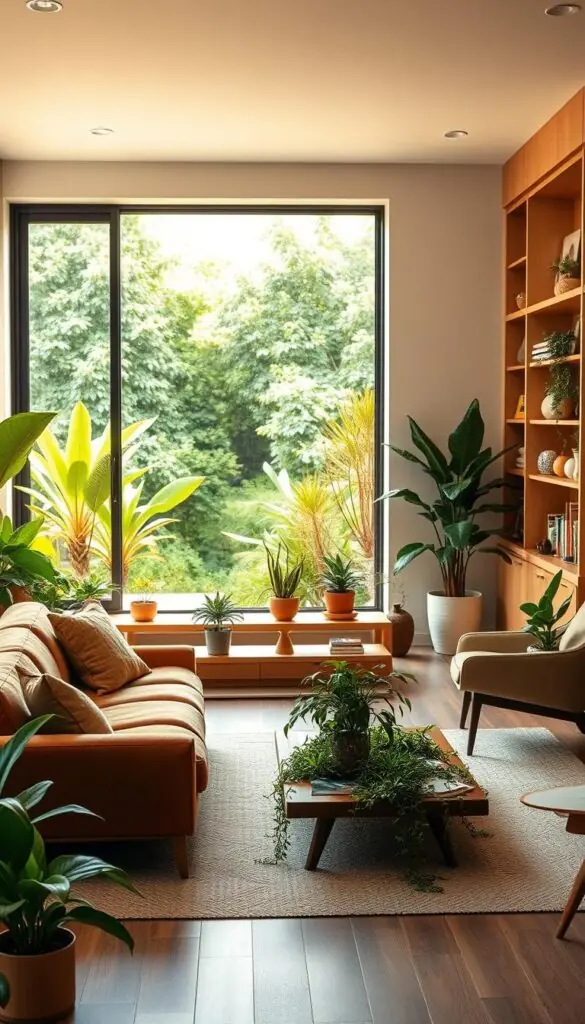
Place a Fiddle Leaf Fig by the patio door and set a Monstera about 3 feet inside. That pairing creates a lush living view and a gentle jungle feel.
Use a low bench at the threshold for a row of medium pots to bridge outdoor and indoor zones. In winter, bring patio-adjacent pots 1–2 feet inward to avoid drafts.
Traffic tip: leave 30 inches between floor pots and door swings to prevent bumps and broken leaves.
| Room | Top species | Placement example | Seasonal tweak |
|---|---|---|---|
| Bathroom | Lemon Button Fern, Air Plants, Maidenhair Fern | Vanity tray; wall holders; shower shelf | Use misting and soak weekly; add grow light if windowless |
| Kitchen / Laundry | Succulent trio, Pothos, Spider Plant, Philodendron | Sill trio; fridge-top trailing; hang by washer | Move succulents closer to window in winter; hang philodendron higher in summer |
| Patio threshold | Fiddle Leaf Fig, Monstera, large-leaf calathea | Fig by door; Monstera 3 ft inside; bench row of mediums | Pull in 1–2 ft in cold months; open doors on mild days |
Care, seasons, and common mistakes to avoid
A gentle routine keeps leaves glossy and your home feeling alive. Small, regular checks prevent stress for both you and your greenery. The notes below give clear, actionable steps you can use every month.
Watering rhythm, winter tweaks, and feeding
Watering rhythm: Check weekly and water when the top inch is dry (2–3 inches for succulents). Use a moisture meter to double-check, then water until a little drains into the saucer. Empty saucers after 10–15 minutes.
Feeding made easy: In spring and summer use a balanced liquid fertilizer at half strength every 4–6 weeks. Halve or pause feeding in fall and winter.
Winter tweaks: Move bright-lovers closer to windows, run grow lights longer, and reduce watering as growth slows. Keep Areca Palm stable—avoid sudden moves or drafts.
Mistakes to watch for
- Too little light makes stems leggy—try a brighter spot or a grow light, not more water.
- No drainage causes soggy roots—always use pots with holes and a saucer.
- Scale mismatch—only upsize pots 1–2 inches to avoid long-term wet soil.
- Drafts and heat blasts damage leaves—keep plants away from vents and exterior doors.
Quick maintenance circuit
Set a monthly “plant hour.” Dust leaves with a damp microfiber, rotate pots a quarter turn, clip yellow foliage, and take cuttings to propagate in water. Check for pests when you water. These small steps are an easy way to keep life in every room and support a calm, rooted design.
Conclusion
Start small: a single shelf or cart can change how a room feels in an afternoon.
Let one confident piece lead the way. Mix a tall statement with two smaller companions. Repeat a finish or color across pots and shelves to tie the scene together.
Use flexible systems—bar carts, pegboards, mirror-wrapped vines—to move greenery as light and moods change. At the patio threshold, a Fiddle Leaf Fig beside a Monstera makes a natural indoor-outdoor bridge for the living room.
Keep it simple: right light, clear drainage, and a steady routine do most of the work. If something struggles, shift it and try again. With small steps you’ll add warmth, style, and calm to your home.
FAQ
How do I match a plant to the light in my room?
Start by reading your windows—south and west bring the brightest sun, east gives morning light, and north is gentler. Place bright-light lovers like Monstera deliciosa or fiddle leaf fig by sunny windows with a sheer curtain. Low-to-medium light options such as ZZ plant, snake plant, pothos, and peace lily thrive a few feet from a window or on a shelf. If natural light is limited, add a grow light positioned above the foliage and run it for 8–12 hours daily.
What’s a simple checklist to style plants quickly in a home?
Use this quick-start checklist: assess light, pick scale that matches the room (tall floor plants for corners, small pots for shelves), choose pots with drainage, group plants in odd numbers, mix leaf shapes and textures, and add hanging planters for vertical interest. Keep tools like a moisture meter, saucers, hooks, and a small watering can on hand for easy care.
Which tools and materials will I need for styling and care?
Essentials include planters with drainage, saucers, quality potting mix, hooks or ceiling hardware for hanging, a moisture meter, a grow light for low-light rooms, and bar carts or plant stands for displays. Add a small spray bottle, pruning shears, and a saucer or tray to protect furniture and floors from water.
How can I create a statement look in my living room?
Choose a bold floor plant like a fiddle leaf fig, rubber tree, or Areca palm to anchor the space. Pair it with a textured pot and place it near a window or light source. Layer smaller pots on shelves and side tables to build depth, and use a tall planter or basket to balance furniture. Vary leaf shapes and heights for a curated, lush vibe.
What are good plant ideas for entryways and hallways?
Use a bar cart plant stand for a portable display, or group sturdy snake plants for texture and low maintenance. Hanging planters or slim floor planters keep flow in narrow spaces. Choose resilient varieties that tolerate drafty spots and variable light, and use planters with drip trays to protect floors.
Which plants are best for bedrooms and home offices?
Pick calming, air-purifying picks like peace lily, snake plant, or pothos. Compact options such as small ferns or ZZ plants work on desks and nightstands. Keep plants out of heavy foot traffic and away from heating vents. Soft leaf textures and muted pots help create a restful, sunlit feel.
How do I choose the right plant based on light, space, and vibe?
Match plants to the room’s light and your routine. For bright, indirect light choose Monstera, fiddle leaf fig, or rubber tree. For lower light, pick ZZ plant, snake plant, pothos, or peace lily. Consider pet safety—research toxicity and keep toxic varieties out of reach. Scale is key: large pots for high ceilings, compact planters for shelves or windowsills.
What are pet-aware plant options and which plants should I avoid?
Pet-safe choices include spider plant, Boston fern, and some varieties of palms. Avoid classics that can harm pets, like peace lily, philodendron, and certain dracaenas. Always check specific species for toxicity and place any risky plants on high shelves, hanging planters, or behind barriers.
How do I balance scale, shape, and composition in a room?
Start with one anchor piece, then add medium and small plants to create layers. Use a mix of leaf shapes—broad leaves, fine fronds, trailing vines—to create contrast. Keep proportions in mind: a tall plant works beside a low sofa; trailing plants soften edges on shelves. Group in odd numbers for a natural, curated look.
Which planter materials and finishes work best indoors?
Matte ceramic, terracotta, and concrete offer clean lines and good stability; choose planters with drainage to avoid overwatering. Pair glossy leaves with raw clay or textured fabric pots for contrast. Black or dark pots make silver-variegated leaves pop; natural tones complement woven baskets and wooden furniture.
How can I use vertical and hanging solutions in small spaces?
Install ceiling hooks for hanging planters like string of pearls, English ivy, or philodendron vines. Use shelves, pegboards, or mirrors wrapped with vines to create a living wall effect without taking floor space. Command hooks and trellises help train climbers toward light and keep trailing foliage tidy.
What’s the best way to place plants near windows, walls, and corners?
Place statement floor plants in corners to soften angles. Use windowsills for compact pots and trailing plants that catch light. Anchor shelves to create vignette groupings and tilt mirrors near plants to reflect greenery and light. Keep heavier plants close to solid walls for support and balance.
When should I add a grow light and how do I set it up?
Add a grow light when natural light is insufficient—common in north-facing rooms or winter months. Hang the light 12–24 inches above foliage for seedlings and 18–36 inches for mature plants; check manufacturer guidelines. Run it about 8–12 hours a day and use a timer for consistent light rhythm.
What are plant choices for bathrooms, kitchens, and patios?
For bathrooms pick humidity lovers like ferns and air plants. Kitchens and laundry nooks suit compact succulents, herbs, and trailing pothos. For covered patios or indoor thresholds choose large-leaf drama plants such as rubber tree or palms to blur indoor-outdoor lines. Consider humidity, light, and temperature for each space.
What common care mistakes should I avoid?
Avoid wrong-light decisions, overwatering, lack of drainage, and scale mismatch. Don’t place sensitive plants in drafty spots or too close to heating vents. Regularly dust leaves, rotate pots for even growth, and check soil moisture before watering to prevent root rot.
What is a simple maintenance routine I can follow?
Follow a quick maintenance circuit: dust leaves weekly, rotate pots every few weeks, prune to shape and propagate cuttings, and check moisture with a meter before watering. Feed lightly during the growing season and reduce watering in winter. Small habits keep plants lush and thriving.