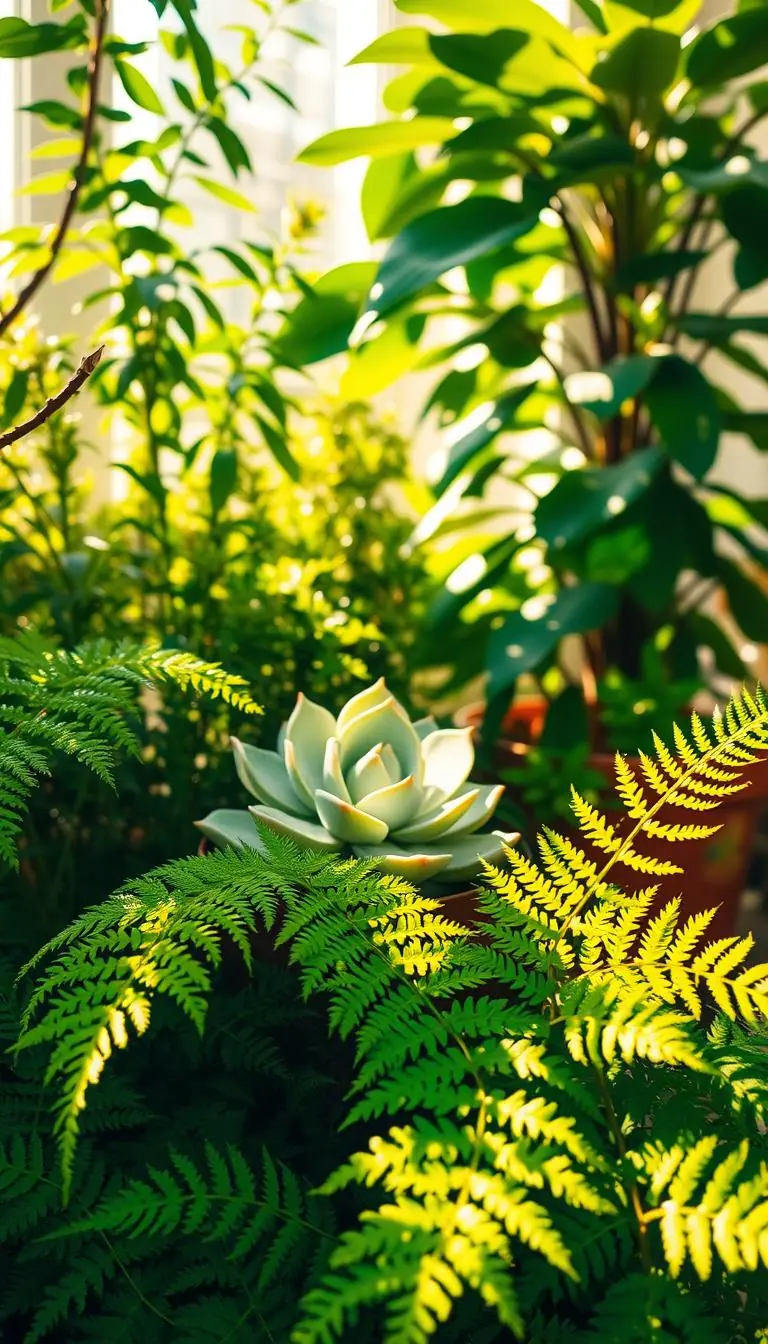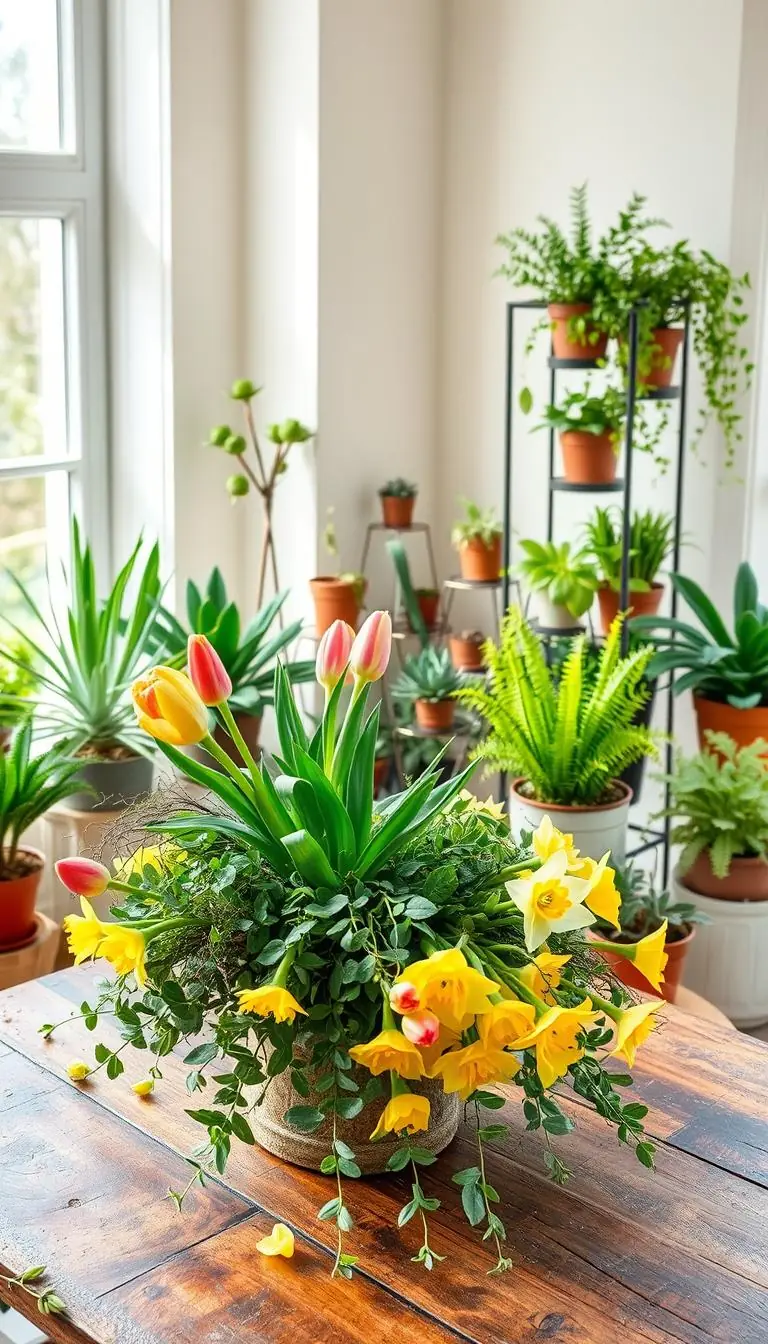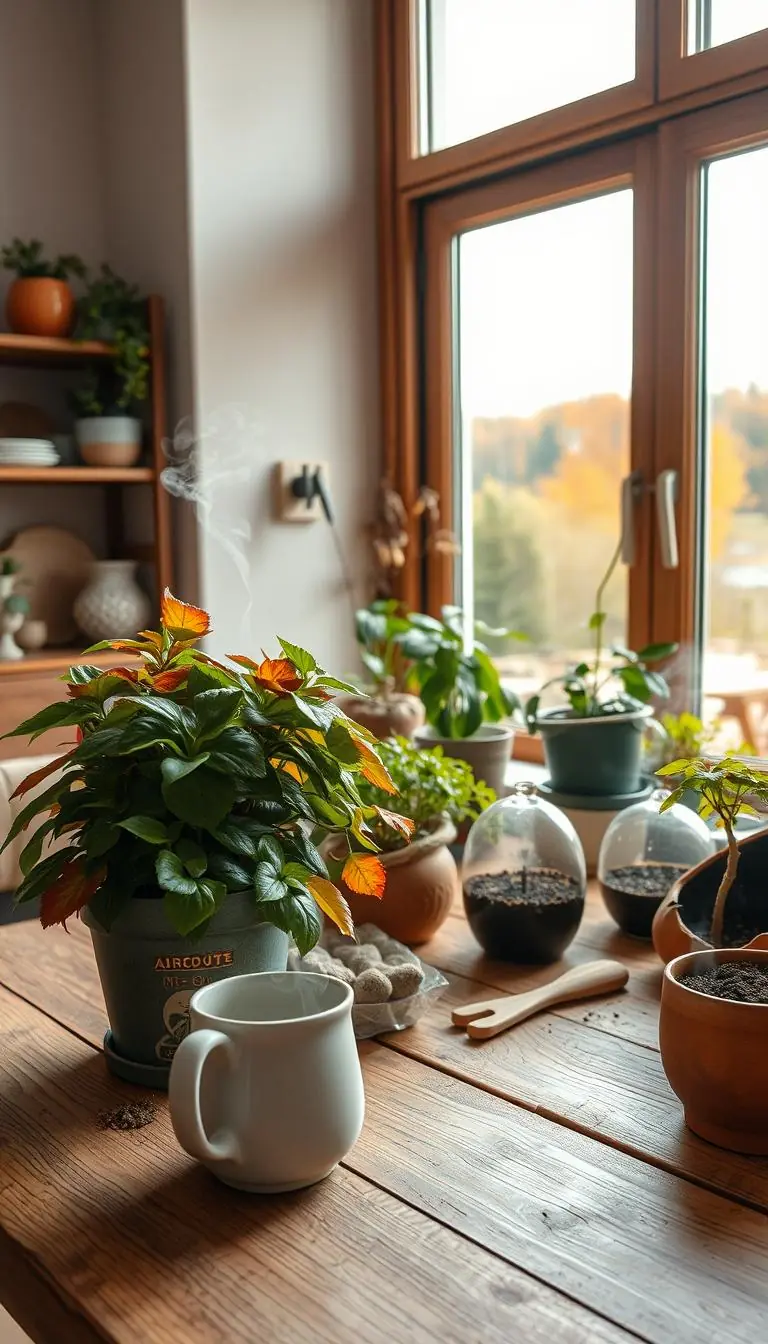
Morning light slips across the sill, warming a patch of glossy leaves and a spill of soft color. Have you imagined a calm, living nook that greets you each morning?
You can create one with compact plants that fit a narrow ledge or a slim shelf. We’ll guide you through step-by-step methods, simple tools, and seasonal tips so you build a windowsill garden that’s easy to keep.
Expect clear care basics: how much light each plant needs, when to water, and when to feed in spring and summer. Use repetition in pots for a cohesive look and clip-on LED gooseneck grow lights for dim spots.
Group a few pieces to boost visual impact and make watering simpler. We balance beauty and function so your display feels intentional, not crowded. By the end, you’ll have a peaceful, thriving corner in your home you enjoy every day.
Key Takeaways
- Turn a sunny nook into a calm scene with glossy foliage and soft colors.
- Learn exact care basics: light, water, and feeding for each plant.
- Use slim planters, wall shelves, and clip-on LEDs to save space.
- Group repeats of pots or species for a cohesive, low-effort look.
- Follow simple seasonal notes: more attention in spring, gentler care in winter.
Why small houseplants on window sills create peaceful, low-maintenance beauty
Sunlit ledges invite plants that bring texture, color, and an easy rhythm to your home. A windowsill is a natural stage: the right light gives leaves depth and the right placement keeps care simple.
Read the light by time of day. North windows give gentle, steady light. East provides soft morning indirect light. South gets the strongest sunlight, and west brings warm afternoon rays.
"Stand in the spot at noon—if you squint, it’s strong; a fuzzy shadow is medium; no shadow is low."
Match plants to conditions: ferns and calatheas like lower, indirect light; succulents and snake plants thrive in brighter exposures with some shade. Place trailing plants high so foliage can spill. Group similar needs together and repeat containers for a cohesive look.
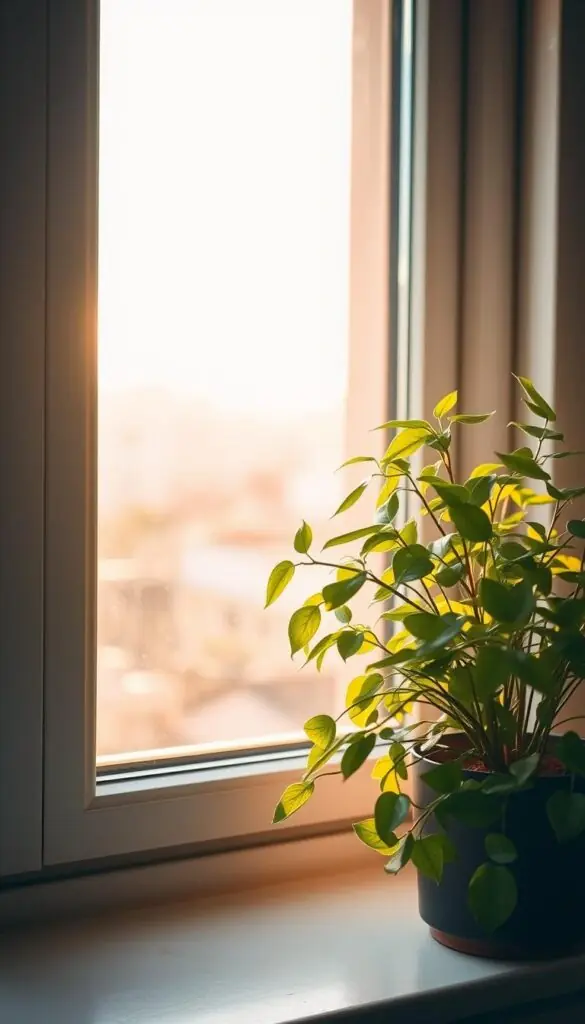
Tools and materials to have on hand
- Planters with drainage holes and matching saucers
- Moisture meter (or your finger) and a small hygrometer
- Fine-tip pruning snips and a microfiber cloth
- Pebble tray, spray bottle, and a gallon of distilled water
- Clip-on LED gooseneck grow lights or full-spectrum bulbs
- Mixing jug for diluted fertilizer
Use vertical space with slim floating shelves or a hanging planter system. Rotate pots a quarter turn weekly for even growth. Clean glass and dust leaves so your plants get the light and humidity they need.
Quick-start care basics for window-sill indoor plants
Start with a simple rhythm: check pots once a week and respond to what the soil tells you.
Watering rhythm and the “soil dry” check by inches
Press your finger 1–2 inches into the soil. If the top 1–2 inches feel dry, water slowly until water seeps from the drainage hole. Empty the saucer so roots never sit in standing water.
Use a moisture meter if you like numbers—aim for the middle range for leafy species. Succulents and cacti should trend drier. Schedule by plant and current conditions; bright, warm spots need water more often.
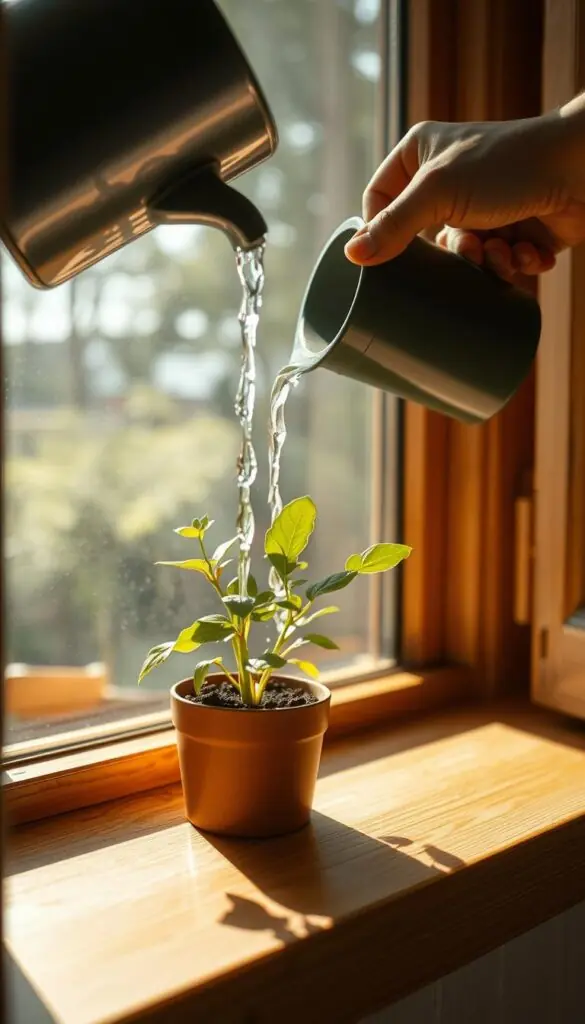
Humidity boosts without mess
Raise humidity without fuss. Set pots on pebble trays filled with water so the pot rim stays above the water line.
Cluster pots together or move humidity lovers like a philodendron or fern to the bathroom or kitchen during showers. For steady moisture in winter, run a small room humidifier near ferns and calatheas.
Fertilizer timing from spring through fall
Feed lightly from spring through early fall. Use a balanced, water-soluble fertilizer at half strength every 4–6 weeks. Reduce or skip feeding in winter when most plant grows slow.
Flush soil with plain water every few months to prevent salt buildup. Use distilled or filtered water for sensitive species like some calathea varieties to avoid leaf-edge browning.
| Care Step | How to Do It | Frequency | Notes |
|---|---|---|---|
| Soil check | Finger 1–2 inches or moisture meter | Weekly | Adjust by light and temperature |
| Watering | Water until drains; empty saucer | When top 1–2 inches dry | Succulents less often |
| Humidity | Pebble tray, grouping, or humidifier | As needed in dry months | Good for ferns, calathea |
| Fertilizer | Balanced water-soluble at ½ strength | Every 4–6 months in spring–fall | Light feeders: pothos; slow for new repots |
Pothos varieties: forgiving trailers for indirect light
These vines are a cheerful, low-fuss way to add texture and color to a window ledge. A pothos adapts easily: it will trail from a hanging basket, spill from a shelf, or climb a short support.
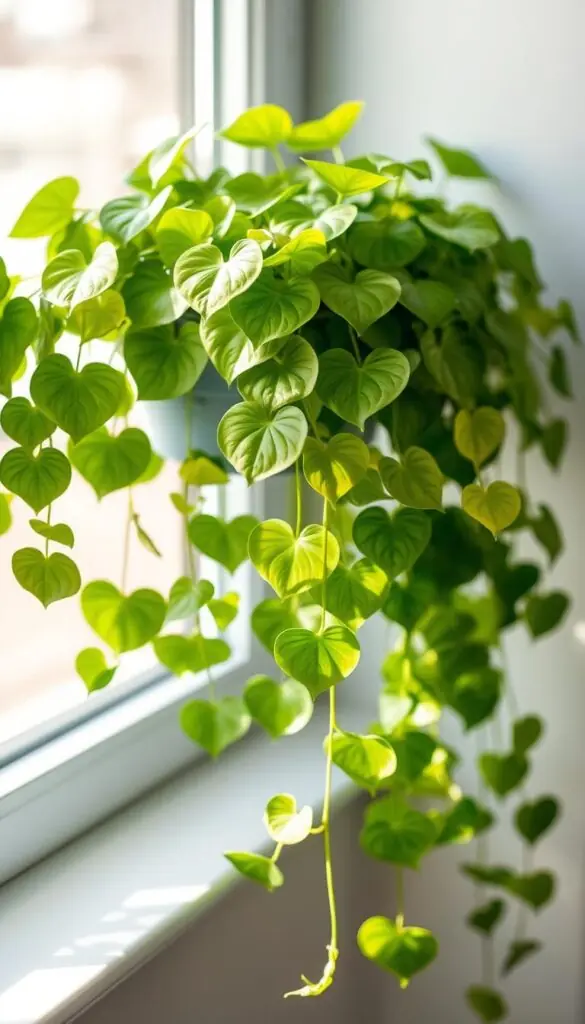
Training and trims: Pinch just above a node to encourage branching and fuller growth. Trim long stems to keep the display compact. Root cuttings in water and tuck them back in the pot for instant fullness.
Hanging, training, or compact trimming for tight spots
Let the top inch of soil dry before you water; pothos tolerate a missed drink better than a soggy pot. Use a light, well-draining soil mix and avoid standing water in saucers.
- Choose eye-catching varieties—marbled or chartreuse leaves glow in bright, indirect light.
- Feed lightly with a balanced fertilizer every 1–3 months in the growing season.
- Train stems up a mini trellis for vertical interest or let vines tumble from a high shelf for a soft cascade.
Wipe leaves with a damp cloth to reveal their sheen and rotate the pot weekly so foliage colors evenly. Pair a pothos with compact companions that like similar light for a harmonious vignette.
Philodendron picks for beginners and color lovers
A philodendron is a friendly choice when you want bold foliage without fuss. Start with forgiving varieties like heartleaf or the variegated Birkin. These plants offer strong impact and an easy habit for beginners.
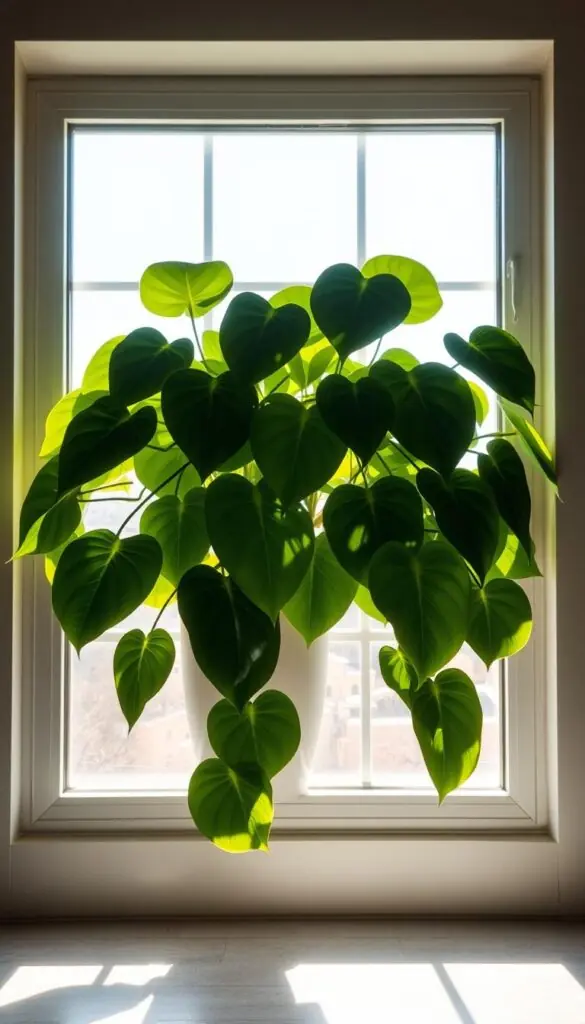
Light and water cues: Philodendrons tolerate low light but show richer colors in medium, indirect light. Water when the top inch feels dry and avoid soggy soil to keep roots healthy.
- Feed lightly with water-soluble fertilizer from spring through fall to support steady growth.
- Choose self-heading types for upright form or vining types for gentle trailing displays.
- Rotate pots every week or two and use a slim stake as stems lengthen.
- Enjoy textures: satin leaves, creamy stripes, and new leaves that unfurl like ribbons.
- Snip tip cuttings to propagate and fill another pot or share with a friend.
Pair philodendron with other low-maintenance plants that share light and water needs. This keeps your routine simple and your windowsill calm and colorful.
Snake plant: sleek, drought-tolerant structure for bright to low light
Bring a calm, architectural presence to your sill with a snake plant—steady, forgiving, and refined.
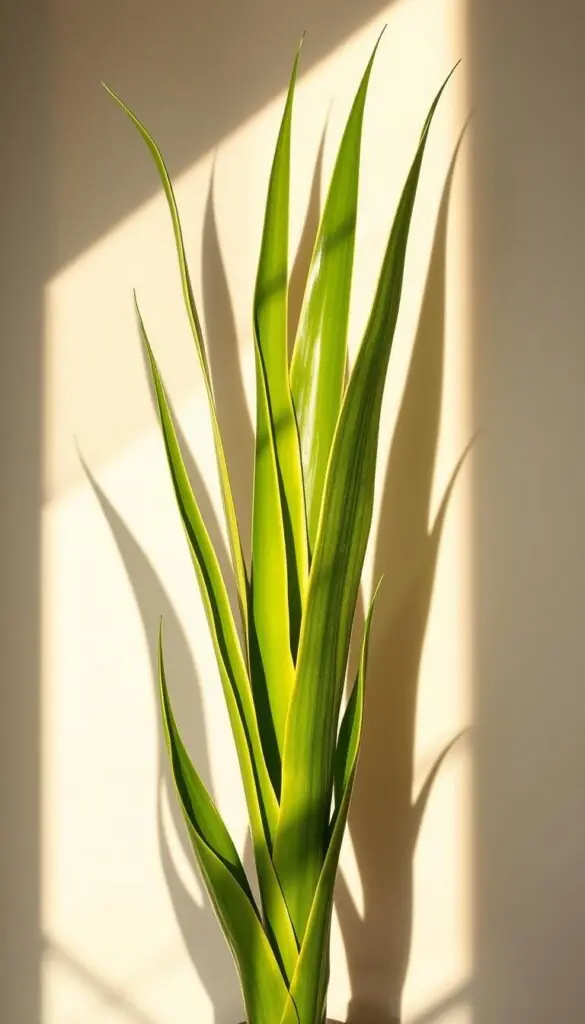
Minimal-care steps: Choose a gritty, well-draining soil and a pot with drainage to avoid root rot. Water sparingly—every two to three weeks in average indoor conditions and allow the soil to dry thoroughly between drinks. In some quieter homes this plant goes six to eight weeks between waterings, especially in cooler months.
Place the plant where it gets bright, indirect sunlight or even lower light; it tolerates a wide range without complaint. Dust each leaf with a soft cloth so gentle light reaches its surface and keeps its sleek look.
- Lean, architectural leaf blades add clean lines to a narrow sill.
- Choose a heavy, narrow planter to keep tall leaves balanced.
- Rotate the pot monthly to prevent leaning toward the window.
- In winter, extend the interval by a week or two as growth slows.
- A snug container is better than overpotting for steady, tidy growth.
"Simple, sculptural, and steady—perfect when you want presence without a complicated routine."
| Feature | Recommendation | Why it matters |
|---|---|---|
| Watering | Every 2–3 weeks (2–8 weeks in some homes) | Prevents overwatering and root rot |
| Soil | Gritty, well-draining mix | Promotes airflow and quick drainage |
| Light | Bright indirect to low sunlight | Keeps leaves upright and patterned |
| Placement | Heavy, narrow pot on a slim sill | Stability for tall, lean leaves |
Spider plant: arching foliage and easy offshoots for a lively window
Set a spider plant where stems can arc and catch light—movement makes a sill feel alive. Hang it in a macramé or place it high on a shelf so the long, arching leaves ripple in a breeze.
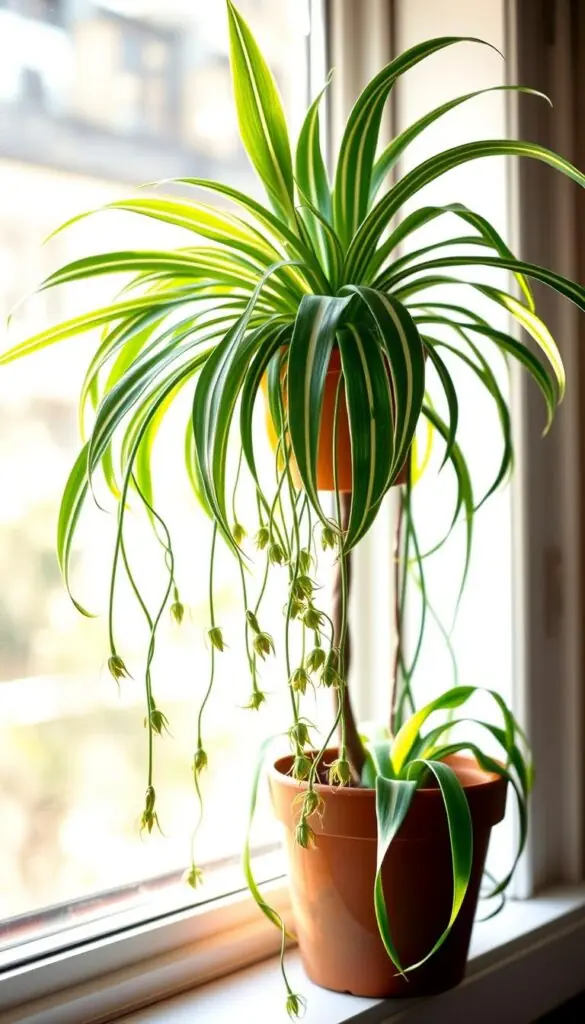
Easy routines help it thrive. Water when the top inch feels dry; this forgiving houseplant bounces back from a missed drink. Use a light, airy potting mix so roots never sit wet.
Snip baby offshoots and root them in water or small pots to thicken the display or share with friends. Rotate the basket every couple of weeks for even growth and trim browned tips with clean scissors.
"Hang high for drama, pot babies for more life, and keep a simple watering rhythm."
- Group with other beginners to simplify care and boost humidity.
- Add a clip-on grow light in winter to extend bright, indirect light.
| Tip | How | Why |
|---|---|---|
| Placement | Hanging or high shelf | Shows cascading stems without taking counter space |
| Offshoots | Root in water, then pot | Quick way to multiply or gift plants |
| Watering | Top inch dry before watering | Prevents root rot and encourages steady growth |
Zebra haworthia: tiny succulent texture that prefers bright, indirect light
A zebra haworthia offers crisp white banding and a compact shape that reads like living sculpture. It is a favorite among indoor plants for narrow sills and tidy displays.
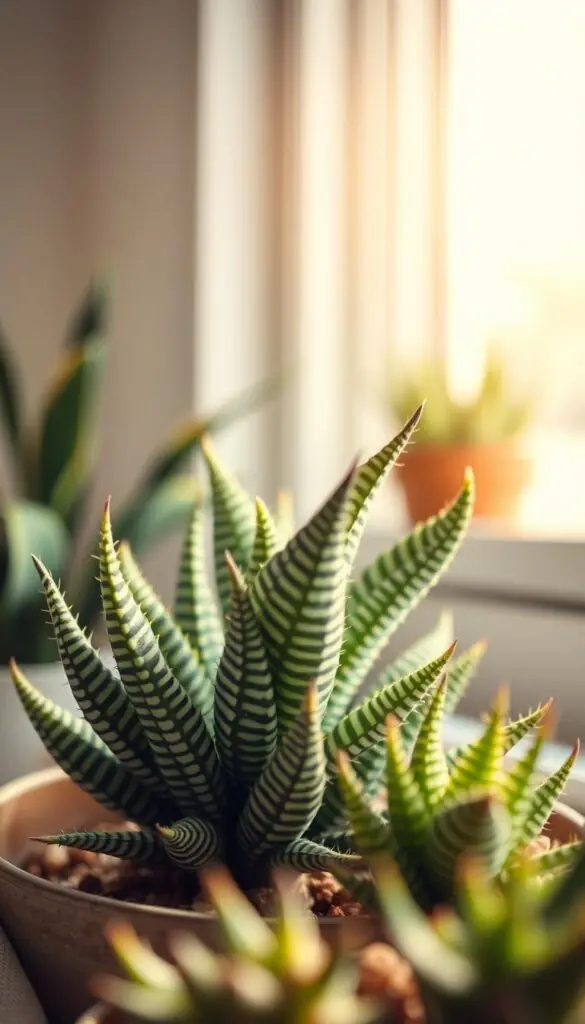
Size and light: Expect a 3–5 inches rosette that stays compact. Give bright, indirect light to keep the pattern bold, though it tolerates lower exposures.
Watering cues: Let the soil dry completely before you water. When dry, water thoroughly and make sure excess drains away. Aim to feel the soil is "soil dry" rather than slightly damp.
Use a cactus/succulent mix in a pot with drainage. Turn the pot monthly so the leaves stay even. Wipe grit from the white bands to keep contrast crisp.
- Keep fertilizer minimal — a slow-release once a year is enough for this plant.
- Water less in winter when light and growth slow.
- Group with other sun-lovers on the brightest section of your sill for a cohesive vignette.
| Feature | Recommendation | Why it helps |
|---|---|---|
| Height | 3–5 inches | Fits narrow sills and ledges |
| Light | Bright, indirect | Keeps leaves dense and banding sharp |
| Watering | Allow soil to dry completely | Prevents rot and mimics natural cycle |
| Soil | Cactus/succulent mix | Fast drainage and healthy roots |
Peperomia and baby rubber plant: pet-friendly pops of glossy green
Glossy green rosettes and chunky stems make peperomia and baby rubber plants quietly showy on a sunny sill. These picks are gentle companions for homes with pets and add a calm, lush note without crowding a window.
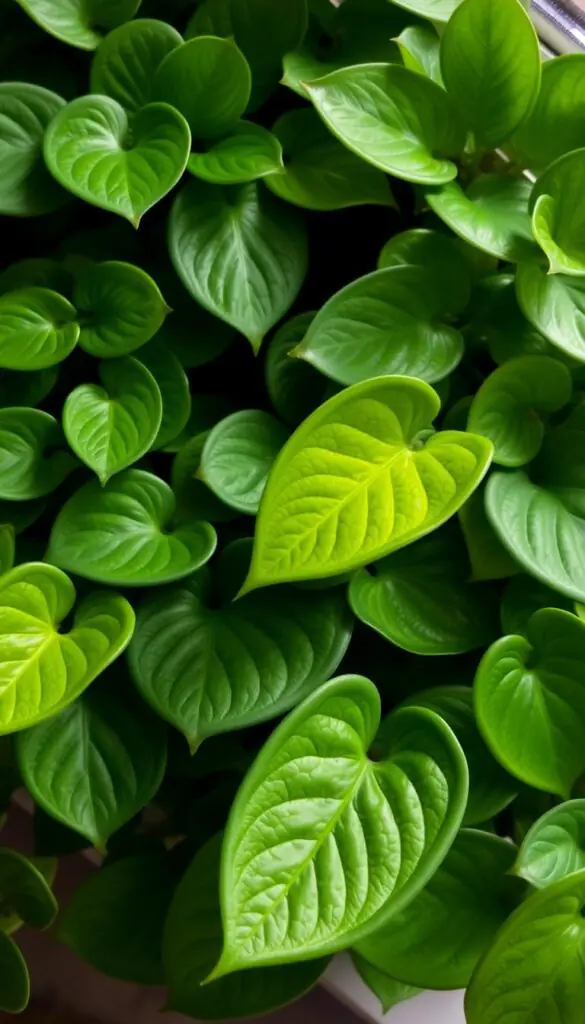
Water thoughtfully: let the top inch or two of soil dry, then water. Peperomia usually needs a drink about every 7–10 days. Err slightly dry rather than soggy to keep roots happy.
Choose a snug pot with drainage and a chunky mix so the crown stays airy. Rotate the plant a quarter turn each week to keep growth compact and even. Wipe glossy leaves with a soft cloth to keep them bright.
"Expect subtle spring flowers on the baby rubber plant—understated spikes that add a quiet charm."
- Keep both out of harsh direct light to prevent scorch.
- Feed monthly at half strength from spring through summer, then pause in winter.
- Tuck one on a bedside table or kitchen window where dappled light makes the green tones glow.
Fittonia (mosaic plant): color-veined leaves that shine in high humidity
Fittonia rewards careful humidity and gentle light with leaves that look hand-painted. Marvel at the tiny veins of pink, red, or white crossing plush green foliage. This plant truly sings when the air stays near 70% humidity.
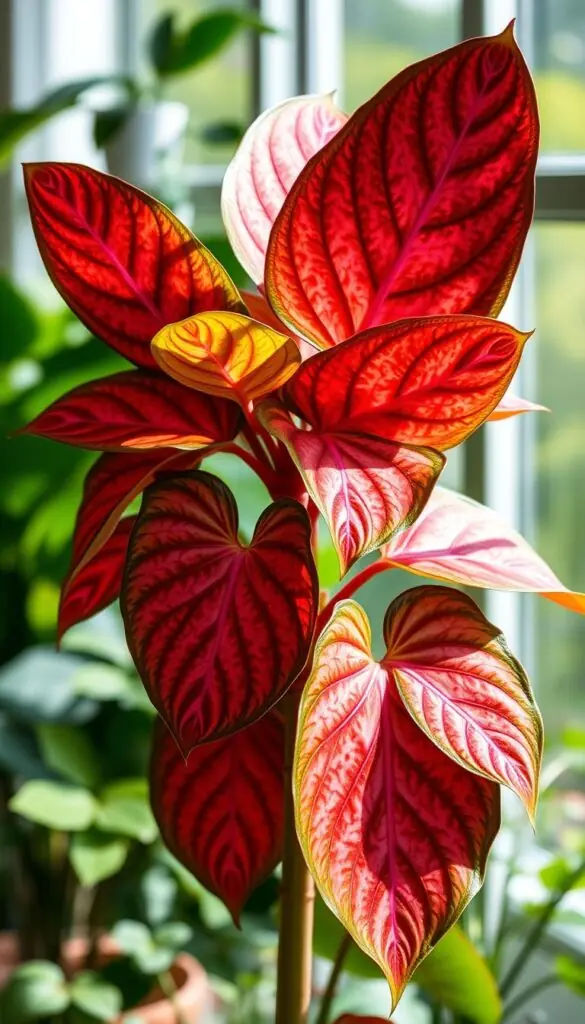
For steady moisture, a closed terrarium is ideal. Layer fine gravel, activated charcoal, and a lightweight potting mix so roots enjoy fresh air and clean soil.
Terrarium and bathroom setups that prevent crisping leaves
Keep soil lightly moist—not soggy. Water with a narrow-spout can every 7–10 days, or when the top layer feels barely damp. Open the lid weekly for ten minutes to avoid heavy condensation.
- Avoid direct sunlight; bright, indirect light keeps colors saturated and prevents scorch.
- Prune tips to maintain a dense mat and stop leggy stems.
- Place on a pebble tray in dry seasons or tuck into a steamy bathroom for steady humidity.
"Fittonia droops quickly when thirsty, but gentle water brings it back within hours."
Blue star fern and Boston fern: soft fronds for gentle, indirect light
Soft, feathery fronds can make a windowsill feel like a calm, green retreat.
Blue star fern offers a powdery blue-green patina and delicate texture. Boston fern brings the classic, feathery look and thrives near pets. Both varieties reward a steady routine.
Moisture and humidity: Water weekly, keeping the soil evenly moist but never waterlogged. Mist leaves lightly, group the plants, or set pots on a pebble tray to raise humidity within a few feet.
Place them in bright, indirect light—avoid harsh rays that scorch fronds. A bright bathroom window is ideal; the combined moisture and light helps new fronds unfurl in tidy curls.
- Snip tired fronds at the base to refresh shape and encourage new growth.
- Use a breathable mix with bark for airy roots and even moisture retention.
- Wipe or mist leaves to restore sheen; dust dulls natural foliage color.
Feed lightly in spring and summer to support steady frond production. With a little attention, these plants add soft texture and calm color to any sill.
Calathea and Ctenanthe: patterned foliage, distilled water, high humidity
Patterned foliage like Calathea’s and Ctenanthe’s thrives when you focus on humidity and clean water. These plants reward a gentle routine and look happiest in warm, steady conditions.
Water quality matters: use distilled or filtered water to avoid minerals that cause brown edges. Many of these plants react poorly to tap water, so this simple swap keeps leaf margins smooth.
Aim for high humidity—around 60% or more—so the leaf surfaces stay supple. A pebble tray or a small humidifier near the sill gives steady moisture without wetting the potting mix.
- Place in medium, indirect light away from harsh rays to prevent scorch and faded patterns.
- Water when the top ½ inch of soil feels barely dry; keep soil moist but never soggy for Ctenanthe and Calathea alike.
- Keep temperatures above 60°F and avoid cold drafts so new leaves can unfurl without damage.
Care touches: wipe each leaf gently to remove dust and reveal the pattern. Feed lightly at half strength monthly in the growing season and rotate pots every week or two so patterns develop evenly.
"New leaves often emerge tightly rolled—be patient; they unfurl over days into the bold, silky patterns you admire."
Arrowhead vine: compact habit with trailing or climbing options
Let an arrowhead vine tuck along a trellis or spill gently over your window ledge for soft vertical interest.
Keep it compact. Prune wandering stems to encourage a bushier, window-friendly silhouette. Stake a few stems on a petite trellis for upright charm without added bulk.
Arrowhead vine can climb or trail up to 6 feet when happy. For steady growth, use a light, barky mix and keep soil evenly moist. Place it in bright, indirect light and protect from harsh sun.
Notice the leaf transition as it matures—from slim arrow shapes to gentle lobes. That change adds interest over time and tells you the plant is settling in.
- Rotate regularly to prevent a lopsided lean toward the pane.
- Group with other humidity-loving pots or set near a bright bathroom window for extra comfort.
- Propagate tip cuttings to thicken the pot or share a sprig with a neighbor.
| Feature | Recommendation | Why it helps |
|---|---|---|
| Water | When top 1 inch feels dry | Keeps roots moist but not waterlogged |
| Light | Bright, indirect | Maintains vibrant new growth and leaf shape |
| Training | Trim and stake or trellis | Promotes compact habit and fuller form |
| Soil | Light, barky mix | Balances moisture and root aeration |
Bromeliads and begonias: window-friendly flowers and vibrant foliage
A bromeliad’s cup of color or a begonia rex’s shimmering leaves adds instant life to a light-washed sill. Both bring striking texture and a cheerful focal point without a lot of fuss.
Choosing pots and soil that keep roots healthy
Pick a pot with drainage so excess water escapes and roots stay aerobic. Use a chunky, well-draining soil mix for begonias and a loose bromeliad blend or orchid bark for fast drainage.
Keep pots slightly snug. Oversized containers hold extra moisture that encourages root rot, especially for begonia rex.
- Add a thin top-dress of fine bark or decorative gravel to keep leaves clean and the surface tidy.
- Water when the top inch of soil feels dry; begonias dislike soggy roots and bromeliads tolerate occasional damp if their cup has fresh water.
- Place both in bright, indirect sunlight. Bromeliads also do well under fluorescent light or in humid bathrooms.
- Expect pups after a bromeliad blooms; wait until a pup is about one-third the mother’s size before repotting.
- Keep begonias warm (around 70°F) and lightly humid in cooler months to prevent crisping edges.
"Feed lightly in spring and summer to support flowers and foliage without encouraging weak, leggy growth."
Display ideas that maximize beauty and function in any room
Think like a stylist: group a few bold shapes and repeat a single pot color to make a compact display read as intentional.
Planters, shelves, and hanging solutions for tiny spaces
Use floating shelves or a wall planter rail to add vertical layers without stealing sill space. Place favorites at eye level so you enjoy textures and colors up close each day.
Hang trailers like pothos and spider plant high with S-hooks, macramé, or a simple dowel. This keeps the sill clear and lets foliage flow freely.
Add a slim LED gooseneck clip-on to darker corners so your indoor garden stays lively even when light is limited.
Using repetition, color, and foliage contrast for impact
Repeat one pot style or a single color to create calm. Then mix foliage textures—matte ferns beside glossy philodendron—for clear contrast that feels curated.
Anchor groups with a taller accent, such as a compact ficus or a trellised vine. Grouping plants together also makes watering and misting a one-stop task, which simplifies care.
- Keep saucers matched and tidy to extend the visual line of the sill.
- Rotate the whole group weekly so light spreads evenly.
- Use uniform pots or a repeated color to make a small room feel cohesive and intentional.
Small houseplants care calendar by season
A gentle seasonal rhythm keeps your windowsill garden healthy without extra fuss. Follow a short checklist each month and you’ll help each plant move through active growth and rest with confidence.
Spring and summer growth vs. winter rest
Spring: as days lengthen, increase water and check the soil dry by the inch more often. Start a monthly feed with low-strength fertilizer.
Summer: feed once a month at half strength. Shield delicate leaves from harsh afternoon rays and watch pots that dry faster in hot windows.
Fall: taper water and stop feeding as growth slows. Clean leaves and rotate pots for even light.
Winter: give less water and allow longer gaps between drinks. Add a small LED for short days and raise humidity with a pebble tray or humidifier in dry heating conditions.
- Dust leaves monthly and inspect for pests during warm months.
- Propagate cuttings in late spring for quick starts.
- Repot only when roots circle the pot or water runs straight through.
- Keep a simple log to record what worked each month.
| Season | Key Action | Frequency |
|---|---|---|
| Spring | Increase water; start monthly half-strength fertilizer | Weekly checks; feed monthly |
| Summer | Shade from harsh sun; monitor faster drying | Check soil twice weekly |
| Fall | Reduce water and fertilizer; clean leaves | Every 2 weeks |
| Winter | Water less; add humidity and supplemental light | Every 3+ weeks; humidify as needed |
Common mistakes to avoid with indoor plants on window sills
A few gentle checks each week keep most window plants happy and tidy. These quick steps stop common problems before they start and help you enjoy a calm, thriving sill.
Direct sunlight scorch, overwatering, and tap water issues
Avoid harsh direct sunlight through glass — tender foliage can scorch. Move sensitive pots a few inches back or add a sheer curtain to soften rays.
Don’t water by the calendar. Check the top inch for a soil dry feel before you water again. This keeps roots healthy and prevents soggy crowns.
Use distilled or filtered tap water for sensitive species like calathea to prevent brown edges. Always empty saucers after watering so pots don’t sit in standing water.
"Watch for yellowing leaves, mushy stems, or a sour soil smell — these are clear signs of overwatering."
When and how to repot without stressing roots
Repot only when needed: roots circling, water rushing straight through, or the plant toppling. Step up just 1–2 inches in pot diameter and use fresh mix.
Gently loosen the root ball and avoid tearing healthy root tissue. Keep the crown at the same height and water the newly potted plant lightly.
| When | How | Why |
|---|---|---|
| Roots circling | Repot + loosen ball | Prevents root bind |
| Water rushes through | Use fresh mix | Restores moisture balance |
| Topples | Choose slightly wider pot | Improves stability |
- Rotate sensitive pots away from heat vents and drafts to reduce stress.
- When in doubt, check the soil rather than the calendar — the pot will tell you when it needs care.
Conclusion
Let your window become a calm, living vignette by starting with just a couple of confident choices.
With a few well-chosen small houseplants, your window will become a peaceful accent you enjoy coming home to. Grouping a philodendron, a snake plant, or a soft fern creates texture and balance. Add a bright bromeliad or a compact ficus for color and height.
Keep care simple: check soil by touch, water slowly, and feed lightly in spring. Use slim shelves, repeat pots for cohesion, add a clip-on LED where needed, rotate weekly, and dust leaves monthly.
Start with two or three favorites, keep a small kit nearby, and let your indoor plants grow with you season by season.
FAQ
How often should I water window-sill plants and how do I check the soil dry?
Watering frequency varies by species and season, but a simple check helps. Stick your finger about an inch into the potting mix — if the top inch feels dry, it’s time to water. For succulents like zebra haworthia, let the top 2 inches dry. For moisture-loving plants such as fittonia or ferns, keep the mix lightly damp but not soggy. Always let excess water drain away and avoid letting plants sit in saucers full of water.
Which windows are best for different plants — north, east, south, or west?
East-facing windows give gentle morning sun and suit philodendrons, spider plants, and bromeliads. South-facing windows deliver the brightest light — great for succulents and some begonias if you protect leaves from midday sun. West windows provide strong afternoon light that can work for pothos and snake plants if you monitor for leaf scorch. North windows give low, indirect light and are ideal for ferns, fittonia, and many calatheas.
How can I boost humidity around plants without making a mess?
Group plants to create a shared microclimate, use pebble trays with shallow water under pots (keeping pots above the water line), or run a small humidifier nearby. Bathrooms and kitchens often offer higher humidity for plants like fittonia and calathea. Misting helps briefly but isn’t a reliable long-term solution for very thirsty species.
When should I fertilize indoor window plants?
Feed most houseplants lightly during the active growing months, from spring through early fall. Use a balanced, water‑soluble fertilizer at half the label strength every 4–6 weeks. Cut back or stop feeding in winter when growth slows. Succulents need minimal feeding — once or twice in the growing season is enough.
Are pothos and philodendron good for beginners on window sills?
Yes. Pothos varieties and many philodendrons are forgiving and adapt to indirect light, making them perfect for windowsills. They tolerate uneven care, respond well to pruning, and can trail or be trained to climb. Keep their roots slightly snug in a pot and water when the top inch of soil dries.
How do I prevent leaf scorch from direct sunlight?
Move sensitive plants like calathea, fittonia, and begonias away from intense midday sun. Use sheer curtains to diffuse light, rotate pots to keep growth even, and watch for bleached or brown leaf edges. If scorch appears, shift the plant to a spot with bright, indirect light and trim damaged leaves.
Which plants tolerate low light and occasional neglect?
Snake plant and some pothos and philodendron varieties tolerate low light and dry periods. They store water in their tissues and need less frequent watering. Spider plant is also quite resilient, though it prefers brighter indirect light to put out strong foliage and pups.
Can I use tap water for my indoor plants?
Most plants do fine with tap water, but some—like calathea and ctenanthe—prefer distilled or filtered water if your tap water is hard or heavily chlorinated. Let tap water sit out overnight to dissipate chlorine, or use a simple filter for peace of mind.
How do I repot without stressing roots?
Repot in spring when growth resumes. Choose a pot one size larger and use a well-draining potting mix appropriate to the plant (succulent mix for haworthias, peat-based for ferns and fittonia). Gently loosen circling roots, avoid burying the stem too deep, and water lightly after repotting. Give the plant a few weeks of bright, indirect light to recover.
What pots and soil work best for window-sill plants?
Use pots with drainage holes to prevent waterlogging. For most foliage plants, a lightweight, airy potting mix with peat or coco coir and perlite works well. Succulents need a gritty, fast-draining mix. Choose containers that fit the plant’s mature size so roots aren’t cramped, and consider terracotta for faster drying or glazed pots to retain moisture.
How do I handle pests like spider mites or scale on indoor plants?
Isolate affected plants first. Wipe leaves with a mix of mild soap and water, or use insecticidal soap. For persistent scale, gently scrape off with a soft cloth or cotton swab dipped in rubbing alcohol. Increase humidity and keep plants healthy — strong plants resist pests better. Regularly inspect undersides of leaves and new growth.
Which plants are safe around pets and which should I avoid?
Peperomia and many varieties of spider plant are generally pet-friendly. Avoid plants known to be toxic, such as many philodendron species, dieffenbachia, and some begonias. Always check ASPCA resources or product labels if you have curious pets, and place risky plants out of reach in hanging baskets or high shelves.
How can I create an attractive window display in a small space?
Mix heights and textures: place low pots like peperomia and haworthia in front, medium plants like pothos and philodendron in the middle, and taller forms such as snake plant at the ends. Use repetition of pots and colors for cohesion, and add a hanging plant like a spider plant to free up sill space while adding movement.