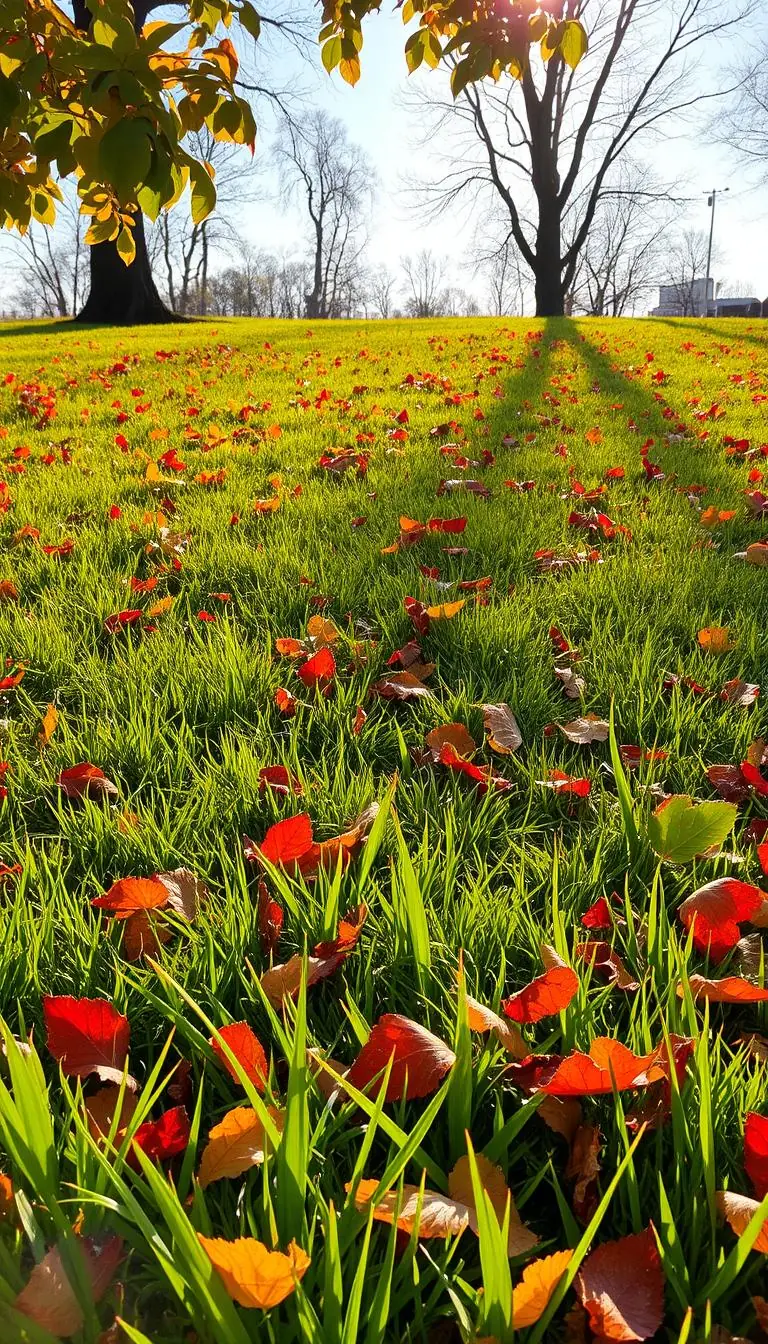
You step outside to sun-warmed soil and the faint scent of fresh-cut grass. Maybe you notice thin spots near the path or dream of a soft, green stretch outside the kitchen door. A gentle, season-driven plan makes that vision simple.
We’ll guide you, month by month, so your yard looks lush all year without extra stress. From early spring clean-up and pre-emergent timing to summer mowing height and fall overseeding, each step fits the season. Use a sharp mower, the right spreader for your space, and core aeration in compacted areas.
You’ll learn easy cues—when soil hits about 58°F to time weed control, or the sound of dry leaves ready for mulching. Little habits each week add up so tending your grass becomes calm and reliable, not a marathon.
🌱 Free Printable Lawn Care Calendar
Stay organized through every season! Download our month-by-month checklist — print it or save it on your phone to track your yard care at a glance.
[⬇️ Download the Lawn Care Calendar PDF]
Key Takeaways
- Follow a simple month-by-month plan to match tasks to each season.
- Spring starts growth, summer needs higher mowing and measured watering.
- Fall strengthens roots with fertilizing and overseeding for cool-season turf.
- Use the right tools: sharp mower, proper spreader, and a core aerator.
- Watch sensory cues—soil temperature, leaf sound, and turf feel—to act at the right time.
Start Smart: Know Your Grass Type and Region
Identify your grass by its peak growing months and the feel of its blades.
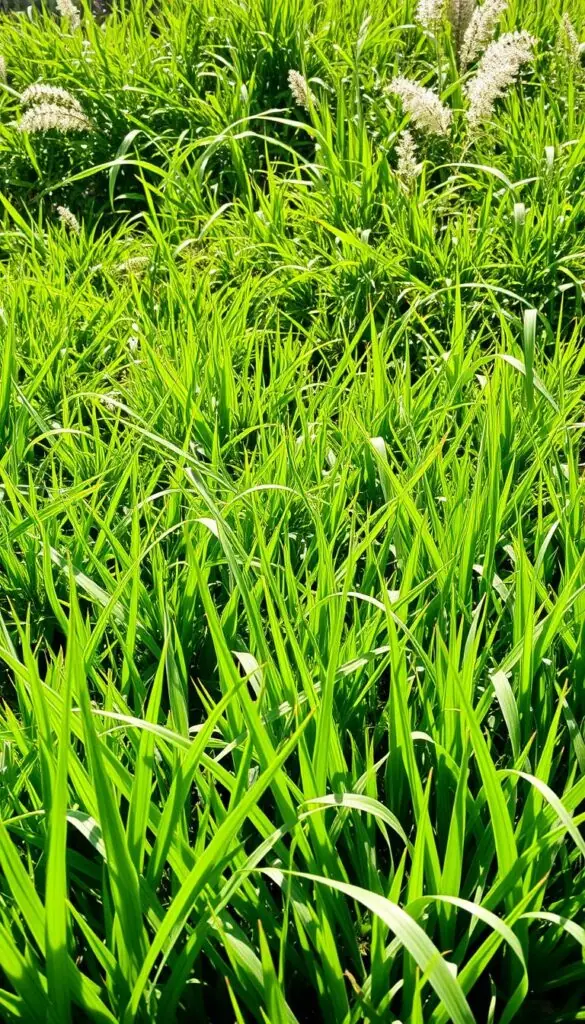
Look at when growth peaks. Cool-season grasses green up in spring and again in fall. Warm-season grasses wake with summer heat.
Touch the blades. Fine fescue feels silky and stays happy in shade. Bermuda makes a dense, sun-loving mat and grows fast in heat.
Cool-season vs. warm-season
Cool-season: Kentucky bluegrass, rye, and fescues. Best at 40–75°F. Tolerates frost; may slow in hot weeks.
Warm-season: Bermuda, zoysia, St. Augustine, bahia, buffalo. Best at 60–95°F. Thrives in midsummer and tans in winter.
Transition zone tips
If you live between regions, you may see mixed grasses. Tall fescue pairs well with zoysia or Bermuda.
Test your soil in early spring. Walk your lawn and note sunny and shady areas. Then use flexible plans: overseed cool patches in fall and ease up on summer feeding in warm sections.
| Characteristic | Cool-season | Warm-season |
|---|---|---|
| Peak growth | Spring & fall | Late spring & summer |
| Common types | Kentucky bluegrass, fescue, rye | Bermuda, zoysia, St. Augustine |
| Dormancy | Can rest in hot summer | Tans in winter, greens with warmth |
Your Month-by-Month Lawn Care Schedule
Tackle tasks in small bursts—each month has one or two high-impact moves. This keeps work simple and your yard steady through the seasons.
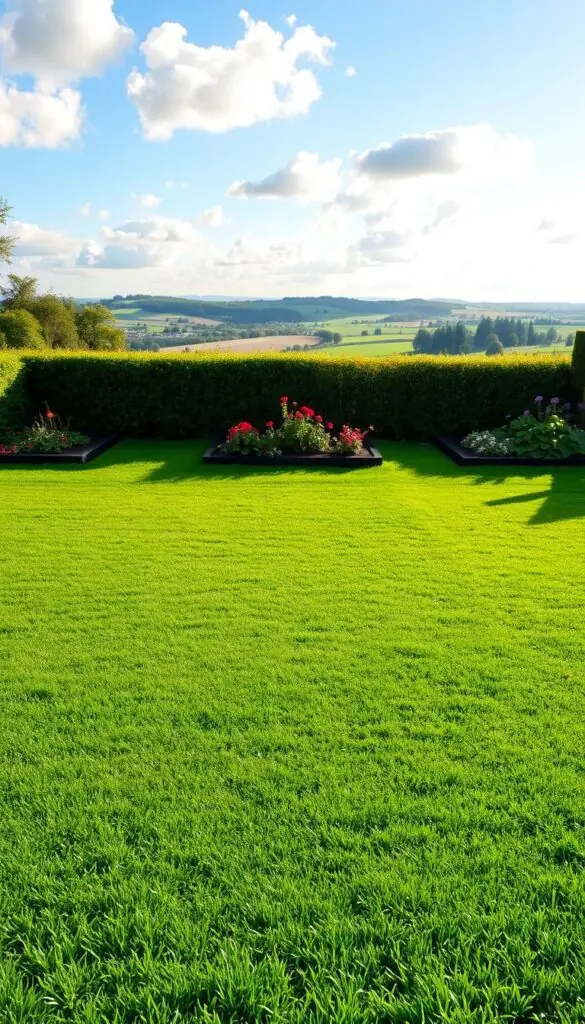
March–May: Early spring refresh
Rake away sticks and thatch so new shoots can breathe. After the first clean pass, the yard often smells fresh and looks brighter.
Test soil with a kit, touch up mower blades, and set a pre-emergent when soil nears 58°F to stop crabgrass. Apply a starter fertilizer for cool-season grass earlier, or wait until mid-spring for warm types.
June–August: Steady summer habits
Mow higher to shade roots and reduce heat stress. Water about an inch water per week using a tuna-can test in the sprinkler to confirm runoff-free coverage.
Watch for beetle activity and treat with preventive grub control if you saw damage last year. Warm-season grass can take a light feed; cool-season lawns rest.
September–November: Fall strength
Feed cool-season lawns around Labor Day and again in 6–8 weeks to build roots. The yard often responds with a deep, velvety green after feeding.
Overseed thin areas and mulch leaves into dime-sized pieces so they break down into the turf and feed the soil.
December–February: Rest and prep
Limit heavy foot traffic on dormant grass and avoid rock salt near edges. Use this time to sharpen blades, replace filters, and plan next year’s fertilizer timing.
| Months | Key Task | Tool/Tip |
|---|---|---|
| Mar–May | Pre-emergent & first feed | Soil test kit, dethatching rake |
| Jun–Aug | High mowing & 1 inch water/week | Tuna-can test, sprinkler timer |
| Sep–Nov | Fall fertilizer & overseed | Spreader, mulching mower |
| Dec–Feb | Protect dormant turf & tune gear | Sharpen blades, store equipment |
Seasonal Playbook: What to Do in Spring, Summer, Fall, and Winter
Seasonal rhythms guide easy tasks that keep grass strong and soil healthy. Follow small, tactile cues and one or two focused moves each season. These steps protect roots and simplify long-term maintenance.
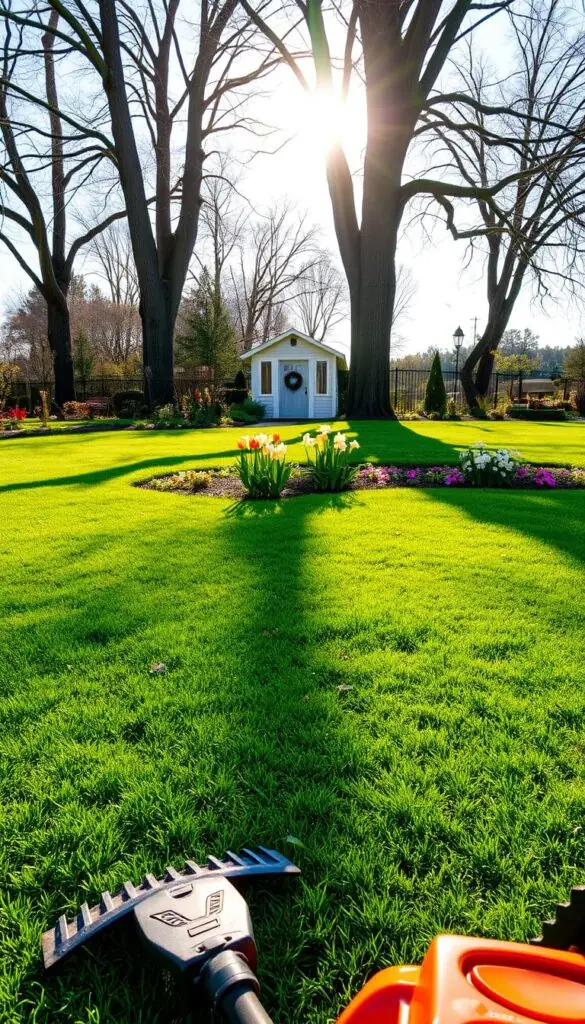
Spring
Start with a gentle rake and check thatch depth. Dethatch only if the layer exceeds 1/2 inch so crowns stay safe.
Core aerate high-traffic strips. Those crumbly 2–3 inch plugs return organic matter to soil and open paths for roots.
Sharpen mower blades and inspect the mower. A clean slice keeps grass healthy and cuts disease risk.
Summer
Water deeply in the cool morning (6–10 a.m.). Aim for about 1 inch weekly so turf weathers heat without constant watering.
Spot-treat weeds with selective post-emergent and avoid spraying during extreme heat. If you see gray-blue grass or lingering footprints, raise mowing height and skip a cut.
Fall
Core aerate cool-season sections and overseed any thin patches. Plan a second fall feed to strengthen roots before frost.
Drop mowing height 1–2 inches for the final pass to reduce matting and snow mold. Mulch leaves into fine pieces rather than bagging.
Winter
Limit foot traffic on frozen or dormant turf. Store tools dry, sharpen blades, and set reminders for spring tasks.
Avoid sodium chloride near edges—salt can burn grass and harm soil life. Light maintenance now saves work later.
- Quick mistakes to avoid: dethatching too deep in spring, spraying weeds in heat, and bagging all leaves in fall.
- Tools to keep handy: core aerator, dethatching rake, sharp mower blades, and a reliable spreader.
Watering and Mowing Made Easy
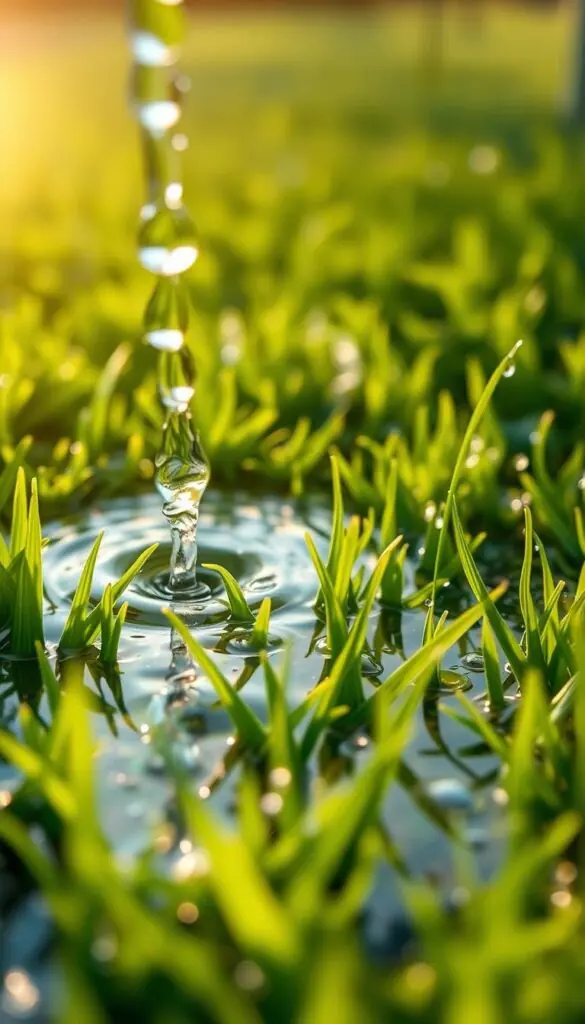
Start by measuring how much water your irrigation actually delivers so you can water less and smarter. A quick test teaches you run times and removes guesswork.
How to measure one inch of water per week with a can test
Place several short cans—tuna or cat food—around the yard. Run sprinklers for 15 minutes. The soft thud of cans hitting grass is oddly satisfying.
Measure the depth in each can. Use that number to calculate how many 15-minute intervals make one inch of water across the week.
Set mower height by grass type and follow the one-third rule
Adjust your mower for cool-season slightly taller and warm-season a bit shorter. Follow the one-third rule: never remove more than one-third of blade length in a single cut.
Keep mower blades sharp—the clean snip reduces stress and keeps color deep. Mow when grass is dry, rotate patterns weekly, and stretch intervals when growth slows to keep grass healthy.
- Water in the early morning to help roots and save time.
- Check cans after 15 minutes to find the right run time for one inch per week.
Weeds, Patches, and Pests: Quick Fixes That Last
Tackle small trouble spots fast—this saves time and protects surrounding grass.
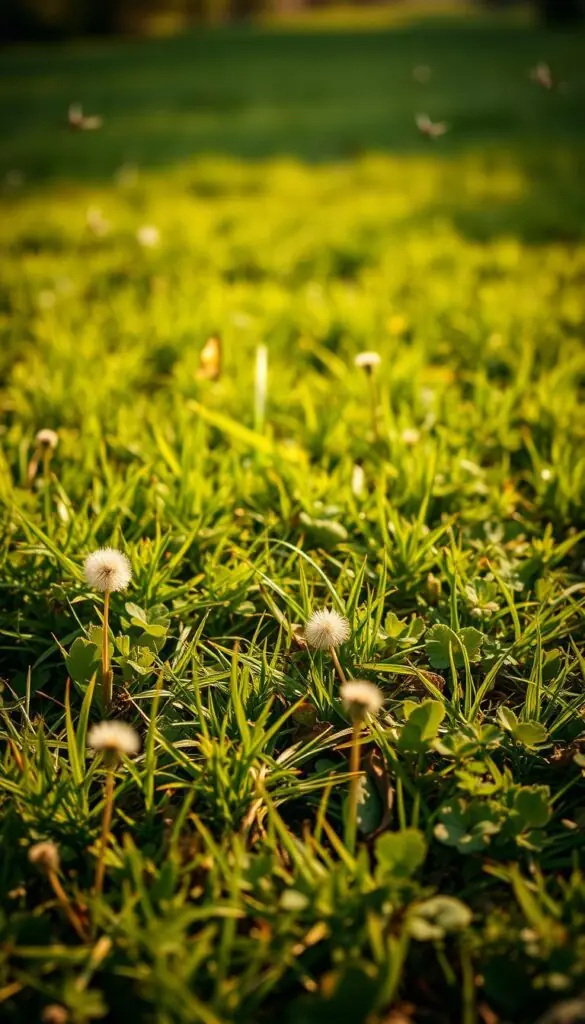
Pre-emergent vs. post-emergent by season
Apply a pre-emergent when soil nears 58°F to block crabgrass before it sprouts. Time the application by soil warmth, not just the calendar.
For visible weeds in summer, use a selective post-emergent with a hand sprayer. Treat spots, not whole areas, to protect the turf.
Repair bare spots: seed, starter fertilizer, and light mulch
Loosen the surface, mix in a little compost, then spread seed so it touches the soil.
Lightly rake, add a thin layer of clean straw, and feel the soft mulch—just enough to shade seed without smothering it.
Mist new seed several times daily until shoots reach about 1 inch, then taper to deeper, less frequent watering. Add starter fertilizer at seeding; avoid heavy applications.
Grub control timing for cool- and warm-season yards
Apply preventive grub control in late spring for cool-season and late spring/early summer for warm-season if you saw past damage. Protect roots and watch for loose, brown sod.
- Quick checklist: pre-emergent timing, spot post-emergent, loosen + seed, straw cover, misting, starter fertilizer, timely grub treatment.
| Issue | Best timing | Tool / Tip |
|---|---|---|
| Pre-emergent weed prevention | Soil ~58°F (early spring) | Spreader; timed application |
| Post-emergent spot control | Summer when weeds visible | Hand sprayer; selective formula |
| Bare patch repair | Spring or early fall | Rake, seed, starter fertilizer, light straw |
| Grub prevention | Late spring / early summer | Preventive grub product; monitor roots |
Tools, Timing, and a Weekday Routine
Simple rhythms make maintenance feel friendly instead of frantic. Pairing a heavier task with a light one shortens the total time you spend each week. Tools become companions, not burdens, when you use them on a predictable cadence.
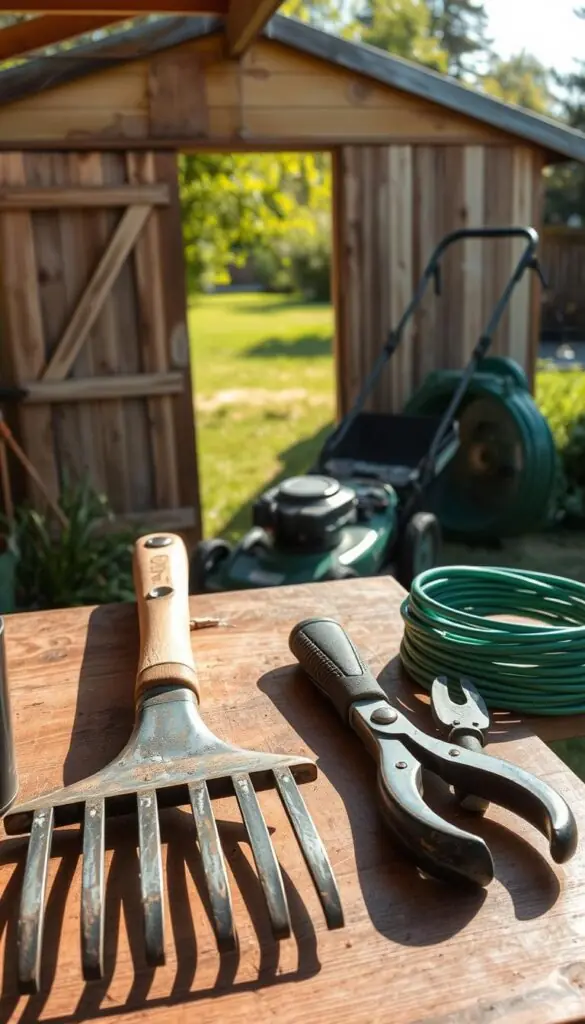
Essential tools that pull most weight
Keep a basic kit: a broadcast spreader sized for your yard, a sharp lawn mower with fresh mower blades, a dethatching rake, and access to a core aerator for compacted soil.
Two practical weekly rhythms
Free Weekend: Monday — mow and water. Wednesday — trim edges and spot weed. Friday — repair bare spots and fertilize. This blocks time early so your weekend stays open.
Time Saver: one task per weekday. Mow, edge, weed, inspect, and then water on the weekend. Pair a time-heavy item with a quick chore so each session stays under an hour.
Six essential tasks include fertilizing, watering, mowing, edging, weed control, and repairing damage. In fast-growth weeks, add a second, short mow and pair it with a quick edge.
| Routine | Typical week | Time per session | Why it helps |
|---|---|---|---|
| Free Weekend | Mow/Water; Trim/Weed; Repair/Fertilize | 30–60 minutes | Frees weekend and combines heavy + light tasks |
| Time Saver | One task per weekday; water weekend | 20–40 minutes | Keeps daily effort low and consistent |
| Spring surge | Mow twice weekly + quick edge | 2 shorter sessions | Prevents overgrowth and reduces long mowing time |
Block out 30–60 minutes at a time. Jot notes each week so you can shift tasks with weather and growth. With steady, neighborly routines, your yard looks tended and you reclaim evenings and weekends.
Conclusion
Follow nature’s cues and small routines to keep roots deep and blades vibrant all year.
Early spring calls for cleanup, a quick soil test, and pre-emergent timing. In spring and fall, a well-timed fertilizer application and overseed will build strong roots and thicker grass.
Water the smart way—aim for about one inch per week measured with cans—and adjust during heavy rain or heat. Mow by the one-third rule with sharp blades and mulch leaves in fall so they feed the soil.
One last tip: pick the right seed for your areas and raise mower height when temperatures climb. With a few calm habits, your yard becomes a welcoming place to relax—sunlit, soft, and easy to enjoy.
FAQ
How do I know whether I have cool-season or warm-season grass?
Check when your turf grows most actively. Cool-season types (fescue, rye, Kentucky bluegrass) green up in spring and again in fall and prefer cooler temps. Warm-season types (zoysia, bermudagrass, St. Augustine) thrive in summer and go dormant in cooler months. Regional climate and the look of the blades help, too — if your yard springs to life in early spring, you likely have cool-season grass; if it surges in late spring into summer, it’s probably warm-season.
When should I perform spring cleanup and my first fertilizer application?
Aim for early spring once soil thaws and daytime temps are consistently above freezing. Rake leaves, remove debris, test soil if possible, then apply a balanced starter if grass is actively growing. For cool-season turf, apply a moderate first feed in March–May; for warm-season turf, wait until new growth appears in late spring.
What’s the best way to water and how much is one inch per week?
Use two or three rain gauges or a tuna-can test to measure output from sprinklers. One inch per week is usually split into one or two deep sessions to encourage deep roots. In hot summer, increase frequency but avoid shallow daily sprays. Adjust for rain and soil type — sandy soils need shorter, more frequent runs than clay.
How high should I set the mower blade through the seasons?
Follow the one-third rule: never cut more than one-third of blade height at once. Set cool-season grasses higher in fall (around 3–3.5 inches) and slightly lower in late spring. Warm-season grasses can be kept shorter in summer (1–2 inches for Bermuda, 2.5–3.5 inches for zoysia). Regularly sharpen mower blades for clean cuts that protect roots.
When and how should I overseed bare patches?
For cool-season turf, overseed in early fall when temperatures are cooler and weeds are less competitive. Prepare soil by raking or aerating, add starter fertilizer, spread seed matched to your grass type, and keep the area moist until seedlings establish. For warm-season grass, late spring to early summer is best when the soil is warm enough for germination.
What’s the difference between pre-emergent and post-emergent weed control?
Pre-emergent herbicides create a barrier that stops weed seeds (like crabgrass) from sprouting and should be applied before soil temps reach about 55°F for several days. Post-emergent products target actively growing weeds and work best when weeds are small and actively growing. Use the right product for your grass type and follow label directions closely.
How do I know when to apply grub control treatments?
Treat grubs in late summer to early fall for cool-season lawns, when adults are laying eggs and larvae are small near the soil surface. For warm-season turf, timing can shift slightly later. Monitor for brown patches that lift easily and consult product labels for active ingredient timing. Preventive options work best when timed properly.
Is aeration necessary, and when should I do it?
Aeration relieves soil compaction and helps roots access air, water, and nutrients. Core aerate cool-season lawns in early fall and warm-season lawns in late spring. High-traffic or clay-heavy soils benefit most. Follow aeration with overseeding if you need thicker turf.
How do I handle mowing and maintenance during summer heat?
Raise cutting height to shade soil and reduce stress, mow less frequently, and leave clippings to recycle nutrients if they aren’t excessive. Water deeply but infrequently to encourage deep roots. Avoid heavy fertilization in peak heat; use light, slow-release products if needed for recovery.
What should I do in fall to prepare turf for winter?
For cool-season grasses, perform a final fall fertilization to strengthen roots, overseed thin areas, rake or mulch leaves, and lower mower height slightly for the last cut. For warm-season turf, let it harden off naturally, clean and service equipment, and limit foot traffic once it begins dormancy.
Which tools are essential for an easy weekly routine?
A sharp mower, a spreader for seed and fertilizer, a dethatching rake, and a core aerator are the core tools. Keep blades sharp and calibrate your spreader. A simple weekly rhythm — one focused weekend task plus short weekday checks — keeps yard work manageable and consistent.
How often should I test soil and adjust fertilizer plans?
Test soil every 2–3 years or when you see persistent nutrient problems. A soil test tells you pH and nutrient needs so you can pick the right fertilizer and application timing. Match feeds to your grass type and the season: early spring and fall for cool-season, late spring and summer for warm-season, with light maintenance feeds as needed.