Imagine soft, trailing vines brushing the top of your window as morning light warms their glossy leaves. Do you dream of adding height and movement to a small room without a lot of fuss? You’re in the right place.
We’ll help you choose forgiving choices like pothos and philodendron, plus slower growers such as hoya, so you can build a layered look that feels lush and calm.
Expect clear, practical steps—from picking the right basket and matching light levels to simple care tips that keep foliage full and healthy. We’ll note smart tools like macramé hangers and LED grow lights, and give shopping sense about price and sale timing.
In short, this intro lets you picture the result and promises easy, confident choices for your home. Ready to make your space feel greener and more alive?
Key Takeaways
- Start with forgiving species—pothos and philodendron—for quick height and easy care.
- Match a plant to the light in your room to avoid guesswork.
- Choose practical baskets (4.5-inch options are common) for instant drama.
- Compare price and look for a timely sale to get the best value.
- Mix fast and slow growers for balanced fullness and texture.
- Use simple tools—planters, hangers, LED lights—to maintain healthy leaves.
Shop hanging plants by light, style, and space
Match light and room size first — that’s the fastest way to a flourishing display.
Start by choosing a light category: Low, Medium, Bright Indirect, or Direct Sun. Bright-indirect spots suit Marble Queen pothos and Scindapsus 'Exotica'. Medium light favors Philodendron 'Brasil'. Low-light corners work well with Golden pothos and heartleaf philodendron.
Indoor favorites and quick picks
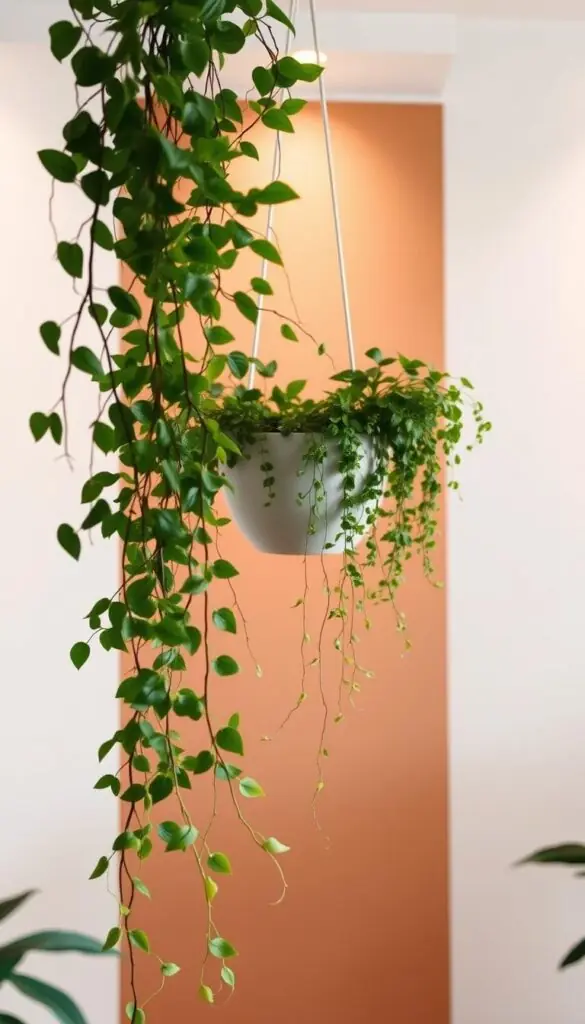
Reliable varieties: pothos for fast coverage; philodendron for heart-shaped charm; hoya for waxy leaves and occasional flowers; Tradescantia 'Nanouk' for color. Add String of Turtles or String of Hearts for delicate, jewelry-like trails.
Outdoor hanging and seasonal tips
Use trailing ivy and sun-tolerant options on covered porches in spring and summer. In USDA Zones 8–10, many baskets stay outdoors longer. Move tender tropicals inside when nights dip below 50°F.
Pet safety and value checklist
- Pet-friendly picks: Boston Fern and many Hoya varieties.
- Keep ivy and thorny miniature roses away from pets and children.
- Value tips: compare price, look for 4.5-inch baskets and up, check sale collections, and note shipping windows for live arrival.
How to plant, hang, and care for your new greenery
A few simple steps will get your new greenery thriving in a basket or planter in a single afternoon. Follow short, clear routines and you’ll save time and worry.
Step-by-step potting and size
Tools: potting mix, perlite, pruning shears, macramé hanger, anchors.
- Choose a basket or planter with drainage. 4.5-inch baskets are ideal starters.
- Mix 2 parts high-quality potting soil + 1 part perlite. Set root ball 1" below rim.
- Top with a light layer of compost and water until a brief trickle appears from drains.
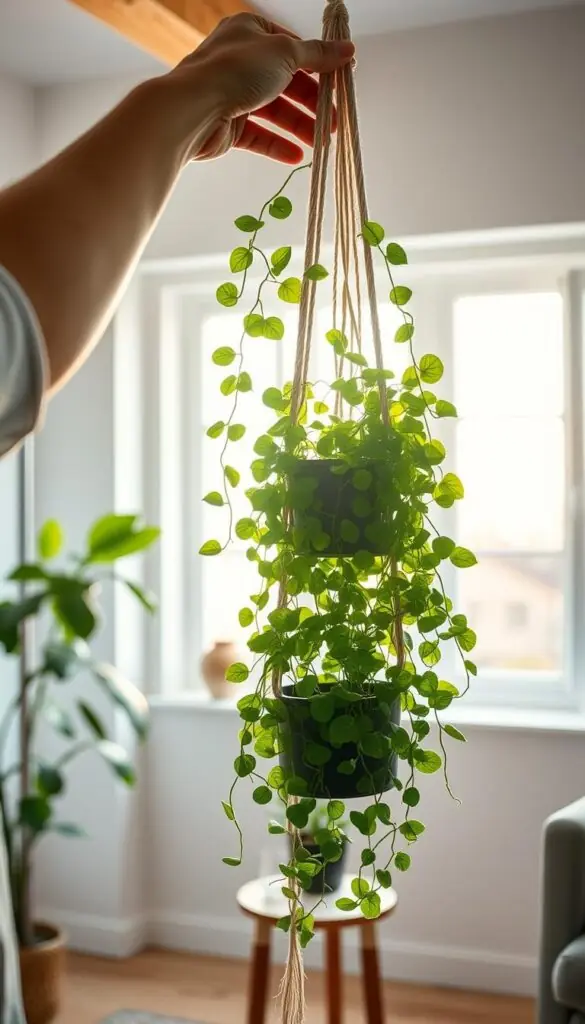
Light, water, and routine
Bright indirect suits Marble Queen pothos; medium light favors Philodendron micans. Tradescantia ‘Nanouk’ needs strong light to keep color. Hoya likes bright spots and to dry longer between waterings.
Let the top 1–2" of soil dry for vines. Ferns should stay evenly moist. Feed half-strength liquid fertilizer every 4–6 weeks in spring and pause in winter.
Hardware, seasonal moves, and mistakes
- Use a joist or 25+ lb-rated toggle bolt. Drop 12–24" for easy care.
- Bring outdoor baskets in before nights hit ~50°F and acclimate over 5–7 days.
- Avoid overwatering, poor drainage, and low light—yellow leaves, legginess, or mushy stems signal fixable problems.
Design ideas to elevate small and large spaces
Mix broad, glossy foliage with fine, stringy varieties to make your room feel taller and softer. Layering adds color, texture, and gentle movement that catches light and scent.
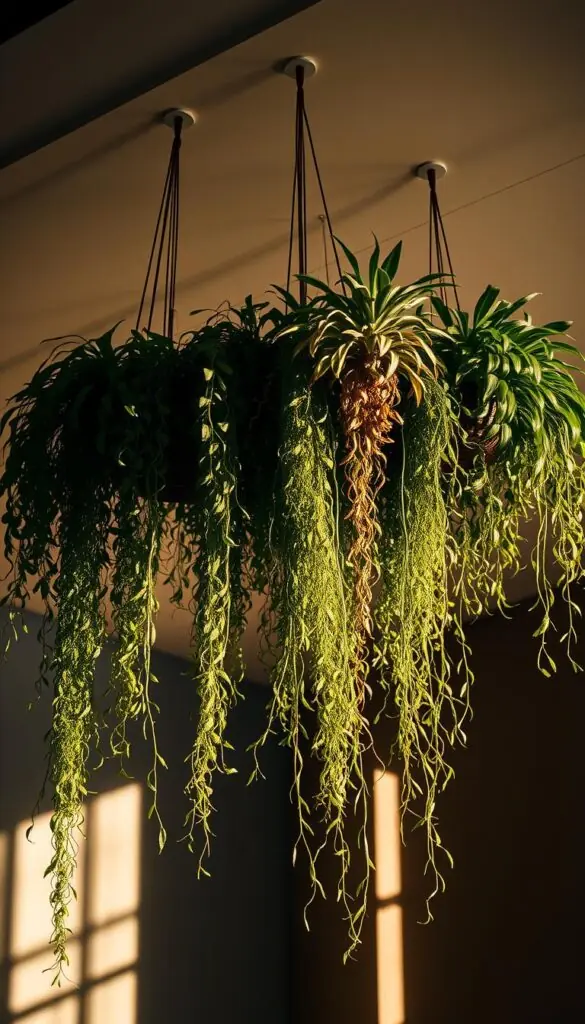
Layered looks: strings, vines, and flowers
Pair a full pothos with a delicate String of Hearts for contrast—wide, shiny leaves next to thin, trailing strands. Add Tradescantia ‘Nanouk’ for pink-lilac pops and a Hoya for waxy leaves and sweet-smelling flowers.
Functional beauty: privacy and easy displays
Create soft screens by hanging two or three fuller stems along a window. Use woven macramé or pedestal planters to lift greenery near seating, and stagger ceiling hooks for vertical rhythm.
- Group items by light and water needs to simplify care.
- Use one statement hanger plus a couple of sale finds to refresh a nook affordably.
- Quick routine: rotate, trim stray stems, and wipe leaves weekly for tidy, thriving displays.
Conclusion
A simple plan—right pot, correct light, and a little routine—lets your space feel instantly softer.
You’re ready to pick hanging plants that suit your light and bring graceful height to a room. Choose reliable favorites first, then add a special variety when you find a fair price or a good sale.
Practical tips: check basket size and sturdy hardware before install, plan shipping for a delivery day you’re home, and water lightly after unboxing. Small weekly habits—rotate, wipe leaves, and test soil—keep your displays thriving with little effort.
With mindful buys and gentle care, your home will feel calmer and greener—one plant at a time.
FAQ
What are the easiest hanging plants to add height and drama in my home?
Look for trailing varieties that grow quickly and tolerate a range of conditions—pothos, philodendron, and tradescantia are top picks. They create cascading foliage that draws the eye upward and fills vertical space without fussy care. Choose a lightweight basket or planter and a pot with drainage to keep roots healthy.
How do I match the right plant to my light conditions?
Start by assessing each spot: bright indirect light near east or west windows, medium light a few feet from a sunny window, and low light in shady corners. Place sun-loving vines like hoya in bright spots and tolerant types like pothos or philodendron in medium to low light. Rotate containers periodically so all sides get light and even growth.
Which indoor varieties are best for beginners?
Pothos and philodendron are forgiving and fast-growing, with lush leaves that suit many styles. Hoya offers waxy flowers for a touch of blooms, and tradescantia brings colorful foliage. These varieties need simple watering, moderate humidity, and occasional feeding.
Can I use these plants outdoors, and what should I consider by season and USDA zone?
Many vines adapt outdoors in warm months. Check your USDA zone: freeze-sensitive types should stay inside in cold zones. Move baskets outdoors in late spring after frost risk passes and bring them in before first frost. Provide filtered light and shelter from harsh afternoon sun and heavy rain.
Which options are safe around pets, and which are toxic?
Some popular vines can be toxic if chewed—many philodendrons and pothos contain calcium oxalate crystals. If you have pets, choose non-toxic options like certain spider plant varieties or place containers out of reach. Always confirm the specific species’ safety before placing it in a home with curious animals.
How do price, sales, and shipping affect the best value for baskets and planters?
Compare plant sizes and pot quality, not just price. Look for seasonal sales for larger discounts and factor shipping costs into the total. Larger baskets provide fuller looks but cost more to ship—opt for local pickup when possible to save. Check return and delivery guarantees for peace of mind.
What’s the step-by-step way to pot a vine into a hanging basket with proper drainage?
Choose a basket with drainage or add a liner with drainage holes. Add a breathable potting mix, position the plant so vines can drape, then fill around roots gently and water until excess drains. Hang at the intended height and avoid overpacking soil to allow airflow and root growth.
How should I decide between bright indirect, medium, and low light for placement?
Bright indirect light is near but not touching direct sun—ideal for many flowering vines. Medium light suits rooms with filtered daylight. Low light means little natural sun; pick tolerant plants and reduce watering to prevent rot. If in doubt, observe leaf color and growth rate—paler leaves mean too little light.
What are simple watering, humidity, and feeding schedules for common varieties?
Water when the top inch of soil feels dry—generally weekly for many vines, less in winter. Mist or use a pebble tray for moderate humidity if air is dry. Feed with a balanced liquid fertilizer every 4–6 weeks during the growing season. Adjust for pot size and plant response.
What hardware and tools do I need to hang baskets safely?
Use a sturdy ceiling hook anchored into a joist or a heavy-duty toggle for drywall. Choose chains or macramé that support the pot weight, and a level to ensure straight hanging. If outdoors, use weather-resistant fixtures; aim for safe heights so plants don’t block walking paths.
When should I move outdoor baskets inside for the season?
Bring plants inside before the first hard frost. In cooler climates, start monitoring nighttime lows in early fall and move sensitive plants when temperatures dip consistently below a plant’s minimum. Gradual acclimation—bringing them in for nights first—helps reduce shock.
What common mistakes lead to brown leaves or stunted growth?
Overwatering, poor drainage, and insufficient light are the usual culprits. Crowding roots in too-small pots and using heavy soil also causes stress. Check for pests, avoid sudden temperature swings, and prune leggy growth to encourage fuller foliage.
How can I layer vines, strings, and flowers for texture and scent in small spaces?
Use varying pot heights and staggered hang points to create depth. Combine a trailing vine with a compact flowering plant for color contrast and scent. Lightweight planters and slim-profile hooks save floor space while creating a lush, sunlit vertical display.
What are practical designs for privacy, natural drapes, or easy-maintain displays?
Create a green screen by hanging multiple planters at intervals to form a living curtain. Train vines on a trellis or strings to make a privacy panel. For low maintenance, group slow-growing varieties in larger baskets so you water and feed less often while maintaining a full look.